PaintingProGuide is reader-supported. When you buy through links on this page we may earn an affiliate commission at no extra cost to you.
Acrylic paint is water-based while wet and plastic once dry. That single fact decides how you get acrylic paint out of clothes. Catch it wet and cold water, dish soap and a little scrubbing usually remove it completely. Let it dry and you are dealing with a thin film of flexible polymer bonded to the fibers, which needs a solvent such as rubbing alcohol to soften before it will lift.
Below are step-by-step methods for wet stains and dried stains, how to adjust for different fabrics, what never to do (the dryer is the big one), and five laundry products on Amazon that help at different stages.
Quick answer: If the paint is still wet, scrape off the excess, flush the stain from the back with cold or lukewarm water, work in dish soap and rinse until the water runs clear, then wash as usual. If it has dried, saturate the spot with isopropyl rubbing alcohol, let it sit a few minutes, scrape and scrub with an old toothbrush, then pre-treat with a laundry stain remover such as Shout Advanced Set-In Stain Scrubber and wash. Air dry and check before using a dryer.
Our Top Picks at a Glance
- Shout Advanced Set-In Stain Scrubber Gel — Best pre-treater for worked-in stains
- Goof Off Marks, Messes and Stains Remover — Best for stubborn marks on sturdy fabrics
- Grandma’s Secret Spot Remover Gel — Best travel-size spot treatment
- OxiClean Max Force Laundry Stain Treater Spray — Best enzyme spray for washable paint and mixed stains
- Shout Triple-Acting Active Enzyme Spray — Best low-cost everyday pre-wash spray
| Product | Best For | Key Spec | Key Strength | Price Tier |
|---|---|---|---|---|
| Shout Set-In Stain Scrubber | Dried or set-in stains | 8.7 oz gel with built-in brush | Scrubs gel into fibers | $ |
| Goof Off Marks and Stains | Tough marks, sturdy fabric | 8 oz spray | Heavy-duty formula | $ |
| Grandma’s Secret Spot Remover | Studio bag, travel | 2 oz gel | Bleach- and chlorine-free | $ |
| OxiClean Max Force Spray | Kids washable paint stains | 3 x 12 oz sprays | Lists washable paint | $ |
| Shout Active Enzyme Spray | Everyday pre-wash | 22 oz spray | Spray now, wash later | $ |
How to Get Wet Acrylic Paint Out of Clothes
Speed is everything. Acrylic starts to skin over in minutes and can be dry through on a thin fabric smear in under an hour.
- Remove excess. Scrape off blobs with a spoon, palette knife or the edge of a card. Do not rub; rubbing pushes paint deeper.
- Flush from the back. Turn the garment inside out and run cold or lukewarm water through the back of the stain, so paint is pushed out of the fabric rather than through it. Hot water can help paint set on some fabrics.
- Work in dish soap. Apply a drop of liquid dish soap, rub the fabric against itself or use an old toothbrush, and rinse. Repeat until no more color comes out.
- Pre-treat. Apply a laundry stain remover to any remaining tint.
- Wash. Launder with regular detergent on the warmest setting the care label allows.
- Air dry and inspect. If any stain remains, repeat before drying. Dryer heat can set what is left.
How to Get Dried Acrylic Paint Out of Clothes
Dried acrylic will not wash out with water alone. You need to soften the polymer first.
- Scrape what you can. Flex the fabric and pick off flakes with a fingernail, dull knife or tweezers. Thick dried blobs often pop off.
- Test a hidden seam. Dab rubbing alcohol on an inside seam to check the dye does not run.
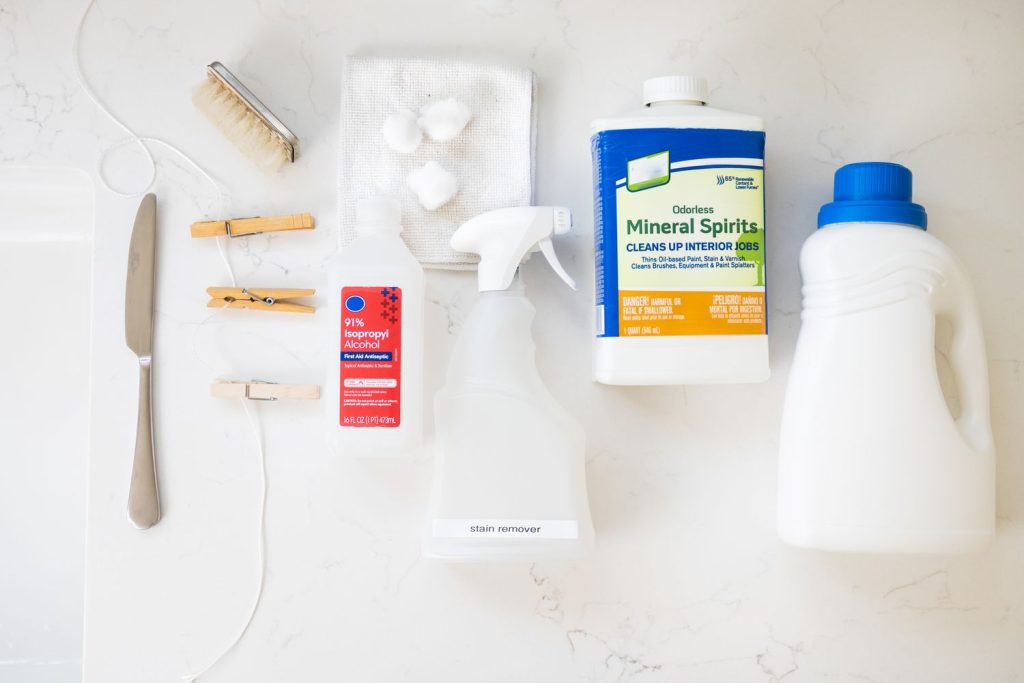
- Saturate with isopropyl alcohol. Soak a cotton ball or cloth in 70% or 91% rubbing alcohol and press it onto the stain. Let it sit for several minutes so the paint softens.
- Scrub and scrape. Use an old toothbrush or the edge of a spoon to lift softened paint. Blot with a clean cloth, moving to a fresh section as color transfers.
- Repeat as needed. Older or thicker stains often take several rounds.
- Wash out the alcohol. Rinse, work in dish soap, apply a pre-treater and launder as normal.
- Air dry. Check the spot in daylight before tumble drying.
Stronger solvents (use with care)
Some people use acetone-based nail polish remover on stubborn dried acrylic on cotton or denim. Acetone can damage or dissolve acetate, triacetate and some synthetics, and it can strip dye, so test first, use it in a ventilated area and never on fabrics labeled acetate. Window cleaner with ammonia is another traditional option on sturdy cottons. When in doubt, try alcohol first.
Adjusting for Fabric Type
- Cotton and denim: the most forgiving. Alcohol, scrubbing and repeated treatments are usually fine.
- Polyester and nylon: acrylic grips synthetic fibers well. Alcohol works, but avoid acetone. Be patient with several gentle rounds.
- Wool and silk: rub gently, use cool water, test any solvent carefully and consider a professional cleaner for valuable pieces.
- Dry clean only: blot off wet paint and take it to a cleaner quickly. Tell them it is acrylic paint.
- Canvas shoes and bags: treat like cotton, scrubbing with a toothbrush.
We cover related fabrics in separate guides: how to get acrylic paint out of fabric such as upholstery and canvas, a shorter walkthrough on taking acrylic paint out of clothes for quick reference, and getting acrylic paint out of carpet for floor spills.
How We Chose
We have not tried these removers on paint stains ourselves. Picks are based on the Amazon listing details checked in October 2026, how each product’s format and stated uses fit the paint-removal steps above, and how widely each is reviewed by Amazon buyers. We left out a latex paint remover aimed at household surfaces and an ink-specific spot cleaner, since they are less suited to acrylic paint on clothing. We considered:
- Whether the listing mentions paint or comparable stains
- Safety for washable fabrics and colors
- Format: gel, spray or scrubber, and how it fits the step it is used for
- Convenience, such as treat-now, wash-later formulas
Best Stain Removers for Acrylic Paint on Clothes
No laundry product dissolves dried acrylic on its own the way alcohol does. These are best used for wet stains and as the pre-treatment step after alcohol has softened dried paint.
1. Shout Advanced Set-In Stain Scrubber Gel — Best for worked-in stains

Shout’s Advanced gel is a thick, concentrated stain remover with a built-in scrubber brush on the cap. The brush is the useful part for paint: after you soften dried acrylic with alcohol, the scrubber works the gel deep into the fibers where the last tint hides.
The listing says it works on machine-washable whites and colors, in all water temperatures and in HE and standard washers, and that you can treat and wash up to a week later.
Best suited for: The final pre-treat after alcohol, and wet paint smears on everyday clothing.
Key features:
- 8.7 oz concentrated gel
- Built-in scrubber brush
- For machine-washable whites and colors
- Treat and wash up to a week later
Pros:
- Brush saves finding a toothbrush
- Thick gel stays on the stain
- Inexpensive
Cons and limitations:
- Will not dissolve dried paint alone
- Brush is firm for delicates
Buying consideration: Keep a bottle by the studio sink so wet spills get treated immediately.
2. Goof Off Marks, Messes and Stains Remover — Best for stubborn marks

Goof Off’s household formula is labeled safe on plastics, fabric and clothing and is aimed at difficult messes such as ink, permanent marker, scuffs, tar, gum, lipstick and shoe polish. The listing says to let it penetrate for at least a minute, then wipe or wash.
Paint is not named on this listing, so treat it as a tougher option to try on sturdy fabric when alcohol and soap leave a stubborn shadow. Test on a hidden area first.
Best suited for: Stubborn residual marks on sturdy cotton and denim.
Key features:
- 8 oz spray
- Safe on plastics, fabric and clothing per listing
- Removes ink, marker, tar, gum
- Penetrates in about a minute
Pros:
- Handles very tough marks
- Useful household all-rounder
Cons and limitations:
- Paint not listed as a target stain
- Test for colorfastness
Buying consideration: Use it after alcohol, never mixed with it, and rinse thoroughly before washing.
3. Grandma’s Secret Spot Remover Gel — Best for travel-size spot treatment

This 2 oz gel is small enough for a plein air bag or a classroom drawer. The listing describes a chlorine- and bleach-free formula that targets stains without stripping color, and names uncured latex paint among the stains it handles, along with crayon, grease and many food stains.
Uncured is the key word: it is best on paint that has not dried. Apply, agitate and blot as directed.
Best suited for: Artists who paint away from home and anyone who wants a spot treatment within reach.
Key features:
- 2 oz travel-size gel
- Chlorine- and bleach-free
- Lists uncured latex paint among targets
- Apply, agitate, blot
Pros:
- Portable
- Gentle on colors
- Names paint on the listing
Cons and limitations:
- Small bottle
- Best on fresh, not dried, paint
Buying consideration: Pack it with your paints so you can treat a smear before it dries.
4. OxiClean Max Force Laundry Stain Treater Spray — Best for washable paint and mixed stains

OxiClean Max Force is an enzymatic, color-safe spray with no chlorine bleach, brighteners, dyes or phosphates. Its listing names washable paint among target stains, which makes it a strong pick for kids’ tempera and washable craft paint on clothes.
For true acrylic, use it as the pre-wash after alcohol. The listing says you can spray now and wash up to 7 days later, which suits busy households.
Best suited for: Parents dealing with kids paint and anyone pre-treating mixed stains.
Key features:
- 3 x 12 oz sprays
- Enzymatic, color-safe
- Lists washable paint and ink
- Spray now, wash up to 7 days later
Pros:
- Names washable paint
- Three bottles
- No chlorine bleach
Cons and limitations:
- Not a solvent for dried acrylic
Buying consideration: Great for school art days; treat the smock and the shirt underneath.
5. Shout Triple-Acting Active Enzyme Spray — Best for an everyday pre-wash

Shout’s classic spray is the cheapest way to keep a pre-treater on hand. The 22 oz bottle covers a wide range of everyday stains and works on machine-washable whites and colors in any water temperature.
Use it on the faint tint left after dish soap removes a wet acrylic stain, then wash. You can spray and wash up to a week later.
Best suited for: Everyday laundry pre-treatment and the last step after paint removal.
Key features:
- 22 oz spray
- Active enzyme formula
- Machine-washable whites and colors
- Spray now, wash later
Pros:
- Very low cost
- Large bottle
- Easy spray
Cons and limitations:
- Paint not specifically listed
- Mild compared with gels
Buying consideration: Ideal as the routine pre-wash for painting clothes.
Buying Guide: Choosing Products to Remove Acrylic Paint
Wet versus dry
For wet acrylic, water, dish soap and any pre-treater work. For dried acrylic, you need isopropyl alcohol or another solvent first; laundry products finish the job.
Fabric compatibility
Read labels. Enzymatic sprays suit machine-washable fabrics. Solvent-type removers need a colorfastness test and may not suit delicates or acetate.
Format
Gels cling to vertical stains and suit scrubbing. Sprays cover large splatters. Travel sizes belong in your art bag.
Color safety
Choose bleach-free, color-safe formulas for colored clothing.
Treat-now, wash-later
Formulas that hold for days help when you cannot launder straight away.
Prevention value
A cheap apron or painting shirt costs less than any remover, and saves good clothes entirely.
Is It Really Acrylic? Identify the Paint First
Before reaching for alcohol, check what made the stain. Kids’ washable paint and tempera are designed to rinse out with water and detergent even after drying, so a soak and a normal wash may be all you need. Acrylic craft paint, artist acrylic, acrylic paint pens and fabric paint behave the same way: rinseable while wet, stubborn once dry. Oil paint is a different problem entirely; it needs a solvent or a degreasing dish soap rather than water, and alcohol does little.
A quick test: wet a corner of the dried stain and rub it between your fingers. If color transfers easily, it is probably washable paint. If it feels rubbery or plastic and nothing moves, treat it as dried acrylic and follow the alcohol method.
Prevent Paint Stains Before They Happen
- Wear a dedicated painting shirt or a full apron with a bib.
- Roll sleeves above the elbow; cuffs drag through palettes.
- Keep a damp rag and a small pre-treater bottle in your paint area.
- Use a palette with a lid and wipe brush handles regularly.
- For kids, choose washable paints and smocks.
Common Mistakes to Avoid
- Rubbing a wet stain. It spreads paint and drives it into the weave. Scrape and blot.
- Using hot water first. Start cold or lukewarm.
- Tumble drying too soon. Heat can set remaining paint permanently.
- Acetone on acetate or synthetics. It can melt or damage fibers.
- Skipping the patch test. Alcohol and solvents can pull dye.
- Giving up after one round. Dried paint often needs several cycles of alcohol and scrubbing.
FAQs
Does acrylic paint come out of clothes?
Usually yes if treated while wet with water and dish soap. Dried acrylic is harder but often comes out after softening with rubbing alcohol, scrubbing and washing. Old, thick or heat-set stains may be permanent.
Does rubbing alcohol remove dried acrylic paint?
Isopropyl rubbing alcohol is one of the most effective household options. It softens the dried acrylic film so it can be scraped and scrubbed out. Test on a hidden seam first.
Will vinegar remove acrylic paint from clothes?
Vinegar can help loosen fresh paint slightly, but it is much less effective than alcohol on dried acrylic. It is better as a rinse aid than a main treatment.
Is acrylic paint permanent on clothes?
Once fully dry and especially after machine drying, acrylic is very hard to remove. That is why artists add fabric medium and heat-set acrylic on purpose for painted clothing.
Can I use hand sanitizer on acrylic paint stains?
Alcohol-based hand sanitizer can work in a pinch on small stains because of its alcohol content, but gels may leave residue. Rinse and wash afterward.
What if the stain went through the dryer?
Try the dried-paint method with alcohol and several rounds of scrubbing. Heat-set stains may lighten but not disappear completely; repurpose the garment as a painting shirt.
Final Recommendation
Act while the paint is wet: scrape, flush from the back with cool water, use dish soap and wash. For dried acrylic, rubbing alcohol is the key step, followed by a laundry pre-treater. Shout’s Set-In Stain Scrubber is the best all-round finisher, Goof Off tackles stubborn marks on sturdy fabric, Grandma’s Secret belongs in your art bag, OxiClean Max Force is the pick for kids’ washable paint, and the basic Shout spray is the cheap everyday pre-wash.