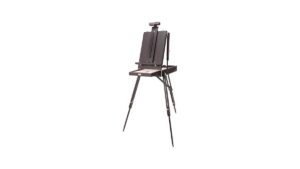
Quick answer: The Mabef M/22 is one of the Italian maker’s oiled beechwood studio easels, and like the rest of the range it is valued for solid hardwood construction, simple mechanical adjustment and long working life. It is a good fit for painters with a dedicated space who want a stable easel for regular oil or acrylic work. Its downsides are weight, cost and limited portability. Confirm the M/22’s current canvas capacity, overall height and tilt options on the listing before buying.
A Mabef M/22 easel review should answer one practical question: will this easel improve how you paint enough to justify its price and the floor space it occupies? Specifications alone rarely answer that. What matters is how the design fits your canvases, your room and your habits.
This review approaches the M/22 as a buying decision. It summarizes what the Mabef studio range is known for, outlines the M/22’s likely strengths and limits based on that design approach and common buyer feedback themes, and gives you a framework to decide. No hands-on testing is claimed. For a side-by-side look at heavier professional options, our guide to the best easels for professional painters is a useful companion.
Mabef M/22 Easel Review in Brief
| Aspect | Summary |
|---|---|
| Material | Beechwood with oil finish, consistent with Mabef’s range |
| Origin | Made in Italy, according to the manufacturer |
| Category | Studio easel (confirm exact design and features on the listing) |
| Best for | Regular painting in a fixed space |
| Main strengths | Stability, durability, repairable hardware |
| Main limits | Weight, footprint, price |
| Check before buying | Max and min canvas height, overall height, tilt, base size |
Why Painters Consider a Mabef Studio Easel
Most artists who look at Mabef are upgrading. A lightweight easel that sways when you press a brush, a tripod that slips, or a canvas holder that drifts down during a session all interrupt concentration. A heavier hardwood easel solves those problems through mass and sturdier joints rather than complexity.
Beechwood helps here. It is dense and hard, so bolts and threaded inserts hold well and the frame resists denting. The oil finish protects the wood while keeping a natural look.
What the M/22 Does Well
Steady under pressure
Studio easels in Mabef’s range are built to stay put during vigorous brushwork, palette knife painting and scraping. That steadiness is the main benefit over budget easels.
Straightforward adjustments
Mabef generally uses knobs and sliding holders that are intuitive and easy to fix. There is little to break.
Long service life
Hardwood studio easels are often used for many years. Replacing a knob or tightening a bolt is usually the extent of maintenance.
Good studio presence
The look of oiled beech suits teaching spaces, home studios and galleries.
Where the M/22 May Not Fit
Small rooms
Studio easels have wide bases and tall masts. In a small apartment or shared room, the easel can dominate the space.
Frequent moving
Heavy wooden easels are not designed for frequent relocation. Unless the model includes casters, moving it requires lifting.
Watercolor on a flat surface
Many studio easels do not tilt fully horizontal. If you paint very wet watercolor, check the tilt range or plan to use a table.
Budget-conscious beginners
If you are not yet sure how much you will paint, the price of a professional easel can be hard to justify.
A Decision Framework: Should You Buy the M/22?
Work through these questions honestly. If most answers point to “yes,” a Mabef studio easel is likely a good investment.
- Do you paint at least weekly? Regular use is what makes a sturdy easel pay off.
- Do you have a dedicated spot? Studio easels work best when they stay in one place.
- Are your canvases medium or larger? Small panels do not need a heavy studio easel.
- Do you use firm pressure or knife work? Stability matters more as pressure increases.
- Has a lighter easel frustrated you? Upgrading solves known problems better than speculative ones.
- Can you accommodate its height when extended? Measure your ceiling.
Cost Per Year: A Useful Way to Think About Price
Instead of comparing only the purchase price, consider cost over the easel’s useful life. A budget easel that wobbles and needs replacing after a couple of years can end up costing more per year of satisfying use than a sturdier easel used for a decade. This is not a guarantee, since lifespan depends on care and use, but it is a reasonable way to compare.
| Scenario | Upfront cost | Expected useful life | Practical outcome |
|---|---|---|---|
| Budget easel replaced twice | Low each time | Short | Recurring cost, recurring frustration |
| Mid-range easel | Moderate | Medium | Good balance for many hobbyists |
| Professional hardwood easel | High | Long, with care | Lower cost per year if used regularly |
Studio Easel Mechanisms Compared
Mabef studio models differ partly in how they adjust. Understanding the options helps you read the M/22 listing and compare it with neighboring models.
| Mechanism | How it works | Pros | Cons |
|---|---|---|---|
| Knob and slide | Loosen a knob, slide the holder, retighten | Simple, quick, few parts | Heavy canvases need support while adjusting |
| Crank | Geared handle raises and lowers the holder | Easy with heavy canvases, precise | More parts, usually more expensive |
| Tilt hinge | Knob or bracket angles the mast | Controls glare, helps drawing | Adds complexity |
| Extending mast | Upper mast section slides up | Accommodates tall canvases | Raises center of gravity |
Buying a Used Mabef Easel
Because Mabef easels are durable, the used market can be a smart way to get one. Inspect carefully:
- Check all knobs: make sure they tighten fully and hold.
- Inspect wood: look for cracks near bolt holes and at the base joints.
- Check for warping: sight along the mast; it should be straight.
- Test sliding parts: holders should move smoothly when loosened.
- Look for missing parts: top clamp, tray, knobs and washers.
- Accept dried paint: surface paint is cosmetic and can often be cleaned, but paint in sliding tracks needs removal.
Budget Easel vs Mabef Studio Easel: Practical Differences
Spec sheets do not always show how differently a cheap easel and a hardwood studio easel behave in daily use. These are the differences painters tend to notice most.
| Situation | Typical budget easel | Mabef-style studio easel |
|---|---|---|
| Firm brushstroke near the top of the canvas | Canvas or mast may sway | Frame stays put |
| Palette knife scraping | Easel can shift on the floor | Weight keeps it in place |
| Raising a large canvas | Holder may slip or bind | Smoother, more secure locking |
| Long-term use | Knobs and joints may loosen or strip | Hardware generally lasts longer |
| Moving the easel | Easy | Requires effort unless on casters |
| Cost | Low | High |
Planning Your Space for the M/22
- Measure the ceiling. Studio easels can extend tall. Make sure the fully raised mast and your tallest canvas fit.
- Measure the floor. Allow for the base footprint plus space for a side table and a step-back lane.
- Consider doorways. If the easel arrives assembled or needs moving between rooms, check door widths.
- Plan for light. Position near side lighting rather than directly facing a window, which creates glare and silhouettes.
- Protect the floor. A drop cloth or mat under the base keeps paint off flooring and makes cleanup easier.
Questions to Ask Before Ordering
If you are buying from a dealer or online store, these questions help avoid surprises:
- What are the exact maximum and minimum canvas heights for this version?
- Does it tilt, and in which directions?
- Does it ship assembled or flat-packed, and how heavy is the package?
- Are casters included or available as an add-on?
- What is the return policy for large items, and who pays return shipping?
- Is the seller an authorized Mabef dealer, and how is warranty handled?
Accessories Worth Budgeting For
- A taboret or rolling cart for your palette and supplies.
- A mahl stick for steady detail work.
- Daylight-balanced lighting for evening sessions.
- A drop cloth or floor mat.
- A backing board for small panels.
Setting Up and Using the M/22
- Assemble according to the instructions, ideally with help.
- Place on a level floor and check for rocking.
- Position with your main light coming from the side.
- Set the lower holder so the canvas center is around eye level.
- Clamp the canvas gently but firmly.
- Use tilt (if available) to reduce glare.
- Keep a taboret or side table nearby for your palette.
Getting the Most From a Studio Easel
A sturdy easel only improves your painting if the setup around it supports good habits.
Paint at arm’s length
Stand far enough back that your arm is nearly extended when the brush touches the canvas. This encourages broader strokes and lets you see more of the painting at once.
Step back regularly
Stability means you can walk away mid-session without worrying about the canvas. Use that. Stepping back every few minutes during the early stages helps you spot drawing and value errors while they are still easy to fix.
Use height changes, not body contortions
Lower the canvas to work on the top section and raise it for the bottom. Repositioning takes seconds and saves your neck and back over long sessions.
Keep the tray clean
A paint-covered tray transfers color onto the bottom edge of every canvas you place on it. A quick wipe at the end of each session prevents this.
Rotate the canvas
Turning the canvas upside down or sideways for a moment is a classic way to see composition and value problems with fresh eyes. A stable easel with a secure clamp makes this quick to do.
Signs It Is Time to Upgrade From Your Current Easel
- The canvas holder slips down during painting.
- The easel sways or creaks when you apply pressure.
- You avoid larger canvases because your easel cannot hold them.
- Knobs have stripped or will not tighten.
- You spend time each session re-tightening or adjusting.
If several of these sound familiar, a heavier studio easel such as the M/22 is likely to make painting sessions noticeably calmer.
Maintenance
- Clean paint off holders and the mast after sessions.
- Retighten structural bolts periodically.
- Keep away from heaters and humidity.
- Wax sticky sliding surfaces lightly.
- Store spare knobs if available from the manufacturer or dealer.
Common Issues and Simple Fixes
A holder sticks on the mast
Dried paint or humidity is the usual cause. Scrape paint away carefully and rub a little paraffin wax on the sliding surface.
A knob will not tighten
The thread may be worn. Replacement knobs are often available from dealers, or a hardware store can match the thread size.
The easel rocks slightly
Check the floor for level and retighten the base bolts. Wood can settle after the first few weeks of use.
Alternatives to Consider
- Other Mabef studio models: compare heights, tilt and crank options within the range.
- Crank H-frame easels: better for very large, heavy canvases.
- Lyre or A-frame easels: lighter and cheaper for small spaces.
- Field easels: for painters who also work outdoors.
To compare these alternatives side by side, see our breakdown of sturdy professional easels for artists.
FAQs
Is the Mabef M/22 good for oil painting?
Mabef studio easels are designed with oil and acrylic painting in mind, offering stability for firm brushwork. Confirm canvas capacity on the listing.
What wood is the Mabef M/22 made from?
Mabef easels are generally made from beechwood with an oil finish.
Is a Mabef easel worth the money?
For painters who work regularly in a fixed space, the durability and stability can justify the price. Occasional painters may get better value from a less expensive easel.
Can I buy replacement parts for Mabef easels?
Replacement knobs and parts may be available through authorized dealers or the manufacturer. Generic hardware can sometimes work if thread sizes match.
How do I know which Mabef studio easel to choose?
Compare maximum canvas height, overall height, tilt options, footprint and whether a crank is included against your typical canvas sizes and room.
Is a used Mabef easel a good buy?
Often, yes, if the wood is sound, knobs tighten properly and no parts are missing.
Final Thoughts
The Mabef M/22 brings the familiar Mabef strengths of beechwood construction, simple adjustments and longevity, with the usual trade-offs of weight, space and price. Work through the decision framework above and verify the listing’s specifications. To see how it compares with other heavy-duty options, read our guide to the best professional studio easels.