Look closely at the Mona Lisa’s mouth and you will not find a single line marking where the lips end and the cheek begins. The transition happens through layer after layer of soft, translucent shadow, so the expression seems to shift as your eye moves. That effect is not magic. It comes from a handful of Leonardo da Vinci painting techniques that he developed, wrote about and refined over decades, and most of them can be studied and practiced with modern oil paints.
Quick answer: Leonardo da Vinci’s main painting techniques were sfumato (smoky, edgeless transitions between tones), chiaroscuro (strong modeling of form with light and dark), atmospheric perspective (distant objects painted paler, bluer and softer), and building images with many thin, translucent oil glazes over a careful underdrawing on a smooth gesso ground. He also experimented with materials, sometimes with poor results, as in the deteriorating Last Supper.
Leonardo in Context: Why His Methods Stood Out
Leonardo trained in Andrea del Verrocchio’s workshop in Florence in the late fifteenth century, where egg tempera was still common. Tempera dries fast and is typically built with fine hatched strokes, which makes very soft blending difficult. Oil paint, developed and popularized in Northern Europe, was gaining ground in Italy, and Leonardo embraced its slow drying and translucency.
He approached painting as a science. His notebooks, later compiled as the Treatise on Painting, discuss light, shadow, optics, anatomy and the way air changes color over distance. His techniques grew out of that observation, which is why they still feel natural rather than stylized. Practicing his approach today mostly comes down to patience and soft, well-shaped brushes, and our notes on Da Vinci brand oil brushes for blending and glazing are a useful starting point for the tools.
What Paintings Did Da Vinci Paint?
Leonardo completed relatively few paintings; scholars generally attribute somewhere around 15 to 20 surviving works to him, and some attributions remain debated. Well-known examples include:
| Painting | Approximate date | Medium and support | Technique highlights |
|---|---|---|---|
| Annunciation | c. 1472–1476 | Oil and tempera on panel | Early work; atmospheric landscape background |
| Ginevra de’ Benci | c. 1474–1478 | Oil on panel | Soft modeling of the face; juniper backdrop |
| Adoration of the Magi | Begun 1481 (unfinished) | Oil on panel | Reveals underdrawing and early layers |
| Virgin of the Rocks (two versions) | c. 1483–1508 | Oil on panel (Louvre version transferred to canvas) | Chiaroscuro, sfumato, geological detail |
| Lady with an Ermine | c. 1489–1491 | Oil on walnut panel | Dramatic turning pose; modeled light |
| The Last Supper | c. 1495–1498 | Experimental tempera and oil on dry plaster | Linear perspective; significant deterioration |
| Mona Lisa | c. 1503–1519 | Oil on poplar panel | Sfumato, atmospheric perspective, thin glazes |
| Virgin and Child with Saint Anne | c. 1503–1519 | Oil on panel | Pyramidal composition, soft transitions |
| Saint John the Baptist | c. 1513–1516 | Oil on panel | Figure emerging from deep shadow |
Dates are approximate and vary between sources. Many of these works are on wood panel rather than canvas, which matters for technique because a smooth, rigid gesso ground suits extremely fine, thin layers.
Leonardo da Vinci Painting Techniques Explained
1. Sfumato
Sfumato comes from the Italian word for smoke. Leonardo described shadows and lights blending “without lines or borders, in the manner of smoke.” In practice, sfumato means no hard outlines; forms turn into shadow through imperceptible gradations.
Technical studies of the Mona Lisa and other works have suggested he achieved this with many extremely thin layers of translucent, darkened paint (glazes), each slightly adjusting the tone. Rather than blending wet colors together on the surface, he appears to have built the soft transitions gradually, letting layers dry in between.
2. Chiaroscuro
Chiaroscuro (light-dark) is the modeling of three-dimensional form through contrast between light and shadow. Leonardo pushed shadows deeper than many contemporaries, giving figures strong volume. In Saint John the Baptist and the Virgin of the Rocks, figures emerge from dark backgrounds, lit from one direction.
His notebooks distinguish between primary light, reflected light and cast shadows, and he observed how shadow edges soften with distance from the object casting them. Those observations inform how naturally his forms turn.
3. Atmospheric (Aerial) Perspective
Leonardo wrote that distant objects appear lighter, bluer and less distinct because of the air between viewer and object. The landscapes behind the Mona Lisa and the Virgin and Child with Saint Anne fade into pale blue-gray mountains. This technique creates deep space without relying only on linear perspective.
4. Underdrawing and Planning
Leonardo usually began with careful drawings, including full-size cartoons that could be transferred to the panel. Infrared studies of several works reveal underdrawings and changes of mind (pentimenti). The unfinished Adoration of the Magi shows this stage clearly, with forms laid out in brown tones before color.
5. Thin Oil Glazes
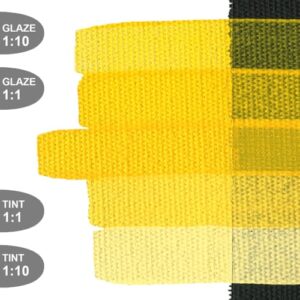
Glazing means applying thin, transparent layers of oil paint over a dry underlayer. Each glaze modifies color and value while letting light pass through and reflect from the bright ground beneath. This gives a luminous, inner glow that opaque paint alone cannot match. Leonardo’s skin tones and shadows rely heavily on this layering.
6. Smooth Gesso Grounds and Imprimitura
Panels were prepared with layers of gesso (traditionally animal glue and chalk or gypsum) sanded very smooth. A thin toned layer, often called imprimitura, could then be applied to set an overall tone and seal the gesso. A smooth, bright ground maximizes the luminosity of glazes and allows fine detail.
7. Linear Perspective and Composition
The Last Supper is a famous demonstration of single-point perspective: lines in the architecture converge toward Christ’s head, focusing attention. Leonardo also favored pyramidal compositions, grouping figures into stable triangular forms, as in the Virgin of the Rocks and the Virgin and Child with Saint Anne.
8. Experimentation (and Its Risks)
Leonardo did not paint the Last Supper in true fresco, which requires painting quickly into wet plaster. Instead he used an experimental technique on dry plaster that allowed slower work and revisions. Unfortunately, the paint did not bond well, and deterioration began within his lifetime. It is a useful reminder that innovation in materials carries risk.
Da Vinci Painting Technique: How to Practice It Today
You do not need Renaissance materials to study these methods. Modern oils, mediums and brushes adapt well. If you want brushes suited to soft blending and fine glazing, look for soft blenders, small rounds and filberts; the Da Vinci brush brand mentioned above simply shares the name and is not historically connected to Leonardo.
Materials
- Smooth, rigid support: a gessoed panel sanded smooth.
- Earth pigments (raw umber, burnt umber, yellow ochre, burnt sienna), plus white, black and a few transparent colors.
- Glazing medium (for example, a linseed-based or alkyd medium).
- Soft synthetic or natural hair brushes: small rounds for detail, filberts for modeling, a soft fan or mop for blending.
- Lint-free cloth.
Step-by-Step Sfumato Study
- Tone the panel. Apply a thin wash of raw umber or a warm gray and let it dry. This is your imprimitura.
- Draw carefully. Transfer a simple subject, such as a sphere, egg or face, with light lines.
- Underpainting (grisaille or brunaille). Model the form in monochrome, umber or gray, establishing light and shadow. Keep edges soft. Let dry fully.
- First glaze. Mix a small amount of transparent color with medium. Apply thinly over the shadows and blend edges softly with a clean, dry brush.
- Repeat thin layers. Each glaze should be subtle. Allow drying between layers; with oils this may take a day or more depending on thickness and medium.
- Refine transitions. Use a very soft, almost dry brush to feather edges. Work light over dark in highlights with slightly more opaque paint.
- Final accents. Add the lightest lights and darkest darks sparingly at the end.
Atmospheric Perspective Exercise
- Paint three layers of hills, one behind the other.
- Nearest hills: warmer, darker, more detail and contrast.
- Middle hills: slightly cooler and lighter, less detail.
- Far hills: pale blue-gray, minimal contrast, soft edges merging with the sky.
Sfumato, Chiaroscuro and Tenebrism Compared
These terms are often mixed up. The table clarifies how they relate.
| Term | What it describes | Leonardo’s use |
|---|---|---|
| Sfumato | Soft, edgeless transitions between tones and colors | Faces, hands, distant landscape |
| Chiaroscuro | Modeling form through contrast of light and shadow | Figures emerging from dark backgrounds |
| Tenebrism | Extreme, theatrical contrast with large areas of near-black | Hinted at in late works; developed more fully by later painters such as Caravaggio |
| Atmospheric perspective | Color and contrast loss with distance | Blue-gray mountain backgrounds |
Sfumato and chiaroscuro often work together: chiaroscuro sets up the big light-and-shadow pattern, and sfumato softens the edges where the two meet.
Can You Do Sfumato in Acrylic?
Yes, with adjustments. Acrylic dries too quickly for long wet blending, but that suits a glaze-based approach. Mix a small amount of transparent color into acrylic glazing medium, apply very thin layers with a soft brush, and let each dry for a few minutes before the next. Dozens of thin glazes can produce surprisingly soft transitions. A retarder or slow-drying acrylic gives a little more time to feather edges. The finish may look slightly flatter than oil, which a gloss or satin varnish can help even out.
Fat Over Lean: Making Layers Last
When building many oil layers, follow the fat-over-lean principle: each successive layer should contain slightly more oil (or flexible medium) than the one below. Lean lower layers dry faster and are less flexible; putting fatter, slower-drying layers on top reduces the risk of cracking. This is critical for glaze-heavy techniques like Leonardo’s.
A Four-Week Practice Plan
Week 1: value studies in pencil or charcoal of simple objects under a single light, focusing on the core shadow, reflected light and cast shadow. Week 2: monochrome oil or acrylic underpaintings of the same objects on smooth panels. Week 3: add two or three transparent glazes over the dried underpaintings, softening every edge except the focal point. Week 4: a small landscape using atmospheric perspective, or a simple portrait study combining all of the above. Small panels around 8 x 10 inches keep each exercise manageable.
Common Mistakes When Imitating Leonardo
- Blending too much wet paint: creates muddy surfaces. Build softness through layers instead.
- Thick glazes: lose transparency and can wrinkle. Keep them very thin.
- Rushing drying time: layering on tacky paint lifts lower layers.
- Using a textured canvas: rough weave fights fine glazes. Use a smooth panel.
- Neglecting drawing: sfumato hides edges, not structure. The drawing beneath must be accurate.
- Uniform softness everywhere: even Leonardo kept a few crisper accents to anchor focal points.
Leonardo’s Ideas You Can Use in Any Medium
- Observe light carefully: note how shadows soften and colors change.
- Design with value: a strong value plan is the backbone of chiaroscuro.
- Push distance with color temperature: cool and lighten what recedes.
- Plan before painting: drawings and studies reduce mistakes.
These principles translate to acrylic (with glazing medium), watercolor (through layered washes) and even digital painting.
FAQs
What was Leonardo da Vinci’s painting technique called?
His best-known technique is sfumato, a method of soft, smoky transitions without hard outlines. He also used chiaroscuro and atmospheric perspective.
What did da Vinci paint on?
Most of his paintings are oil on wood panels such as poplar or walnut, prepared with smooth gesso. The Last Supper was painted on a dry plaster wall.
What paintings did da Vinci paint?
Well-known works include the Mona Lisa, The Last Supper, Lady with an Ermine, the Virgin of the Rocks, Ginevra de’ Benci, the Annunciation and Saint John the Baptist.
How did da Vinci achieve sfumato?
Technical studies suggest he applied many very thin translucent layers of oil paint, gradually adjusting tones so transitions became imperceptible.
Why is The Last Supper deteriorating?
Leonardo used an experimental technique on dry plaster rather than true fresco. The paint did not bond well to the wall and began flaking early.
What brushes are best for da Vinci-style blending?
Soft brushes such as filberts, small rounds and soft blending brushes or mops work best for thin glazes and feathered edges.
Final Thoughts
Leonardo’s methods combine careful observation, patient layering and smooth surfaces. Start with a monochrome sfumato study on a sanded panel, add thin glazes over several sessions, and you will see how much softness comes from restraint. When you are choosing tools for that slow, layered work, our pro tips on Da Vinci oil painting brushes help you pick shapes suited to blending, glazing and fine detail.