PaintingProGuide is reader-supported. When you buy through links on this page we may earn an affiliate commission at no extra cost to you.
Rags are the most used and least discussed tool in a painting studio. Oil painters wipe brushes on them between colors, lift paint with them to pull out highlights, and clean palettes with them at the end of the day. Watercolor and acrylic painters use them to control water on the brush. Choosing the right cleaning rags for painters comes down to lint, absorbency and how many you burn through.
Below are six options, from new lint-free T-shirt cotton for techniques that touch the canvas to bulk boxes, terry towels and microfiber for cleanup. We also cover something many guides skip: rags soaked in linseed oil can self-heat, so storage and disposal deserve a few minutes of attention.
Quick answer: The VALENGO lint-free cotton T-shirt rags are the best all-round choice, especially for oil techniques that touch the canvas. Choose the PPG ProVantage 4 lb bag for steady everyday use, or the SupremePlus 10 lb box for classrooms and heavy oil painting.
Our Top Picks at a Glance
- VALENGO Lint-Free Cotton T-Shirt Rags — Best for oil painters who wipe brushes and lift paint
- PPG ProVantage Bag of White Rags (4 lb) — Best for a mid-size supply for regular studio use
- SupremePlus Recycled White T-Shirt Rags (10 lb) — Best for bulk supply for busy studios and classrooms
- Arkwright Terry Cloth Rags (60 pack) — Best for scrubbing palettes and heavy cleanup
- Nabob Wipers Lint-Free Cotton Cloths (15 pack) — Best for small studios that want reusable cloths
- UNIMADE Microfiber Shop Rags (100 sheets) — Best for glass palettes and lint-sensitive surfaces
| Product | Best For | Key Spec | Key Strength | Price Tier |
|---|---|---|---|---|
| VALENGO Lint-Free Cotton T-Shirt Rags | Oil painters who wipe brushes and lift paint | 100% cotton jersey; 17 x 17 in | Low-lint, microplastic-free | $ |
| PPG ProVantage Bag of White Rags (4 lb) | A mid-size supply for regular studio use | 4 lb; cotton knit mix | Low-lint, processed for absorbency | $$ |
| SupremePlus Recycled White T-Shirt Rags (10 lb) | Bulk supply for busy studios and classrooms | 10 lb box; cotton; about 18 x 18 in | Lowest cost per rag | $$$ |
| Arkwright Terry Cloth Rags (60 pack) | Scrubbing palettes and heavy cleanup | 60 towels; 100% cotton terry; 14 x 17 in | Thick, washable, very absorbent | $$ |
| Nabob Wipers Lint-Free Cotton Cloths (15 pack) | Small studios that want reusable cloths | 15 cloths; ring-spun cotton | Exact-cut, washable | $ |
| UNIMADE Microfiber Shop Rags (100 sheets) | Glass palettes and lint-sensitive surfaces | 100 microfiber sheets; 11 x 9 in | Lint-free, dispenses like tissues | $$ |
How We Chose
These picks come from Amazon listing details and specifications checked in October 2026, how well each rag’s fiber, size and quantity fit painting tasks, and how widely each product is reviewed by Amazon buyers. Most rags are sold for general shop use, so we read the listings for what matters to artists: lint, absorbency, fiber content and size.
Criteria we applied:
- Lint level on a wet painted surface
- Fiber: cotton jersey, cotton knit, terry or microfiber
- Absorbency for oil, solvent and water
- Piece size and consistency
- Quantity relative to typical studio use
- Reusable or disposable
Best Cleaning Rags for Painters Reviewed
1. VALENGO Lint-Free Cotton T-Shirt Rags — Best for oil painters who wipe brushes and lift paint

Old T-shirt cotton is the rag many oil painters reach for, because jersey knit is soft, absorbent and leaves little lint on a wet surface. VALENGO sells new, cut rags in that same material: 100% combed cotton jersey, about 17 by 17 inches, with a low-lint weave that the listing describes as streak-free and safe on glass.
Low lint matters most when you use a rag as a painting tool. Wiping back a toned ground to find highlights, softening an edge, or lifting a glaze all leave fibers behind if the cloth sheds. Being cotton and free of synthetic fibers, these rags also absorb linseed oil and solvent rather than smearing them.
Best suited for: Oil painters who use rags for wiping brushes, lifting paint and rag-toning, and anyone who wants new rather than recycled cloth.
Key features:
- 100% cotton jersey knit
- Pre-cut squares around 17 x 17 inches
- Low-lint weave
- No synthetic fibers
Pros:
- Clean, consistent cloth for painting techniques
- Soft enough for delicate lifting
- Absorbs oil and solvent well
Cons and limitations:
- Costs more per rag than bulk recycled boxes
- Jersey stretches when pulled hard
- Not as tough as terry for scrubbing
Buying consideration: Buy these for the rags that touch the painting and use a cheaper bulk box for wiping brushes and floors.
2. PPG ProVantage Bag of White Rags (4 lb) — Best for a mid-size supply for regular studio use

A 4-pound bag sits in the useful middle: enough rags for weeks of oil painting without a box taking over the studio. PPG describes these as white cotton knit mix rags processed for extra absorbency, with a low-lint composition and a carry handle on the bag.
Knit mix rags vary a little in size and weight from piece to piece, which is fine for brush wiping, cleaning palettes and mopping spills. Sort out the softest, most uniform pieces for techniques where lint would show.
Best suited for: Painters who go through rags steadily and want a manageable bag rather than a 10-pound box.
Key features:
- Four pound bag
- White cotton knit mix
- Processed for absorbency
- Low-lint composition
- Carry handle
Pros:
- Practical quantity for a home studio
- White cloth shows when paint is fully wiped
- Low lint for most painting uses
Cons and limitations:
- Piece sizes vary
- Mix fabric, not 100% cotton as stated in the listing
- Bag is less tidy than a dispenser box
Buying consideration: Keep a few pieces in a closed metal can by the easel and the rest in the bag; that way the working supply never gets mixed with used, oily rags.
3. SupremePlus Recycled White T-Shirt Rags (10 lb) — Best for bulk supply for busy studios and classrooms
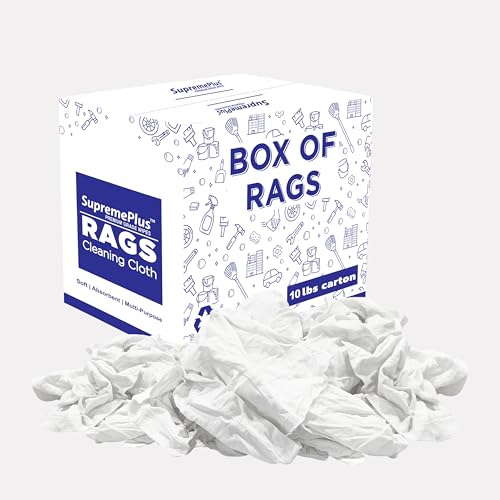
If you teach, run workshops or paint large oils, a 10-pound box makes sense. SupremePlus packs recycled white T-shirt cotton cut to roughly 18-inch squares, and the listing positions them as paint, stain and oil rags as well as general shop rags.
Recycled T-shirt cotton is the classic artist’s rag for a reason: it absorbs paint and solvent and is soft enough to use on the canvas. Because these are recycled, expect occasional seams, hems or small variations; set those aside for floors and tools.
Best suited for: Classrooms, shared studios and oil painters who use rags heavily and want the lowest cost per piece.
Key features:
- Ten pound box
- Recycled white T-shirt cotton
- Pre-cut around 18 x 18 inches
- Listed for paint, stain and oil
Pros:
- Large quantity
- Familiar T-shirt texture painters like
- Good absorbency
Cons and limitations:
- Recycled pieces include occasional seams or hems
- Big box needs storage space
- Highest upfront price tier
Buying consideration: Split the box into smaller bags as soon as it arrives. Rags stored near solvents or in dusty corners pick up contaminants you do not want on a painting.
4. Arkwright Terry Cloth Rags (60 pack) — Best for scrubbing palettes and heavy cleanup

Terry cloth has looped fibers that grab and hold liquid, which makes it ideal for wet cleanup: wiping a glass palette, catching water when you rinse brushes, or mopping a spilled water jar. Arkwright’s pack contains 60 cotton terry towels at 14 by 17 inches, and the listing specifically mentions removing dirt from tools and paintbrushes.
The loops that make terry absorbent also shed lint, so it is not the cloth to press onto a wet oil painting. As a washable workhorse beside the sink or under the water jar, though, it outlasts thinner rags.
Best suited for: Watercolor and acrylic painters who need absorbent, reusable towels for water, and oil painters who want a scrubbing cloth for palettes.
Key features:
- Sixty terry towels
- 100% cotton
- 14 x 17 inch size
- Machine washable
- Carry-handle bag
Pros:
- Very absorbent for water and spills
- Reusable through many wash cycles
- Uniform size
Cons and limitations:
- Terry loops leave lint on wet paint
- Bulkier to store than knit rags
- Overkill for simple brush wiping
Buying consideration: Wash oily terry towels separately and never put solvent-soaked rags in a dryer; let them air out flat first.
5. Nabob Wipers Lint-Free Cotton Cloths (15 pack) — Best for small studios that want reusable cloths

Nabob’s cloths are a smaller-quantity option: 15 exact-cut white cloths made from ring-spun cotton and described as reusable through multiple washes. A small pack suits a watercolorist or occasional oil painter who does not want a large bag of rags around.
Ring-spun cotton is soft and absorbent, and exact cutting avoids the ragged edges that can drop threads onto a painting. Keep a couple for wiping brushes, one for palette cleanup and one reserved for touching the painting surface.
Best suited for: Hobby painters and watercolorists who need a modest supply of clean, reusable cotton cloths.
Key features:
- Fifteen cloths per pack
- Ring-spun cotton
- Exact-cut edges
- Reusable and washable
Pros:
- Tidy, uniform cloths
- Good absorbency
- Low price tier
Cons and limitations:
- Small quantity for heavy oil use
- Listing dimensions are unclear
- Not ideal as disposable oily rags
Buying consideration: Because these are meant to be reused, they work best for water-based media. For oils, disposable or bulk rags are safer and easier.
6. UNIMADE Microfiber Shop Rags (100 sheets) — Best for glass palettes and lint-sensitive surfaces

Microfiber is the outlier on this list. UNIMADE’s 100 white microfiber sheets dispense from a box like tissues, and the listing describes them as lint-free, scratch-free, absorbent and machine washable.
For painters, that makes them useful for cleaning glass palettes, wiping varnished surfaces and polishing frames or acrylic glazing without leaving fibers. Microfiber is less absorbent of oil than cotton and is a synthetic, so it is not our first choice for rag-wiping oil paint, but it is excellent for the cleaning jobs around a painting.
Best suited for: Painters who use glass or acrylic palettes and want lint-free wipes for cleaning and finishing tasks.
Key features:
- 100 microfiber sheets
- Pull-out dispenser box
- Lint-free and scratch-free
- Machine washable
Pros:
- Convenient dispenser
- No lint on glass or varnish
- Reusable
Cons and limitations:
- Synthetic fiber; not microplastic-free
- Less oil-absorbent than cotton
- Small sheet size
Buying consideration: Keep a box near the palette for cleanup and use cotton rags for anything involving heavy oil or solvent.
How Painters Actually Use Rags
It helps to think of rags in two groups. Working rags touch the painting: you use them to wipe back a toned ground, soften an edge, lift a glaze or blot excess medium. They must be low-lint and soft. Cleanup rags never touch the painting: they wipe brushes, palettes, knives and spills, and they can be any absorbent cloth.
Keeping the two groups separate is the simplest improvement most painters can make. A working rag that has also cleaned a muddy palette will put that mud back onto the canvas. Many oil painters keep a small stack of new cotton for working rags and a bulk box for everything else.
Watercolorists use rags differently. A folded cotton cloth beside the palette lets you touch the ferrule to remove excess water and control how wet the brush is before it meets the paper. Terry and thick cotton are best here because they absorb fast.
Oily Rag Safety
Linseed oil and other drying oils cure by oxidizing, and that reaction gives off heat. A crumpled pile of oil-soaked rags can trap the heat until it ignites. This is a well-documented hazard, not a myth.
- Lay used oily rags flat to dry outdoors or in a ventilated area away from heat.
- Or store them in a metal container with a tight lid, partly filled with water, until disposal.
- Never put oil-soaked rags straight into a clothes dryer.
- Check your local rules for disposing of solvent- and oil-soaked materials.
Buying Guide: How to Choose Cleaning Rags for Painting
Lint level
For working rags, low lint is essential. Jersey knit T-shirt cotton and exact-cut cotton shed least. Terry shed more, and recycled rags vary. Microfiber is the most lint-free but is synthetic and less absorbent of oil.
If lint keeps appearing in your paint, the rag is usually the source, not the brush.
Fiber content
Cotton absorbs oil, solvent and water and is the long-standing choice for oil painting. Microfiber excels at cleaning glass and smooth surfaces. Avoid polyester blends for oil work, as they smear rather than absorb.
Absorbency and thickness
Thin jersey is good for precise lifting; thick terry is better for soaking up water and spills. A mix of both covers most studios.
Size and consistency
Squares around 12 to 18 inches fold neatly into a pad that fits in one hand. Uniform pieces are easier to use than random recycled scraps, but cost more.
Quantity and storage
A hobby painter can live with a small pack; an oil painter working several days a week will go through a 4 lb bag quickly. Big boxes save money but need dry, dust-free storage away from solvents.
Reusable or disposable
Water-based paint washes out of cotton easily, so reusable cloths make sense for watercolor and acrylic. Oil-soaked rags are harder to launder and carry the heat risk, so many oil painters treat them as disposable.
More Studio and Craft Guides
Rags are just as useful for craft painting. If you decorate ceramics, see our guide to painting pottery at home, where a lint-free cloth helps wipe back glaze and clean edges. For fresh project ideas to put your studio to use, browse our collection of artistic inspiration and creative ideas for painters.
Common Mistakes to Avoid
- Using the same rag for cleanup and for working on the canvas
- Choosing terry cloth for lifting wet oil paint and leaving lint behind
- Piling oily rags in a trash can or bag
- Putting oil-soaked rags into a dryer
- Using polyester-blend rags that smear oil instead of absorbing it
- Storing a bulk box next to open solvent containers
FAQs
What kind of rags do oil painters use?
Most use cotton, often old or new T-shirt jersey, because it absorbs oil and solvent and leaves little lint. Bulk white cotton rag boxes are a common budget source.
Are microfiber cloths good for painting?
They are excellent for cleaning glass palettes and smooth surfaces because they leave no lint. They absorb oil less well than cotton, so cotton is still better for wiping oil brushes.
Can oily painting rags catch fire?
Yes. Rags soaked in drying oils such as linseed can self-heat as the oil cures. Lay them flat to dry or store them in a sealed metal can with water before disposal.
Can I wash rags used for acrylic paint?
Yes, if the paint is still wet or only lightly dried. Rinse them before acrylic cures and launder normally. Heavily dried acrylic stays in the fabric.
What size rags are best for painters?
Pieces around 12 to 18 inches square fold easily into a hand-size pad and are big enough to wipe a large brush without getting paint on your fingers.
Do watercolor painters need rags?
Yes. A folded cotton rag or towel beside the palette helps you control how much water stays in the brush, and it is useful for blotting and lifting color.
Final Recommendation
For rags that touch the painting, the VALENGO lint-free T-shirt cotton is the cleanest option. For general wiping and cleanup, the PPG 4 lb bag fits most home studios, while the SupremePlus 10 lb box suits classrooms and heavy oil painters who want the lowest cost per rag.
Add a pack of Arkwright terry towels if you work with lots of water, and a box of UNIMADE microfiber if you clean glass palettes. Whatever you choose, store oily rags safely; it takes a minute and removes a real risk from the studio.