Quick answer: To restore stiff paint brushes, first find out what is making them stiff. Hardened paint near the ferrule is the usual cause: soak only the hairs in a matching solvent (rubbing alcohol or brush restorer for acrylic, mineral spirits or safflower oil for oil), work the softened paint out, then wash with mild soap. Finish by conditioning natural hair, reshaping synthetic brushes with a brief hot-water dip if needed, and drying the brush flat with its shape set.
A stiff brush is usually a dirty brush. Paint that was never fully washed out of the heel slowly hardens, layer by layer, until the hairs feel crunchy and refuse to flex. Less often, the stiffness comes from leftover sizing, hard-water minerals, or natural hair that has dried out from harsh cleaning. Each cause needs a slightly different fix, and using the wrong one wastes time or damages the brush.
This guide works like a restoration plan: diagnose the cause, start with the gentlest treatment, and escalate only if needed. It also covers synthetic, oil and miniature brushes specifically, and how to tell when a brush cannot come back.
Diagnose Before You Treat
Spend one minute examining the brush. It tells you which treatment to start with.
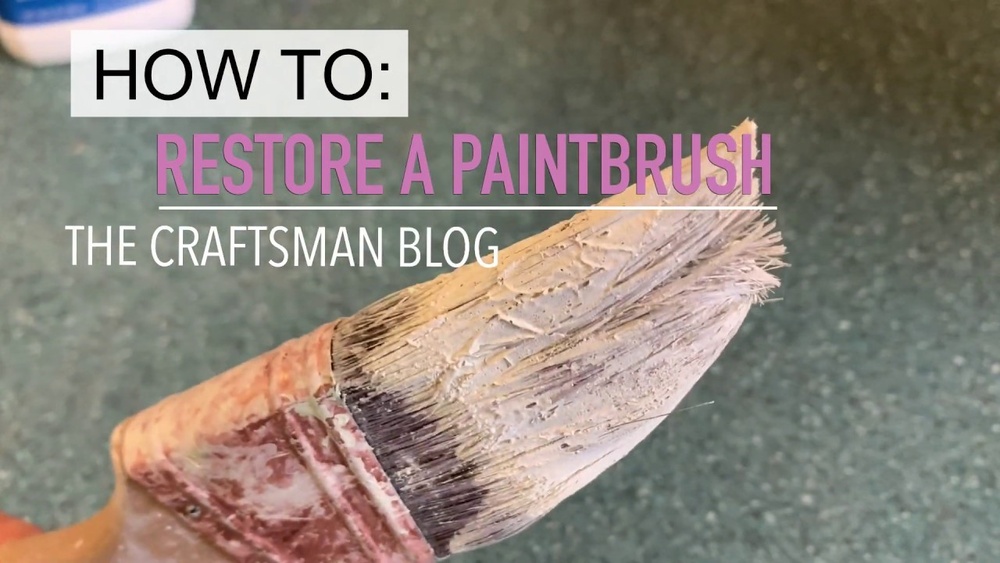
- Bend test. Gently flex the hairs. If they bend near the tip but stay rigid near the ferrule, paint has hardened in the heel.
- Look for color. Spread the hairs. Visible paint at the base, or a dark band just above the ferrule, confirms buildup.
- Feel the hairs. Uniformly stiff, glossy hairs on a new brush point to sizing. Dry, rough, brittle-feeling natural hair suggests it has been stripped of its oils.
- Check the water. If brushes feel stiff even when clean and you live in a hard-water area, mineral residue may be a factor.
- Recall the paint. Was the brush last used with acrylic, oil, watercolor or something else? The solvent must match.
| What you find | Likely cause | Start with |
|---|---|---|
| Rigid heel, paint at base | Dried paint buildup | Solvent soak matched to paint |
| New brush, glossy and stiff all over | Factory sizing | Lukewarm water rinse |
| Dry, rough natural hair | Over-cleaning, solvent stripping | Conditioner treatment |
| Clean but slightly crunchy | Soap or mineral residue | Thorough rinse, distilled water final rinse |
| Bent or kinked synthetic | Shape memory from poor drying | Hot-water reshape |
If the ferrule is loose or the hairs pull out easily during this check, restoration may not be worth it. In that case, a well-built replacement from our guide to the best paint brushes for long-term use is often the better investment.
The Restoration Ladder: Gentle to Strong
Work up the ladder, stopping as soon as the brush is flexible again. Every level is harder on the brush than the one before.
Level 1: Warm Soapy Water
Good for watercolor, gouache, fresh acrylic and light buildup.
- Soak the hairs only in lukewarm water with a little mild soap for 10 to 15 minutes.
- Lather the brush in your palm, pushing soap into the heel.
- Rinse and repeat until the lather is clean.
Level 2: Conditioner Treatment
For natural hair that feels dry or brittle, and as a finishing step after any solvent.
- Work a pea-sized amount of hair conditioner into the clean, damp hairs.
- Leave for 5 to 15 minutes.
- Rinse lightly, reshape and dry.
Level 3: Solvent or Restorer Soak
For hardened acrylic or oil paint in the heel.
- Suspend the brush so only the hairs sit in the liquid. Clip it to the jar edge with a clothespin. The ferrule should stay dry.
- Use rubbing alcohol or a commercial brush restorer for acrylic. Use odorless mineral spirits or safflower oil for oil paint.
- Soak 30 minutes to a few hours, checking every half hour.
- Work the softened paint out from the heel to the tip with your fingers or a brush comb.
- Wash with soap several times, then condition (Level 2).
Level 4: Heat Reshaping for Synthetics
For synthetic brushes that are clean but bent, kinked or splayed.
- Heat water until very hot but not at a full boil.
- Dip the hairs only for 10 to 30 seconds.
- Reshape immediately and rinse in cool water to set the shape.
- Dry flat or hairs-down.
Do not use this on natural hair, and keep dips short; too much heat can frizz synthetic filaments permanently.
How to Clean Paint Brushes That Are Stiff Without Harsh Chemicals
If you prefer to avoid alcohol and solvents, there are gentler options, although they work more slowly:
- For oil paint: Safflower or linseed oil softens oil paint effectively. Soak the hairs for several hours or overnight, then wash with dish soap.
- For acrylic: Repeated soaks in warm soapy water can loosen paint that is only a day or two old. Some painters report success with a soak in warm white vinegar, but results vary and the warm liquid should not reach the ferrule.
- For watercolor and gouache: Warm water and soap are always enough.
Fully cured acrylic that has been in a brush for weeks usually needs alcohol or a restorer. Gentle methods alone may not shift it.
How to Restore Synthetic Paint Brushes
Synthetic brushes are the most common acrylic brushes, and the most common to find stiff with dried acrylic.
- Soak the hairs in rubbing alcohol or brush restorer (Level 3).
- Comb out softened paint.
- Wash well with soap.
- If the shape is distorted, do a short hot-water reshape (Level 4).
- Dry with the shape set. For flats, clamp the head lightly between folded paper to keep the edge straight.
Synthetics do not need conditioner in most cases, though a tiny amount can make some filaments feel smoother.
How to Restore Oil Painting Brushes
Oil paint hardens slowly through oxidation, so even a brush that has sat for several days often recovers.
- Suspend the bristles in safflower oil or odorless mineral spirits.
- Soak for a few hours. Very old buildup may need overnight soaking in oil.
- Press the bristles on a rag, working from ferrule to tip.
- Wash with brush soap until the lather stays white. This can take five or six rounds.
- Condition hog bristle and sable lightly, reshape and dry.
Hog bristle brushes can be reshaped by wrapping the head in paper while damp and leaving it to dry overnight. Do not cut the natural split ends, which help the brush hold paint.
How to Restore Miniature Paint Brushes
Tiny detail brushes stiffen easily, because even a small amount of dried paint fills most of the head.
- Use a brush restorer or alcohol, but check every 10 to 15 minutes; small brushes soften quickly.
- Work paint out very gently between your fingertips. A comb is usually too coarse.
- Set the point with a small amount of brush soap and let it dry overnight.
- Rinse the soap out fully before the next painting session.
Because miniature brushes are often used with thin, fast-drying acrylics, rinsing every minute or two while painting is the best prevention.
Restoring Watercolor Brushes
Watercolor brushes rarely go stiff from paint, because watercolor rewets. When they do feel stiff, the cause is usually leftover sizing on a newer brush, residue from gum arabic in the paint, or natural hair that has dried out.
- Swirl the brush in lukewarm water for a minute or two to dissolve any gum or pigment.
- Wash gently with a mild soap, then rinse until the water runs clear.
- Condition sable, squirrel or goat hair with a small amount of hair conditioner and rinse lightly.
- Reshape the point and dry flat or hairs-down.
If a watercolor brush has been used with acrylic ink or masking fluid, treat it like an acrylic brush, since those dry permanently.
Hard Water and Residue: A Hidden Cause
Brushes that feel slightly crunchy even after thorough cleaning may be holding mineral or soap residue. In areas with hard tap water, minerals can be left behind on the hairs as water evaporates, and some soaps react with those minerals to form a film.
- Rinse more thoroughly than seems necessary after washing.
- Do a final rinse in distilled or filtered water once in a while.
- Switch to a brush soap or a mild, dye-free dish soap if your current soap seems to leave a film.
- Avoid bar soaps with heavy moisturizers or fragrances, which can coat the hairs.
Tools That Help With Restoration
- Clothespins or binder clips to suspend brushes in jars.
- Small glass jars with lids for soaking and reusing solvent.
- A brush comb for working paint out of flats and filberts.
- A cake of brush soap for repeated lathering.
- Nitrile gloves for handling alcohol and mineral spirits.
- Paper towels or lint-free rags for blotting and pressing paint out.
Setting the Shape After Restoration
A restored brush needs help to hold its shape again:
- Rounds: Roll the wet hairs to a point, coat lightly with mild bar soap or gum arabic, and dry.
- Flats and brights: Press into a sharp chisel and dry clamped between folded paper.
- Filberts: Shape into a soft oval with your fingers.
- Stubborn shapes: Wrap in a strip of paper towel from ferrule to tip and dry for 24 hours.
Rinse any setting agent out before painting.
What to Expect: Realistic Outcomes
| Situation | Usual outcome |
|---|---|
| Acrylic dried a few hours to a day | Good recovery likely |
| Acrylic dried for weeks | Partial recovery; may suit rough work |
| Oil paint dried a few days | Good recovery likely with oil or solvent soak |
| Natural hair dried and brittle | Often improves noticeably with conditioner |
| Synthetic bent from poor drying | Usually restored with hot-water reshape |
| Synthetic frizzed from heat | Unlikely to fully recover |
| Loose ferrule with shedding | Restoration does not fix construction |
Should You Restore or Replace?
Restoration costs time, solvent and some wear on the brush. A quick way to decide:
- Restore quality natural hair brushes, favorite shapes, and anything with a tight ferrule and intact hairs.
- Restore lightly, then repurpose inexpensive brushes that only partly recover; they still make good texture, mixing or gesso brushes.
- Replace brushes with loose ferrules, heavy shedding or hairs worn down to stubs, since no soak fixes construction or lost hair.
Common Restoration Mistakes
- Soaking the whole brush. Solvent in the ferrule dissolves glue and causes shedding.
- Resting brushes on their tips in the jar. This bends the hairs permanently during a long soak.
- Using acetone on handles. It can strip lacquer quickly.
- Boiling natural hair. Heat makes it brittle.
- Skipping the soap wash. Solvent residue left in the brush stiffens it again.
- Pulling dried paint out with fingernails. It breaks hairs.
Preventing Stiff Brushes in the Future
- Keep paint on the front two thirds of the hairs.
- Rinse acrylic brushes often during painting.
- Wash with soap after every session, until the lather is clean.
- Condition natural hair occasionally.
- Do a final rinse in distilled water if you have very hard tap water.
- Dry brushes flat or hairs-down, with their shape set.
A good set of everyday synthetics, like the ones covered in our Princeton paint brush set review, will last much longer with these habits than without them.
FAQs
How do you restore a hard paint brush?
Soak only the hairs in a solvent that matches the paint, work out the softened paint, wash with soap, then condition and reshape. Start gentle and escalate only if needed.
How do you clean paint brushes that are stiff?
Use warm soapy water for water-based paints, rubbing alcohol or brush restorer for acrylic, and mineral spirits or safflower oil for oil. Always finish with a thorough soap wash.
Can you restore synthetic paint brushes?
Yes. Remove dried paint with alcohol or restorer, wash, then reshape with a brief hot-water dip if the hairs are bent. Heat-frizzed synthetics rarely fully recover.
How do you restore oil painting brushes?
Soak the bristles in safflower oil or mineral spirits for several hours, work out the paint, wash repeatedly with soap and condition natural bristles before drying.
Does fabric softener restore paint brushes?
Some painters use diluted fabric softener to soften hairs after cleaning. It can help the feel, but it will not remove dried paint, which is the usual cause of stiffness.
When should I give up on a stiff brush?
If the ferrule is loose, hairs shed heavily, or paint will not release after two or three soaks, retire the brush to rough tasks like texture or gesso.
Final Thoughts
Most stiff brushes are restorable once you identify the cause and match the treatment to it. Start with soap and water, move up to a solvent soak if needed, and finish by conditioning and setting the shape. If a brush has reached the end of its life, our guide to durable artist brushes that stay flexible can help you choose a replacement that stands up to regular cleaning.