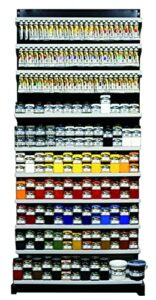
Acrylic paint tube sizes run from tiny 12 ml and 22 ml tubes in student sets up to 500 ml and liter containers for studio use, with the 59 ml (2 oz) and 120 ml (about 4 oz) tubes sitting in the middle as the most common choices for working painters. Acrylic paint tubes 120ml in volume (about 4 oz) are often the point where price per milliliter drops noticeably while the tube is still easy to squeeze and store.
The right size depends less on budget than on how fast you use a particular color. White and a few staples empty quickly; a high-strength blue might last for years. This guide explains each common size, what it is good for, and how to match tube size to color.
Quick answer: Common acrylic tube sizes are 22 ml (sets and sampling), 59 to 75 ml (standard individual tubes), 118 to 120 ml (the popular “large tube”), 138 to 250 ml (bigger studio tubes) and 473 to 500 ml or more (jars and pump bottles). Buy 120 ml or larger for white and colors you use daily, 59 to 75 ml for regular mixers, and 22 to 59 ml for high-strength or occasional colors. Larger sizes usually cost less per milliliter, but only save money if you use the paint before it dries out.
Why Acrylic Paint Tube Sizes Matter More Than They Seem
Paint is sold by volume, but it is used by color. A painter might empty a white tube every couple of weeks and still have most of a phthalo green tube a year later. Buying the same tube size for every color ignores that difference and leads to two problems: running out of the colors you need, and wasting money on colors that sit unused until they harden.
Tube size also affects handling. A 22 ml tube is easy to control but empties after a few paintings. A 500 ml container is economical but awkward to dispense small amounts from, and a large pool of paint exposed to air every time you open it is more likely to skin over.
Heavy body paint makes this choice especially relevant, because thick application uses paint faster than fluid techniques. If you are already leaning toward bigger sizes, our guide to large-tube heavy body acrylic options is a good companion to this explainer.
Common Acrylic Paint Tube Sizes at a Glance
| Size | Approx. US equivalent | Where you see it | Best for |
|---|---|---|---|
| 12 to 22 ml | About 0.4 to 0.75 oz | Student and sampler sets | Trying colors, travel, kids and classes |
| 36 to 38 ml | About 1.25 oz | Some artist lines and sets | Occasional colors, strong pigments |
| 59 to 60 ml | 2 oz | Standard artist individual tubes | Regular mixing colors |
| 75 ml | About 2.5 oz | Many European and student brands | Regular mixing colors |
| 118 to 120 ml | About 4 oz | “Large tube” in many ranges | White, earths and daily staples |
| 138 ml | About 4.65 oz | Some student lines | Budget staples and practice |
| 200 to 250 ml | About 6.8 to 8.5 oz | Studio tubes | White, background colors, large canvases |
| 473 to 500 ml | About 16 oz | Jars and pump bottles | White, gesso-like coverage, murals |
| 946 ml to 1 L and up | About 32 oz and up | Jars, bottles, tubs | Classrooms, murals, pouring |
Exact sizes vary by brand and product line. Some manufacturers round to metric (60 ml, 120 ml, 250 ml) and others to US fluid ounces (2 oz, 4 oz, 8 oz), which is why you see 118 ml and 120 ml labeled as near-equivalents. Heavy body acrylics, fluid acrylics and soft body acrylics often come in different container types even within one brand.
Small Tubes: 12 ml to 38 ml
Small tubes dominate starter and sampler sets. Their main job is to let you try many colors without much money tied up in any one of them.
When small tubes make sense
- High tinting strength colors. Phthalo blue, phthalo green, quinacridone magenta and dioxazine purple are so strong that a little goes a long way. A small tube can last a surprisingly long time.
- Specialty colors. Metallics, interference colors and fluorescents are often used sparingly.
- Testing a brand. Before committing to large tubes of a new line, a small tube shows how it handles.
- Travel and plein air. Lighter kit, less to carry.
Drawbacks
Price per milliliter is usually highest at this size. Tiny tubes also empty quickly for any color you mix heavily, so a set of twelve 22 ml tubes often leaves you with a nearly empty white and several barely used colors within a few weeks.
Standard Tubes: 59 ml and 75 ml
The 2 oz (59 ml) and 75 ml tubes are the standard individual tubes of acrylic paint for most painters. They are large enough for repeated use and small enough to keep a broad palette without spending a fortune.
This size suits the core mixing colors most painters keep on hand: two yellows, two reds, ultramarine and an earth or two. It also suits colors you reach for every session but in moderate quantities, like burnt umber in a landscape palette or a cadmium red substitute in portrait work.
If you are building your palette one color at a time rather than buying a set, this is the sensible default size. Upgrade individual colors to larger tubes once you notice which ones keep running out.
Acrylic Paint Tubes 120ml: The Popular Large Size
The 118 to 120 ml tube is the size many painters think of as a “big tube.” It roughly doubles the volume of a standard tube, and in many ranges the price per milliliter drops meaningfully at this point.
Why 120 ml is a sweet spot
- Value without waste. Large enough to save money on heavily used colors, small enough that most painters will use it before it ages badly.
- Still a tube. You squeeze out exactly what you need, which keeps the remaining paint sealed. Jars expose the whole surface every time you open them.
- Easy to store. Fits in a standard drawer or caddy alongside smaller tubes.
What to buy at 120 ml
Titanium white is the obvious first candidate, because it goes into a large share of mixtures. Mars black or ivory black (if you use black), yellow ochre, burnt umber and ultramarine are next for many painters. Heavy body acrylics are frequently bought in this size because their thick consistency is used generously for impasto and texture. If you want more background on that paint type, see our explainer on what heavy body acrylic paint is and when to use it.
For a comparison of heavy body lines that offer this size and larger, our guide to heavy body acrylics sold in large tubes looks at consistency, coverage and value.
Big Tubes of Paint: 138 ml to 250 ml
Above 120 ml, tubes become studio-sized. Some student lines use a 138 ml tube as their standard large size. Artist ranges may offer 200 ml or 250 ml tubes for popular colors, especially white.
Big tubes of paint make the most sense when:
- You work on canvases larger than about 24 x 36 inches
- You paint backgrounds or flat color fields
- You use a lot of impasto or palette knife work
- You run a class or share supplies
The trade-off is handling. A large, heavy tube can be harder to squeeze evenly, and once it is half empty you may need to roll it from the bottom to get paint out. Some painters decant a portion into a small airtight container for daily use and keep the big tube sealed.
Jars and Bottles: 473 ml and Up
Once you reach 16 oz (about 473 ml) and larger, most acrylic paint comes in jars, tubs or pump bottles instead of tubes. This format suits fluid and soft body acrylics, gesso, mediums, and white for very large or frequent work.
Advantages
- Lowest price per milliliter in most ranges
- Easy to scoop with a palette knife
- Pump bottles dispense fluid paint cleanly
Disadvantages
- Every time the lid comes off, the whole surface is exposed to air
- Skins can form around the rim and fall back into the paint
- Contamination from dirty knives or brushes affects the whole jar
Use a clean knife every time, wipe the rim before closing, and keep the lid tightly sealed. A thin layer of plastic wrap pressed onto the paint surface can help slow skinning in a partly used jar.
Matching Tube Size to Color
The most efficient palette uses different sizes for different jobs. Here is a simple framework.
| Color type | Examples | Suggested size | Why |
|---|---|---|---|
| White | Titanium white | 120 ml to 250 ml or larger | Used in most mixtures and runs out first |
| Earth colors | Yellow ochre, burnt sienna, burnt umber | 59 ml to 120 ml | Frequently used, lower tinting strength |
| Core primaries | Cadmium or hansa yellow, cadmium or naphthol red, ultramarine | 59 ml to 120 ml | Workhorse mixers |
| High-strength organics | Phthalo blue and green, quinacridones, dioxazine purple | 22 ml to 59 ml | A little colors a lot |
| Black | Mars black, carbon black | 59 ml to 120 ml | Depends heavily on your style |
| Specialty | Metallic, fluorescent, interference | 22 ml to 59 ml | Used sparingly |
Tinting strength is the hidden factor. Two colors can cost the same per tube but go dramatically different distances, because a strong pigment shifts a mixture with a tiny amount. Buying a strong blue in a large tube often means paying up front for paint you will not touch for years.
Price per Milliliter: How to Compare Fairly
Larger tubes are usually cheaper per milliliter, but the difference varies by brand, color and retailer. To compare fairly:
- Divide the price by the volume in milliliters for each size.
- Compare within the same paint line and the same color, since series pricing means a cadmium costs more than an earth at every size.
- Check whether the larger size is the same paint. Occasionally, large jars in a “studio” or “value” line are a different formulation from the artist tubes.
- Factor in waste. A big tube that dries out half full is more expensive than a small tube used completely.
Individual Tubes of Acrylic Paint vs Sets
Sets are convenient and often cheap per tube, but they lock you into uniform sizes. The common pattern is a set where every color is 22 ml or 59 ml, white included. White empties first, the strong organics last almost forever, and you end up buying white again within weeks.
Buying individual tubes lets you size each color to how you paint. A practical approach is to start with a small set to discover your preferences, then replace colors individually as they run out, moving the heavily used ones up to larger tubes. For white in particular, our article on why white is worth buying in a large tube covers how much to buy and why.
Keeping Large Tubes Usable
Bigger tubes last longer, so storage habits matter more.
- Clean the threads and cap before closing. Dried paint in the threads stops the cap sealing and can make it impossible to unscrew later.
- Store tubes upright or flat in a cool place away from direct sunlight and heaters. Avoid freezing; many acrylics carry warnings against frost.
- Squeeze from the bottom and roll the tube as it empties, to keep air out.
- If a cap sticks, run warm water over it briefly, or use a rubber jar opener. Avoid pliers, which can split the tube neck.
- Do not add water to the tube. It can encourage mold and changes the paint’s consistency.
FAQs
How much is 120 ml of acrylic paint?
About 4 US fluid ounces, roughly half a cup. In practice, it is about twice the volume of a standard 59 ml artist tube and enough for many small to medium paintings, depending on how thickly you paint.
Is a 120 ml tube of acrylic paint worth it?
For colors you use often, such as white, earths and core primaries, it usually is, because price per milliliter is generally lower. For high-strength or rarely used colors, a smaller tube is often the better value.
What is the most common acrylic paint tube size?
For individual artist tubes, 59 ml (2 oz) and 75 ml are very common. Sets typically use 12 ml to 22 ml tubes, and large tubes for staples are often around 118 to 120 ml.
Do big tubes of acrylic paint dry out?
They can if the cap is not sealing properly or if the tube sits for years. Cleaning the threads, closing tightly and storing tubes away from heat helps them last. Jars are more prone to skinning than tubes.
Should I buy all colors in the same tube size?
Usually not. Size each color to how fast you use it. Buy white large, core mixers medium, and strong pigments small.
Are 22 ml acrylic tubes good for beginners?
They are good for trying colors cheaply, but white and frequently used colors will run out fast. Pairing a small set with a separate large white is a common, economical approach.
Next Step
Once you know which of your colors deserve the bigger sizes, compare the lines that offer them. Our review of the best heavy body acrylic paints in large tubes looks at value per milliliter, consistency and color range so you can stock up on staples sensibly.