
PaintingProGuide is reader-supported. When you buy through links on this page we may earn an affiliate commission at no extra cost to you.
Birch wood panels for painting solve a problem canvas never will: they do not flex. Oil painters get a surface that will not crack their paint film as it ages, acrylic pourers get a dead-flat plane for cells and swipes, and encaustic artists get the rigid, absorbent ground that hot wax demands. The market has settled into two camps, pre-made cradled birch panels sold in multipacks and larger single cradled panels for statement pieces, and this guide covers the best of both as they appear on Amazon right now, from 5 x 7 inch minis to a 24 x 36 inch cradled board.
Quick answer: For most acrylic and oil painters, the Arteza 9 x 12 inch cradled birch panels (pack of 5) are the best all-round buy: a standard size, a true birch face and a cradle that hangs without a frame. Encaustic and pour artists who work square should look at the Arteza 8 x 8 or 10 x 10 packs. For large work, U.S. Art Supply’s 16 x 20 and 24 x 36 inch unfinished cradled panels are the practical options, and the FSWCCK 12-pack of 5 x 7 cradled minis is the pick for small studies and markets.
Our Top Picks at a Glance
- Arteza Cradled Birch Panels, 9 x 12 in, Pack of 5 — Best overall for acrylic and oil
- Arteza Cradled Birch Boards, 8 x 8 in, Pack of 5 — Best square panel for encaustic and small series
- U.S. Art Supply 12 x 12 in Unfinished Cradled Wood Panel — Best mid-size square
- U.S. Art Supply 16 x 20 in Unfinished Cradled Wood Panel — Best for standard-frame-size paintings
- U.S. Art Supply 24 x 36 in Unfinished Cradled Wood Panel — Best large statement panel
- Tenceur 20 x 20 in Birch Wood Panel Boards, 4 Pack, 3/4 in Deep — Best large square for pouring and mixed media
- FSWCCK 5 x 7 in Cradled Wood Panels, 12 Pack — Best minis for studies and markets
Comparison Table
| Product | Best For | Key Spec (from title) | Key Strength | Who Should Skip It |
|---|---|---|---|---|
| Arteza 9 x 12 Cradled Birch, 5-pack | Acrylic and oil, everyday work | 9 x 12 in, pack of 5, cradled birch | Standard size, birch face, multipack value | Painters who want a single large panel |
| Arteza 8 x 8 Cradled Birch, 5-pack | Encaustic, small square series | 8 x 8 in, pack of 5, cradled birch | Compact square, easy to gallery-hang in groups | Anyone painting rectangular compositions |
| U.S. Art Supply 12 x 12 Cradled | Mid-size square work | 12 x 12 in, unfinished cradled wood | Popular square size, sold individually | Buyers needing a stated birch face |
| U.S. Art Supply 16 x 20 Cradled | Standard frame-size paintings | 16 x 20 in, unfinished cradled wood | Matches common frames and mats | Small-space painters |
| U.S. Art Supply 24 x 36 Cradled | Large statement pieces | 24 x 36 in, unfinished cradled wood | Big rigid surface without stretching canvas | Anyone without room to store or ship it |
| Tenceur 20 x 20 Birch, 4-pack | Pouring, mixed media, wood burning | 20 x 20 in, 4 pack, 3/4 in deep, birch | Large square with a stated depth, multipack | Painters who want a deep gallery profile |
| FSWCCK 5 x 7 Cradled, 12-pack | Studies, gifts, craft markets | 5 x 7 in, 12 pack, cradled wood canvas | Dozen small panels for the price of one large | Anyone painting larger than a postcard |
How We Chose
These picks are drawn from Amazon’s listings for birch wood panels for painting, collected in November 2026, judged on how well each panel’s stated size, depth, pack count and wood type suit the mediums people put on wood: oil, acrylic, pouring, encaustic and mixed media. We have not painted on, sanded or measured these specific panels for this article; every spec quoted comes from the listing title, and where a title does not state birch or a depth, we say so. Our notes on preparation and behavior rest on long-established practice for painting on wood.
What matters in a painting panel:
- Face material: a stated birch face takes gesso evenly and has a tight grain; unspecified plywood may be fine but is not guaranteed.
- Cradle depth: 3/4 inch is standard; deeper cradles read as gallery-wrapped and need no frame.
- Size and proportion: squares for encaustic and pours, standard rectangles for framing.
- Pack count: multipacks lower cost per panel for series work; singles suit large pieces.
- Finish state: unfinished panels need sealing and priming; that is a step, not a flaw.
- Flatness and warp resistance: the cradle’s job; wider panels need stronger cradles.
Best Birch Wood Panels for Painting Reviewed
1. Arteza Wood Panels, 9 x 12 in, Pack of 5, Cradled Birch — Best Overall for Acrylic and Oil

Nine by twelve is the size most painters already work at on paper and canvas, and the Arteza listing gives you five cradled birch boards at that size. The title states birch, which matters: birch has a fine, closed grain that sands smooth and takes gesso without the raised fibers you get on softer plywoods. The cradle, a wooden frame glued behind the face, keeps the panel flat and gives it enough depth to hang without framing.
Five panels is the right number for a small series or a month of regular painting. Because the face is unfinished, plan on sealing the wood and applying two or three coats of gesso before oil or acrylic, or leaving it raw for encaustic.
Best suited for: acrylic and oil painters who want a rigid, archival alternative to canvas at a familiar size.
Key features
- 9 x 12 inch panels, pack of 5 (from the listing title)
- Cradled birch construction
- Unfinished face ready for sealing and priming
- Cradle allows frameless hanging
Pros
- Stated birch face for smooth priming
- Standard size fits common frames if you choose to frame
- Multipack value for series work
Cons / limitations
- Needs sealing and gesso before paint; not pre-primed
- Cradle depth not stated in the title; check the product page
- Five identical panels is more than a one-off project needs
Buying consideration: if you plan to paint the cradle sides as part of the piece, confirm the depth on the product page so you know how much edge you are working with.
2. Arteza Wood Panels, 8 x 8 in, Pack of 5, Cradled Birch — Best Square for Encaustic and Small Series

Encaustic painters favor small squares because wax is applied and fused in passes with a heat gun or torch, and a compact rigid panel keeps every pass manageable. The Arteza 8 x 8 cradled birch pack suits that workflow and also makes a tidy grid when several finished panels hang together. Raw birch is a traditional encaustic ground because the wax bonds to the absorbent wood; for acrylic or oil, seal and gesso first.
Best suited for: encaustic artists, pour painters who work small, and anyone building a multi-panel wall grouping.
Key features
- 8 x 8 inch panels, pack of 5 (listing title)
- Cradled birch boards
- Square format for grid displays
Pros
- Compact size suits wax, pour and mixed media
- Birch face takes encaustic medium directly
- Easy to store and ship
Cons / limitations
- Too small for most representational painting
- Depth to be confirmed on the product page
Buying consideration: for encaustic, leave the face raw and sealed only with encaustic gesso or medium; ordinary acrylic gesso will not hold wax reliably.
3. U.S. Art Supply 12 x 12 in Unfinished Cradled Wood Panel — Best Mid-Size Square

Twelve by twelve is the square most people want once 8 x 8 starts to feel cramped. U.S. Art Supply’s listing describes an unfinished cradled wood panel; note that the title does not specify birch, so if a birch face is essential to you, check the product description. As an unfinished cradled board it serves the same purpose: a rigid, flat painting support that hangs without a frame once the sides are painted or stained.
Best suited for: acrylic painters and mixed media artists working in square format who want one panel rather than a pack.
Key features
- 12 x 12 inch unfinished cradled wood panel (listing title)
- Sold as a single panel
- Cradled back for flatness and hanging
Pros
- Popular square size for modern wall art
- Buy one at a time for one-off pieces
Cons / limitations
- Wood species not stated in the title
- Unfinished; needs sealing and priming
Buying consideration: if the product page confirms a hardwood veneer face, treat it like birch; if it is a softer ply, sand lightly and apply an extra coat of gesso to fill the grain.
4. U.S. Art Supply 16 x 20 in Unfinished Cradled Wood Panel — Best for Standard-Frame-Size Paintings

Sixteen by twenty is a classic painting size with frames widely available, and a cradled wood panel at that scale is where rigidity starts to pay off. A stretched canvas of this size can be dented from behind in storage; a cradled panel cannot. The U.S. Art Supply listing again describes an unfinished cradled wood panel without naming the species, so confirm on the product page if that matters for your technique.
Oil painters in particular benefit here: a rigid support is one of the strongest predictors of a paint film that stays crack-free for decades.
Best suited for: oil and acrylic painters producing finished work for framing or frameless display.
Key features
- 16 x 20 inch unfinished cradled wood panel (listing title)
- Standard proportion that matches off-the-shelf frames
- Cradled back
Pros
- Rigid support for long-lived oil paintings
- Frames and floater frames easy to source at this size
Cons / limitations
- Wood species not stated in title
- Heavier than canvas of the same size
Buying consideration: seal both the face and the cradle sides before priming; sealing only the front invites uneven moisture uptake and warp.
5. U.S. Art Supply 24 x 36 in Unfinished Cradled Wood Panel — Best Large Statement Panel
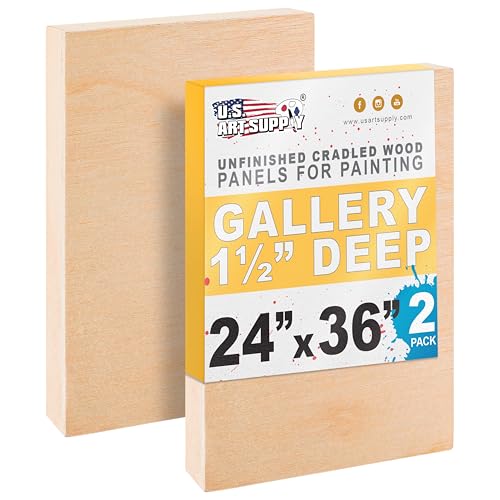
At 24 x 36 inches a cradled panel becomes a serious piece of furniture, and that is the point. Large pours, big abstract works and oil paintings meant to anchor a room all benefit from a surface that will not sag or flex, and buying it pre-cradled saves hours of joinery. The listing describes an unfinished cradled wood panel; expect to seal, sand and prime it before paint.
Handle the logistics before you order: you will need a flat place to prime it, a wall or easel that takes the weight, and hanging hardware rated for a wood panel rather than picture wire alone.
Best suited for: painters making large statement pieces, pour artists working at scale and anyone replacing a large stretched canvas with something sturdier.
Key features
- 24 x 36 inch unfinished cradled wood panel (listing title)
- Cradled construction for flatness at size
- Sold individually
Pros
- Rigid large surface without stretching canvas
- Impressive presence when hung frameless
Cons / limitations
- Heavy; needs sturdy hanging hardware
- Large panels are more prone to warp if sealed on one side only
- Species not stated in the title
Buying consideration: prime both sides or at least seal the back; a 2 x 3 foot panel sealed on one face is the classic recipe for a cupped board.
6. Tenceur 20 x 20 in Birch Wood Panel Boards, 4 Pack, 3/4 in Deep — Best Large Square for Pouring and Mixed Media
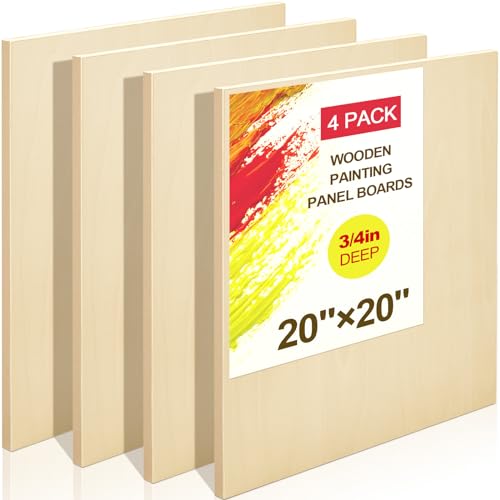
This is the most fully described listing in the group: four 20 x 20 inch birch panels with a stated 3/4 inch depth, marketed for pouring, mixed media, wood burning, acrylic and oil. A 3/4 inch cradle is the standard depth, enough to hang frameless and shallow enough to drop into a floater frame later. Four large squares make a strong series or a four-panel installation.
Pour artists like a square this size because the composition reads from any orientation and the flat, rigid surface keeps cells from drifting as the paint levels.
Best suited for: acrylic pour artists, mixed media painters and wood-burning artists working large.
Key features
- 20 x 20 inch birch panels, 4 pack (listing title)
- 3/4 inch depth stated
- Listed for pouring, acrylic, oil, mixed media and wood burning
Pros
- Stated birch and depth remove guesswork
- Multipack of large panels is unusual and useful for series
Cons / limitations
- 3/4 inch reads shallow if you want a deep gallery profile
- Four 20-inch panels take real storage space
Buying consideration: for pours, seal the raw birch first; unsealed wood draws moisture from the pour and can create dull patches.
7. FSWCCK 5 x 7 in Unfinished Cradled Wood Panels, 12 Pack — Best Minis for Studies and Markets
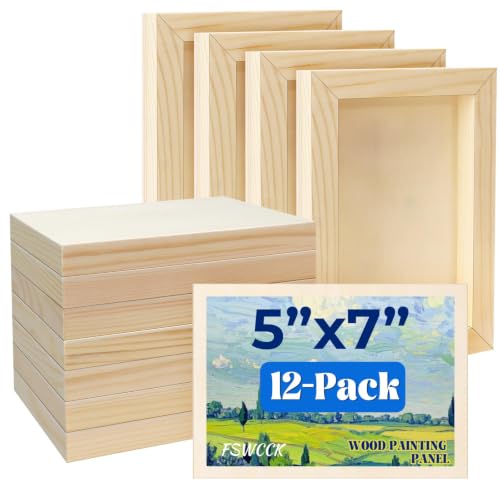
A dozen 5 x 7 cradled panels is the kit for daily painting challenges, plein air color studies, holiday gifts and craft-fair tables. The small cradled format hangs straight on a nail, sits on a shelf without an easel and finishes quickly. The title describes an unfinished cradled wood canvas without stating the species, so expect to seal and prime.
Best suited for: daily painters, students doing value studies, and makers selling small originals.
Key features
- 5 x 7 inch panels, 12 pack (listing title)
- Cradled construction
- Unfinished surface
Pros
- Twelve rigid supports for the cost of a single large panel
- Postcard scale encourages finishing work
Cons / limitations
- Too small for detailed or ambitious compositions
- Wood species not specified
Buying consideration: prime all twelve in one session with a foam roller; it is faster and gives a more even ground than brushing each panel.
Buying Guide: How to Choose Birch Wood Panels for Painting
Birch versus unspecified wood
Baltic birch plywood is the painter’s default because its face veneer is tight-grained, pale and nearly knot-free, so a few coats of gesso produce a smooth, even ground. Listings that say only “wood panel” may use a similar hardwood ply or a softer species that raises more grain. Both work; the difference is how much sanding and how many gesso coats you need. If you want predictability, choose a listing that names birch.
Cradled versus flat panels
A cradle is the wooden frame glued to the back of the panel. It stiffens the board against warp, gives you a hanging edge and lets the piece stand off the wall like a gallery-wrapped canvas. Flat, uncradled panels are thinner and cheaper, suit framing under a mat or in a traditional frame, and need to be kept small or braced to stay flat. Everything on this page is cradled.
Depth: 3/4 inch versus deeper profiles
The common cradle depth is 3/4 inch, which hangs flush and fits most floater frames. Deeper cradles of 1 1/2 inches or more present like a chunky gallery canvas and let you paint or stain a substantial side. Of the listings here, only the Tenceur states its depth (3/4 inch); check the product page for the others before you plan the edge treatment.
Sealing before priming
Raw wood contains tannins and absorbs moisture unevenly, so the standard preparation is a coat or two of a sealer (a clear acrylic medium or a dedicated wood sealer) followed by two or three thin coats of gesso, lightly sanded between coats. Seal the back and sides as well as the face, especially on panels over 12 inches, to keep moisture uptake balanced and the board flat. Encaustic painters skip acrylic gesso and work on raw or encaustic-gessoed birch.
Size and weight realities
A wood panel weighs considerably more than a stretched canvas of the same size. Up to 16 x 20 the difference is unimportant; at 24 x 36 it dictates your hanging hardware and how you move the piece. Store panels flat or fully vertical, never leaning at an angle for months, and keep them away from damp walls.
Multipacks versus singles
Packs of five or twelve small panels drive down the cost per panel and make sense for series, studies and anything you sell in quantity. Large panels are sensibly sold individually. If you paint one ambitious piece a month, buy singles in the size you actually finish; if you paint daily, buy a pack.
Match the medium
Oil: sealed and gessoed birch is one of the most stable supports available. Acrylic: the same preparation, and the rigidity helps thick impasto and pours. Pouring: seal thoroughly so the pour levels evenly. Encaustic: raw birch or encaustic gesso, never ordinary acrylic gesso. Mixed media and collage: a cradled panel takes glue, paper and heavy texture far better than canvas.
Who Should Buy What
- Oil painter moving off canvas: the Arteza 9 x 12 cradled birch pack for studies and the U.S. Art Supply 16 x 20 for finished work.
- Acrylic pour artist: the Tenceur 20 x 20 birch 4-pack for large pieces, the Arteza 8 x 8 pack for small ones.
- Encaustic painter: the Arteza 8 x 8 or 10 x 10 cradled birch packs; raw birch is the traditional ground.
- Daily painter or market seller: the FSWCCK 5 x 7 12-pack.
- Painter planning a single large piece: the U.S. Art Supply 24 x 36 cradled panel.
- Mixed media and collage artist: the U.S. Art Supply 12 x 12 for a mid-size square support.
Once your panels are painted, our guide on how to display canvas panels covers hanging options that work just as well for cradled wood. If you like a weathered, raw-wood look on the cradle sides, see how to make wood look like driftwood.
Common Mistakes to Avoid
- Painting on raw, unsealed wood with acrylic or oil. Tannins can discolor the paint and oil can sink into the wood. Seal first.
- Sealing only the front. Uneven moisture uptake cups the panel. Seal the back and sides too.
- Using acrylic gesso under encaustic. Wax does not bond well to acrylic gesso; use raw birch or encaustic gesso.
- Assuming every “wood panel” is birch. Check the title or description if the species matters to you.
- Buying 24 x 36 without a plan to hang it. Use D-rings and wire rated for the weight, or a French cleat.
- Skipping light sanding between gesso coats. Raised grain shows through thin paint layers.
- Storing panels leaning against a wall. Months at an angle will put a bow in even a cradled board.
Helpful Guides Before You Buy
- Does Birch Plywood Paint Well? Prep, Priming and Results
- How to Paint Birch Trees in Acrylic Step by Step
- Advantages of Birch Wood: Why Artists Paint on Birch Panels
FAQs
Do you need to gesso birch wood panels before painting?
For acrylic and oil, yes: seal the wood and apply two or three thin coats of gesso. For encaustic, no acrylic gesso; work on raw birch or an encaustic-specific ground.
What is the difference between cradled wood panels and flat panels?
Cradled wood panels have a wooden support frame on the back that stiffens the board and lets it hang frameless. Flat panels are thin boards meant for framing or small sizes where warp is less of a risk.
Are unfinished wood panels for painting better than pre-primed ones?
Unfinished panels cost less and let you choose the ground, including raw wood for encaustic or a tinted gesso for oil. Pre-primed panels save time. Everything on this page is unfinished.
How deep should a birch wood panel kit be?
Three-quarter inch is standard and fits floater frames. Deeper 1 1/2 inch cradles present like gallery canvases. Only the Tenceur listing here states its depth; confirm the others on their product pages.
Can you use wood art panels for acrylic pouring?
Yes, and many pour artists prefer them because the surface is dead flat. Seal the wood first so the pour does not dry unevenly where the wood absorbs moisture.
Do wood painting boards warp?
A cradled panel resists warp well, but large panels sealed on one side only, or stored leaning in a damp room, can still cup. Seal both sides and store flat or upright.
Final Recommendation
For the widest range of painters, the Arteza 9 x 12 cradled birch pack is the panel to start with: a stated birch face, a familiar size and a multipack for series work. Encaustic and small-format pour artists should take the Arteza 8 x 8 pack instead. Painters producing finished rectangular work for display should step up to the U.S. Art Supply 16 x 20 cradled panel, and anyone with a large wall and a plan for hanging should consider the 24 x 36. The Tenceur 20 x 20 birch 4-pack is the best large square for pouring and mixed media, with the useful advantage of a stated 3/4 inch depth. Keep the FSWCCK 5 x 7 12-pack on hand for studies and small originals. Whichever you buy, seal both sides before you prime.