PaintingProGuide is reader-supported. When you buy through links on this page we may earn an affiliate commission at no extra cost to you.
Acrylic is kind to beginners in almost every way except one: once it dries in a brush, it does not rewet. Water alone will not dissolve it. A forgotten brush sitting in a jar for an afternoon can turn into a stiff, splayed stick. The right brush cleaner for acrylic paint does two jobs: it gets fresh paint out of the heel of the brush during everyday cleanup, and it softens partly dried paint before the brush is lost.
There are two broad types. Soap-style cleaners, like The Masters and Speedball Pink Soap, condition bristles and are meant for routine cleaning. Liquid soaking restorers are for rescuing brushes with dried paint. Most painters benefit from having one of each. Below are six options, compared using what their Amazon listings say.
Quick answer: For everyday acrylic cleanup, The Masters Brush Cleaner and Preserver by General’s is the best brush cleaner for acrylic paint: a non-toxic solid soap that cleans and conditions synthetic and natural hair in one step. To rescue brushes with dried acrylic, choose the U.S. Art Supply Brush Cleaner and Restorer for soaking. If you want a large bottle of gentle liquid for daily washing, the X ARTY HUB 32 oz cleaner is formulated specifically for water-based paints.
Our Top Picks at a Glance
- The Masters Brush Cleaner and Preserver (General’s) — Best overall brush cleaner for acrylic paint
- U.S. Art Supply Brush Cleaner and Restorer — Best for reviving brushes with dried acrylic
- X ARTY HUB Paint Brush Cleaner 32 oz — Best gentle liquid for daily water-based cleanup
- Speedball Pink Soap — Best liquid conditioner with no solvents
- Green Piece Paint Brush Cleaner and Restorer — Best plant-based option for wet or dry paint
- Krud Kutter Brush-Wash Cleaner and Renewer — Best for large craft and furniture brushes
| Product | Best For | Key Spec | Key Strength | Price Tier |
|---|---|---|---|---|
| The Masters (2.5 oz) | Routine cleaning and conditioning | Solid cake; sable, bristle, synthetic | One-step clean and condition | $ |
| U.S. Art Supply Restorer | Dried acrylic and oil | 16 oz liquid soak | Restores hardened brushes | $$ |
| X ARTY HUB 32 oz | Daily acrylic, gouache, watercolor | 32 oz liquid; water-based only | Mild formula, large bottle | $$ |
| Speedball Pink Soap | Cleaning and conditioning | 12 oz; no solvents or alcohol | No greasy residue | $$ |
| Green Piece Restorer | Wet or dry paint, eco-minded | 18 oz; fruit extracts and minerals | Biodegradable, citrus scent | $$ |
| Krud Kutter Brush-Wash | Big brushes, latex and oil | 32 oz soak | Revives stiff brushes and rollers | $ |
How We Chose
These picks are based on the Amazon listing details and specifications checked in October 2026, how well each cleaner’s stated purpose fits acrylic brush care, and how widely each product is reviewed by Amazon buyers. We have not soaked brushes in these products; any claims about dried-paint removal are the manufacturers’.
- Stated effectiveness on acrylic, both fresh and dried
- Gentleness on bristles, including natural hair and synthetic
- Non-toxic claims and safety certifications such as ACMI AP
- Whether the product conditions as well as cleans
- Format: solid soap for routine use or liquid for soaking
- Value by volume for frequent painters
Best Brush Cleaners for Acrylic Paint Reviewed
1. The Masters Brush Cleaner and Preserver (General’s, 2.5 oz) — Best for routine cleaning and conditioning

The Masters is the brush soap most art teachers recommend, and its listing explains why: it is a one-step total-care product that removes oils, acrylics, watercolors, stains and varnishes, and it works on sable, bristle and synthetic brushes. Because it conditions as it cleans, brushes keep their shape longer.
The smaller 1 oz version of the same product also notes it is made in the USA by General Pencil Company to ACMI AP non-toxic standards, and that it can remove old dried-on paint if left on the brush for up to several hours. For acrylic, the usual routine is to rinse out most of the paint in water, then swirl the damp brush on the cake, work up a lather in your palm, rinse and reshape.
Best suited for: Every acrylic painter, as the end-of-session cleaning step.
Key features:
- Solid cleaning and conditioning cake
- Removes acrylic, oil, watercolor, varnish, glazes
- Safe for sable, bristle and synthetic brushes
- Non-toxic per listing
- Also sold in a 1 oz size
Pros:
- Cleans and conditions in one step
- Gentle on fine natural hair
- Long-lasting cake
- Low price tier
Cons and limitations:
- Slower than a soak for heavily dried paint
- Small tub for classrooms
- Works best when used right after painting
Buying consideration: Use it at the end of every session; regular conditioning prevents the build-up that ruins brushes.
If you want a pocket size for a travel kit, the same product comes as a 1 oz Masters Brush Cleaner and Preserver.
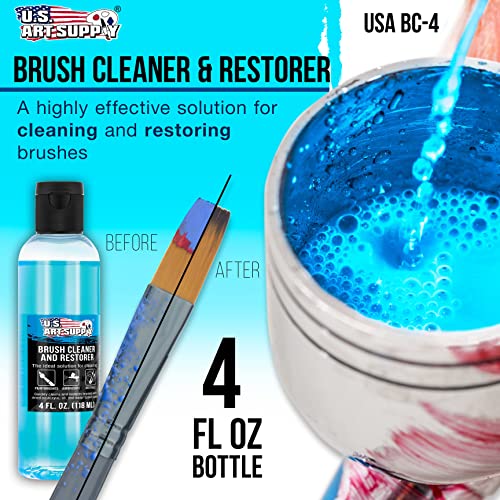
2. U.S. Art Supply Brush Cleaner and Restorer (16 oz) — Best for reviving brushes with dried acrylic

When acrylic has already dried in a brush, you need a soak. U.S. Art Supply’s Brush Cleaner and Restorer is a 16 oz liquid designed for brushes with dried-on acrylic, oil, gouache, ink and water-based paints. The directions say to soak as needed and then remove softened residue with a wipe, knife or toothbrush.
The listing says it cleans paint within minutes to hours depending on how dry it is, and that fully dried acrylic and oil may need a longer soak. It is also suitable for airbrush cleaning, with the instruction not to soak the whole airbrush.
Best suited for: Rescuing brushes that were left to dry, and cleaning palette knives and tools.
Key features:
- 16 oz bottle
- For dried acrylic, oil, gouache, inks
- Soak and work out softened paint
- Also cleans airbrushes and tools
Pros:
- Revives brushes you might otherwise throw away
- Works on several media
- Good volume for the price tier
- Useful for tools too
Cons and limitations:
- Soaking can take hours for hard paint
- Not a conditioner; follow with a brush soap
- Avoid soaking wooden handles and ferrules too deep
Buying consideration: Suspend brushes so only the bristles sit in the cleaner; resting on the tips bends them.
3. X ARTY HUB Paint Brush Cleaner (32 fl oz) — Best for daily water-based cleanup

X ARTY HUB’s cleaner is formulated for acrylic, gouache, watercolor and airbrush paints, and the listing is clear that it is not for oil. It is meant for cleaning immediately after use and for softening slightly dried paint with a 4 to 6 hour soak. It explicitly says it is not effective on paint that has fully hardened for days.
That honesty is useful: this is a daily-care cleaner, not a miracle restorer. The listing also positions it as gentler than bar soap or dish liquid, which it says can leave residue and make bristles brittle. A 32 oz bottle lasts a long time and can also clean palettes and knives.
Best suited for: Acrylic and gouache painters who want a large, gentle liquid cleaner for every session.
Key features:
- 32 fl oz bottle
- For acrylic, gouache, watercolor and airbrush
- Softens slightly dried paint in 4 to 6 hours
- Not for oil paint
- Cleans palettes and knives too
Pros:
- Large volume
- Clear guidance on what it can and cannot do
- Gentle formula per listing
- Works on tools as well
Cons and limitations:
- Not for fully dried paint
- Not for oil painters
- Mid-price tier
Buying consideration: Pair this with a restorer for emergencies; it is designed for prevention, not rescue.
4. Speedball Pink Soap Brush Cleaner and Conditioner (12 oz) — Best for gentle liquid conditioning

Speedball Pink Soap is a liquid alternative to a solid brush soap. The listing describes it as a cleaner, preserver and conditioner for oils, acrylics and watercolors that leaves no greasy residue. It contains no chlorides, phosphates, solvents or alcohol, and carries an ACMI certification.
Liquid soap is quicker to use than a cake in a busy classroom or studio: a drop in the palm, work it through the bristles, rinse. Because it conditions, it helps brushes stay soft between sessions.
Best suited for: Painters who prefer liquid soap, and classrooms where a cake would get messy.
Key features:
- 12 oz liquid
- Cleans oil, acrylic and watercolor
- Conditions and preserves bristles
- No chlorides, phosphates, solvents or alcohol
- Non-toxic, ACMI certified
Pros:
- Quick to use
- Leaves no greasy residue
- Solvent-free
- Mid-price tier
Cons and limitations:
- Not designed for heavily dried paint
- Liquid goes faster than a solid cake
- Unscented, which some prefer and some do not
Buying consideration: Keep it next to the sink and use a small amount after every session.
5. Green Piece Paint Brush Cleaner and Restorer (18 oz) — Best for a plant-based option

Green Piece positions itself as a natural alternative to thinners. The listing describes a formula made from fruit extracts and minerals, biodegradable, made in the USA, with no paint thinner or turpentine. It says it removes wet or dry paint and works on acrylic, latex, oil and shellac.
It has a citrus scent and the listing says it is safe to use on hands. It is also marketed for a wide range of other cleaning tasks, so the bottle may end up doing double duty in a studio.
Best suited for: Eco-minded painters and anyone who wants one cleaner for acrylic, oil and household paint.
Key features:
- 18 oz bottle
- Fruit extracts and minerals per listing
- Biodegradable, no thinner or turpentine
- Works on acrylic, latex, oil, shellac
- Made in USA
Pros:
- Plant-based formula
- Wet and dry paint per listing
- Pleasant citrus scent
- Versatile
Cons and limitations:
- Higher price tier
- Very broad claims; results on fully cured acrylic may vary
- Citrus scent may bother some painters
Buying consideration: Test it on an old brush first to see how it handles your particular acrylic brand.
6. Krud Kutter Brush-Wash Cleaner and Renewer (32 oz) — Best for large craft and furniture brushes

Krud Kutter Brush-Wash comes from the home-improvement aisle, but it has a place in a craft studio. The listing says it helps remove dried paint, coatings and residue from brushes and rollers, works on latex and oil-based paint, and helps loosen hardened bristles.
For fine-art brushes, gentler artist cleaners are a better first choice. Where Krud Kutter shines is with large flat brushes used for gesso, base coats, furniture painting or chalk-style paint, where buildup in the heel is common and the brushes are less delicate.
Best suited for: Big flat brushes, gesso brushes and craft or furniture painting tools.
Key features:
- 32 oz bottle
- For latex and oil-based paints
- Revives stiff, hardened brushes
- Soak, work through and rinse
- Also cleans rollers
Pros:
- Low price tier for a large bottle
- Handles heavy buildup
- Good for gesso and base-coat brushes
- Widely available brand
Cons and limitations:
- Not designed for fine natural-hair artist brushes
- Stronger than artist brush soaps
- Use with ventilation and gloves per label directions
Buying consideration: Keep this for your rough-work brushes and use an artist soap on your good ones.
Buying Guide: How to Choose a Brush Cleaner for Acrylic Paint
Choosing a brush cleaner for acrylic paint is easier once you separate daily care from rescue jobs.
Daily cleaner or restorer?
Daily cleaners and soaps remove fresh paint and condition the bristles. Restorers are for soaking brushes with dried paint. If your brushes are in good shape, start with a soap. If you have a jar of stiff brushes, add a restorer.
Bristle type
Natural hair such as sable needs gentle care; harsh cleaners can strip it. Synthetic brushes, which most acrylic painters use, are tougher but still benefit from conditioning. Check the listing for the bristle types the cleaner is designed for.
Solid or liquid
Solid cakes last a long time and are easy to pack. Liquids are quicker in a busy studio or classroom. Many painters keep a cake at the sink and a liquid soak for emergencies.
Safety and ventilation
Look for non-toxic claims and certifications such as ACMI AP. Home-improvement cleaners may need gloves and ventilation; follow label directions carefully.
Media compatibility
Some cleaners are water-based only and not for oil, like the X ARTY HUB formula. Others cover acrylic and oil. If you paint in both, choose a cleaner rated for both or keep separate products.
Volume and value
A tiny tub of soap lasts a long time. Liquid soaks go faster. Consider how many brushes you clean and how often when comparing sizes.
How to Clean Acrylic Brushes the Right Way
- Wipe excess paint onto a paper towel while it is still wet.
- Rinse in clean water, working paint out of the heel near the ferrule.
- Lather with a brush soap or a few drops of liquid cleaner in your palm.
- Rinse until the water runs clear.
- Reshape the tip and let the brush dry flat or bristles up.
Learn more in our step-by-step guide on how to use brush cleaner for acrylic paint, and see exactly how to use The Masters brush cleaner for routine care. Good cleaning matters most for small brushes; if you are choosing new ones, read what size brush to use for detailed acrylic work.
Common Mistakes to Avoid
- Leaving brushes standing bristle-down in water, which bends and splays them
- Letting acrylic dry in the heel of the brush, where it pushes bristles apart
- Using hot water, which can loosen the glue in the ferrule
- Scrubbing brushes hard against the bottom of the jar
- Relying on dish soap alone, which may leave residue and dry bristles
- Soaking brushes so deep that wooden handles swell and crack their finish
- Using harsh solvents on fine natural-hair brushes
FAQs
What is the best way to remove dried acrylic paint from brushes?
Soak the bristles in a brush restorer, such as the U.S. Art Supply Brush Cleaner and Restorer, then gently work out softened paint with your fingers or a comb. Finish with a brush soap to condition.
Can I use dish soap to clean acrylic brushes?
Dish soap can remove fresh acrylic, but it is not designed for brushes and may leave residue or dry the bristles over time. A brush soap that also conditions is a better routine choice.
Does The Masters brush cleaner work on acrylic?
Yes. Its listing says it removes acrylics as well as oils, watercolors, stains and varnishes, and that it is safe for sable, bristle and synthetic brushes.
Can rubbing alcohol remove dried acrylic paint?
Many painters use isopropyl alcohol to soften dried acrylic, but it can be harsh on brushes. Use it sparingly and condition the brush afterward.
How often should I deep clean acrylic brushes?
Clean with soap after every session. A deeper soak is only needed if you notice stiffness or buildup near the ferrule.
Is brush cleaner safe for natural hair brushes?
Gentle conditioners like The Masters are designed for natural hair, including sable. Stronger restorers and home-improvement cleaners may be too harsh for fine natural brushes.
Final Recommendation
For routine care, The Masters Brush Cleaner and Preserver is the best brush cleaner for acrylic paint: it cleans and conditions synthetic and natural hair in one step. Keep the U.S. Art Supply Brush Cleaner and Restorer on hand for brushes that were left to dry, and choose X ARTY HUB or Speedball Pink Soap if you prefer a liquid for daily cleaning.
Eco-minded painters can try Green Piece, and Krud Kutter Brush-Wash is a practical choice for big gesso, craft and furniture brushes that see heavy buildup.