PaintingProGuide is reader-supported. When you buy through links on this page we may earn an affiliate commission at no extra cost to you.
An oil brush cleaning pot is one of the cheapest studio upgrades with the biggest payoff. A sealed, stainless steel washer with a coil or screen insert lets you scrub paint out of bristles while the pigment sinks below the screen, so the solvent on top stays clean enough to reuse for weeks. It also keeps mineral spirit fumes contained between sessions instead of drifting around the room from an open jar.
The best oil brush cleaning pot for most painters is a leak-proof stainless steel washer with a clip-on lid, a rubber gasket and a removable strainer. The differences come down to size, portability and extras. Below we compare six options currently sold on Amazon.com for studio and plein air painters.
Quick answer: The DIRBUY Stainless Steel Brush Washer is the best oil brush cleaning pot for most painters: a leak-proof clip-on lid with a rubber seal, a removable filter screen and a mid-size 3.9 x 3.4 inch body that fits most brushes. Plein air painters who want a matching clip-on palette cup should choose the Skybooly 2-Piece Brush Cleaner Set. For the largest solvent capacity, the 13 oz stainless steel cleaner jar is the pick.
Our Top Picks at a Glance
- DIRBUY Stainless Steel Leak-Proof Brush Washer — Best overall oil brush cleaning pot
- Skybooly 2-Piece Brush Cleaner Set with Palette Cup — Best for plein air kits
- Stainless Steel Oil Brush Cleaner Jar, 13 oz — Best large capacity
- Tosnail Stainless Steel Brush Washer, Small — Best budget compact washer
- MyLifeUNIT Stainless Steel Brush Cleaner, 10 oz — Best small studio washer with two compartments
- Babluble Electric Brush Cleaner — Best for water-based paint rinsing (not for solvents)
| Product | Best For | Key Spec | Key Strength | Price Tier |
|---|---|---|---|---|
| DIRBUY Brush Washer | Most oil painters | 3.94 x 3.4 in stainless steel | Rubber-sealed clip lid, filter screen | $ |
| Skybooly 2-Piece Set | Plein air | Washer 3.4 x 3.4 x 4.0 in + double palette cup | Washer and palette cup in one set | $$ |
| 13 oz Cleaner Jar | Large brushes, longer sessions | 13 oz thickened stainless steel | Large capacity, gasket seal | $$ |
| Tosnail Small Washer | Budget and compact kits | 3.25 in tall x 3 in diameter | Clip-on lid with rubber seal | $ |
| MyLifeUNIT 10 oz | Small studios | 2.8 x 2.8 x 3.5 in, two compartments | Sealing rubber loop, porous filter | $ |
| Babluble Electric Cleaner | Acrylic and watercolor rinsing | Rechargeable USB-C, about 1 hour per charge | Automatic agitation | $ |
How We Chose
We did not use these cleaning pots for this article. Our picks are based on the Amazon listing details and specifications checked in October 2026, how well each pot’s seal, materials, insert and size suit oil painting with solvents, and how widely each product is reviewed by Amazon buyers.
- Seal: a rubber gasket and clip-on lid that stop leaks and contain vapors.
- Material: stainless steel that resists solvents and will not crack like some plastics.
- Insert: a removable screen or coil that gives bristles a surface to scrub on and lets pigment settle below.
- Size: wide enough for your largest brush, small enough for your kit.
- Portability: handles and compact shapes for plein air painting.
A heavy-duty kitchen pot scrub brush also appeared in the search results for this query. It is a dish brush, not a paint brush cleaner, so we excluded it.
Best Oil Brush Cleaning Pot Picks Reviewed
1. DIRBUY Stainless Steel Leak-Proof Paint Brush Washer — Best for most oil painters

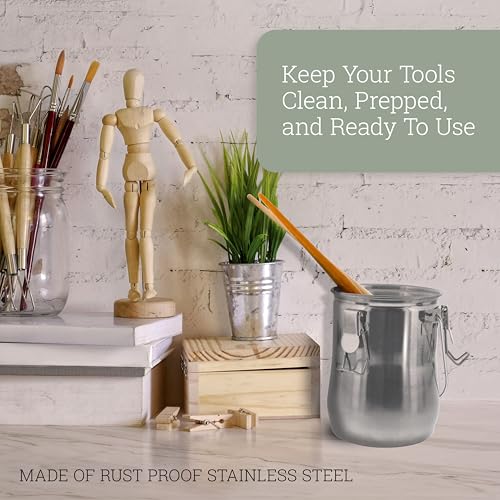
DIRBUY’s washer has every feature that matters in a classic brush cleaning pot. The listing describes a corrosion-proof stainless steel body about 3.94 inches tall and 3.4 inches in diameter, a clip-on lid with a watertight rubber seal, a carrying handle and a removable filter screen.
The screen sits above the bottom of the pot. You scrub bristles against it, the loosened pigment sinks below, and the solvent above stays clearer. The handle lets you carry it or hang it from a pochade box for outdoor painting.
Best suited for: studio oil painters and plein air painters who want one reliable washer that fits most brush sizes.
Key features:
- Stainless steel, corrosion proof
- Clip-on lid with watertight rubber seal
- Removable filter screen
- Carry handle
- About 3.94 x 3.4 inches
Pros:
- Mid-size body fits most brushes
- Strong seal contains fumes
- Handle useful outdoors
Cons and limitations:
- Wide flats and large brights may feel cramped
- Screen needs occasional cleaning
Buying consideration: Fill only to just above the screen. Overfilling wastes solvent and increases spill risk when the lid is clipped shut.
2. Skybooly 2 Pcs Paint Brush Cleaner Set with Cup, Medium — Best for plein air kits

The Skybooly set pairs a brush washer with a double “spoon” palette cup, giving you a sealed cleaning pot and a clip-on medium cup in one purchase. The washer measures about 3.4 x 3.4 x 4.0 inches and the palette cup about 3.5 x 1.6 x 1.2 inches, per the listing.
The washer has a sealing lid with a rubber ring and a removable porous filter, and both pieces are stainless steel. The listing calls out its suitability for painting outside, where a clip-on medium cup is especially handy.
Best suited for: plein air painters and anyone assembling a compact outdoor kit.
Key features:
- Medium stainless steel washer with sealed lid
- Removable porous filter
- Double palette cup that clips on
- Washer about 3.4 x 3.4 x 4.0 in
Pros:
- Two essential plein air tools in one set
- Rust and deformation resistant steel
- Compact for travel
Cons and limitations:
- Palette cup is small for large paintings
- Medium washer size only
Buying consideration: Keep solvent in the washer and painting medium in the palette cup so you never mix the two by accident.
3. Oil Paint Brush Cleaner Jar, 13 oz Stainless Steel — Best for large capacity

At 13 ounces, this jar holds more solvent than the other pots here, which suits larger brushes and longer sessions. The listing describes a rubber gasket and clip-on lid to lock in solvents and prevent spills, and a thickened, rust-resistant stainless steel build.
An inner filter screen lets you glide bristles across it while sediment settles below. The listing notes that this keeps cleaning fluid fresher for reuse, and that the jar holds water, alcohol, turpentine and mineral spirits. It weighs 8.1 ounces and has a carry handle.
Best suited for: studio painters using larger brushes, or anyone who wants to change solvent less often.
Key features:
- 13 oz capacity
- Rubber gasket and clip-on lid
- Thickened stainless steel
- Inner filter screen
- Carry handle
Pros:
- Largest capacity in this guide
- Sturdy construction
- Works for several mediums
Cons and limitations:
- Heavier and bulkier for plein air
- More solvent to dispose of when it is finally spent
Buying consideration: A larger pot does not mean you need to fill it. Use only what you need and top up as it evaporates.
4. Tosnail Stainless Steel Leak-Proof Paint Brush Washer, Small — Best for budget compact washer

Tosnail’s small washer is a pared-down version of the classic design at the lowest price tier here. The listing describes a 3.25 inch tall by 3 inch diameter body in rust-proof stainless steel, a clip-on lid with a watertight rubber seal, a carry handle and a removable strainer cup.
It is listed for water, spirits, turpentine and other solvents, so it works for oils, and it fits easily into small pochade boxes.
Best suited for: beginners, small brush sets, travel kits and painters who want a backup washer.
Key features:
- 3.25 in tall × 3 in diameter
- Stainless steel, rust proof
- Clip-on lid with rubber seal
- Removable strainer cup
- Carry handle
Pros:
- Lowest cost option
- Very compact
- Full leak-proof design
Cons and limitations:
- Small for large brushes
- Less solvent capacity
Buying consideration: Ideal as a second pot: one for initial dirty rinse, one for a final cleaner rinse.
5. MyLifeUNIT Paint Brush Cleaner, Stainless Steel, 10 oz Small — Best for small studios

MyLifeUNIT’s 10 oz cleaner is a compact studio washer measuring about 2.8 x 2.8 x 3.5 inches and weighing 5.6 ounces, according to the listing. It has a sealing rubber loop for an airtight, leak-proof lid and a removable porous filter that provides a friction surface for cleaning bristles.
The listing names water, spirits, ink, turpentine and pigment toning oil as suitable contents and mentions use with oil, watercolor, gouache and acrylic. Product details list two compartments, consistent with the filter dividing the pot.
Best suited for: small home studios, students and painters with mostly small to medium brushes.
Key features:
- 10 oz capacity
- Sealing rubber loop for airtight lid
- Removable porous filter
- Stainless steel, about 2.8 x 2.8 x 3.5 in
- Sturdy handle
Pros:
- Compact and light
- Good seal for fume control
- Versatile across mediums
Cons and limitations:
- Narrow opening for wide brushes
- Small capacity for big sessions
Buying consideration: Check the opening against your widest flat or filbert before buying.
6. Babluble Electric Paint Brush Cleaner and Rinse Cup — Best for water-based paint rinsing

Babluble’s cleaner is a motorized rinse cup with a silicone lid that holds several brushes and agitates them automatically, per the listing. It charges by USB-C and runs about an hour per full charge.
The listing says it cleans water-based and oil-based paints and mentions makeup brushes too. For oil painting, though, we suggest caution: electric devices and flammable solvents such as mineral spirits or turpentine are not a good combination, and the listing does not describe solvent-rated construction. Use it with water and soap, or for acrylic and watercolor brushes.
Best suited for: acrylic and watercolor painters, and oil painters who clean with soap and water after an initial oil or solvent rinse.
Key features:
- Rechargeable USB-C
- About 1 hour per charge
- Automatic cleaning mode
- Silicone lid holds multiple brushes
Pros:
- Hands-free agitation saves time
- Holds several brushes at once
- Low price tier
Cons and limitations:
- Not designed for flammable solvents
- Plastic body, no sealed lid for storage
Buying consideration: For oil brushes, wipe and rinse in solvent in a stainless pot first, then finish with soap and water here.
How a Brush Cleaning Pot Saves Solvent
The design is simple but clever. When you scrub a brush on the screen or coil, pigment and oil fall to the bottom of the pot. Over a day or two, the heavy sludge settles completely, leaving relatively clear solvent on top. You keep reusing the clear layer until the sludge reaches the screen, then decant the clean solvent into another container, scrape out the sludge for proper disposal, and pour the clean solvent back. Many painters go weeks or months on one fill.
Buying Guide: How to Choose an Oil Brush Cleaning Pot
Stainless steel over plastic or glass
Stainless steel resists solvents, will not shatter like glass and does not degrade like some plastics. It is the standard choice for oil painters.
A real seal
A rubber gasket and clip-on lid prevent leaks during transport and stop solvent evaporating between sessions. That saves money and reduces vapors in your studio.
Screen or coil insert
Screens and perforated cups are common; coil inserts work similarly. Either way, the insert should be removable for cleaning and sit high enough that sludge has room to collect underneath.
Size for your brushes
Measure the width of your largest brush and compare it with the pot diameter. Small pots around 3 inches suit rounds and small filberts; larger pots suit wide flats and big bristle brushes.
Portability
For plein air, look for a handle, a compact footprint and a seal you trust in a backpack. A matching palette cup is a bonus.
Solvent choice
Many painters use odorless mineral spirits because they have less odor than turpentine, though they still produce vapors and need ventilation. Some painters avoid solvents entirely by wiping brushes, working the paint out in a vegetable oil such as safflower, and finishing with soap.
Safe Solvent Handling
- Ventilate your workspace, even with odorless mineral spirits.
- Keep pots closed when not actively cleaning.
- Never use solvents near open flames, heaters or electric devices not rated for them.
- Store solvent-soaked rags in a sealed metal container or lay them flat outdoors to dry; oily rags can self-heat.
- Dispose of solvent sludge through local hazardous waste programs, not down the drain.
- Label containers clearly, especially decanted clean solvent.
Setting Up a Two-Pot Cleaning System
Many experienced oil painters use two cleaning pots rather than one, and it is worth considering if you paint often. The first pot is the “dirty” rinse: you swish and scrub the brush there to remove most of the paint. The second pot holds cleaner solvent for a final rinse before the brush goes back on the palette or into soap and water. Because most of the pigment ends up in the first pot, the second stays clear for a long time, and you avoid dragging muddy tints into fresh color.
A practical setup is a larger washer for the dirty rinse and a small, cheap washer like the Tosnail for the clean rinse. Label the lids so you do not mix them up. When the dirty pot finally needs servicing, let it settle overnight, pour the clear top layer into a spare jar, scrape out the sludge, wipe the pot and screen, and return the clear solvent.
During a painting session, keep the active pot within easy reach of your painting hand and the clean pot slightly farther away, so the habit becomes automatic: wipe, dirty rinse, wipe, clean rinse, wipe. It sounds fussy, but it keeps colors brighter and makes brushes last noticeably longer.
Brush Care That Makes Cleaning Easier
Wipe excess paint off brushes with a rag or paper towel before they go into solvent. The less paint that enters the pot, the longer the solvent lasts. After the solvent rinse, wash brushes with mild soap or a brush soap and lukewarm water, reshape the tips and dry them flat or bristles down. Detail brushes in particular benefit from careful cleaning; our guides to using a liner brush for detail work and choosing brush sizes for detail work explain why tip shape matters so much.
Common Mistakes to Avoid
- Overfilling the pot, which spills when the lid is clipped.
- Stirring the sludge back into suspension by scrubbing too hard on the bottom.
- Leaving brushes standing bristles-down in solvent, which bends them permanently.
- Using an electric cleaner with flammable solvents.
- Pouring dirty solvent down the drain.
- Never cleaning the screen, which eventually clogs.
- Skipping the soap wash after solvent, leaving oil residue in the ferrule.
FAQs
What is the best oil brush cleaning pot?
A stainless steel washer with a rubber-sealed clip-on lid and removable screen, like the DIRBUY washer, suits most oil painters.
How often should I change the solvent?
With a screen-type pot, you can reuse the solvent many times. When the sludge reaches the screen, decant the clear solvent, clean out the sludge and refill with the clear solvent.
Can I clean oil brushes without solvent?
Yes. Wipe the brush, work the paint out with a vegetable oil such as safflower, then wash with soap and water. Many solvent-free painters use this method.
Is odorless mineral spirits safe?
It has less odor than turpentine but still produces vapors. Use it in a ventilated space and keep containers closed.
How do I dispose of used solvent?
Let pigment settle, reuse the clear solvent, and take sludge and spent solvent to a household hazardous waste collection site.
Are electric brush cleaners good for oil paint?
They are convenient for water-based cleaning, but they are not a good match for flammable solvents. Use them only with water and soap for oil brushes.
Final Recommendation
For most oil painters, the DIRBUY Stainless Steel Brush Washer is the best balance of seal, size and price. Plein air painters will appreciate the Skybooly 2-piece set with its clip-on palette cup, while painters with big brushes should choose the 13 oz cleaner jar. The Tosnail and MyLifeUNIT pots are compact, budget-friendly options, and the Babluble electric cleaner is best reserved for water-based rinsing. Clean brushes paint cleaner marks; if you want to practice control, try our guide to painting dots with a round brush.