PaintingProGuide is reader-supported. When you buy through links on this page we may earn an affiliate commission at no extra cost to you.
Dry brushing is the simplest texture technique in painting: load a stiff brush with very little paint, wipe most of it off, and drag the bristles lightly across the surface so color catches only on the raised tooth of the canvas or the high points of a model. The best dry brush for texture effects has firm, springy bristles that hold their shape under pressure, a head that releases paint gradually, and a size that matches the area you are texturing.
Two very different groups of painters use dry brushes. Canvas painters use stiff bristle flats and fans to suggest grass, weathered wood, bark and sunlit water. Miniature and model painters use small domed goat hair brushes to pick out edges and raised detail. This guide covers both, comparing five brushes and sets currently listed on Amazon, and explains which brush shape produces which texture.
Quick answer: For canvas and landscape texture, the GACDR 7-Piece Hog Bristle Fan Brush Set is the most versatile pick: stiff natural bristle in sizes 2 to 14 for grass, foliage and broken color. For miniatures and models, the GETHPEN 5-Size Domed Goat Hair Drybrush Set is the best value. Add the GACDR Comb/Grainer Set for wood grain, fur and hair textures.
Our Top Picks at a Glance
- GACDR 7-Piece Hog Bristle Fan Brush Set — Best dry brush for canvas texture and landscapes
- GETHPEN 5-Size Domed Goat Hair Drybrush Set — Best value for miniatures and models
- Golden Maple 6-Piece Goat Hair Dry Brush Set — Best for fine-detail model drybrushing
- GACDR 4-Piece Grainer and Comb Brush Set — Best for wood grain, fur and hair texture
- Golden Maple 3-Piece Weathering Brush Set — Best for weathering, pigments and texture pastes
| Product | Best For | Key Spec | Key Strength | Price Tier |
|---|---|---|---|---|
| GACDR Hog Bristle Fan Set | Canvas texture | 7 fans, sizes 2 to 14 | Stiff hog bristle, copper ferrules | $ |
| GETHPEN Drybrush Set | Miniatures | 5 domed brushes, sizes 3 to 13 | Semi-stiff goat hair, rustproof ferrules | $ |
| Golden Maple Dry Brush Set | Small model details | 6 domed brushes, sizes 1 to 6 | Dense, springy goat hair | $ |
| GACDR Grainer/Comb Set | Wood grain and fur | 4 comb brushes, 1/4 to 5/8 inch | Split synthetic hair | $ |
| Golden Maple Weathering Set | Weathering and pastes | 3 nylon rounds, sizes 4, 6, 8 | Short handles for control | $ |
How We Chose
These picks are based on the Amazon listing details and specifications checked in October 2026, how well each brush’s bristle type, stiffness and shape fit dry brushing, and how widely each product is reviewed by Amazon buyers. We left out two drywall and ceiling texture brushes that appeared in the search, because they are made for house walls rather than painting on canvas or models.
What mattered:
- Bristle stiffness: dry brushing needs resistance so paint skips across texture instead of flooding it.
- Head shape: fans and flats for canvas, domed rounds for raised model detail, combs for linear texture.
- Durability: dry brushing is abrasive, so ferrule quality and shed resistance matter.
- Size range: sets that cover both broad areas and small accents.
- Handle length: short for close model work, longer for easel painting.
Which Brush Shape Makes Which Texture?
- Fan brush: grass, foliage, tree branches, fur and broken light on water.
- Flat bristle brush: weathered wood, rock faces, rough walls and scumbled skies.
- Domed round: raised edges on miniatures, armor, stone texture on terrain.
- Comb or grainer: wood grain, hair, feathers and parallel striations.
- Stiff round: stippled textures, moss and controlled weathering spots.
Best Dry Brushes for Texture Effects Reviewed
1. GACDR Fan Brush Set, 7 Hog Bristle Brushes — Best for Canvas Texture and Landscapes

Hog bristle is stiff, naturally split at the tips and springy, which is exactly what you want for dry brushing on canvas. This GACDR set includes seven fans in sizes 2, 4, 6, 8, 10, 12 and 14, so you can drag tiny blades of grass with the small sizes and scumble big passages of foliage or sky with the large ones.
The listing describes the hog bristle as suitable for thick strokes and textures, able to stir thick pigment and be rubbed and brushed without sticking together, with copper crimped ferrules for durability. Birch handles keep the balance comfortable for easel work.
Best suited for: acrylic and oil painters creating grass, foliage, bark, fur and broken color on canvas.
Key features:
- Seven fan brushes, sizes 2 to 14
- Natural hog bristle
- Copper crimped ferrules
- Birch wood handles
Pros:
- Full size range in one set
- Stiff bristle ideal for dry brush
- Low price tier
Cons and limitations:
- Fans only; you will still want a flat or two
- Natural bristle softens if left soaking
Buying consideration: clean hog bristle promptly and dry flat; soaking in water swells the wooden handle and loosens ferrules.
2. GETHPEN Drybrush Paint Brush Set, 5 Sizes — Best for Miniatures and Models

Miniature painters drybrush constantly to highlight raised detail, and a domed tip is the standard shape because it spreads paint evenly over edges without leaving streaks. This GETHPEN set includes five domed brushes with dense, semi-stiff, springy goat hair and rustproof ferrules.
The listing suggests the larger sizes (#11 and #13) for big raised areas and the smaller sizes (#3 and #5) for details. Short handles give close control for models, terrain, model trains and tabletop figures.
Best suited for: miniature, wargaming and model painters who drybrush regularly.
Key features:
- Five domed brushes
- Semi-stiff, springy goat hair
- Rustproof ferrules
- Short handles
Pros:
- Classic domed drybrush shape
- Good size spread
- Very affordable
Cons and limitations:
- Too small for most canvas work
- Goat hair wears with heavy drybrushing over time
Buying consideration: dedicate these to drybrushing only; the technique wears bristles, so keep your detail brushes separate.
3. Golden Maple Dry Brush Set for Miniature Painting, 6 Pieces — Best for Fine-Detail Model Drybrushing
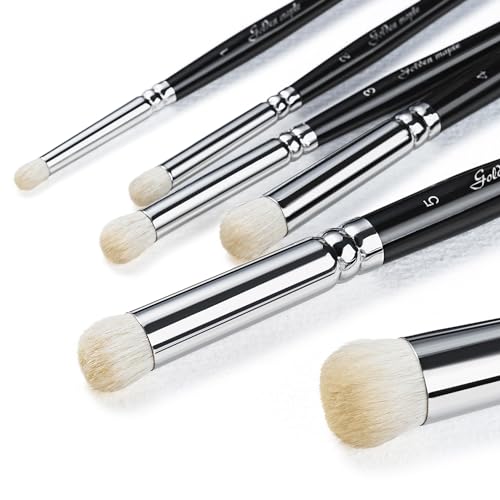
Golden Maple’s six-piece set uses the same domed goat hair approach but in a smaller size range: #1 and #2 for small details up to #5 and #6 for larger raised areas. That makes it better suited to 28 mm figures, jewelry-scale details and fine edges than the larger GETHPEN set.
The listing mentions dense, semi-stiff goat bristles, rustproof ferrules, and birch wood handles. It positions the brushes for model making, miniatures, enamel painting and ceramics.
Best suited for: painters of small-scale miniatures who want precise edge highlights.
Key features:
- Six domed brushes, sizes 1 to 6
- Goat hair bristles
- Rustproof ferrules
- Birch handles
Pros:
- Smaller sizes for fine detail
- Six brushes for rotation
- Good value
Cons and limitations:
- Smallest brushes wear quickly
- Not for large surfaces
Buying consideration: pair it with the GETHPEN set if you paint both small figures and larger terrain pieces.
4. GACDR Grainer Brush Set, 4 Comb Texture Brushes — Best for Wood Grain, Fur and Hair

Comb or grainer brushes have split, gapped hair that leaves several parallel lines in one stroke. Dry brushed with very little paint, they create convincing wood grain, fur, hair and feathers. This GACDR set includes four sizes: 1/4, 3/8, 1/2 and 5/8 inch.
The listing describes split synthetic Toray hair from Korea, seamless silver ferrules and short birch handles, and states compatibility with acrylic, watercolor, gouache and oil. It specifically mentions dry brushing and fine detail textures.
Best suited for: painters adding grain, fur, hair or grass with linear texture.
Key features:
- Four comb brushes, 1/4 to 5/8 inch
- Split synthetic hair
- Seamless ferrules
- Short handles
Pros:
- Fast linear texture in one stroke
- Works across media
- Widely reviewed
Cons and limitations:
- Specialist shape, not an all-purpose dry brush
- Synthetic hair is softer than hog
Buying consideration: use thin paint and very light pressure; heavy pressure merges the separate lines into a smear.
5. Golden Maple Weathering Paint Brushes, 3-Piece Round Set — Best for Weathering and Texture Pastes
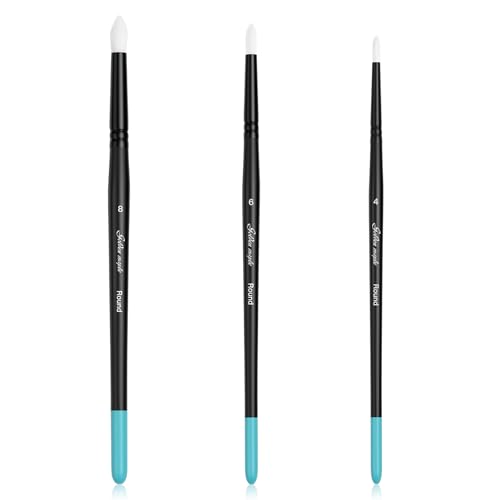
Weathering brushes take a beating from pigments, washes and texture pastes, so dedicated cheap brushes save your good ones. This set includes three synthetic nylon rounds in sizes 4, 6 and 8, with short handles optimized for dry brushing and control.
The listing describes them for weathering effects, textures, pigments, varnishes, gels and fine-detail applications, including dry brushing, washing, pigment setting and texturing with pastes. It is a newer listing with few buyer reviews.
Best suited for: model and terrain painters who apply rust, dust, mud and texture pastes.
Key features:
- Three nylon rounds, sizes 4, 6, 8
- Short handles
- Designed for weathering and pastes
Pros:
- Inexpensive sacrificial brushes
- Handles pastes and pigments
- Good control
Cons and limitations:
- Few buyer reviews
- Nylon is softer than goat or hog for heavy drybrushing
Buying consideration: treat these as consumables for messy materials; replace them when they lose shape.
How to Dry Brush for Texture: Quick Method
- Pick a brush that matches the texture: fan for grass, flat for wood, domed round for miniatures.
- Dip only the tip of the brush into undiluted paint.
- Wipe most of the paint off on a paper towel until strokes on the towel look dusty and broken.
- Drag the brush lightly across the surface with the side of the bristles, not the tip.
- Build up gradually with several light passes rather than one heavy one.
- Move from darker to lighter values so the brightest texture sits on top.
Dry Brush Texture Effects by Subject
The same technique produces very different results depending on the surface, the brush and the direction of your strokes. These are the textures painters most often build with a dry brush.
Grass and Meadows
Use a fan brush held vertically and flick upward from the base of the grass line. Start with a mid-value green, then add lighter, warmer greens on top so the strokes catch the light. Vary the angle slightly so the blades do not look like a picket fence.
Weathered Wood and Barns
Drag a stiff flat along the direction of the grain with a gray or pale ochre over a darker brown base. A comb brush on top adds fine grain lines. Leave some areas untouched so the darker base reads as shadowed cracks.
Rock and Stone
Scumble a flat brush in short, multidirectional strokes over a dark base. The tooth of the canvas does much of the work, leaving broken specks of light that read as granular stone. Add a final pale highlight only on the planes facing the light.
Sparkle on Water
With a nearly dry flat and pale paint, skim horizontally across a dried water area. The broken marks look like sunlight glinting on ripples. Keep the strokes horizontal and sparse; too many turns sparkle into noise.
Armor, Fur and Stone on Miniatures
On models, drybrush progressively lighter tones over a dark basecoat. Metallic paints over black make convincing worn armor; light browns over dark browns bring out fur; grays over black define stone bases. A domed brush keeps each layer even so the highlights look deliberate rather than chalky.
Buying Guide: How to Choose a Dry Brush for Texture Effects
Bristle Type
Hog bristle is the stiffest natural option and the best choice for canvas texture. Goat hair is softer but dense and springy, ideal for even drybrushing on models. Synthetic hair varies; stiff synthetics work, soft synthetics tend to deposit too much paint.
Shape for the Effect
Match the shape to the texture you want. A fan fans out marks; a flat leaves broad scumbles; a dome gives soft, even coverage on edges; a comb gives parallel lines. One set of each shape covers most needs.
Size Relative to Surface
Large surfaces need large brushes, or the texture looks fussy and repetitive. On models, the brush should be bigger than the detail you are highlighting so it skims across the top.
Durability
Dry brushing is hard on bristles. Crimped or seamless ferrules and dense bristle packing help brushes last. Expect to replace drybrushes more often than other brushes.
Handle Length
Short handles give control for close work on models and small canvases. Longer handles let you stand back from an easel and use looser, more varied strokes.
Paint Type
Acrylic dries fast, which helps dry brushing build quickly but can harden in bristles. Oil stays workable longer, allowing softer texture. Clean acrylic out of brushes promptly.
Practice the Technique
If you are new to the method, our full tutorial on the dry brush technique with acrylics walks through loading, wiping and building layers with examples. When you move from texture to fine finishing touches, see how to use a liner brush for detail work.
Common Mistakes to Avoid
- Leaving too much paint on the brush, which floods texture instead of catching high points.
- Using soft watercolor brushes that cannot skip paint across a surface.
- Pressing hard with the tip rather than skimming with the side of the bristles.
- Using your best detail brushes for drybrushing and wearing them out.
- Building texture all at once instead of in light layers.
- Forgetting to clean acrylic from the brush, leaving bristles stiff and splayed.
- Using drywall or ceiling texture brushes for fine art; they are far too coarse.
FAQs
What kind of brush is best for dry brushing?
For canvas, a stiff hog bristle flat or fan works best. For miniatures, a domed goat hair brush is the standard. In both cases, the brush should be firm enough to skip paint across texture.
Can you dry brush with acrylic paint?
Yes. Acrylic is the most common paint for dry brushing because it dries quickly, letting you build layers fast. Use it undiluted and wipe most of it off before brushing.
Is a fan brush good for dry brushing?
Yes. Fan brushes are excellent for dry brushing grass, foliage, tree branches and fur. Hog bristle fans give the most texture.
Why do miniature drybrushes have domed tips?
A dome spreads the light paint load evenly over raised edges without leaving streaks or hard lines. It also wears more evenly than a flat when scrubbed across models.
How do I stop my dry brush from leaving streaks?
Remove more paint before brushing, use lighter pressure, and switch to a domed or fan brush. Several light passes look smoother than one heavy pass.
Can I use an old brush for dry brushing?
Often, yes. Worn brushes with splayed bristles can make good drybrushes, especially for rough texture. For even model highlighting, a purpose-made domed brush gives more control.
Final Recommendation
Canvas painters should start with the GACDR hog bristle fan set, which covers grass, foliage and broken color in seven sizes, then add the GACDR comb set for wood grain and fur. Miniature painters get the most value from the GETHPEN domed goat hair set, adding the smaller Golden Maple dry brush set for fine edges and the Golden Maple weathering rounds as sacrificial brushes for pigments and pastes. Whatever you choose, use very little paint and build texture gradually.