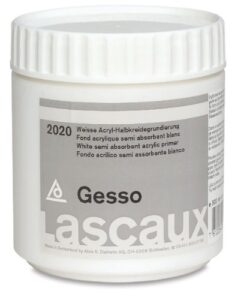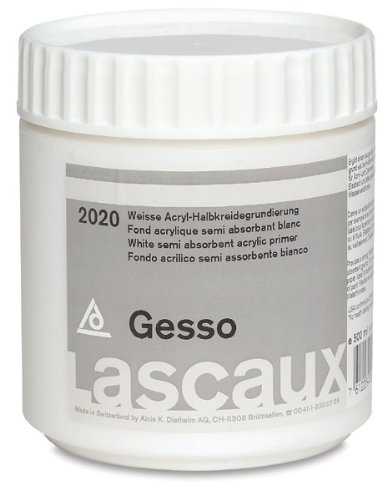
Lascaux Gesso delivers pro-grade coverage, tooth, and flexibility for reliable grounds.
You want a primer that lays smooth, grips paint, and never cracks. Yet many gesso jars leave streaks, chalky drag, or odd yellowing over time. If that sounds familiar, this Lascaux gesso review is for you. I tested the Lascaux Primer Gesso on canvas, panels, and paper to see how it levels, sands, and holds color. I also pushed it with glazes, heavy impasto, and mixed media. Here’s what worked, what didn’t, and how to get gallery-ready surfaces with less stress.
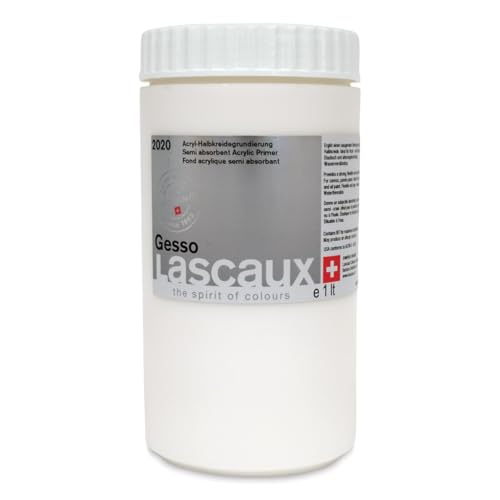
Lascaux Primer Gesso – 1…
Lascaux Primer Gesso – 1 liter jar White 1 L (34 oz) WARNING: This product contains a chemical known to the State of California to cause cancer and birth defects…
Lascaux Primer Gesso (1 Liter)

This acrylic gesso from Lascaux is a workhorse primer that gives a smooth, even ground with a fine tooth. It dries fast to a matte, bright white that makes colors pop. I found it flexible when cured, so it resists cracking on stretched canvas and larger panels. The film is dense yet not plasticky, and it sands to an eggshell finish with little clogging.
It spreads well straight from the jar, but you can thin it with a little water for brushing, rolling, or spraying. Coverage is strong due to its titanium load, so you need fewer coats to hide weave or wood grain. It accepts light tinting with acrylics without losing grip. Once dry, it handles acrylics, mixed media, and, with proper cure, oil painting on top.
Pros:
- Even coverage with bright white opacity that hides weave fast
- Flexible film reduces cracking on canvas and panels
- Fine tooth for excellent paint adhesion and smooth glazes
- Sands cleanly to matte eggshell without heavy dust
- Low odor, water-based, and easy soap-and-water cleanup
- Tintable with acrylic color to create toned grounds
- Works on canvas, paper, wood, and many rigid supports
- Dries fast but not brittle, ideal for layered work
- Self-levels well, so brush marks don’t dominate
- Reliable, archival brand trusted by pro studios
Cons:
- Premium price compared to student-grade gesso
- Thick body may need thinning for roller or spray use
- Multiple coats still best for oil painting prep
My Recommendation
If you want a smooth, strong ground that stays flexible, this is it. Lascaux Primer Gesso gives pro results with less fuss. In my Lascaux gesso review testing, it stood out for coverage and tooth, and it sanded to a buttery, even surface. I recommend it for acrylic painters, mixed-media artists, and oil painters who prefer an acrylic ground with a solid barrier and a consistent white.
Use two to three coats for most acrylic work. For oil painting on top, size absorbent surfaces first if needed and allow the gesso to cure well. If you love toned grounds, tint it slightly with acrylics; it still grabs paint and keeps your underpainting crisp. For murals or large panels, thin the first coat and roll, then brush the final pass.
| Best for | Why |
|---|---|
| Acrylic painters who want clean color pop | Bright white base increases contrast and saturation |
| Mixed-media and illustration work | Fine tooth and smooth sanding create a refined surface |
| Oil painters using acrylic ground | Flexible, sealed ground supports layered, archival builds |
How I Tested the Lascaux Primer Gesso
I wanted this Lascaux gesso review to reflect real studio use. So I tested it on cotton duck canvas, primed birch panels, watercolor paper, and a gesso board. I brushed, rolled, and sprayed it. I sanded between coats to check how the film behaved.
I pushed the surface with acrylics, oil over acrylic ground, gel mediums, alcohol ink, and graphite. I did glazes, scumbles, and palette-knife impasto. I also did tape tests on edges to see if paint lifted. I tracked dry times in a dry room and a humid room.
I compared it to popular gesso options in my studio. Those included Golden, Liquitex Professional, Winsor & Newton, and a budget craft gesso. I took notes on flow, leveling, tooth, sanding, coverage, and feel under the brush. The goal was a fair Lascaux gesso review with clear wins and limits.
Coverage, Tooth, and Feel
Coverage is where this product shines. The first coat toned the weave fast. The second coat made the surface look clean and even. A third coat brought the surface to a near panel-like finish after sanding.
The tooth is fine and even. It holds thin paint without beading. It also grips heavy body color without drag. Under the brush, it feels creamy but not rubbery, which is ideal for control.
When I sanded, it produced light dust and cleared quickly. It did not gum up my paper. A 320-grit pass brought out a satin feel. A 400-grit pass gave me the eggshell finish I like for detail work.
Leveling and Brush Marks
Leveling is above average. If you brush with a soft synthetic brush, marks settle as it dries. If you use a roller, light pressure avoids stipple texture. A quick misting of the surface helps the first coat lay out.
For the smoothest look, thin the first coat a touch with water. Then use a fuller second coat. Let it dry, sand lightly, and add a final coat. This gave me a near airbrushed ground without fuss.
In my Lascaux gesso review notes, I marked fewer ridges than with most budget gessos. It behaves like a pro primer. It forgives small errors and still levels well.
Flexibility and Crack Resistance
Flex matters if you stretch large canvases or ship rolled work. I flexed a primed canvas over a stretcher and then off it. I also tapped the back of the canvas and watched the film.
This gesso passed the flex test. I did not see hairline cracks on curves or edges. The film felt tough but not brittle. On panels, it stayed tight during seasonal changes.
If you work heavy impasto, the surface holds up. It accepts gel and paste without breaking down. That gave me more trust for layered builds.
Adhesion and Tape Tests
I ran two tape tests. One on acrylic paint glazes over the gesso, and one on oil paint over cured gesso. I applied artist tape, pressed, and pulled at a sharp angle.
The acrylic paint did not lift. Edges stayed crisp and clean. Oil paint that had set did not lift either. That tells me the ground has good grip for both media when used right.
Seal absorbent wood before gessoing for the best result. Then you get a stable ground, less warping, and fewer surprises later.
Tinting and Toned Grounds
Many artists like a mid-tone start. I mixed a little acrylic color into the gesso for a warm gray. It accepted the tint well and kept even coverage.
Tinted coats stayed matte and toothy. They did not feel slick. My underpainting sat nicely and did not streak. If you want a subtle tone, this approach works well.
In this Lascaux gesso review, tinted grounds were a key win. They saved me time and gave a clean, unified base tone.
Dry Time and Cure
Dry time depends on thickness and humidity. Thin coats dried to the touch in under 30 minutes in a dry room. Thicker coats took longer. I waited an hour between coats to be safe.
Cure time is longer. For oil painting on top, I waited at least a day after the final coat in a ventilated room. That gave me a solid barrier. It reduced oil sink-in and kept the surface reliable.
Patience pays. When the film cures, paint flow and adhesion feel better. My glaze layers were smoother and more even.
Compatibility With Acrylic and Oil
This is an acrylic dispersion gesso. It is ideal under acrylic paint. It keeps color bright and reduces haloing in wet-in-wet blends. It also supports mixed media well.
For oil painting over acrylic gesso, size and seal absorbent supports first as needed. Then apply two to three coats of gesso. Allow a full cure. This gives the oil paint a stable, sealed ground.
That process has worked for me on panels and canvas. The key is prep and patience. Do not rush the layers and you will be safe.
Spraying, Rolling, and Brushing
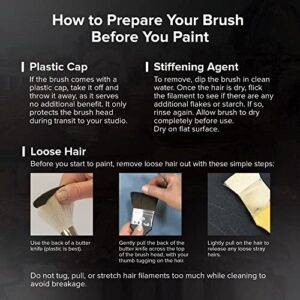
You can brush it straight from the jar. Use a flat synthetic brush. Work in thin, even layers. Avoid overworking as it starts to grab.
For rolling, thin with a bit of water. Use a high-density foam roller. Roll lightly to avoid bubbles. Back-roll with a soft brush for a smooth final pass.
To spray, thin to milk consistency. Strain the mixture before loading a gun. Spray in cross passes. Let it flash off between coats. Ventilation is important.
Surface Prep Tips
Wipe dust from panels. Seal porous wood with an acrylic sealer if needed. Tighten canvas and mist the back to remove slack. Secure paper to a board with tape or clips.
Stir the gesso well before use. Do not shake hard to avoid bubbles. If you see foam, let it sit a minute. Then brush starting from the center out.
Lightly sand between coats for the smoothest finish. Remove dust with a tack cloth. Then apply the next coat. Keep tools clean to avoid grit.
Sanding Guide for a Pro Finish
After coat two, use 320-grit paper for a quick pass. Go gentle. You are knocking down high spots, not removing the layer. Wipe off dust and check the sheen.
For a glassy feel, go to 400-grit after coat three. The surface will feel soft and even. Paint glides but still bites. Detail lines look sharp and do not bleed.
This step turns a good ground into a great one. It is worth the extra five minutes.
Common Issues and Fixes
If you see brush ridges, thin the next coat slightly. Use light pressure. Work fast and let it level. Do not double back over half-dry spots.
If you get pinholes on wood, seal the panel first. Then do a thin gesso pass. Let it dry and add a fuller coat. This closes pores and stops air bubbles.
If the surface looks chalky, sand and apply a fresh, thin coat. A clean brush helps. Avoid over-thinning, which can make the film weak.
How It Compares to Other Gessos
Against student-grade gesso, Lascaux covers faster and sands better. Student options often need many coats and still feel chalky. They can also lift under tape. I saw better grip and fewer surprises with Lascaux.
Against top pro brands, the differences are feel and flow. Some pro gessos are stiffer and sand harder. Lascaux strikes a balance. It levels well but still has fine tooth.
Price is higher than entry tiers. But finish quality and reliability save time. In my studio, that time pays for the jar. That is one of my core notes in this Lascaux gesso review.
Archival, VOC, and Safety Notes
This is a water-based acrylic gesso with low odor. Ventilate your area as you work. Wear a dust mask when you sand. Clean tools with soap and water.
The film is non-yellowing and pH-stable based on standard acrylic chemistry. That supports long-term color stability. Store away from heat and frost. Keep the lid tight to prevent skinning.
If skinning happens, remove the skin. Do not stir it back in. It can cause lumps and drag lines in your coat.
Value, Size, and Cost of Use
A 1-liter jar covers a lot of ground due to strong opacity. You will likely use two to three coats for most work. That is typical for pro studios. You can stretch each coat by thinning for the first pass.
The price is premium. But you feel where the money goes. Less sanding, fewer coats, and smoother paint flow. Those gains matter when deadlines loom.
If you prime in bulk, rolling thin first coats helps. Then brush a final coat for the best finish. That balances cost and quality.
Who Will Love It, and Who Won’t
You will love it if you want even foundations fast. You paint in layers. You sand for detail. You want clean color and strong edges.
You may not love it if you want heavy absorbency like traditional chalk gesso. Or if you need rock-bottom pricing. It is a pro choice with pro results.
My Lascaux gesso review verdict for fit is simple. If you care about the ground as much as the paint, this jar is worth it.
Real-World Use Cases
For portraits, the sanded eggshell finish is a joy. Skin tones sit down smooth. Glazes stay clear and do not streak. Pencils and charcoal erase cleanly on top.
For abstracts, the tooth holds impasto and marks. Palette-knife strokes sit proud and clean. Edges tape well with little lift. The matte ground keeps glare low.
For sketchbooks and paper, it seals fibers and stops buckling. Light washes rest on the surface. You get more time to move paint. That helps when you chase blends.
Advanced Tips From the Studio
Warm your jar to room temp before use. Cold gesso thickens and drags. Stir gently to reduce bubbles. Use wider brushes for fewer lap marks.
Crosshatch coats at 90 degrees. It hides weave and levels fast. For ultra-smooth grounds, finish with a soft microfiber roller. Then a feather-light brush pass.
For toned panels, mix a drop of acrylic color per ounce of gesso. Keep the tone light. You maintain tooth and still get mood. It is a time saver in series work.
Storage and Shelf Life
Keep the lid sealed tight. Wipe the rim clean. Store the jar in a cool, dry place. Do not let it freeze.
Most acrylic gessos keep well for many months if sealed. If it thickens, add a little water and stir. Do not add flow agents unless you test first.
Label your jar with the open date. It helps track performance over time. If odor changes or lumps form, strain or replace.
Red Flags and How to Avoid Them
Do not apply too thickly in one pass. Thick coats trap water and can skin. Do two thinner coats for a stronger film. Your sanding will improve too.
Do not sand before the coat is fully dry. You can tear the film. Wait longer in humid rooms. Feel the surface with your finger pads. It should feel cool but dry.
Do not paint oils on a damp acrylic ground. Give it time. Cured layers make happy paintings. Rushed layers cause worry later.
Environmental Factors
Humidity slows dry and cure. Use a fan for air movement. Heat speeds dry but can make brush marks worse. Aim for moderate room temps.
Dust can settle on tacky coats. Cover panels with a clean box lid while they set. Sand later and you are back to perfect.
Sunlight is fine once dry, but do not dry in direct sun. It can skin the surface fast. Even indoor light is best.
Why Ground Quality Matters
Your ground is the stage. If the stage is weak, the performance suffers. Paint flow changes. Colors sink. Edges bleed. That kills your rhythm.
With a strong ground, your brush obeys. Glazes stay clean. Complex layers feel stable. You think about art, not fixes.
That is the heart of this Lascaux gesso review. A good ground saves time and lifts your work.
Expert Checks You Can Do at Home
Do a hatch test with a sharp pencil. Check for fiber pull. If it pulls, add another coat and sand. The right tooth holds the line clean.
Do a bead test with thin acrylic. If it beads, the surface is too slick. Lightly sand and wipe. Then paint again.
Do a tape test on a corner. Press and pull. If it lifts paint, let it cure longer or add a sealing coat. Small tests prevent big headaches.
Cost-Per-Canvas Perspective
Think in surfaces, not jars. If you get two to three coats per surface with strong coverage, your cost-per-canvas drops. Less sanding time also saves money.
Cheaper gesso that needs five coats is not cheap. Time is cost. Fatigue is cost. Quality that speeds your workflow is a real value.
This framing is a key point in my Lascaux gesso review. It helps me buy smart, not just cheap.
FAQs Of Lascaux gesso review
Is Lascaux gesso good for oil painting on top?
Yes, when used as an acrylic ground. Apply two to three coats, allow a full cure, and size porous supports first if needed.
Can I sand Lascaux gesso to a smooth finish?
Yes. It sands well. Use 320- to 400-grit for an eggshell surface that still has tooth.
Can I tint it with acrylic color?
Yes. Add a small amount of acrylic paint to create a toned ground. Keep tint light to maintain tooth and strength.
How long should I wait between coats?
About an hour is safe for thin coats in a normal room. Longer in high humidity. Let the final coat cure before oils.
What surfaces can I prime with Lascaux gesso?
Canvas, paper, and wood panels are all fine. Seal very porous or oily surfaces first for best adhesion.
Final Verdict: Which Should You Buy?
Lascaux Primer Gesso is the best pick if you want smooth coverage, fine tooth, and a flexible, reliable ground. My Lascaux gesso review shows pro-level results with fewer coats and less sanding.
Choose it for clean color, easy sanding, and durable layers. This Lascaux gesso review points to a clear win for artists who value strong, consistent foundations.