Acrylic paint on a favorite shirt feels like a permanent mistake, but it usually isn’t. Knowing how to get acrylic paint out of fabric comes down to one question: is the paint still wet, or has it already dried into a plastic film? The answer decides which method works, how long it takes, and how much of the stain you can realistically remove.
Quick answer: If the acrylic paint is still wet, blot off the excess, flush the fabric from the back with cold running water, then work in liquid dish soap and rinse until the water runs clear. If it has dried, scrape off the raised paint, saturate the spot with isopropyl rubbing alcohol (or acetone on cotton and polyester only), scrub with an old toothbrush, and launder in cold water. Air-dry and check before the item ever goes in a dryer, because heat makes leftover acrylic much harder to remove.
Why Acrylic Paint Behaves Differently on Fabric
Acrylic paint is pigment suspended in a water-based acrylic polymer emulsion. While it is wet, the polymer particles are floating separately in water, which is why soap and water can carry them away. As the water evaporates, those particles squeeze together and fuse into a continuous, flexible plastic film that wraps around every fiber it touched.
That fusing step is the reason timing matters so much. A thin smear can become water-resistant in as little as 10 to 20 minutes, and a thick blob may stay soft in the middle for an hour or more. Once the film has formed, water alone will not redissolve it. You need a solvent that softens the polymer, plus mechanical action to break it away from the fibers.
The fabric matters just as much. Paint sits on the surface of tightly woven synthetics, but it soaks deep into absorbent cotton, terry cloth, and fleece. Loose knits and textured weaves give the paint more surface area to grip, so expect those to need more patience. That same grip is what makes fabric-friendly acrylic paints so durable when you apply them on purpose.
What You Need Before You Start
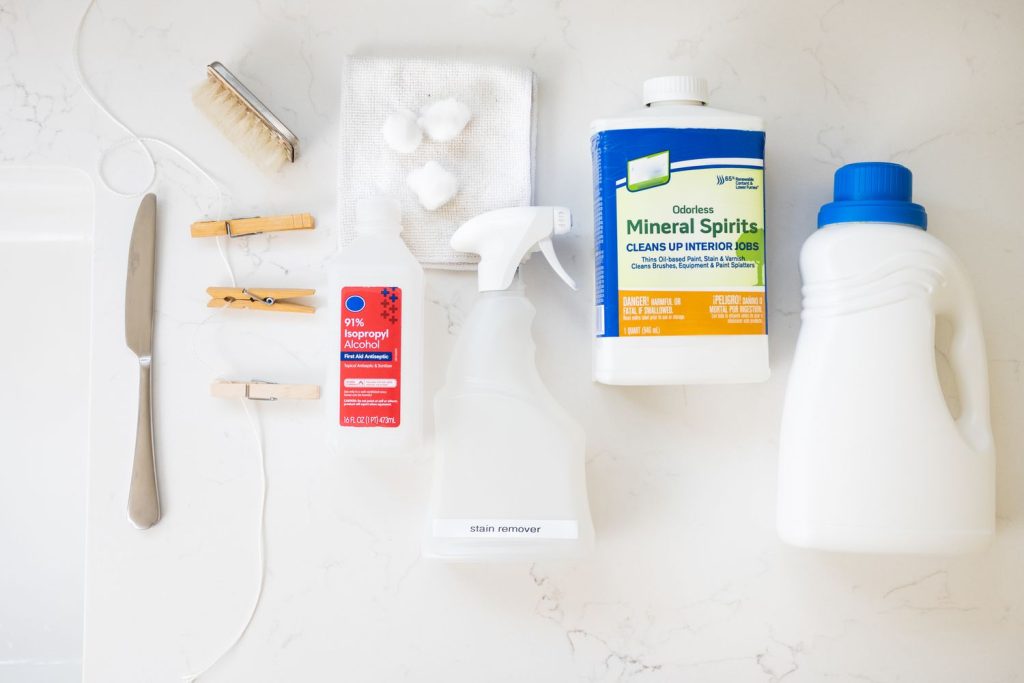
Most of what you need is already in a kitchen or bathroom cabinet. Gather it before you begin so the paint doesn’t keep drying while you search.
- Paper towels or a clean white cloth for blotting (white avoids dye transfer)
- A dull butter knife, spoon edge, or old credit card for scraping
- Liquid dish soap (a plain, dye-free formula is ideal)
- Isopropyl rubbing alcohol, 70% or 91%
- Acetone or acetone-based nail polish remover (only for fabrics that tolerate it, see the table below)
- An old toothbrush or a soft nail brush
- A small bowl and cold water
- Laundry stain remover or an enzyme pre-treatment spray
- A thick folded towel or piece of cardboard to place under the stain
Always test any solvent on a hidden spot first, such as an inside seam or the underside of a hem. Dab it on, wait two minutes, then blot with a white towel. If color comes off on the towel or the fabric changes texture, switch to a gentler method.
How to Get Acrylic Paint Out of Fabric While It Is Still Wet
Fresh paint is the best-case scenario. Act right away and you can often remove the stain completely.
- Lift, don’t rub. Scoop up any thick paint with a spoon or knife edge, then blot gently with a paper towel. Rubbing pushes pigment deeper into the weave and spreads the stain outward.
- Flush from the back. Turn the garment inside out and hold the stain under cold running water. Water pushing from the back drives paint out of the fibers the same way it went in, instead of forcing it through.
- Work in dish soap. Mix about one teaspoon of liquid dish soap with a cup of cold water, or apply a few drops straight onto the damp stain. Massage it between your fingers or with a soft toothbrush, working from the outer edge toward the center.
- Rinse and repeat. Rinse again under cold water. Repeat the soap-and-rinse cycle until no more color runs out. Three or four rounds is normal for a stain the size of a coin.
- Pre-treat and wash. Apply a laundry stain remover, let it sit for the time the label recommends, and wash on a cold cycle with your normal detergent.
- Air-dry and inspect. Hang the item to dry and look at it in good light. If a shadow remains, go to the dried-paint method below before using any heat.
Cold water is important here. Warm water speeds evaporation at the paint’s edges and can encourage the polymer to begin fusing while you are still working.
How to Remove Dried Acrylic Paint From Clothes
Dried acrylic takes more effort, and results depend on how long the paint has cured and how absorbent the fabric is. A spot that dried overnight on denim is very different from a week-old smear on a cotton sweatshirt. Still, the steps are the same.
- Scrape off the raised layer. Use a dull knife held at a low angle to flake away as much surface paint as possible. Bend the fabric over your finger to crack the film, which helps the solvent reach underneath.
- Protect the other side. Slide a folded towel or cardboard inside the garment so the solvent and loosened paint don’t transfer to the back layer.
- Saturate with alcohol. Pour or dab enough isopropyl alcohol to soak the stain completely. Let it sit for 5 to 10 minutes. Rubbing alcohol softens the acrylic film so it turns gummy and starts to release.
- Scrub in small circles. Use the toothbrush to scrub the softened paint, wiping the brush on a paper towel often. You should see color lifting onto the towel.
- Repeat as needed. Add more alcohol whenever the area starts to dry. Stubborn stains may take several rounds over 20 to 30 minutes.
- Step up to acetone if the fabric allows. On cotton, linen, polyester, and denim that passed a spot test, acetone acts faster than alcohol. Dab it on with a cotton ball, wait a minute or two, and scrub. Never use it on acetate, triacetate, or modacrylic, because it dissolves those fibers.
- Wash out the solvent. Rinse thoroughly, apply dish soap, rinse again, then launder in cold water.
- Air-dry and check again. If faint color remains, repeat the alcohol step once more before drying with heat.
Some old, heavily absorbed stains will fade to a pale ghost rather than disappear completely. That is the realistic limit for paint that has fully cured inside cotton fibers.
Best Solvents Compared
Each household solvent has strengths and risks. This table summarizes when to reach for each one.
| Remover | Works best on | Strength on dried acrylic | Cautions |
|---|---|---|---|
| Cold water + dish soap | Wet paint on any washable fabric | Low | Only effective before the paint film forms |
| Isopropyl alcohol (70–91%) | Dried paint on most fabrics | Medium to high | Can lift some dyes; flammable, use in a ventilated area |
| Acetone / nail polish remover | Cotton, linen, polyester, denim | High | Dissolves acetate, triacetate and modacrylic; can bleach some dyes |
| Alcohol-based hairspray | Small dried spots in a pinch | Low to medium | Weaker than straight alcohol; can leave residue that must be washed out |
| Ammonia-based window cleaner | Dried spots on sturdy synthetics | Medium | Never combine with bleach; test colorfastness first |
| Laundry pre-treatment | Final step after any method | Low on its own | Follow label times; not a substitute for a solvent on cured paint |
Method by Fabric Type
The same stain can call for different handling depending on what the garment is made of. Check the care label before you start.
Cotton and denim
These tolerate aggressive treatment. Alcohol and acetone are both options after a spot test, and you can scrub firmly. Denim’s twill weave hides faint residue well, so most stains end up invisible even if not fully gone.
Polyester and nylon
Synthetics are the easiest to clean because the fibers don’t absorb much paint. Alcohol usually works within one or two rounds. Use acetone carefully on nylon blends and test first, as finishes and dyes vary.
Wool and silk
Treat these gently. Use cold water and a mild soap for wet paint, and dab with alcohol rather than scrubbing for dried paint. Avoid acetone and vigorous brushing, which can felt wool or damage silk’s surface sheen. For valuable pieces, a professional dry cleaner is the safer route; tell them the stain is acrylic paint.
Acetate, triacetate and rayon
Never use acetone on acetate or triacetate. Rayon is weak when wet, so blot instead of scrubbing and support the fabric from underneath. Dry cleaning is often the best choice for these.
Upholstery and carpet
You can’t flush these from the back, so work from the outside of the stain inward with a damp cloth and dish soap, blotting constantly. For dried paint, dab alcohol onto a white cloth, press it onto the spot, and gently tease paint from carpet fibers with a fingernail or dull knife. Blot with plain water afterward to remove residue.
How to Get Metallic Acrylic Paint Out of Clothes
Metallic and iridescent acrylics contain coated mica flakes or similar reflective particles along with the usual binder. The binder comes out with the same methods above, but the flakes can stay lodged in the weave and sparkle even after the color is gone.
After treating the stain, let the fabric dry completely and press a strip of packing tape or a lint roller onto the area to lift loose flakes. Rinse once more from the back with a strong stream of cold water. Repeat tape-and-rinse cycles until the shimmer fades. Glitter acrylics respond the same way, though larger glitter pieces may need picking out with tweezers.
Can You Use Acrylic Paint Markers on Fabric, and How Do You Remove Them?
Acrylic paint markers contain a thin acrylic paint, so their marks come out the same way as brushed paint. Because the ink is fluid, it wicks into fibers quickly, so act fast and flush from the back. Once dry, treat it like any dried acrylic with alcohol.
Can you use acrylic paint markers on fabric on purpose? Yes, they work well for lettering and fine details on canvas shoes, tote bags, and cotton tees. For wash durability, heat-set the design according to the marker maker’s directions once it has dried, usually by ironing on the reverse side.
Common Mistakes That Set the Stain
- Using hot water. Heat encourages the polymer to fuse and bond to the fibers.
- Putting the garment in the dryer. Dryer heat essentially cures any remaining paint. Always air-dry until the stain is fully gone.
- Rubbing a wet stain. It spreads pigment over a wider area and drives it deeper.
- Skipping the spot test. Solvents can strip dye and leave a pale patch that is more visible than the paint was.
- Working from the front only. Flushing from the back pushes paint out the way it came in.
- Mixing chemicals. Never combine ammonia products with bleach, and rinse out one solvent before trying another.
- Giving up after one round. Dried acrylic usually lifts gradually over several applications.
Is Acrylic Paint Good for Fabric When You Want It to Stay?
All the qualities that make acrylic hard to remove are exactly why people paint on fabric with it on purpose. Plain acrylic forms a durable film, but on its own it can feel stiff and may crack or flake along folds after repeated washing. If you’re wondering whether you can use acrylic paint on fabric, our guide on using acrylic paint for fabric projects covers prep, technique, and wash care in depth.
The usual fix is an acrylic medium for fabric, often sold as textile or fabric medium. Mixed with regular acrylic, typically around one part medium to one or two parts paint (check the product’s label), it improves flexibility, helps the paint penetrate fibers, and keeps the finished design softer to the touch. After the paint dries, heat-setting with an iron, usually 3 to 5 minutes on the reverse side, helps it survive the washer. If you’d rather start with paints already suited to textiles, see our roundup of acrylic paints that hold up well on fabric.
Fabric paint vs acrylic paint
| Feature | Regular acrylic paint | Acrylic + fabric medium | Dedicated fabric paint |
|---|---|---|---|
| Hand feel when dry | Stiff, plastic-like | Softer, more flexible | Soft, designed for wear |
| Wash durability | Fair; may crack over time | Good after heat-setting | Good to very good after setting |
| Color range | Very wide | Very wide | Narrower |
| Best for | Decor items not washed often | Clothing and bags | Clothing, children’s items |
Acrylic medium vs fabric medium is a common point of confusion. General acrylic mediums (gloss, matte, glazing) extend or alter the paint but aren’t formulated for flexibility on cloth. Fabric or textile medium is specifically designed to keep the paint film soft and washable.
Preventing Paint Stains Next Time
A few simple habits will save you most of the trouble above:
- Wear a dedicated painting shirt or a full-length apron with sleeves.
- Keep a damp rag and a spray bottle of water at your station for instant blotting.
- Rinse brushes over a container, not by flicking them toward the sink.
- Cover furniture and rugs with a drop cloth or old shower curtain.
- When painting with children, choose washable formulas made for kids, which are designed to come out of fabric more easily than artist acrylics.
For textile projects, slip cardboard inside shirts and bags before painting. It stops bleed-through and gives you a firm surface.
FAQs
Does vinegar remove acrylic paint from clothes?
Vinegar can help soften small amounts of fresh paint and may loosen a thin dried film slightly, but it is much weaker than rubbing alcohol on cured acrylic. It is better used as a supporting step than as a main remover. Rinse it out fully before laundering.
Can acrylic paint come out of clothes after washing and drying?
It is harder but not always impossible. Scrape, soak with isopropyl alcohol or acetone (where the fabric allows), scrub, and repeat several times. A faint shadow may remain on absorbent fabrics because the paint has cured deep inside the fibers.
Is acrylic paint washable on fabric?
Wet acrylic washes out with soap and cold water. Dried acrylic is water-resistant, which is why it needs a solvent to remove and why it can be used intentionally for painted clothing, especially when mixed with fabric medium and heat-set.
How long do I have before acrylic paint stains permanently?
Thin smears start resisting water within roughly 10 to 20 minutes, while thicker spots stay workable longer. Treat any stain as soon as you notice it; the sooner you flush it, the easier it is to remove completely.
Will rubbing alcohol damage my clothes?
Isopropyl alcohol is safe for most fabrics, but it can lift some dyes. Test it on a hidden seam first, and rinse it out thoroughly once the paint is gone.
Can you use acrylic paint on fabric without medium?
You can, and it will stick, but the result tends to be stiffer and more likely to crack with washing. Adding a fabric medium and heat-setting the finished piece gives a softer, longer-lasting result.
Final Thoughts
Getting acrylic paint out of fabric is mostly about speed and the right solvent: cold water and soap while it’s wet, alcohol or acetone once it’s dry, and no heat until the stain is gone. Patience across several rounds removes more than one aggressive scrub.
If the stain happened while you were working on a textile project, the same chemistry can work in your favor. Browse our guide to the best acrylic paints for fabric to find colors and formulas that bond to cloth on purpose, stay flexible, and survive the wash.