

PaintingProGuide is reader-supported. When you buy through links on this page we may earn an affiliate commission at no extra cost to you.
You can paint fabric with acrylic, but plain acrylic dries stiff and can crack or flake when the fabric bends and goes through the wash. The best acrylic paints for fabric are either fabric acrylics formulated to stay soft and permanent on textiles, or regular acrylics mixed with a fabric medium, which makes them flexible and helps them bond with fibers. For fine details, acrylic paint markers that list fabric are a handy third option.
This guide compares six options from our October 2026 Amazon check across those three approaches, then walks through preparing fabric, painting, setting the paint and washing your finished piece so the design lasts. It covers T-shirts, denim jackets, canvas tote bags, sneakers and home textiles.
Quick answer: For most clothing projects, the FolkArt Brush-On Fabric Paint Beginner Set is the simplest choice: eight 2 oz colors that are permanent on textiles once dry and machine washable in cold water. For a kit with stencils and metallics, the Nicpro 12-Color Fabric Paint Set includes brushes, a palette and 30 stencils. If you already own acrylics, add Nicpro Fabric Medium and mix it 1:1 to turn your paint into fabric paint.
Our Top Picks at a Glance
- FolkArt Brush-On Fabric Acrylic Paint Beginner Set — Best overall fabric acrylic for clothing
- Nicpro 12 Colors Fabric Paint with Brushes and Stencils — Best fabric paint kit for beginners
- Nicpro Professional Effects Fabric Medium, 8.45 oz — Best way to convert regular acrylics
- TMOL Acrylic Paint Set, 24 Colors — Best acrylic set to pair with fabric medium
- Shuttle Art 36 Colors Acrylic Paint Set — Best color range for fabric medium mixing
- ARTISTRO 36 Dual-Tip Acrylic Paint Markers — Best for lettering and fine fabric details
| Product | Best For | Key Spec | Key Strength | Price Tier |
|---|---|---|---|---|
| FolkArt Fabric Set | T-shirts, linens, denim | 8 x 2 oz fabric acrylic | Soft, permanent, cold machine wash | $ |
| Nicpro Fabric Paint Kit | Beginners and gifts | 12 x 1 oz incl. 2 metallics, 30 stencils | Brushes, palette, color wheel | $ |
| Nicpro Fabric Medium | Converting acrylics | 8.45 oz, mix 1:1 | No heat setting required per listing | $ |
| TMOL 24 Acrylic | Pairing with medium | 24 x 60 ml, 12 brushes | Lists fabric among surfaces | $$ |
| Shuttle Art 36 Acrylic | More colors for textile art | 36 x 60 ml incl. metallics | Large bottles | $$ |
| ARTISTRO 36 Markers | Lettering and outlines | 1 mm fine + 1 to 5 mm dot tip | Fabric listed, no pumping | $ |
How We Chose
We compared these products using the Amazon listing details and specifications checked in October 2026, prioritizing products formulated for textiles or that clearly list fabric, stated wash durability and setting instructions, finish and softness claims, safety labels, and how widely each product is reviewed by Amazon buyers. We did not paint or wash test garments. Because wash performance depends heavily on preparation and setting, we pair each pick with the steps that give it the best chance of lasting.
- Formulated or adapted for fabric: fabric acrylics or a fabric medium.
- Flexibility and softness: paint that moves with fabric instead of cracking.
- Wash instructions: stated washability and whether heat setting is required.
- Coverage: opacity on light and dark fabrics.
- Tools included: brushes, stencils and palettes for beginners.
Three Ways to Paint Fabric with Acrylic
| Method | How it works | Best for | Watch out for |
|---|---|---|---|
| Fabric acrylic paint | Made to stay flexible and bond to fibers | Clothing that will be washed often | Fewer colors than regular acrylic sets |
| Regular acrylic + fabric medium | Medium adds flexibility and adhesion | Using paint you already own; custom colors | Must mix correctly and let cure |
| Acrylic paint markers | Paint in pen form | Lettering, outlines, small details | Small coverage; may need layering |
Best Acrylic Paints for Fabric Reviewed
1. FolkArt Brush-On Fabric Paint Beginner Set — Best Overall Fabric Acrylic for Clothing

FolkArt’s fabric line is formulated specifically for textiles. This beginner set includes eight 2 oz bottles: Wicker White, Licorice, Engine Red, Lemon Custard, Fresh Foliage, Magenta, Brilliant Blue and Pure Orange. The listing states that once dry, the paint is permanent on textiles with a soft finish, and painted fabrics can be machine washed in cold water.
It works on cotton, linen, denim, polyester and more, cleans up with soap and water while wet, and is made in the USA. Eight colors, including white and black, are enough to mix a wide range of hues for shirts, totes and tea towels. Because it is designed for fabric from the start, there is no mixing step to get wrong, which makes it the most beginner-proof option here.
Best suited for: Painting T-shirts, tote bags, denim and home linens that will be washed regularly.
Key features:
- 8 fabric acrylic colors, 2 oz each
- Soft finish, permanent on textiles when dry
- Machine washable in cold water
- Cotton, linen, denim, polyester and more
- Made in USA
Pros:
- Formulated for fabric
- Soft hand on clothing
- Clear care instructions
Cons:
- Only eight colors
- No brushes included
- Opacity on dark fabrics may need extra coats
Buying consideration: Pre-wash fabric without fabric softener before painting, and slip cardboard between layers of a garment so paint does not soak through.
2. Nicpro 12-Color Fabric Paint Kit — Best Fabric Paint Kit for Beginners

Nicpro’s kit includes ten classic colors and two metallic colors, each in 1 oz bottles, three brushes (flat, filbert and round), a mixing palette, 30 stencils and a color wheel instruction sheet. The listing describes high-pigment paint that covers cotton, denim, canvas and polyester evenly, dries quickly into a flexible, waterproof, fade-resistant layer, and stands up to washing. It meets ASTM D4236 and EN-71.
The stencils are the beginner advantage: they make it easy to add clean shapes, letters and patterns to shirts and bags without freehand skill.
Best suited for: Beginners, gift buyers and group craft sessions customizing clothing and bags.
Key features:
- 12 colors incl. 2 metallics, 1 oz each
- 3 brushes, palette, 30 stencils, color wheel
- Flexible, waterproof, fade-resistant when dry
- ASTM D4236 and EN-71
Pros:
- Complete kit with stencils
- Metallics for accents
- Washable claims for wearable art
Cons:
- 1 oz bottles are small
- Care and setting details are brief
- Stencil designs may not suit adults
Buying consideration: Use a stencil brush or sponge with a dabbing motion and very little paint to avoid bleeding under the stencil.
3. Nicpro Fabric Medium, 8.45 oz — Best Way to Convert Regular Acrylics

Fabric medium is the bridge between your existing acrylics and textiles. Nicpro’s 8.45 oz bottle is designed to improve flow, flexibility and adhesion when mixed with acrylic paint, preventing cracking and flaking so the paint moves with the fabric. The listing recommends a 1:1 ratio, adjusted for your paint’s consistency, and states no heat setting is required. It dries waterproof and fade-resistant with a soft-touch finish and conforms to ASTM D4236 and EN71.
With one bottle you can turn any acrylic set into fabric paint, which gives you a far larger color range than dedicated fabric lines.
Best suited for: Artists who already own acrylics and want to paint clothing, shoes, canvas bags and cushions.
Key features:
- 8.45 oz fabric medium
- Mix 1:1 with acrylic paint
- No heat setting required per listing
- Waterproof, fade-resistant, soft-touch finish
- ASTM D4236 and EN71
Pros:
- Unlocks your full acrylic palette
- Large bottle
- Reduces stiffness and cracking
Cons:
- Mixing ratio affects results
- Thinned paint may need more coats
- Translucent gloss finish
Buying consideration: Even though the listing says heat setting is not required, letting the paint cure for several days before the first wash helps durability.
4. TMOL 24-Color Acrylic Set — Best Acrylic Set to Pair with Fabric Medium
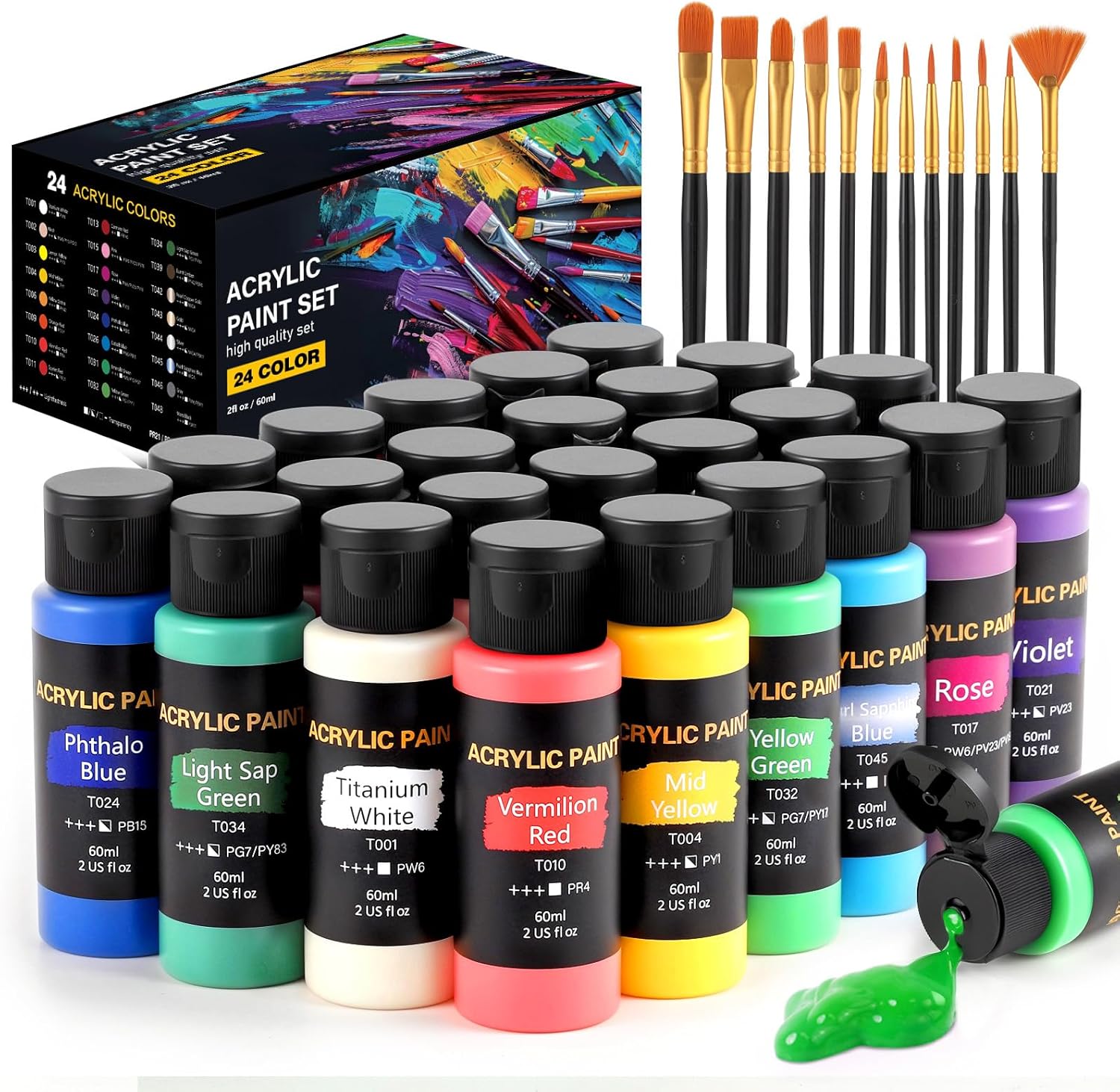
TMOL’s set includes 24 colors in 60 ml bottles and 12 brushes, and the title specifically names fabric among canvas, wood and ceramic. It conforms to ASTM D4236 and cleans up with soap and water.
On its own, regular acrylic will feel stiff on clothing, so pair it with a fabric medium for anything that will be worn and washed. Used that way, the 2 oz bottles and broad palette give you plenty of paint for several garments.
Best suited for: Painters who want a broad palette and brushes for fabric projects, mixed with medium.
Key features:
- 24 colors in 60 ml bottles
- 12 brushes
- Fabric listed among surfaces
- ASTM D4236
Pros:
- Large bottles
- Brushes included
- Versatile beyond fabric
Cons:
- Needs fabric medium for wearables
- Not formulated for textiles
- Finish not stated
Buying consideration: Mix only as much paint and medium as you will use in one session; the mixture dries like any acrylic.
5. Shuttle Art 36-Color Acrylic Set — Best Color Range for Fabric Medium Mixing

Shuttle Art’s 36 colors in 2 oz bottles, including metallic gold and silver, with 12 brushes and a palette, give you the widest choice for textile art when combined with fabric medium. The listing names fabric and leather among suitable surfaces and states ASTM D4236 conformance.
Metallics are popular on denim jackets and canvas sneakers, and having them ready-made saves mixing.
Best suited for: Textile artists painting detailed, colorful designs on jackets, shoes and bags.
Key features:
- 36 colors in 60 ml bottles incl. gold and silver
- 12 brushes and a palette
- Fabric and leather listed
- ASTM D4236
Pros:
- Most colors here
- Metallics included
- Palette for mixing with medium
Cons:
- Needs medium for soft, flexible results
- Gloss finish may look shiny on fabric
- Bottles take space
Buying consideration: Test your paint and medium mix on a scrap of the same fabric, then wash it, before painting a favorite garment.
6. ARTISTRO 36 Dual-Tip Acrylic Paint Markers — Best for Lettering and Fine Fabric Details

ARTISTRO’s 36 water-based acrylic markers each have a 1 mm fine tip and a 1 to 5 mm dot tip, with pre-activated cotton tips that need no pumping. Fabric is listed among the surfaces, alongside paper, wood, rock, glass and more, and the markers conform to ASTM D-4236. The listing notes multiple layers may be needed on dark or absorbent materials.
Markers excel at lettering, outlines and small details that are fiddly with a brush, such as names on tote bags or line art on sneakers.
Best suited for: Adding text, outlines and small details to fabric projects.
Key features:
- 36 colors
- 1 mm fine + 1 to 5 mm dot tip
- Water-based, odorless, ASTM D-4236
- Fabric listed among surfaces
Pros:
- Precise lines
- No mixing or brushes
- Large color range
Cons:
- Small coverage area
- May need layers on dark fabric
- Wash durability not specified
Buying consideration: Stretch the fabric over cardboard so the tip does not drag, and go over lines twice for stronger color.
How to Paint Fabric So It Lasts
- Choose suitable fabric. Natural fibers like cotton and denim take paint best; tightly woven synthetics can work but test first.
- Pre-wash. Wash and dry the item without fabric softener to remove sizing that blocks adhesion.
- Insert a barrier. Slide cardboard inside shirts and bags to prevent bleed-through and keep the surface taut.
- Sketch lightly. Use chalk or a washable fabric pen for your design.
- Paint thin layers. Work paint into the fibers with a stiff brush; thin layers stay flexible.
- Let it cure. Allow at least 24 hours to dry, and longer before washing.
- Heat set if directed. Follow the product’s instructions; many fabric paints recommend ironing on the reverse side with a cloth.
- Wash gently. Turn inside out, wash cold and air-dry or tumble low.
Painting Light vs Dark Fabrics
On white and light fabrics, most colors look bright with one or two coats. On black and dark fabrics, translucent colors can almost disappear. Paint a base layer of white fabric paint first and let it dry, then add color on top; the white underlayer makes colors pop. Metallics and opaque colors such as white, yellow and light blue are the strongest performers on dark denim and black tees.
Buying Guide: How to Choose Acrylic Paint for Fabric
Fabric paint or medium?
Fabric acrylics are simplest. A medium is best if you already own acrylics or want more colors.
Check wash and setting instructions
Look for clear statements about washability and whether heat setting is needed.
Softness on the garment
Fabric formulas and medium mixes stay softer than straight acrylic, which can feel stiff and crack.
Opacity for dark fabrics
Plan for a white base layer or opaque colors on dark items.
Tools for your design
Stencils and markers help with clean shapes and lettering; stiff brushes push paint into the weave.
Quantity
A large design on a jacket back uses more paint than you expect; 2 oz bottles help.
More About Acrylic on Fabric
If you are still deciding whether acrylic is right for your project, read can you use acrylic paint for fabric and our deeper explanation of whether acrylic paint can be used on fabric long-term. Accidents happen, so keep our guide on how to get acrylic paint out of fabric handy.
Common Mistakes to Avoid
- Painting thick layers of plain acrylic on clothing, which cracks when worn.
- Skipping the pre-wash, so sizing prevents adhesion.
- Forgetting cardboard inside shirts, causing bleed-through.
- Washing too soon, before paint has cured.
- Using hot water and high dryer heat on painted garments.
- Not testing on a scrap of the same fabric.
FAQs
Can I use regular acrylic paint on fabric?
Yes, but for items that will be worn and washed, mix it with a fabric medium so it stays flexible and bonds with the fibers.
Is acrylic paint permanent on fabric?
Fabric acrylics like FolkArt’s are permanent on textiles once dry. Regular acrylic with fabric medium is also durable when cured and washed gently.
Do I need to heat set fabric paint?
Follow the product instructions. Some, like Nicpro’s medium, say no heat setting is required, while many fabric paints recommend ironing on the reverse.
How long should painted fabric dry before washing?
At least 24 hours to dry, and ideally several days to cure before the first wash.
What fabric is best for painting?
Cotton, denim and canvas take paint best. Test synthetics first.
How do I paint on black fabric?
Apply a white base layer first, let it dry, then paint colors on top for brightness.
Final Recommendation
For most clothing projects, FolkArt’s Brush-On Fabric Paint set is the easiest way to get soft, permanent, washable results. Nicpro’s 12-color fabric kit is the best beginner bundle thanks to its stencils, brushes and metallics.
If you already own acrylics, add Nicpro’s fabric medium and use it with sets like TMOL’s 24 colors or Shuttle Art’s 36 for a much bigger palette, and keep ARTISTRO paint markers for lettering and fine details. Prepare the fabric, paint thin layers and let everything cure before washing. A quick test on a scrap of the same fabric, washed once before you start the real piece, is the best insurance against disappointment.


2 Comments