PaintingProGuide is reader-supported. When you buy through links on this page we may earn an affiliate commission at no extra cost to you.
Painting a denim jacket, a canvas tote or a plain T-shirt is one of the most satisfying ways to use acrylic paint, but fabric is unforgiving. It bends, stretches and goes through the wash. Regular acrylic straight from the bottle can work, yet it often dries stiff and may crack or fade with washing. The best acrylic paint sets for fabric painting either include paint formulated for textiles or work well when mixed with a fabric medium, and they pair with heat setting for designs that last.
This guide compares seven products from the October 2026 listings: one dedicated fabric paint kit, five regular acrylic sets that list fabric as a surface, and a set of dual-tip acrylic markers for detail work. We also explain exactly how to turn regular acrylic into a soft, wash-friendly fabric paint.
Quick answer: For the most reliable results on clothing, choose the Nicpro 12-Color Fabric Paint Kit, which the listing describes as permanent, washer-safe and flexible, with brushes, a palette and 30 stencils. If you already own or prefer regular acrylic, the Shuttle Art 36-color or Caliart 24-color sets work on fabric when mixed with a textile medium and heat set. For lettering and fine details, add ARTISTRO dual-tip acrylic paint markers.
Our Top Picks at a Glance
- Nicpro 12-Color Fabric Paint Kit — Best overall for fabric painting
- Shuttle Art 36-Color Acrylic Paint Set — Best large palette to mix with fabric medium
- Caliart 24-Color Acrylic Paint Set — Best classic color selection
- ARTISTRO 36 Dual-Tip Acrylic Paint Markers — Best for lettering and details
- TMOL 24-Color Acrylic Paint Set — Best starter set listing fabric use
- Nicpro 24-Color Acrylic Paint Set — Best budget set with color guide
- Nicpro 14-Color 500ml Bulk Acrylic — Best for large fabric projects
| Product | Best For | Key Spec | Key Strength | Price Tier |
|---|---|---|---|---|
| Nicpro Fabric Paint Kit | Clothes and wearables | 12 x 1 oz, 3 brushes, 30 stencils | Permanent, washer-safe, flexible listed | $ |
| Shuttle Art 36-Color | Wide palette | 36 x 2 oz, 12 brushes | Fabric listed among surfaces | $$ |
| Caliart 24-Color | Classic colors | 24 x 2 oz, 12 brushes | Matte, crack resistant listed | $$ |
| ARTISTRO Markers | Details and lettering | 36 markers, 1 mm and 1–5 mm tips | No pumping needed | $ |
| TMOL 24-Color | Starters | 24 x 60 ml, 12 brushes | Fabric listed | $$ |
| Nicpro 24-Color | Budget | 24 x 2 oz, 12 brushes, guide | Color wheel guide | $$ |
| Nicpro 14-Color Bulk | Big projects | 14 x 500 ml | Large volume | $$ |
How We Chose
We did not paint fabric with these sets. Our picks are based on Amazon listing details and specifications checked in October 2026, how well each product suits painting on textiles, and how widely each product is reviewed by Amazon buyers. Fabric medium and heat-setting guidance reflects well-established textile painting practice; always follow the instructions on your specific products.
- Fabric-specific formulation or fabric listed as a surface.
- Flexibility and wash claims where stated.
- Color range and opacity for light and dark fabrics.
- Detail tools: brushes, stencils and markers.
- Safety: ASTM D-4236 and EN71 conformity.
Fabric Paint vs Acrylic Paint: What Is the Difference?
Fabric paint is acrylic-based paint formulated to stay flexible on textiles and survive washing. Regular acrylic paint has a binder that dries into a firmer film, so thick layers on fabric can feel stiff and crack where the fabric bends.
The fix is a fabric or textile medium. Mixed into regular acrylic, it improves flexibility, helps paint soak into fibers and improves wash durability after heat setting. Our comparison of fabric paint versus acrylic paint covers the trade-offs in more detail.
Brand matters too. If you already own craft acrylics, see our reviews of whether DecoArt acrylic paint is good for fabric and whether FolkArt acrylic paint works on fabric.
Best Acrylic Paint Sets for Fabric Painting Reviewed
1. Nicpro 12-Color Fabric Paint Kit — Best Overall

Nicpro’s fabric kit is the only product here formulated specifically for textiles. It includes 10 classic shades and 2 metallic colors in 1 oz bottles, 3 brushes (flat, filbert and round), a mixing palette, 30 stencils and a color wheel instruction sheet. The listing describes high-pigment paint that covers cotton, denim, canvas and polyester, blends without cracking or peeling, and dries into a flexible, waterproof, fade-resistant layer that stands up to washing. It meets ASTM D4236 and EN-71.
Best suited for: T-shirts, denim, tote bags and anything that will be worn or washed.
Key features
- 12 x 1 oz fabric paints including 2 metallics
- 3 brushes, palette, 30 stencils
- Flexible, washer-safe listed
- ASTM D4236 and EN-71
Pros
- Formulated for textiles
- Stencils included for beginners
- Lowest price tier here
Cons
- Small 1 oz bottles
- Only 12 colors
Buying consideration: Follow the label’s drying and heat-setting instructions for best wash durability.
2. Shuttle Art 36-Color Acrylic Paint Set — Best Large Palette

Shuttle Art’s 36 colors in 2 oz bottles include metallic gold and silver, with 12 brushes and a palette. The listing names fabric among suitable surfaces and describes creamy, highly pigmented, waterproof and fade-resistant paint conforming to ASTM D-4236.
For wearable projects, mix it with a textile medium to keep the paint flexible.
Best suited for: colorful designs that need many hues.
Key features
- 36 x 2 oz
- Metallic gold and silver
- 12 brushes
Pros
- Huge palette
- Doubles for canvas and crafts
Cons
- Not fabric-specific; needs medium for soft results
Buying consideration: Mix a small test on a scrap of the same fabric and wash it before painting a favorite garment.
3. Caliart 24-Color Acrylic Paint Set — Best Classic Color Selection

Caliart’s 24 colors in 2 oz bottles include lemon yellow, medium yellow, yellow ochre, burnt sienna, orange, vermilion, crimson, scarlet, magenta, purple, phthalo blue, cobalt blue, cerulean blue and viridian, among others. The listing names fabrics among suitable surfaces and describes crack-resistant, fade-resistant, fast-drying, non-toxic matte paint.
Best suited for: painters who want a balanced palette that mixes well.
Key features
- 24 x 2 oz classic colors
- 12 brushes
- Matte finish
Pros
- Well-chosen mixing colors
- Crack resistance listed
Cons
- No metallics
Buying consideration: The matte finish suits fabric, where glossy paint can look plasticky.
4. ARTISTRO 36 Dual-Tip Acrylic Paint Markers — Best for Details

ARTISTRO’s markers combine a 1 mm fine tip and a 1 to 5 mm dot tip with pre-activated cotton tips and quick-drying water-based acrylic paint. Fabric is listed among suitable surfaces, and the paint conforms to ASTM D-4236.
Best suited for: lettering, outlines and detailed patterns on shoes, bags and shirts.
Key features
- 36 colors
- Fine and dot tips
- No pumping
Pros
- Clean lines on fabric
- Easy for beginners
Cons
- Not for filling large areas
- Wash durability depends on fabric and heat setting
Buying consideration: Place cardboard inside garments to stop marker paint bleeding through.
5. TMOL 24-Color Acrylic Paint Set — Best Starter Set
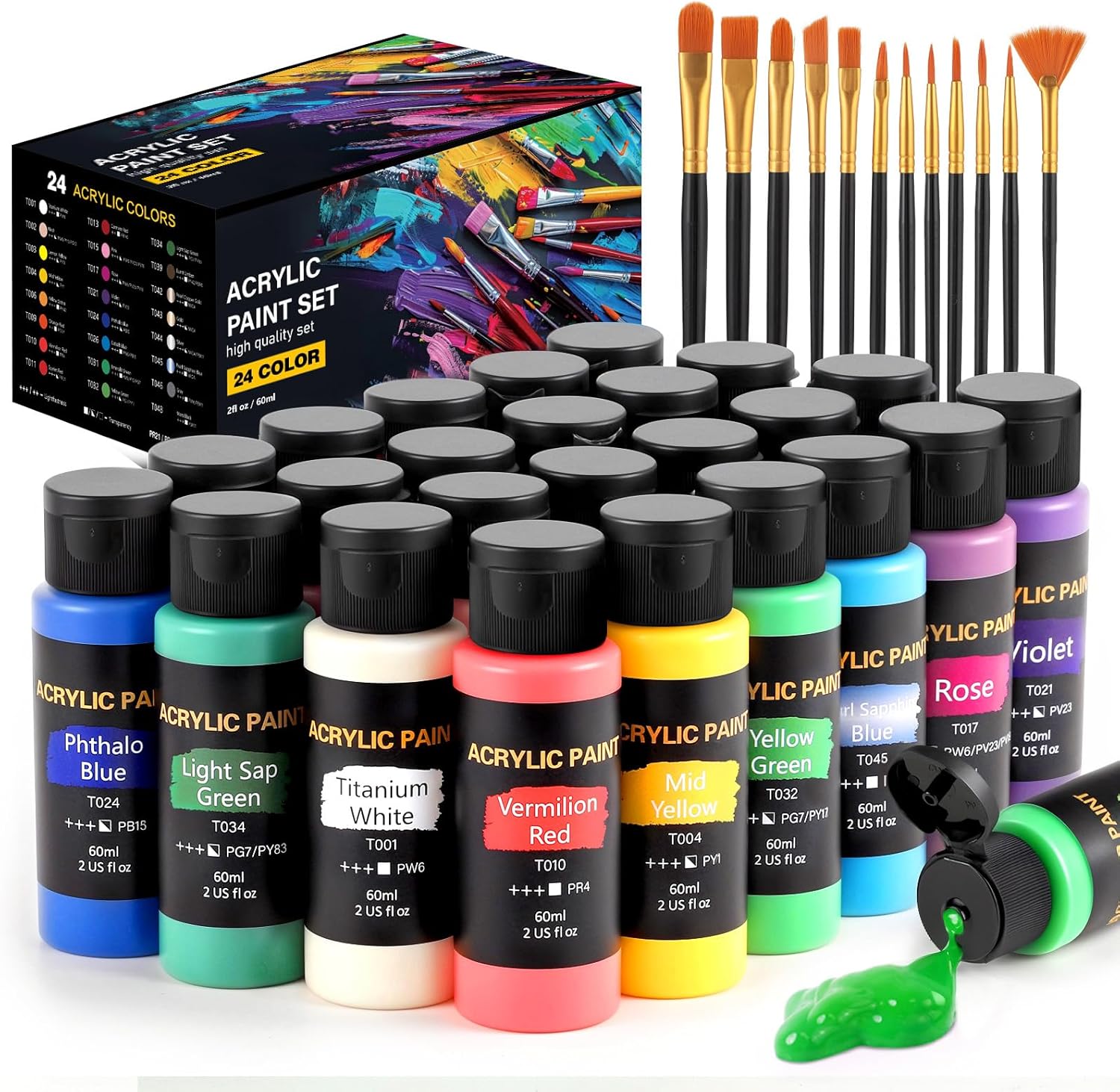
TMOL’s set includes 24 colors in 60 ml bottles and 12 brushes, with fabric among the listed surfaces alongside canvas, wood and ceramic. The paint is described as fade-resistant, quick-drying and conforming to ASTM D4236.
Best suited for: first-time fabric painters who also want paint for other crafts.
Key features
- 24 x 60 ml
- 12 brushes
- Fabric listed
Pros
- All-in-one starter
Cons
- Needs fabric medium for wearables
Buying consideration: Use the included brushes for blocking in and buy a small detail brush for fine work.
6. Nicpro 24-Color Acrylic Paint Set — Best Budget Set

Nicpro’s general acrylic set includes 24 colors in 2 oz bottles, 12 brushes, a palette and a beginner’s guide with a color wheel. The listing names fabric among many surfaces and describes waterproof, fade-resistant paint conforming to ASTM D-4236.
Best suited for: budget fabric projects and mixed crafts.
Key features
- 24 x 2 oz
- 12 brushes, palette, color guide
Pros
- Good value
Cons
- General-purpose acrylic
Buying consideration: Combine with textile medium for clothing.
7. Nicpro 14-Color 500ml Bulk Acrylic — Best for Large Projects

For large projects such as banners, canvas bags in bulk or backdrop fabric, Nicpro’s bulk set provides 14 colors in 500 ml bottles. The listing names fabric among surfaces and describes creamy, fade-resistant, fast-drying paint.
Best suited for: classrooms, events and big textile pieces.
Key features
- 14 x 500 ml
- Palette knife and sponge
Pros
- Large volume
Cons
- Fewer colors; mixing required
Buying consideration: Mix a larger batch of paint and medium at once so color stays consistent across a big piece.
How to Paint Fabric So It Lasts
- Prewash the fabric without fabric softener to remove sizing that blocks paint.
- Insert cardboard inside shirts and bags to stop paint soaking through.
- Mix regular acrylic with fabric medium according to the medium’s label, often around equal parts.
- Paint thin layers and work paint into the fibers rather than piling it on top.
- Let it dry completely, usually at least 24 hours.
- Heat set according to your paint or medium instructions, commonly by ironing on the reverse side with a cloth between iron and fabric.
- Wait before washing, then wash inside out on a gentle cycle and air dry when possible.
Painting on Dark Fabric
Bright colors disappear on black denim or navy cotton because most paints are partly transparent. Lay down a thin white or light underlayer first, let it dry, then paint your colors on top. Metallic and opaque colors show best directly on dark fabric. Expect to apply two thin coats; one thick coat cracks more easily and feels stiffer.
Using Stencils on Fabric
- Position the stencil and hold it flat with low-tack tape or a light spray of repositionable adhesive.
- Load a stencil brush or sponge lightly and blot off excess paint on paper towel.
- Dab straight down rather than brushing sideways, which pushes paint under the stencil edges.
- Build color in thin layers, then lift the stencil carefully while the paint is still slightly wet.
- Clean the stencil before reusing it so dried paint does not blur the next print.
Project Ideas by Item
- Canvas tote bags: the easiest start; flat, sturdy and forgiving.
- Denim jackets: bold backs and collar details with opaque colors and metallics.
- T-shirts: stencils and simple designs on prewashed cotton; keep paint thin for comfort.
- Canvas sneakers: markers for outlines, paint for fills, then a protective spray suited to fabric.
- Pillow covers and tea towels: home decor that shows off pattern work.
Caring for Painted Clothes
Turn painted garments inside out before washing, use cool water and a gentle cycle, and skip harsh detergents and bleach. Air drying is kinder than a hot dryer. Avoid ironing directly on painted areas after heat setting; iron on the reverse with a pressing cloth. With this care, well-applied designs can last a long time.
Choosing Brushes for Fabric
Fabric absorbs paint differently from canvas or paper, and the right brush helps you work paint into the weave. Stiffer synthetic brushes push paint into fibers better than very soft ones. A small round handles outlines and details, a flat or filbert fills shapes evenly, and a stencil brush or sponge dabber gives the cleanest stencil prints. The Nicpro fabric kit’s flat, filbert and round trio covers these basics.
Clean brushes promptly with soap and water. Acrylic mixed with fabric medium dries into a flexible film that is just as hard to remove from bristles as regular acrylic once it sets.
Mixing paint with fabric medium
Mix in a separate cup or palette well with a palette knife until the color is even and slightly thinner than tube consistency. Mix enough for the whole design; matching a custom color later is difficult. Many fabric mediums specify a ratio on the label, often equal parts medium and paint, and some recommend heat setting at a specific temperature. Follow the label rather than general rules when they differ.
Buying Guide: How to Choose Acrylic Paint Sets for Fabric Painting
Fabric paint or acrylic plus medium
Fabric paint is simplest for wearables. Acrylic plus medium offers more colors and is economical if you already own paint.
Fabric type
Natural fibers like cotton and denim take paint best. Synthetics and stretchy fabrics are harder; test first. Tightly woven, smooth fabrics give crisper lines, while loose or textured weaves soften edges and absorb more paint, so you may need extra coats.
Light versus dark fabric
Opaque colors and a white underlayer help designs show on dark fabric, while light fabric shows every color well.
Softness
Thin layers and fabric medium keep designs soft. Thick, unmixed acrylic feels stiff.
Detail needs
Stencils help beginners; markers handle lettering and outlines. Freehand painters benefit most from a small round brush and a light pencil or chalk sketch on the fabric first.
Washability
Look for wash durability claims and follow heat-setting directions.
Made a mistake? See our guide to getting acrylic paint out of fabric.
Common Mistakes to Avoid
- Skipping prewash. Sizing prevents adhesion.
- Painting thick layers. They crack and feel stiff.
- Forgetting cardboard inside. Paint bleeds through.
- Not heat setting. Designs fade faster in the wash.
- Washing too soon. Let paint cure fully first.
- Using hot dryers. Air drying extends design life.
- Painting stretchy fabric while relaxed. Stretch it slightly over cardboard so the design does not crack when worn.
- Skipping a test swatch. Paint and wash a scrap before working on a favorite garment.
FAQs
Can I use regular acrylic paint on fabric?
Yes, but it can dry stiff and crack. Mixing it with a fabric or textile medium and heat setting improves flexibility and wash durability.
Is fabric paint better than acrylic paint for clothes?
For clothes that will be worn and washed often, fabric paint like the Nicpro kit is usually more reliable. Acrylic plus medium is a good alternative.
How do I make acrylic paint permanent on fabric?
Mix with fabric medium, paint thin layers, let dry fully and heat set according to the product instructions.
Do acrylic paint markers work on fabric?
Yes. ARTISTRO markers list fabric as a surface. Use cardboard behind the fabric and heat set if recommended.
Will acrylic paint wash out of clothes?
Properly applied and heat-set paint should last many washes. Unset or thick paint can crack and fade.
What fabric is best for painting?
Prewashed cotton, denim and canvas take paint best.
Final Recommendation
For wearables, start with the Nicpro 12-color fabric paint kit; it is formulated for textiles and includes stencils. If you want a bigger palette, the Shuttle Art 36-color or Caliart 24-color sets work well mixed with fabric medium, and ARTISTRO markers handle details and lettering. The TMOL and Nicpro 24-color sets are budget starters, and the Nicpro 500ml bulk set covers large projects. For more on painting textiles, read can you use acrylic paint for fabric.