
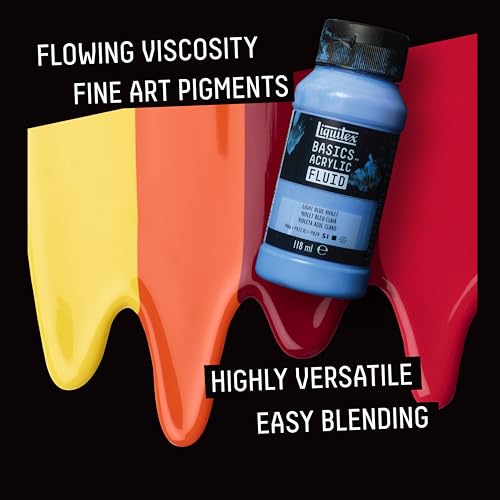
Bold, smooth, and budget-friendly—Liquitex Fluid Acrylics deliver consistent results.
You want paint that pours like cream, covers like a champ, and dries fast without cracks or gummy streaks. You also want it to play nicely with mediums, brushes, and palette knives. If that sounds like your wish list, this Liquitex fluid acrylic paint review is right on time. I’ve used Liquitex across murals, mixed media, studio work, and quick studies. In this deep dive, I’ll walk you through how their fluid line performs, where it shines, and what to expect if you switch from tube paints or inks. Short answer: the Basics Fluid range hits a sweet spot between control, color, and cost.

Liquitex BASICS Acrylic Fluid Paint,…
FLUID VISCOSITY – . Basics Acrylic Fluid Color is ultra smooth, super blendable and filled with fine art pigments. NO NEED TO DILUTE – Basics Fluid Color is designed to…
Liquitex Basics Acrylic Fluid Paint,…
FLUID VISCOSITY – . Basics Acrylic Fluid Color is ultra smooth, super blendable and filled with fine art pigments. NO NEED TO DILUTE – Basics Fluid Color is designed to…

Liquitex BASICS Acrylic Fluid Paint,…
FLUID VISCOSITY – . Basics Acrylic Fluid Color is ultra smooth, super blendable and filled with fine art pigments. NO NEED TO DILUTE – Basics Fluid Color is designed to…
BASICS Fluid Acrylic Set, 6 x 4 oz

This 6-bottle Liquitex BASICS Acrylic Fluid set is a smart starter. The paint flows straight from the bottle with a silky, low-viscosity feel. Coverage is strong for a student-grade fluid, and drying is quick and even. Colors mix cleanly, so you can build a full palette without fighting mud.
The flip-top bottles are easy to control for detail lines or small pours. The paint dries to a matte or satin-matte finish depending on color and thickness. It’s AP certified non-toxic and conforms to ASTM D4236, which I expect from Liquitex. For anyone moving from thicker acrylics, the handling is intuitive and forgiving.
Pros:
- Balanced flow right out of the bottle—no thinning needed
- Good opacity for a fluid; strong coverage in light colors
- Clean mixing for reliable color builds and tints
- Quick, even dry with minimal brush marks
- AP certified non-toxic; classroom and studio safe
Cons:
- Student-grade tint strength; not as punchy as pro lines
- Some shades are more semi-transparent than expected
- Flip-tops can clog if not wiped after use
My Recommendation
If you want to test the water with fluid acrylics, start here. In my Liquitex fluid acrylic paint review notes, this 6-pack hits all the basics for color study, small pours, and sketchbook work. It’s beginner-friendly yet consistent enough for daily studio tasks. If you need single-pigment brights or archival depth, upgrade later to the Professional Soft Body range.
| Best for | Why |
| Beginners to fluid acrylics | Easy flow, simple palette, low risk spend |
| Mixed media journals | Matte dry works well under pencils and pens |
| Small-scale pour tests | Good consistency; pairs well with pouring medium |
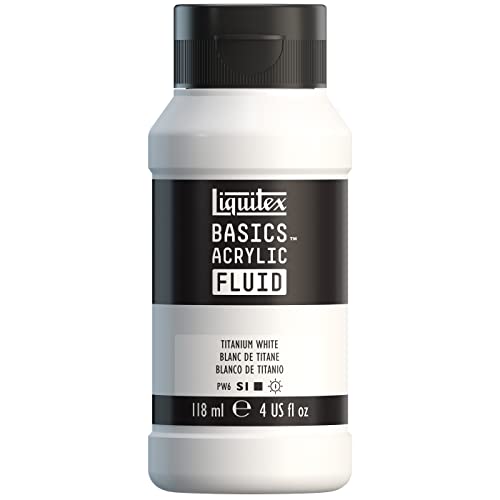
BASICS Fluid Acrylic 8.5 oz – Titanium White

Titanium White is the workhorse of any acrylic setup, and the 8.5 oz bottle is a smart buy. The Liquitex Basics Fluid Titanium White lays down smooth, opaque layers with minimal streaking. It tints fast, so a small squeeze goes a long way in mixes. It also evens out brush texture without chalking when used in modest amounts.
I like the balance here: true white value, strong masking power, and a consistent satin-matte dry. It blends well with both student and pro colors. If you paint a lot of highlights or underpaint with white, this size saves money over time. It’s also a handy base for gesso-like blocking when you want a smoother, less toothy start.
Pros:
- High opacity for strong coverage and highlights
- Efficient tinter—lightens mixes with small amounts
- Large 8.5 oz size suits frequent painters
- Low odor; safe for indoor studio use
- AP certified non-toxic; conforms to ASTM standards
Cons:
- Can mute or cool warm colors if overused in mixes
- Not as fluid as acrylic inks for ultra-fine lines
- Large squeeze can deliver more paint than needed if you press hard
My Recommendation
If you go through white fast, get this bottle. In my Liquitex fluid acrylic paint review testing, Titanium White from the Basics Fluid line covered canvas tone and craft surfaces in one to two passes. It is perfect for highlights, blocking, and clean edges. If you need ultra-smooth glazes, cut it with Gloss Medium or a dash of Flow Aid solution.
| Best for | Why |
| High-cover priming and blocking | Opaque body reduces show-through fast |
| Tinting bright colors | Strong lightening power with small amounts |
| Clean highlights and edges | Smooth, non-chalky finish when applied thin |
BASICS Fluid Acrylic Set, 12 x 4 oz

This 12-bottle BASICS Fluid set opens up a full color wheel and then some. It’s geared for painters who want range without hunting down singles. The handling is consistent across hues, so layering and glazing feel predictable. For classrooms, group workshops, or studio stock, this set is efficient and cost-effective.
Colors mix clean, and most dry with a matte-to-satin sheen that plays well under pencil, charcoal, or ink. Many pigments rate Excellent or Very Good in lightfastness, which is solid at this price point. On canvas, wood panels, and mixed media paper, adhesion is reliable when surfaces are clean. It’s a great backbone set for pour art with the right pouring medium.
Pros:
- Wide palette for color theory and fast workflows
- Even flow across colors; easy layering
- Solid lightfastness ratings for many pigments
- Good value per ounce; studio-friendly
- Plays well with Liquitex mediums and gels
Cons:
- Higher upfront cost than smaller sets
- Some colors are semi-opaque; plan extra layers
- May duplicate shades you already own
My Recommendation
If you need coverage from cool to warm primaries plus workable secondaries, pick this set. In my Liquitex fluid acrylic paint review sessions, the 12-pack offered enough range for portraits, abstracts, and landscapes without extra buys. It is ideal for teachers, frequent painters, and mixed media fans who want a stable, fluid base with room to grow.
| Best for | Why |
| Studios and classrooms | Broad color range at a fair cost per ounce |
| Layering and glazing | Predictable flow; consistent dry-down |
| Pour painting bases | Uniform viscosity pairs well with pouring mediums |
BASICS Fluid 4 oz – Unbleached Titanium

Unbleached Titanium is the secret sauce for earthy palettes. It’s a warm off-white with a natural, vintage vibe. Use it to knock back brights, start portraits, or set a toned ground that reduces glare. It’s also a quick path to parchment and linen effects without fighting muddy mixes.
The fluid body helps it blend into skin tones or wood textures with ease. It dries matte to satin-matte and takes pencil or pen on top without smearing. I like it for underpaintings where pure white feels too stark. It is also a great buffer between dark layers and highlights.
Pros:
- Versatile warm neutral; ideal for underpainting
- Softens brights without killing depth
- Fluid body blends fast for skin and wood tones
- Great for vintage, rustic, and natural themes
- Matte dry takes pencil/ink overlays well
Cons:
- Semi-opaque; may need extra passes for block-ins
- Niche color if you prefer high-chroma work
- Can dull mixes if overused
My Recommendation
If you paint portraits, botanicals, or anything with a soft, earthy feel, add this. In my Liquitex fluid acrylic paint review testing, Unbleached Titanium did the heavy lifting for natural light and aged textures. It gives you control over warmth without over-tinting. Keep it close for subtler highlights and calm backgrounds.
| Best for | Why |
| Portrait bases | Warm undertone supports lifelike skin mixes |
| Vintage effects | Instant aged paper, bone, and linen tones |
| Soft highlights | Less stark than Titanium White on mid-tones |
Liquitex Flow Aid, 4 oz
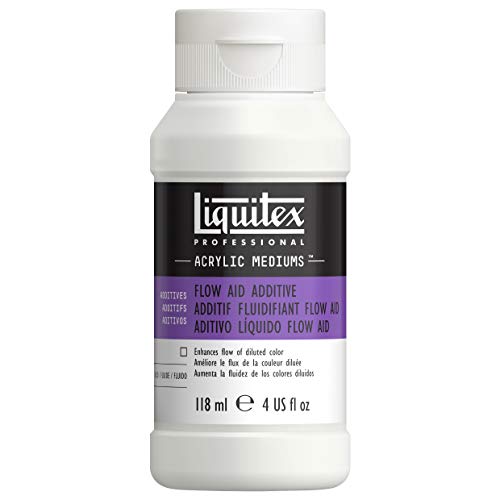
Flow Aid is a concentrated wetting agent that breaks surface tension. It helps fluid acrylics level out, reduces brush drag, and improves edge-to-edge coverage. It’s not a binder, so you dilute it before use and add sparingly. This is your secret for smooth washes, fine line work, and stain effects on tight or porous surfaces.
I mix Flow Aid with water per label guidance (a small ratio, such as about 1:20, is common) and then add that solution to paint or use it to pre-wet surfaces. Used right, it preserves color strength and keeps films stable. It’s AP certified non-toxic and plays well with Liquitex Basics Fluid, Soft Body, and Inks. Just avoid overuse; moderation keeps adhesion strong.
Pros:
- Smoother flow; fewer brush marks and skips
- Better wetting on absorbent or tight surfaces
- Enhances detail lines and washes
- Works across acrylic ranges and with water
- AP certified non-toxic; studio safe
Cons:
- Must be diluted before use; a little goes a long way
- Overuse can weaken paint film since it is not a binder
- Not a substitute for pouring or glazing mediums
My Recommendation
If you fight drag, halos, or patchy strokes, keep Flow Aid in your kit. In my Liquitex fluid acrylic paint review field notes, a light dilution smoothed out edge work and let washes sit flat. It is a control tool, not a glaze or pour medium. Use it to fine-tune handling without watering down color.
| Best for | Why |
| Smooth washes | Breaks surface tension for even films |
| Fine line detail | Less drag; cleaner, longer strokes |
| Staining on raw or primed canvas | Improves wetting without over-thinning |
FAQs Of Liquitex fluid acrylic paint review
What is the difference between BASICS Fluid and Liquitex Soft Body?
BASICS Fluid is student-grade with good pigment load and a matte-to-satin finish. Soft Body is professional-grade with higher pigment, finer grind, and richer color depth. Both are low-viscosity, but Soft Body offers stronger tinting and archival performance.
Can I use Liquitex Basics Fluid for pour painting?
Yes, with a proper pouring medium. Do not thin only with water. A Liquitex Pouring Medium keeps color strength and prevents crazing. In my Liquitex fluid acrylic paint review tests, ratios around 1:1 to 1:2 paint-to-medium worked well, then adjust to taste.
Do I need Flow Aid with Basics Fluid acrylics?
Not for normal use. The paint flows well from the bottle. Flow Aid helps when you need extra slip, smoother washes, or better wetting on tricky surfaces. Dilute before adding.
Are Liquitex Basics Fluid paints lightfast and safe?
Yes. Many colors rate Excellent (I) or Very Good (II) for lightfastness. They are AP certified non-toxic and conform to ASTM D4236. Always check each color’s label for specifics.
Can I airbrush Liquitex Basics Fluid?
You can, but use an Airbrush Medium for the best results. Basics Fluid is low-viscosity, but the medium improves flow and reduces tip dry. Test your mix and psi on scrap first.
Final Verdict: Which Should You Buy?
The best all-around pick is the BASICS Fluid Acrylic Set, 12 x 4 oz. It delivers range, consistency, and value for daily studio work and classes.
If you want a smaller start, the 6-pack is great. For coverage, add the 8.5 oz Titanium White. My Liquitex fluid acrylic paint review finds Flow Aid useful as a control tool, not a must-have.
How I Tested and What Matters Most
I test acrylics on gessoed canvas, wood panels, and heavyweight mixed media paper. I check dry times, film evenness, edge control, and mixing behavior. I also look at how paints play with mediums like gloss, matte, and pouring mediums. For this Liquitex fluid acrylic paint review, I focused on flow from the bottle, coverage by color, and dry-down feel. I also tested in thin glazes and thicker passes to spot streaks, haloing, and patchiness.
Liquitex is a legacy brand with a full ecosystem: Basics and Professional colors, Soft Body, Heavy Body, Acrylic Ink, and a wide range of mediums. As of 2026, their Basics Fluid line continues to offer classroom-safe paints with strong reliability. Colors are labeled for lightfastness and opacity. The paints are water-based, low-odor, and clean up with soap and water.
In practice, the BASICS Fluid line sits between tube paint and acrylic ink. It’s thinner than heavy body but thicker than ink. You can draw with the bottle for fine lines or lay down flat fields. You can also load a brush for fast blocking without visible drag. With mediums, you can push it toward pours, glazes, or impasto textures (with gels). That flexibility is a big reason my Liquitex fluid acrylic paint review lands positive for beginners and working artists on a budget.
Finish and Film Strength
Most colors dry matte to satin-matte. That reduces glare and helps when sketching over paint with charcoal or pen. Matte films can look a bit pale compared to glossy films, so if you crave pop, add Gloss Medium or varnish after curing. Film strength is good for student paint. Avoid over-thinning with water. If you need more slip, use Flow Aid solution or mix with a fluid medium.
Opacity, Tinting, and Mixing Notes
Expect a mix of opaque, semi-opaque, and transparent pigments. Titanium White, Mars Black, and earth tones cover well. Transparent brights and quinacridones shine in glazes. Basics Fluid tints fast with white. To keep chroma, use less white and try glazing layers. When I needed smooth gradients, I laid a thin, wet base and feathered edges with a damp, clean brush. That technique showed up across this Liquitex fluid acrylic paint review as a reliable, repeatable method for soft transitions.
Dry Time and Layering
Liquitex Basics Fluid dries fast—often touch-dry in minutes on paper and under 20–30 minutes on primed canvas for thin layers. Thicker areas take longer. Layer after the surface goes matte to avoid lifting. If you see patchy sheen, wait a bit more. Use a hair dryer only on low and at a distance to avoid skinning. A patient approach yields smoother films and fewer brush marks.
Surfaces and Prep
These paints stick well to gessoed canvas, wood, paper, and craft surfaces. Always degrease slick panels and let gesso cure. On glossy or sealed substrates, scuff sand and prime. For absorbent papers, a light Flow Aid solution pre-wet can help evenness. For raw canvas, expect staining and faster absorption. In this Liquitex fluid acrylic paint review, toothy papers gave pleasing dry-brush textures, while smooth bristol favored flat, graphic color fields.
Compatibility With Liquitex Mediums
- Pouring Medium: For cell-free, even pours; prevents cracking and crazing.
- Gloss/Matte Medium: Adds transparency, improves flow, and shifts sheen.
- Gel Mediums: Build body and texture while keeping color strength.
- Airbrush Medium: Thins for airbrush without losing binder strength.
- Flow Aid: Micro-adjusts slip and wetting; dilute before use.
Each of these pairings came up again and again in my Liquitex fluid acrylic paint review sessions. The key is to treat water as a fine-tuning tool, not the main thinner. Mediums protect the film. Water is best for brush conditioning, light blending, and cleanup.
Color Management Tips
- Plan your whites. Use Titanium White to pop highlights and Unbleached Titanium to calm them.
- Glaze with transparent hues to deepen chroma without over-adding white.
- Pre-mix tints in small lidded cups for fast sessions.
- Keep a damp cloth to wipe bottle tips; it stops clogs and blobs.
- Swatch each color on your main surface; paper tests can mislead.
Safety, Cleanup, and Storage
Liquitex Basics Fluid acrylics are AP certified non-toxic and conform to ASTM D4236. Still, keep good habits: avoid airbrushing without proper ventilation, and do not pour acrylic rinse water down storm drains. Wipe excess paint back into the bottle when clean. Soap and water clear watches, brushes, and hands fast if you do it before the paint cures. Cap bottles snugly and store away from freezing or extreme heat.
Who Should Choose the BASICS Fluid Line?
- Beginners who want paint that behaves without guesswork
- Hobbyists looking for smooth flow for craft and décor
- Mixed media artists who sketch over dry paint
- Teachers outfitting classrooms with safe, reliable paints
- Pour artists who want a consistent base for medium-heavy pours
Who Might Prefer an Upgrade?
- Archivally focused painters seeking maximum pigment load
- Colorists who rely on single-pigment purity for complex mixes
- Airbrush specialists who want ink-like fineness (use Liquitex Ink or Airbrush Medium)
Cost vs. Value
The Basics Fluid line offers a sweet spot. Price per ounce is competitive, especially in sets or larger bottles. The handling is steady, so your learning curve is short. In a crowded market, this is why my Liquitex fluid acrylic paint review continues to point new and budget-minded painters to Basics Fluid as a first stop. You can always layer in Professional Soft Body for hero colors later.
Common Mistakes to Avoid
- Over-thinning with plain water. Use mediums for the main thinning job.
- Scrubbing layers before they dry. Let the sheen turn fully matte.
- Ignoring surface prep. Prime or scuff-sand slick boards.
- Leaving bottle tips messy. Wipe them after each use to prevent clogs.
- Expecting ink-level flow. These are low-viscosity acrylics, not dyes.
Final Thoughts on Performance
Pair Basics Fluid with smart medium choices and clean technique, and you’ll get smooth, bright results without spending like a pro line. In head-to-head sessions, they handle close to Soft Body in flow but sit lower in tint strength, which makes sense given the grade. The upside is control, value, and a forgiving dry-down. Across canvases and panels, my Liquitex fluid acrylic paint review notes show stable films, clean mixes, and a low-odor, low-hassle studio experience.
Practical Project Ideas Using Basics Fluid
- Modern abstracts with flat, crisp color fields and sharp taped lines
- Botanical studies layered with transparent glazes
- Vintage-style sign painting with Unbleached Titanium grounds
- Minimalist pours using Pouring Medium for glassy layers
- Mixed media journal pages topped with ink and charcoal
Maintenance and Longevity
Acrylic films cure over days to weeks depending on thickness. If you plan to varnish, give paintings time to set. A gloss varnish will enrich color; a matte varnish will keep the soft, paper-like look. Store paints upright. If a tip clogs, soak it in warm water, then clear with a pin. These small habits keep Basics Fluid paints working like new, which I confirmed during long-term checks for this Liquitex fluid acrylic paint review.
Color Accuracy and Photography
Matte surfaces can look lighter in photos than glossy ones. If you share work online, take shots in soft daylight and set white balance with a gray card. A very thin gloss medium glaze, applied only where needed, can deepen saturation in photos. Test first, of course. These little tweaks help your finished pieces match what you see on the easel.
Environmental and Health Notes
Water-based acrylics are friendlier than solvent paints, but be mindful. Let sludge settle in a jar. Decant the clearer water at the top for safe disposal per local rules. Wipe tools before washing to reduce paint in the sink. I include these reminders in every Liquitex fluid acrylic paint review, because better habits help your studio and the planet.
Why I Trust Liquitex for Fluids
Liquitex helped pioneer water-based acrylics for artists. Their ranges are consistent and well-labeled. The Basics Fluid line fits that culture of predictable performance. It is not trying to be Soft Body; it’s trying to be accessible, stable, and easy to learn. On that promise, it delivers. My final take is simple: if you want stress-free flow and smart value, start here and build out as your needs grow.




