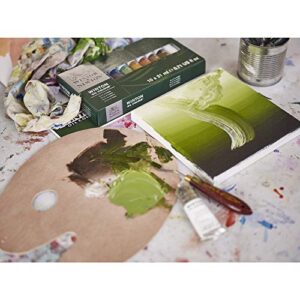
Quick answer: Are Golden acrylics good? Yes. They are widely considered among the best professional acrylic paints available. They are known for high pigment loads, detailed labeling of pigments and lightfastness, a broad range of consistencies (Heavy Body, Fluid, High Flow, OPEN, and SoFlat), and an extensive system of compatible mediums. The main drawback is price. For finished artwork, glazing, and color mixing they are an excellent choice, while beginners on a budget may prefer to start with a few key Golden colors alongside a student-grade line.
Ask a room of acrylic painters which professional brand they trust, and Golden will almost certainly come up. Ask the same room whether the price is worth it, and the answers split. Both reactions make sense, and understanding why helps you decide whether Golden belongs on your palette.
This article looks at whether Golden acrylics are good by examining what the brand offers, how its paint lines differ, where it excels, where it may not be the right fit, and what the safety labeling means for the common question “are Golden acrylics toxic?” It avoids invented test results and sticks to the brand’s published information and well-understood paint properties.
About Golden Artist Colors
Golden Artist Colors is an American paint manufacturer founded in 1980 in New Berlin, New York. The company focuses on acrylic paints and mediums and has a reputation for technical transparency, publishing detailed information about pigments, lightfastness, and product behavior. It also offers technical support and educational resources for artists and conservators.
Beyond its acrylic lines, the company is associated with Williamsburg oil colors and QoR watercolors. Its acrylic range is what most artists mean when they talk about “Golden paint.” For a closer look at colors, lines, and practical tips, our main guide to Golden acrylic paint covers the range in more depth.
Are Golden Acrylics Good? What Makes Them Stand Out
High pigment load
Golden states that its professional acrylics are made with high pigment concentrations and without fillers or extenders that dilute color. In practice, high pigment load means colors stay intense when mixed with white or thinned with medium, and a small amount of paint goes a long way.
Single-pigment colors and clear labeling
Many Golden colors use a single pigment, identified on the label by its Colour Index name (for example PB15:3 for phthalo blue). Single-pigment paints mix cleaner, more predictable colors than multi-pigment convenience mixes. Labels also typically list lightfastness and opacity information.
Lightfastness information
Lightfastness ratings help artists choose colors that resist fading. Golden publishes ratings for its colors, which matters for commissions, gallery work, and pieces that will hang for years.
Range of consistencies
Golden offers several acrylic lines with different viscosities and drying behavior, so you can choose paint suited to impasto, glazing, pouring, airbrushing, or slow blending.
Extensive medium system
Golden’s gels, pastes, mediums, grounds, and varnishes are designed to work together. That allows artists to adjust texture, sheen, drying time, and transparency within one compatible system.
Golden Acrylic Lines Compared
| Line | Consistency | Drying | Best for |
|---|---|---|---|
| Heavy Body | Thick, buttery; holds brush and knife marks | Standard acrylic drying | Impasto, expressive brushwork, general painting |
| Fluid | Pourable, like heavy cream | Standard | Glazing, staining, pouring, detailed work |
| High Flow | Ink-like | Standard | Airbrush, pens, washes, fine lines |
| OPEN | Soft, smooth | Much slower drying | Blending, wet-in-wet, portraits, printmaking |
| SoFlat Matte | Smooth, creamy | Standard; very flat finish | Illustration, design, murals, flat color |
Because these lines are compatible, you can mix them. For example, adding OPEN to Heavy Body extends working time, and adding Fluid to Heavy Body softens consistency.
How Golden Acrylics Suit Different Techniques
Glazing
Glazing builds color in thin transparent layers. Golden’s transparent single-pigment colors, such as phthalos and quinacridones, combined with a gloss glazing medium, produce luminous layers where light passes through the paint and reflects off the ground. Because pigment load is high, a small amount of paint tints a lot of medium.
Impasto and texture
Heavy Body holds peaks and knife marks well, and Golden’s gels and pastes can increase body further without diluting color too much. Heavy gels let you build thick, sculptural passages while preserving transparency or gloss, depending on the gel.
Blending and portraits
Standard acrylics dry fast, which can make soft transitions difficult. Golden OPEN acrylics stay workable much longer, allowing wet-in-wet blending more like oils. Mixing OPEN with Heavy Body offers a middle ground.
Pouring
Fluid acrylics mix readily with pouring mediums and keep strong color at high medium ratios. Golden also produces pouring-oriented mediums, which keeps the whole mix within one compatible system.
Airbrush and fine line work
High Flow acrylics are thin enough for airbrushes and refillable markers. Because they are still pigment-based rather than dye-based, they offer better lightfastness than many inks.
Flat graphic work
SoFlat Matte produces even, non-reflective color that photographs and scans well, which suits illustration and design work where glare would be a problem.
Understanding Golden’s Medium System
Part of what makes Golden useful is the range of mediums that change paint behavior without breaking compatibility. Broadly, they fall into a few categories:
- Gels: Add body or transparency; available in gloss, semi-gloss, and matte, and in soft to extra-heavy consistencies.
- Pastes: Opaque or semi-opaque materials for texture and sculptural effects.
- Fluid mediums: Thin paint for glazing, pouring, or staining while maintaining binder strength.
- Grounds: Specialized surfaces for pastel, watercolor-like effects, or absorbent painting.
- Retarders and OPEN mediums: Slow drying for blending.
- Varnishes: Protective topcoats in different sheens, some designed to be removable.
You do not need many of these to benefit from Golden paint. A gloss medium and a retarder cover most beginner needs, with gels and pastes added as your work develops.
Where Golden Acrylics May Not Be the Best Fit
Price
Golden is among the more expensive acrylic brands. Cadmium, cobalt, and some specialty colors are particularly costly. For beginners painting frequently or covering large areas, cost adds up quickly.
Strong pigments can overwhelm
Highly concentrated colors like phthalo blue and phthalo green are powerful. A small amount can dominate a mix, which can frustrate beginners used to weaker student paints.
Fast drying in standard lines
Like most acrylics, Heavy Body and Fluid dry quickly, especially in warm or dry conditions. Painters who prefer long blending times may need OPEN or a retarder.
Not always necessary for practice
For quick studies, crafts, or underpainting, the advantages of professional paint may not be noticeable enough to justify the cost.
Golden vs Student-Grade Acrylics
| Factor | Golden professional acrylics | Typical student acrylics |
|---|---|---|
| Pigment load | High | Moderate |
| Single-pigment colors | Common | Less common; more hues and mixtures |
| Labeling | Pigments, lightfastness, opacity | Varies |
| Mixing strength | Strong, clean mixes | Can turn chalky or dull faster |
| Price | High | Lower |
| Best for | Finished work, glazing, color accuracy | Learning, practice, large areas |
If you are weighing Golden against another professional brand, our Liquitex vs Golden acrylic paint review compares the two on consistency, color range, and value.
Are Golden Acrylics Toxic?
Most Golden acrylic colors are water-based and labeled under the ACMI (Art and Creative Materials Institute) program. Many carry the AP (Approved Product) seal, meaning they are considered non-toxic under normal use. Some colors, however, contain pigments that require cautionary labeling.
- Colors with cautionary labels: Paints made with cadmium, cobalt, manganese, or certain other pigments may carry a CL (Cautionary Label) and specific warnings. Always read the label of each color.
- Normal brush use: In typical brush painting, the main risks come from ingestion or prolonged skin contact. Avoid eating, drinking, or smoking while painting, and wash hands after use.
- Spraying and sanding: Airbrushing or sanding dried paint creates particles that can be inhaled. Use ventilation and appropriate respiratory protection for these techniques, especially with pigments that carry cautionary labels.
- Disposal: Avoid pouring rinse water containing heavy-metal pigments down drains in large amounts. Let paint solids settle or dry and dispose of them as solid waste according to local guidance.
Golden provides safety data sheets for its products, which list specific hazards and handling instructions. When in doubt, consult the label and safety data sheet for the exact color.
Common Misconceptions About Golden Acrylics
“Expensive paint will fix my paintings.” Better paint makes mixing cleaner and colors more durable, but it does not replace skills like value control, composition, and brush handling. Many artists improve fastest by learning with modest paint and upgrading key colors as they understand what they need.
“All Golden colors cost the same.” Prices are grouped into series based on pigment cost. Earth colors and many organic pigments sit in lower series, while cadmiums, cobalts, and some specialty colors cost considerably more. Choosing lower-series pigments for your core palette keeps costs manageable.
“Hues are always inferior.” A hue is a color made to resemble a more expensive pigment, such as a cadmium hue. Well-made hues can be lightfast and useful, though they may mix slightly differently from the original pigment. The label tells you which pigments are inside.
“Professional paint is harder for beginners.” The main adjustment is strength. Use smaller amounts of strong colors, and you will find professional paint often behaves more predictably than cheaper paint.
Who Should Use Golden Acrylics
- Professional and serious hobby painters who want reliable color, lightfastness, and consistency.
- Glazing and layering painters who need transparent single-pigment colors.
- Mixed-media artists who use gels, pastes, and grounds in one system.
- Painters selling work who need documented lightfastness.
- Artists working with pouring, airbrush, or slow blending who benefit from specialized lines.
Who Might Choose Something Else
- Absolute beginners on a tight budget who are still learning brush handling.
- Crafters painting decor where lightfastness and mixing strength matter less.
- Muralists covering large areas who may prefer more economical mural paints.
How to Get Value From Golden Acrylics
- Start with a limited palette. A warm and cool version of each primary plus titanium white can mix a huge range. Example: Hansa yellow, a warm yellow, phthalo blue, ultramarine blue, a quinacridone red, a warm red, and titanium white.
- Use Golden for key colors. Pair a few professional colors with student paint for less critical areas or underpainting.
- Stretch with mediums. High pigment load allows glazing medium or gel medium to extend paint without losing much intensity.
- Buy larger sizes of workhorse colors. Titanium white and frequently used colors are often cheaper per ounce in larger containers.
- Store properly. Keep caps clean and tight to avoid waste from dried paint.
Tips for Using Golden Acrylics Well
- Add strong colors to lighter ones, not the reverse, to avoid mixing too much paint.
- Use a spray bottle or stay-wet palette to keep Heavy Body paints workable longer.
- Try OPEN acrylics or retarder for blending skin tones and skies.
- Test glazes with gloss medium for luminous layers.
- Varnish finished work with a removable varnish for protection and even sheen.
FAQs
Are Golden acrylics worth the money?
For finished artwork, color mixing, and long-term durability, many artists find Golden worth the cost because of its pigment load, labeling, and consistency. For practice and crafts, a cheaper paint may be sufficient.
Are Golden acrylics toxic?
Many Golden colors carry the AP non-toxic seal, but some colors containing pigments such as cadmium or cobalt carry cautionary labels. Read each label, avoid ingestion, and use ventilation and protection when spraying or sanding.
What is the difference between Golden Heavy Body and Fluid acrylics?
Heavy Body is thick and holds brush marks, while Fluid is pourable and better for glazing, pouring, and fine detail. Both have similar pigment strength according to Golden.
Are Golden acrylics good for beginners?
They can be. Beginners benefit from strong, clean colors, but the price can be limiting. A small set of key Golden colors combined with student paint is a practical approach.
Do Golden acrylics dry darker?
Most acrylics, including Golden, dry slightly darker because the binder changes from milky to clear. High-quality acrylics with clear binders tend to show less color shift.
Can you mix Golden with other acrylic brands?
Yes. Acrylics from different brands are generally compatible. Test mixes for consistency and finish.
Final Thoughts
Golden acrylics are good because they combine strong pigments, clear labeling, documented lightfastness, and a versatile system of paints and mediums. The trade-off is cost, which you can manage with a limited palette and smart use of mediums. For guidance on which Golden colors and lines to start with, explore our full guide to Golden acrylic colors, uses, and pro tips.