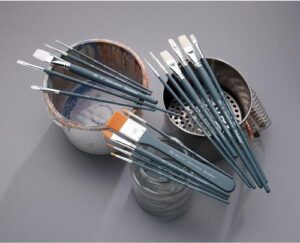
Quick answer: Yes, you can use acrylic brushes for gouache. Most acrylic brushes are synthetic, and synthetic fibers handle gouache well. Soft synthetic rounds and flats work best because gouache re-wets when dry, and stiff bristle brushes can scrub up the layers underneath. Avoid brushes with dried acrylic in the heel, since they won’t hold a point, and rinse often because gouache is pigment-heavy.
If you already paint in acrylic and want to try gouache, the good news is that you probably do not need a new set of brushes. The question “can you use acrylic brushes for gouache” comes up because gouache behaves partly like watercolor and partly like acrylic. It is opaque and flat like acrylic, but it re-dissolves in water like watercolor. That second trait affects which acrylic brushes work well and which cause trouble.
This guide explains which types of acrylic brushes suit gouache, which to avoid, how to care for brushes when switching between media and how to build a small, versatile brush kit. If you are shopping for brushes that cover both media, our roundup of the best acrylic paint brush sets includes options with soft synthetics that also suit gouache.
How Gouache Differs From Acrylic (and Why It Matters for Brushes)
Gouache is a water-based paint made with pigment and gum arabic, the same binder used in watercolor, often with added filler that makes it opaque. Acrylic uses an acrylic polymer binder that becomes permanent and water-resistant when dry.
That difference creates three brush-related consequences:
- Re-wetting: Dry gouache softens when touched with a wet brush. Stiff brushes or heavy scrubbing can lift and muddy underlayers.
- Consistency: Gouache is typically used at a creamy, cream-like consistency for flat opaque areas, or thinned for washes. Soft brushes with good spring help lay down flat, even coats.
- Cleanup: Gouache rinses out with plain water even when dry, so it is gentler on brushes than acrylic. A brush that survives acrylic will handle gouache cleanup easily.
Which Acrylic Brushes Work Best for Gouache
| Brush type | Suitability for gouache | Best uses |
|---|---|---|
| Soft synthetic round | Excellent | Details, lines, small shapes, lettering |
| Soft synthetic flat or bright | Excellent | Flat color areas, crisp edges, backgrounds |
| Synthetic filbert | Very good | Soft-edged shapes, petals, leaves |
| Angled flat | Very good | Corners, clean edges, architectural shapes |
| Synthetic mop or wash brush | Good | Pre-wetting, washes, large backgrounds |
| Stiff synthetic or hog bristle | Limited | Dry brush texture; risk of lifting layers |
| Fan brush | Limited | Foliage texture, grass, special effects |
| Brushes with dried acrylic in the heel | Poor | Better kept for rough texture or crafts |
Soft synthetic rounds
These are the workhorses of gouache painting. A size 2 or 4 round handles details, while a size 8 to 10 round covers moderate areas and still makes fine lines if it holds a point. Look for brushes that spring back to shape after each stroke.
Flats and brights
Gouache is popular for flat illustration and design work, where clean, even blocks of color matter. A soft synthetic flat of 1/4 to 1/2 inch makes smooth, streak-free fills. Brights, which have shorter hairs, give more control on edges.
Filberts
A filbert’s rounded tip creates soft-edged shapes, which suits botanical work, clouds and organic forms. Synthetic filberts sold for acrylic generally work well with gouache.
Acrylic Brushes to Avoid With Gouache
Very stiff brushes
Stiff bristle brushes are designed to push thick acrylic and hold impasto. With gouache, they tend to drag and scrub, lifting the dry layer underneath and creating muddy, streaky color. They can be useful for intentional dry brush texture, but they are not good general gouache brushes.
Damaged brushes with dried acrylic
Acrylic that dries in the heel of a brush (the part near the ferrule) splays the hairs and prevents a good point. Since gouache relies on precise edges and smooth coverage, these brushes cause frustration. Keep them for texture, crafts or applying masking fluid.
Very large, coarse brushes
Gouache is usually painted at smaller scales. Large coarse brushes hold too much water and pigment and are difficult to control for even fills.
Should You Keep Separate Brushes for Acrylic and Gouache?
It is not required, but many painters prefer separate sets for practical reasons:
- Acrylic is harder on brushes. Even well-cleaned acrylic brushes can slowly accumulate residue that stiffens hairs. Gouache brushes stay softer when they never touch acrylic.
- Contamination is minor but possible. Traces of acrylic in a brush won’t ruin gouache, but if acrylic residue dries in the brush, it may leave tiny insoluble flecks in gouache layers.
- Convenience. Switching media without deep-cleaning each time saves effort.
A practical compromise is to choose a few soft synthetic brushes and label them for gouache only, while using your other acrylic brushes interchangeably. Colored tape or a dot of nail polish on the handle is enough to tell them apart.
How to Use Acrylic Brushes With Gouache: Step by Step
- Clean the brushes thoroughly. Wash with mild soap and warm water to remove any acrylic residue. Rinse until the water runs clear.
- Dampen the brush. Dip in clean water, then blot lightly on a paper towel. A damp brush loads gouache more evenly than a dry one.
- Mix gouache to the right consistency. For flat opaque areas, aim for a creamy, yogurt-like consistency. For washes, add more water.
- Load the brush evenly. Work paint into the bristles by stroking on the palette rather than dipping just the tip.
- Apply with light, confident strokes. Lay the paint down without scrubbing. For flat fills, work in one direction and keep a wet edge.
- Let layers dry before adding more. When layering, use a light touch and fairly thick paint so the lower layer does not dissolve.
- Rinse often. Gouache is pigment-heavy and can build up near the ferrule. Rinse frequently and change water when it becomes cloudy.
Brush Care When Switching Between Acrylic and Gouache
Good care keeps a shared brush set working for both media:
- Never let acrylic dry in a brush. Rinse immediately and wash with soap after each session.
- Gently massage soap into the heel of the bristles to remove pigment hidden near the ferrule.
- Reshape the tip with your fingers after washing.
- Dry brushes horizontally or bristles-down, not upright, so water does not run into the ferrule and loosen the glue.
- Avoid soaking brushes in water for long periods, which can swell wooden handles and loosen ferrules.
Building a Simple Gouache Brush Kit From Acrylic Brushes
You can start gouache with just four or five brushes, many of which may already be in your acrylic set:
| Brush | Approximate size | Purpose |
|---|---|---|
| Small round | Size 0 to 2 | Fine details, highlights, lettering |
| Medium round | Size 4 to 6 | General painting, shapes |
| Large round | Size 8 to 10 | Larger areas that need a point |
| Small flat | 1/4 inch | Edges, small flat fills |
| Medium flat | 1/2 inch | Backgrounds, sky, large shapes |
Add a filbert or angled flat if you paint a lot of organic shapes or architecture.
Synthetic Fiber Types: What the Labels Mean
Acrylic brushes are sold with names like “taklon,” “nylon,” “golden synthetic,” “synthetic sable” or “synthetic mongoose.” These names describe the feel and stiffness of the fibers more than their chemistry, and each behaves a little differently with gouache.
- Soft taklon and golden synthetics: smooth, springy and inexpensive. They lay down flat gouache well and hold a decent point. A very good default choice.
- Synthetic sable blends: designed to imitate natural sable. They hold more water and paint, which helps with washes and long strokes.
- Synthetic mongoose or firm synthetics: stiffer, designed for heavier acrylic or oil. Useful for gouache texture work, but they can lift layers if used heavily.
- Synthetic squirrel: very soft and absorbent, used for mops and wash brushes. Good for large, soft areas and pre-wetting paper.
If a brush feels soft and springy when you press it against the back of your hand, it will likely suit gouache. If it feels stiff and scratchy, keep it for texture.
Match Brush Size to Paper Size
Gouache is often painted in sketchbooks and on small sheets, and using brushes that are too large for the format is a common frustration. As a rough guide:
- Pocket sketchbooks (A6 or around 4×6 inches): rounds from size 0 to 4 and a 1/4 inch flat.
- Standard sketchbooks (A5 to 9×12 inches): rounds from size 2 to 8 and flats from 1/4 to 1/2 inch.
- Larger sheets (11×14 inches and up): add a size 10 to 12 round and a 3/4 to 1 inch flat for backgrounds.
Brush sizes are not standardized across brands, so a size 6 from one maker may be noticeably larger than a size 6 from another. Judge by the actual hair length and width when building your kit.
Paper Matters Too
The surface affects how brushes behave with gouache. Heavier watercolor or mixed media paper, around 140 lb (300 gsm), resists buckling and lets you lay down flat coats without the brush catching on wrinkles. Smooth hot-press paper makes flat fills and crisp edges easier, while textured cold-press paper adds grain that shows through thin layers. On thin sketch paper, soft brushes with less water work better, since a heavily loaded brush can make the paper ripple and pool paint.
Can You Use Natural Hair Brushes for Gouache?
Yes. Natural hair brushes such as sable and squirrel are traditional watercolor brushes and work well with gouache because it rinses out easily. Acrylic brushes are usually synthetic because acrylic is harder on natural hair. If you have natural hair watercolor brushes, they are suitable for gouache. If you only have synthetic acrylic brushes, they work fine too.
Common Problems and Fixes
| Problem | Likely cause | Fix |
|---|---|---|
| Streaky flat areas | Paint too thin or too dry; stiff brush | Use a soft flat, creamier paint, steady strokes |
| Lower layers lifting | Scrubbing with stiff brush; too much water | Use soft brush, thicker paint, lighter touch |
| Brush won’t hold a point | Dried acrylic or splayed hairs | Reserve brush for texture; use a clean round |
| Chalky or muddy color | Overworking; dirty water | Change water often; apply fewer strokes |
| Paint pooling at edges | Too much water in brush | Blot brush lightly before loading |
Gouache Techniques That Suit Acrylic Brushes
Flat color blocking
Load a soft flat with creamy gouache, lay down strokes in one direction and slightly overlap each stroke while still wet. This creates the classic poster-like flat finish.
Layering light over dark
Because gouache is opaque, you can paint lighter colors over darker ones. Use a soft round with thick paint and a single confident stroke to avoid lifting the lower layer.
Dry brush texture
Use an older or slightly stiffer acrylic brush, load with a little gouache and drag across the surface. This works well for wood grain, grass and rough textures.
Soft gradients
Lay down two colors side by side while wet and blend the meeting point with a clean, damp soft brush. Work quickly, since gouache dries fast on paper.
FAQs
Are acrylic brushes good for gouache?
Soft synthetic acrylic brushes work very well for gouache. Stiff bristle brushes are less suitable because they can lift dried gouache layers.
Can you use watercolor brushes for gouache?
Yes. Watercolor brushes are a natural fit for gouache because both paints use gum arabic and rinse out easily with water.
Should I use separate brushes for gouache and acrylic?
It is not required, but many painters keep a few soft brushes for gouache only, because acrylic residue can slowly stiffen bristles.
What brush shape is best for gouache?
Rounds and flats are the most useful. Rounds handle details and lines, while flats create even blocks of color and clean edges.
Will acrylic residue ruin gouache?
Small traces of acrylic won’t ruin gouache, but dried acrylic flakes can create tiny specks. Clean brushes thoroughly with soap before switching.
Can I use cheap acrylic brushes for gouache?
Yes, as long as they hold their shape and spring back. Inexpensive soft synthetics are fine for practice, though they may lose their point faster than higher quality brushes.
Next Step
Your acrylic brushes are very likely ready for gouache already. Choose soft synthetics, keep them clean and save the stiff bristles for texture. If you want a single set that handles acrylic, gouache and mixed media well, browse our top-rated acrylic brush sets for versatile painters.