Heavy body acrylic comes out of the tube with the consistency of soft butter. It holds a peak, keeps the shape of every brush hair and knife edge, and covers in a single pass where fluid paint would need three. That body is the whole point, but it also confuses painters used to thinner paint: strokes drag, layers crack when piled too thick, and blends set before they are finished. Here is how to use heavy body acrylic paint on canvas so its thickness works for you instead of against you.
Quick answer: Use heavy body acrylic straight from the tube for opaque coverage, impasto and palette knife work, and thin it with acrylic medium (not lots of water) when you need smoother strokes or glazes. Start with a thin, slightly diluted underpainting, then build thicker paint on top. Use stiff synthetic or bristle brushes and knives, keep the palette misted, and add gel medium to very thick passages to reduce cracking and stretch the paint.
What Makes Heavy Body Acrylic Different
All acrylics share the same basic ingredients: pigment and an acrylic polymer emulsion binder. What changes between types is viscosity, which affects how the paint behaves on canvas.
| Type | Consistency | Typical use |
|---|---|---|
| Heavy body | Thick, buttery, holds peaks | Impasto, knife painting, visible brushstrokes, opaque coverage |
| Soft body | Creamy, like yogurt | Smooth brushwork, general painting, some blending |
| Fluid | Pourable, like heavy cream | Glazes, washes, pouring, fine detail, airbrush (when thinned) |
| High flow / ink | Watery | Lines, pens, staining, airbrush |
Heavy body paint usually contains a high pigment load and a thickened binder. That means strong color and good coverage, but also that it needs the right tools and techniques to move easily across a canvas.
Choose a Canvas That Can Take It
Thick paint is heavier and pulls on a surface as it dries. The canvas matters more than with thin paint:
- Tension: a firm, well-stretched canvas prevents bounce under knife pressure.
- Weight: heavier cotton duck, around 10 to 12 oz primed, holds up better to scraping and thick layers than very light canvas.
- Texture: medium texture grips thick paint well; very smooth surfaces can let knife strokes skid.
- Rigid options: for very heavy impasto, a canvas panel or a canvas mounted on board removes flex entirely and reduces the risk of cracking.
- Bracing: large stretched canvases need a cross brace so the weight of paint does not bow the frame.
Budget canvases work fine for practice, but thin, loosely stretched ones show their limits quickly with heavy paint. Our guide to the best budget canvas for acrylic paint compares affordable options that still hold up to thicker work.
Tools That Suit Heavy Body Paint
Brushes
Soft watercolor-style brushes collapse under heavy paint. Choose:
- Stiff synthetic brushes designed for acrylic, in flats, brights and filberts.
- Hog bristle brushes for loose, textured strokes. Clean them promptly, because acrylic dries fast in natural bristle.
- Larger sizes than you might expect. A size 8 to 12 flat moves thick paint more efficiently than a small round.
Palette knives
A trowel-shaped painting knife with a cranked handle is the most versatile. Have one medium and one small knife. Flexible steel blades spread paint smoothly; stiffer blades lift and place it.
Palette
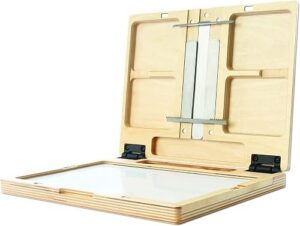
A stay-wet palette keeps heavy body paint workable for hours. Alternatively, use a glass or plastic palette and mist it regularly. Squeeze paint in generous mounds; thick paint skins over at the edges first, but the center stays usable longer than with a thin smear.
How to Use Heavy Body Acrylic Paint on Canvas: Step by Step
- Tone the canvas. Thin a small amount of paint with water or medium and brush a transparent wash over the whole canvas. This kills the white and helps judge values.
- Sketch lightly. Use thinned paint and a small brush, or a pencil, to place the main shapes. Keep it loose.
- Block in with thinner paint. Mix heavy body paint with about 10 to 20 percent water or a fluid medium and block in large areas of color. This underlayer should be fairly thin so later thick paint has a solid, flexible base.
- Build middle values. Use the paint closer to tube consistency, applying it with a stiff brush. Let your strokes follow the form of the subject.
- Add texture and impasto. Use a palette knife or loaded brush to place thick paint where light hits, in foreground areas or where texture adds interest. Keep the thickest paint for the final stages.
- Refine edges. Soften some edges by dragging a clean, damp brush along them; keep others crisp. Contrast between soft and hard edges adds depth.
- Final highlights. Apply the brightest notes thickly and leave them untouched. Overworking a thick highlight flattens it.
- Dry and varnish. Allow thick passages to dry thoroughly, often several days for heavy impasto, before applying an isolation coat and varnish.
Thinning Heavy Body Acrylic the Right Way
Water thins acrylic, but too much breaks down the binder and weakens adhesion. Most acrylic paint makers suggest keeping water additions moderate; a widely used rule of thumb is to stay below roughly 25 to 30 percent water when painting on a non-absorbent primed canvas. For larger changes in consistency, use mediums instead:
| Goal | Use | Effect |
|---|---|---|
| Smoother strokes | Fluid matte or gloss medium | Thinner paint that still binds well |
| Glazes | Glazing medium | Transparent layers with longer working time |
| Longer blending time | Slow-drying or retarder medium (in label amounts) | More time to blend wet into wet |
| Thicker texture | Heavy gel medium | More body, extends paint, holds peaks |
| Sculptural texture | Modeling paste | Stiff, sandable texture; paint over once dry |
Impasto Without Cracking
Thick acrylic can crack as it dries, especially when water evaporates from a deep layer that has already formed a skin. To reduce the risk:
- Mix in gel medium. Combining tube paint with heavy gel extends the paint, adds flexibility and lowers the risk of cracking. A 1:1 mix is a common starting point.
- Build in stages. Rather than one inch-thick slab, apply several thinner thick layers, letting each dry.
- Avoid adding water to impasto. Watery thick paint shrinks more as it dries.
- Use a rigid support for very heavy texture. Flexing canvas plus thick paint is a recipe for cracks over time.
- Control drying. Avoid fans, heaters or direct sun on thick layers; fast surface drying traps moisture underneath.
Blending With Heavy Body Paint
Heavy body acrylic is not the easiest paint for soft blends, but it can be done:
- Work in smaller areas. Blend one section at a time while the paint is wet.
- Add a little slow-drying medium to the colors you want to blend.
- Lay colors side by side, then stroke back and forth along the boundary with a clean, slightly damp brush.
- Mist lightly if the paint starts to drag.
- Use broken color as an alternative. Placing small strokes of related colors next to each other creates an optical blend that suits thick paint beautifully.
Texture Techniques for Heavy Body Acrylic on Canvas
- Knife spreading: load paint on the underside of the blade and drag it flat to make clean planes, ideal for skies, buildings and abstracts.
- Knife edge marks: touch the edge of a loaded knife to the canvas for crisp lines like grass blades or rigging.
- Scumbling: drag a dry, lightly loaded brush over dry texture so paint catches only the raised areas.
- Sgraffito: scratch through wet paint with the knife tip or brush handle to reveal the layer beneath.
- Stamping and lifting: press a knife flat into wet paint and lift sharply to create ridges and peaks.
- Glazing over texture: once texture dries, a transparent glaze settles into the valleys and darkens them, emphasizing relief.
Common Problems and Fixes
Paint drags and will not spread
The paint is too stiff for the brush or the canvas is too absorbent. Add a few drops of fluid medium, use a stiffer brush, or apply a thin first layer to seal the surface.
Colors look different when dry
Acrylic often darkens slightly as it dries because the binder turns from milky to clear. Test a swatch, let it dry, and adjust your mix.
Thick paint cracked
Too thick in one layer, too much water, or drying too fast. Fill small cracks with gel medium and paint over; next time mix paint with gel.
Surface looks patchy
Different areas have different sheen because of varying amounts of water and medium. A coat of varnish unifies the finish.
Paint dries on the palette too quickly
Use a stay-wet palette, mist every few minutes, and squeeze out smaller amounts more often.
A Simple Practice Project: Knife-Painted Field
This short exercise teaches how heavy body paint moves on canvas in under an hour.
- Tone a small canvas, around 8 x 10 inches, with a thin wash of yellow ochre.
- With a palette knife, spread a band of sky using white mixed with a touch of blue, pulling horizontally across the top third.
- Add a strip of distant hills in a muted blue-green, keeping the paint fairly flat.
- Lay in a field of greens and yellows in the lower half, using short downward knife strokes that leave ridges.
- With the knife edge, flick a few lines of lighter green for grass blades in the foreground.
- Finish with dots of red or white from the knife tip for flowers.
Notice how thick paint keeps each stroke separate, and how the foreground texture makes the field feel closer than the flat sky.
Cleaning Up After Heavy Body Acrylic
Thick paint loads brushes deep into the heel. Wipe excess paint off with a rag first, then wash in lukewarm water with soap, working the bristles in your palm. Clean palette knives with a rag before the paint sets; dried acrylic peels off steel blades but takes longer. Never pour large amounts of paint water down the sink; let solids settle in a jar, then dispose of the sludge in household trash according to local rules.
Varnishing Textured Acrylic
Varnish protects the surface and evens out the patchy sheen common in textured work. Wait until the thickest areas are fully dry; pressing a fingernail gently into an inconspicuous thick spot should leave no soft give. Brush on an isolation coat of clear gloss medium first, working it into the valleys of the texture with a soft brush so it does not pool. Then apply a removable varnish in thin coats. On heavy texture, a spray varnish can be easier to apply evenly than a brushed one, provided you work in a ventilated space.
Heavy Body Acrylic Tips by Skill Level
Beginners: start with a limited palette of five colors plus white and practice simple knife landscapes. They teach how thick paint moves.
Intermediate: combine thin underpainting with thick top layers. Experiment with gel medium ratios and broken color blending.
Advanced: plan texture as part of composition, keeping the thickest paint for focal points and using glazes over dry impasto for depth.
FAQs
Can you use heavy body acrylic paint on canvas without thinning?
Yes. Many painters use it straight from the tube, especially for knife work and impasto. Thinning is helpful for underpainting and smoother passages.
Do I need to prime canvas for heavy body acrylic?
Most store-bought canvas is already primed with acrylic gesso. An extra coat is optional but can help on thin or absorbent budget canvases.
How long does heavy body acrylic take to dry?
Thin layers are touch-dry within about 20 to 60 minutes. Thick impasto can take a day or more to dry through, and very heavy layers can take longer.
What is the difference between heavy body and soft body acrylic?
Both contain similar ingredients, but heavy body is thicker and holds brush and knife marks, while soft body is creamier and spreads more smoothly.
Can I mix heavy body acrylic with fluid acrylic?
Yes. Acrylics of different viscosities are compatible and can be mixed to reach the consistency you want.
Why is my heavy body acrylic cracking?
Usually because it was applied too thick in one layer, thinned with too much water, or dried too fast. Mixing with gel medium and building in stages helps.
Final Thoughts
Heavy body acrylic rewards a simple structure: thin underneath, thick on top, mediums instead of excess water, and stiff tools that can move the paint. Pair it with a canvas that has enough weight and tension to take the load. If you are stocking up for textured work, see our roundup of affordable canvases that hold up to acrylic to find surfaces that fit both your paint and your budget.