
PaintingProGuide is reader-supported. When you buy through links on this page we may earn an affiliate commission at no extra cost to you.
Most airbrush problems that get blamed on the airbrush are really paint problems, and most paint problems come down to the thinner. Too little and the paint spatters and clogs; too much and it runs, dries chalky or loses adhesion. The right airbrush paint thinner is matched to the paint chemistry, mixed in the right ratio and, ideally, paired with a flow improver and a cleaner. The Amazon results for “airbrush paint thinner” in November 2026 covered all three product types from Vallejo, U.S. Art Supply, Micro-Mark, Angelus, Tamiya and Master Airbrush. Below we explain which one you actually need, review seven bottles by role, and give the ratios and troubleshooting that the bottle labels leave out.
Quick answer: For water-based acrylic airbrush paints, the Vallejo Airbrush Thinner in the 200 ml bottle is the best all-round airbrush paint thinner: it is formulated for acrylics, widely compatible across brands and sized for regular use. Painters who go through a lot of paint should consider the U.S. Art Supply 16-Ounce Thinner, Reducer and Extender Base for its volume. If you spray Tamiya acrylics, use Tamiya X-20A, which is matched to that paint’s alcohol-based chemistry. Add a flow improver such as the Vallejo Airbrush Flow Improver for tip-dry, and keep a dedicated cleaner like the Master Airbrush Cleaner for between-color flushes.
Our Top Picks at a Glance
- Vallejo Airbrush Thinner for Acrylic Paints, 200 ml — Best overall acrylic airbrush thinner
- U.S. Art Supply 16-Ounce Airbrush Thinner, Reducer and Extender Base — Best value for high-volume spraying
- Micro-Mark Airbrush Paint Thinner, 8 oz — Best for models and miniatures
- Angelus 2-Thin Acrylic Paint Thinner, 4 oz — Best for leather and fabric acrylics
- Tamiya X-20A Acrylic Thinner, 250 ml — Best for Tamiya and alcohol-based acrylics
- Vallejo Airbrush Flow Improver, 200 ml — Best for tip-dry and fine detail
- Master Airbrush Cleaner, 16-Ounce — Best airbrush cleaner to pair with your thinner
| Product | Best For | Key Spec (from title) | Key Strength | Who Should Skip It |
|---|---|---|---|---|
| Vallejo Airbrush Thinner 200 ml | Everyday acrylic airbrushing | 6.76 fl oz (200 ml), for acrylics | Compatible with most water-based acrylics | Tamiya and lacquer users |
| U.S. Art Supply 16 oz Thinner/Reducer/Extender | T-shirts, murals, large models | 16 ounce, reducer and extender base | Volume and multi-role formula | Occasional hobbyists |
| Micro-Mark Thinner 8 oz | Scale models and miniatures | 8 oz, made in USA, acrylic | Hobby-focused formula in a mid-size bottle | Fabric and leather painters |
| Angelus 2-Thin 4 oz | Leather, sneakers, fabric | 4 fl oz, for acrylics | Matched to Angelus leather paints | Anyone spraying large areas |
| Tamiya X-20A 250 ml | Tamiya acrylic paints | 250 ml acrylic/poly thinner | Correct chemistry for alcohol-based acrylics | Users of water-based craft acrylics |
| Vallejo Flow Improver 200 ml | Fine lines, slow tip-dry | 6.76 fl oz (200 ml), for acrylics | Reduces clogging at the needle | Those who only need basic thinning |
| Master Airbrush Cleaner 16 oz | Cleaning between colors and sessions | 16 ounce pint bottle | Dedicated cleaning solution | Buyers who want a thinner, not a cleaner |
How We Chose
Recommendations are based on Amazon listing information checked in November 2026, how each bottle’s chemistry and size fit specific airbrushing jobs, and established knowledge of how acrylic airbrush paints behave. We have not sprayed these particular bottles, so we describe what each product category does rather than invent spray results, and we are explicit where a product is a reducer, a flow aid or a cleaner rather than a thinner.
- Chemistry match: Water-based acrylics, alcohol-based acrylics like Tamiya and solvent lacquers each need a different thinner. We categorize every bottle by what it is designed to thin.
- Role clarity: Thinner, reducer, extender, flow improver and cleaner are different products with overlapping names. We judged each on how clearly its label states its job.
- Bottle size versus use: Detail painters use a few drops per cup; T-shirt and automotive painters use ounces per session. We matched sizes to volume of use.
- Brand compatibility: Thinners from the paint’s own brand are the safest match. Universal thinners were judged on how broadly they are known to work.
- Safety and ventilation: Water-based products are easier to use indoors; alcohol-based thinners need more ventilation. We note this for each.
- Value per ounce: Without quoting prices, we favor larger bottles for high-volume users and small ones for people who thin occasionally.
Best Airbrush Paint Thinners Reviewed
1. Vallejo Airbrush Thinner for Acrylic Paints, 200 ml — Best Overall Acrylic Airbrush Thinner

Vallejo’s Airbrush Thinner is the reference product in this category for a reason: it is formulated specifically to dilute water-based acrylics for spraying without breaking the binder, which is what happens when you thin acrylic paint with plain water past a certain point. Because it contains binder and flow agents as well as water, it keeps adhesion and finish intact at ratios that water alone cannot manage. The 200 ml bottle, listed as 6.76 fluid ounces, is the practical size for anyone who airbrushes more than once a month.
It works with Vallejo Model Air and Game Air straight away and is widely used with other water-based acrylic ranges, from craft acrylics to Createx-style textile paints, though adhesion on fabric should be checked. The smaller 32 ml and 18 ml Vallejo bottles exist for travel kits and testing, but the per-ounce cost makes the 200 ml the one to own.
Best suited for: Miniature painters, model builders and illustrators spraying water-based acrylics who want one thinner that works across brands.
Key features
- 200 ml (6.76 fl oz) bottle
- Formulated for acrylic airbrush paints
- Contains binder and flow agents so paint stays adhesive when heavily thinned
- Water-based, low odor
Pros
- Compatible with most water-based acrylic airbrush ranges
- Low odor, suitable for indoor use with normal ventilation
- Sensible bottle size for regular hobby use
Cons and limitations
- Not suited to Tamiya or Mr. Hobby alcohol-based acrylics
- Will not thin enamels or lacquers
- Does not replace a dedicated flow improver for tip-dry
Buying consideration: If you spray mostly Vallejo paint, this is a no-brainer. If you spray other brands, start at a 1:1 paint-to-thinner ratio and adjust rather than following any single rule.
2. U.S. Art Supply 16-Ounce Airbrush Thinner, Reducer and Extender Base — Best Value for High-Volume Spraying
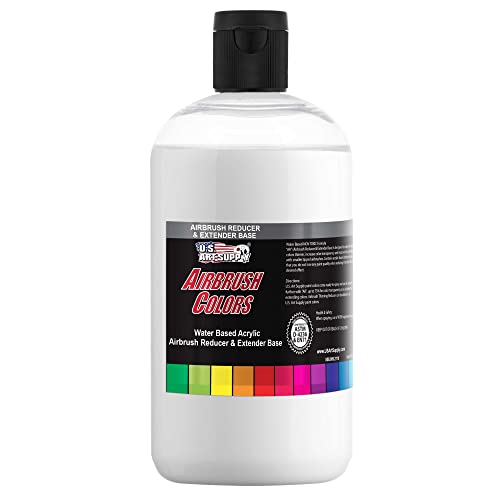
At 16 ounces, this is the largest thinner in the results and the one for people who spray by the cupful rather than by the drop. The title tells you its three roles: thinner, to reduce viscosity; reducer, the automotive and textile term for the same job; and extender base, meaning it contains enough acrylic medium to be mixed with paint to make transparent glazes without weakening the film. That last function is useful for shading and candy effects on T-shirts, helmets and large models.
The trade-off for a multi-role product is that it is not fine-tuned to any one paint line. It is designed for water-based acrylics in general, so test the ratio with your paint before a big job. A 4-ounce version is also sold for people who want to try it first.
Best suited for: T-shirt and textile artists, automotive and helmet painters, and anyone whose airbrush sessions run through ounces of paint.
Key features
- 16-ounce bottle
- Functions as thinner, reducer and extender base
- Water-based acrylic formulation
- 4-ounce size available for trial
Pros
- Most volume per bottle in this comparison
- Extender function lets you make glazes and candy coats
- Economical for daily use
Cons and limitations
- General-purpose; not tuned to any specific paint brand
- Large bottle is awkward for drop-by-drop detail work
- Not for alcohol-based or solvent paints
Buying consideration: Decant into a small dropper bottle for your bench and keep the pint as a refill. Pouring from a 16-ounce bottle into an airbrush cup is a mess waiting to happen.
3. Micro-Mark Airbrush Paint Thinner, 8 oz — Best for Models and Miniatures
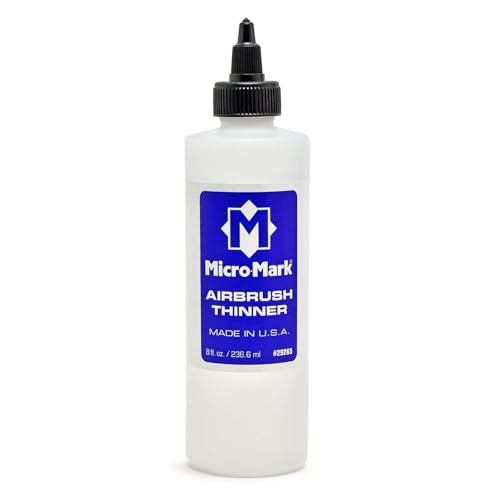
Micro-Mark is a long-established hobby tool supplier, and its 8-ounce acrylic thinner is aimed squarely at scale modelers and miniature painters. The listing states it is made in the USA and intended for models, miniatures and crafts. An 8-ounce bottle sits neatly between Vallejo’s 200 ml and the U.S. Art Supply pint, which makes it a sensible choice for a modeler who sprays weekly and does not want to run out.
Functionally it belongs to the same water-based acrylic thinner family as Vallejo’s, and Micro-Mark sells a companion Flow Improver in the same 8-ounce size for people who want a matched pair. As with any general acrylic thinner, it is not for Tamiya or Mr. Color paints.
Best suited for: Scale model builders and tabletop miniature painters who want a mid-size, hobby-focused acrylic thinner.
Key features
- 8-ounce bottle
- Acrylic paint thinner for models, miniatures and crafts
- Made in the USA
- Companion flow improver available
Pros
- Right size for weekly hobby use
- From a supplier that specializes in modeling
- Pairs with a same-brand flow improver
Cons and limitations
- Less widely documented than Vallejo in hobby forums
- Water-based acrylics only
- Cap style may require decanting to a dropper
Buying consideration: If you already use Micro-Mark tools, buying thinner and flow improver together simplifies your bench. If you use Vallejo paint, Vallejo’s own thinner is the safer match.
4. Angelus 2-Thin Acrylic Paint Thinner, 4 fl oz — Best for Leather and Fabric Acrylics

Angelus makes the acrylic leather paints used by sneaker customizers, and 2-Thin is the thinner designed for them. The 4-ounce bottle is small, which fits the use case: custom shoe work involves small areas and many color changes, and Angelus paint is thinned sparingly to keep its flexibility and adhesion on leather. The listing notes it is for thinning acrylics for airbrush and other applications, so it also works for hand-brushed leather and fabric work.
Use it with a general craft acrylic and it will behave like other water-based thinners, but the reason to choose it is the leather-paint match. If you are not painting shoes, jackets or bags, the Vallejo or Micro-Mark bottles give you more volume for the same job.
Best suited for: Sneaker and leather customizers using Angelus paints, and fabric artists working small.
Key features
- 4 fl oz bottle
- Formulated for Angelus acrylic leather paints
- Suitable for airbrush and brush application
Pros
- Matched to the most popular leather paint system
- Preserves flexibility of leather paint when thinned correctly
- Small bottle suits small projects
Cons and limitations
- Small volume for anyone spraying large areas
- No advantage over generic thinner for non-leather acrylics
- Leather paint should be thinned conservatively, so a little goes a long way
Buying consideration: Angelus recommends thinning its leather paint only modestly for airbrush use; adding too much 2-Thin reduces durability on flexed leather. Start with small additions.
5. Tamiya X-20A Acrylic Thinner, 250 ml — Best for Tamiya and Alcohol-Based Acrylics

Tamiya’s acrylic paints are not like craft-store acrylics. They are alcohol-based, and thinning them with water or a water-based airbrush thinner produces a gummy, uneven spray. X-20A is the matched thinner, and the 250 ml bottle is the size serious modelers buy. The listing describes it as an acrylic/poly thinner, Tamiya’s term for its acrylic range.
X-20A also works with other alcohol-based hobby acrylics such as Mr. Hobby Aqueous, and some modelers prefer it to Tamiya’s own lacquer thinner for a gentler cure. It is, however, wrong for Vallejo, Createx, craft acrylics and anything else water-based, and it has a noticeable alcohol odor that calls for ventilation.
Best suited for: Scale modelers spraying Tamiya or other alcohol-based acrylics.
Key features
- 250 ml bottle
- Acrylic/poly thinner matched to Tamiya acrylics
- Alcohol-based chemistry
Pros
- The correct thinner for Tamiya paint, full stop
- Fast, even drying for smooth model finishes
- Large enough to last through several kits
Cons and limitations
- Incompatible with water-based acrylics
- Stronger odor; needs ventilation or a spray booth
- Not an extender or flow improver
Buying consideration: Do not mix X-20A thinned paint with water-based paint in the same cup. Flush the airbrush between the two systems.
6. Vallejo Airbrush Flow Improver, 200 ml — Best for Tip-Dry and Fine Detail

A flow improver is not a thinner, although the two are often confused. Thinner lowers viscosity. Flow improver slows drying and reduces surface tension so paint does not dry on the needle tip, which is the cause of the spitting and spidering that frustrates detail painters. Vallejo’s 200 ml bottle is the standard, and it is used in small doses, a few drops per cup, alongside thinner rather than instead of it.
For fine-line work, camouflage mottling or any session where you hold a low pressure for a long time, a flow improver is the difference between constant tip cleaning and uninterrupted spraying. It will not fix paint that is too thick; it only addresses drying at the nozzle.
Best suited for: Detail painters, miniature artists and anyone fighting tip-dry at low PSI.
Key features
- 200 ml (6.76 fl oz) bottle
- Retards drying and lowers surface tension of acrylics
- Used in drops alongside thinner
Pros
- Dramatically reduces tip-dry on fine needles
- A bottle lasts a very long time at a few drops per cup
- Compatible with the Vallejo thinner above
Cons and limitations
- Does not thin paint; you still need a thinner
- Overuse slows drying and can cause runs
- Not needed for broad base coats at higher pressure
Buying consideration: A common starting point is one or two drops of flow improver per ten drops of paint, with thinner added separately to reach a milk-like consistency.
7. Master Airbrush Cleaner, 16-Ounce Pint Bottle — Best Airbrush Cleaner to Pair with Your Thinner
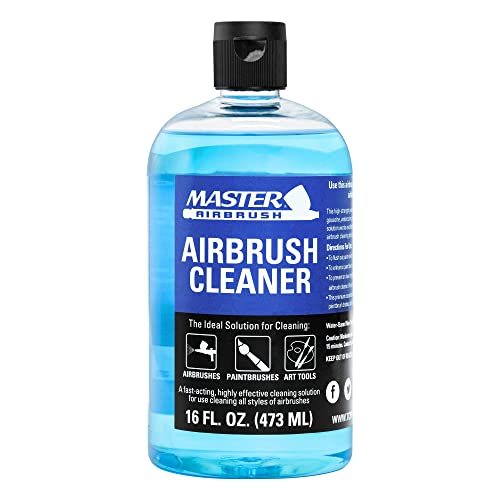
Many people search for an airbrush cleaner and thinner expecting one bottle to do both. Some thinners will flush an airbrush between similar colors, but dried acrylic in a nozzle needs a dedicated cleaner, which is what Master Airbrush’s 16-ounce pint provides. Cleaners contain solvents or surfactants that break down cured acrylic film, something a thinner is specifically formulated not to do while the paint is in the cup.
A pint goes a long way if you use it correctly: a quick flush between colors, a fuller clean at the end of a session, and an occasional soak of the needle and nozzle. Because cleaners are more aggressive than thinners, avoid leaving rubber seals soaking for hours.
Best suited for: Every airbrush owner; this is the bottle you keep next to whichever thinner you choose.
Key features
- 16-ounce pint bottle
- Dedicated airbrush cleaning solution
- For flushing between colors and end-of-session cleaning
Pros
- Removes dried acrylic that thinner cannot
- Large bottle for frequent flushing
- Reduces wear from scraping clogged nozzles
Cons and limitations
- Not a thinner; do not add it to paint
- Can degrade seals with prolonged soaking
- Needs ventilation in enclosed spaces
Buying consideration: Spray cleaner into a cleaning pot or a rag, not into the air; the atomized mist is unpleasant and unnecessary.
Buying Guide: How to Choose an Airbrush Paint Thinner
Thinner is cheap compared with paint and airbrushes, which is exactly why it gets chosen carelessly. These seven criteria will steer you to the right bottle and the right ratio.
Match the thinner to the paint chemistry
This is the only rule that cannot be bent. Water-based acrylics (Vallejo, Createx, craft acrylics, Golden) take a water-based acrylic airbrush thinner. Alcohol-based acrylics (Tamiya, Mr. Hobby Aqueous) take their matched alcohol thinner such as X-20A. Enamels take mineral spirits or the brand’s enamel thinner, and lacquers take lacquer thinner. Cross a category and you get curdling, gumming or a finish that rubs off.
Thinner, reducer, extender, flow improver and cleaner
Thinner and reducer are the same thing under hobby and automotive names respectively. An extender base is a thinner with enough acrylic medium to make transparent glazes without weakening the paint. A flow improver slows drying at the tip and is used in drops alongside thinner. A cleaner dissolves dried paint and must never be mixed into your cup. Most benches need a thinner, a flow improver and a cleaner; the extender is a bonus for shading work.
Ratios and the milk test
Ratios vary by paint. Pre-thinned airbrush paints like Vallejo Model Air may need only a few drops of thinner or none; heavy-body craft acrylics may need 1:1 or more. The practical standard is consistency: thinned paint should run off a stir stick like skim milk, leaving a translucent film. Thicker than that spatters; thinner than that spiders and runs. Mix in the cup or a separate bottle and adjust in small steps.
Bottle size and how you spray
A miniature painter uses drops and a 200 ml bottle lasts months. A T-shirt painter can go through 16 ounces in a few weeks. Buy the size that matches your consumption so the bottle does not sit half-used for years, and decant large bottles into a dropper for bench use.
Pressure, nozzle size and thinning
Thinner, pressure and nozzle work together. A 0.2 mm nozzle at 15 PSI needs paint thinned more than a 0.5 mm nozzle at 30 PSI. If you keep clogging, thin more before you raise pressure, since higher pressure causes overspray and dries paint faster at the tip. Flow improver helps most at low pressure with fine nozzles.
Ventilation and safety
Water-based thinners are low odor and fine with a window open. Alcohol-based thinners like X-20A and most cleaners release stronger vapors and warrant a spray booth or a respirator. Regardless of chemistry, atomized paint should never be inhaled; a mask rated for particulates is the minimum.
Shelf life and storage
Thinners keep for years if sealed and stored away from freezing temperatures, which can separate water-based formulas. Keep caps clean so dried paint does not contaminate the bottle, and label any decanted dropper bottles so thinner, flow improver and cleaner do not get swapped.
Who Should Buy What
The miniature and tabletop painter: Vallejo Airbrush Thinner 200 ml plus Vallejo Flow Improver. Drops of each per cup, months of use per bottle.
The scale modeler spraying Tamiya: Tamiya X-20A 250 ml, with a dedicated cleaner and a well-ventilated bench.
The T-shirt, helmet or automotive hobbyist: U.S. Art Supply 16-Ounce Thinner, Reducer and Extender Base, decanted for the bench, with the Master Airbrush Cleaner pint for frequent flushes.
The sneaker and leather customizer: Angelus 2-Thin 4 oz, used sparingly to preserve the flexibility of leather paint.
The modeler who wants one hobby brand for everything: Micro-Mark Airbrush Paint Thinner 8 oz with its matching flow improver.
Every airbrush owner, regardless of paint: A dedicated cleaner. Thinner alone will not clear a nozzle after the paint has cured.
If your spray is spitting or spidering even after thinning correctly, work through our checklist of airbrush problems and solutions before blaming the paint. Textile painters should read our airbrush tips for fabric painting for reducer ratios that keep paint flexible after heat setting, and if you are unsure which bottle on your shelf does what, our explainer on paint thinner versus brush cleaner sorts out the terminology.
Common Mistakes to Avoid
- Thinning Tamiya acrylics with water-based thinner, or Vallejo with X-20A. Wrong chemistry produces gummy, uneven paint.
- Using plain water as your only thinner. Past a modest ratio, water breaks the acrylic binder and the paint loses adhesion.
- Adding cleaner to the paint cup to “thin” it. Cleaners dissolve paint film; they belong in the cleaning pot.
- Treating flow improver as thinner. It slows tip-dry; it does not reduce viscosity. Overuse causes runs.
- Raising pressure instead of thinning. More PSI means more overspray and faster tip-dry; fix the consistency first.
- Pouring from a pint bottle into a gravity cup. Decant into a dropper bottle to avoid spills and over-thinning.
- Skipping ventilation with alcohol-based thinners. Use a booth or respirator; the fumes are not trivial.
Helpful Guides Before You Buy
New to this? These guides answer the questions most buyers have before choosing:
- Do You Need to Thin Airbrush Paint? When and Why
- Can You Thin Airbrush Paint With Water? Pros and Limits
- How to Thin Airbrush Paint to the Right Consistency
- How to Make Airbrush Paint Thinner at Home (DIY Recipes)
- Airbrush Paint Thinner vs Reducer: What’s the Difference?
FAQs
What is the difference between airbrush thinner and airbrush reducer?
Nothing chemically; “reducer” is the automotive and textile industry’s word for thinner. Products labeled thinner, reducer and extender base, like the U.S. Art Supply bottle, perform the same dilution job with added medium for glazing.
Can I use water instead of acrylic airbrush thinner?
For small adjustments to pre-thinned airbrush paint, yes. For heavier dilution, no: water alone weakens the acrylic binder and the paint may spatter, dry chalky or rub off. A proper acrylic airbrush thinner contains binder and flow agents.
Do I need both an airbrush cleaner and thinner?
Yes. Thinner adjusts paint consistency in the cup; cleaner dissolves dried paint in the nozzle and needle. Some thinners can flush between similar colors, but they will not remove cured acrylic.
How much airbrush paint thinner should I add?
It depends on the paint. Pre-thinned airbrush paints may need only a few drops; heavy craft acrylics may need a 1:1 ratio or more. Aim for the consistency of skim milk and adjust in small steps.
Is airbrush paint with thinner already mixed worth buying?
Ready-to-spray airbrush paints save time and reduce mistakes for beginners, but you will still need thinner for fine detail at low pressure and a cleaner for maintenance. A bottle of each is a small investment next to the paint itself.
Which airbrush thinner is best for Createx or textile paints?
A water-based reducer such as the U.S. Art Supply Thinner, Reducer and Extender Base is the closest match in these results, since textile paints are typically reduced rather than heavily thinned. Check the paint maker’s recommended ratio and heat-set as directed.
Final Recommendation
Buy the thinner that matches your paint, not the one with the most impressive label. For the water-based acrylics most hobbyists spray, the Vallejo Airbrush Thinner 200 ml is the best airbrush paint thinner to keep on the bench, and the Vallejo Flow Improver next to it will cure most tip-dry complaints. High-volume textile and automotive painters get better value from the U.S. Art Supply 16-Ounce Thinner, Reducer and Extender Base, Tamiya users must use X-20A, leather customizers should stick with Angelus 2-Thin, and modelers who like a single hobby brand can choose Micro-Mark’s 8-ounce thinner. Whatever you pick, add the Master Airbrush Cleaner pint; the thinner keeps paint flowing, but only a cleaner keeps the airbrush alive.


One Comment
Comments are closed.