Blank bisque mugs and terracotta pots can make even experienced painters freeze. A curved surface, a glaze that looks nothing like its final color, and the knowledge that mistakes get fired in permanently all add pressure. The fix is to start with designs that suit round forms and to know which paint system you are working with. These pottery painting ideas range from five-minute patterns to full illustrated pieces.
Quick answer: Easy, good-looking pottery painting ideas include polka dots made with a pencil eraser, stripes and bands, sponge-stamped patterns, simple botanical sprigs, fruit motifs like lemons and cherries, wax-resist or tape-resist geometric designs, and speckled finishes. Use underglaze on bisque if the piece will be kiln-fired (as at a paint-your-own-pottery studio), or acrylic and a sealer for decorative pieces at home, and plan for two to three coats for solid color.
First, Know Which Kind of Pottery Painting You Are Doing
The same design behaves very differently depending on the paint. Choosing ideas that suit your materials prevents disappointment.
| Method | Where | Surface | Result | Food-safe? |
|---|---|---|---|---|
| Underglaze + clear glaze, kiln-fired | Paint-your-own studio or with kiln access | Bisque ware | Glossy, permanent, colors deepen after firing | Usually, when the studio’s clear glaze is food-safe |
| Acrylic paint + sealer | Home | Bisque, terracotta, glazed ceramics with primer | Matte or varnished, decorative | No; decorative only |
| Oven-bake ceramic/porcelain paint | Home oven | Glazed ceramics | Semi-permanent, dishwasher resistance varies | Check the label; usually keep off rims |
| Paint pens (ceramic or acrylic) | Home | Most smooth ceramics | Precise lines, great for lettering | Depends on product |
For home projects, the paint choice affects durability more than any design decision. Our comparison of the best paints for pottery and ceramic crafts breaks down acrylic sets and other options by coverage, finish and how well they hold up after sealing. If you are brand new to the process, the walkthrough on painting pottery at home step by step covers prep, coats and sealing in more detail.
Easy Pottery Painting Ideas for Beginners
These designs forgive wobbly hands and work with any paint system.
1. Eraser polka dots
Dip the eraser end of a new pencil into paint and press it straight onto the piece. Make a grid, a scatter, or dots that shrink in size toward the base. Two colors of dots on a pale background look deliberate and modern.
2. Painted bands
Stripes around a mug or bowl follow the form naturally. At a studio, a banding wheel makes them easy: set the brush against the turning piece and hold it still. At home, wrap tape around the piece as a guide.
3. Dipped look
Paint the bottom third of a mug or vase in a single bold color with a wavy or straight edge. It mimics the dipped-glaze look that is popular in handmade pottery.
4. Speckled finish
Paint a base color, then load an old toothbrush with a contrasting color and flick it across the surface with your thumb. Black or brown speckles on cream look like speckled stoneware.
5. Sponge-stamped shapes
Cut a kitchen sponge into a heart, star or triangle, dab it in paint and stamp a repeating pattern. Sponges deposit a soft texture that hides uneven coverage.
Botanical and Nature Designs
Plants work beautifully on curved surfaces because leaves and stems can wrap around the form.
- Simple sprigs: A single curved line for the stem with teardrop leaves pressed in using a round brush. Repeat three or four times around a mug.
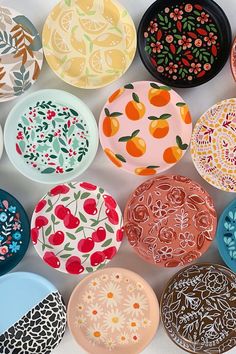
- Lemons and leaves: Yellow ovals with a small point at each end, dark green leaves and a few white highlight strokes. Classic for platters and pitchers.
- Cherries: Two red circles joined by thin brown stems. Small and charming on espresso cups.
- Wildflower meadow: Grass strokes around the base, then dots and tiny daisies rising from it.
- Monstera or palm leaves: Large, graphic leaf shapes in one or two greens; they fill a plant pot dramatically.
- Mushrooms: Red caps with white dots on a small planter or trinket dish.
Paint a small leaf on a test tile or scrap first to see how the paint flows from your brush before committing to the piece.
Geometric and Pattern Ideas
Tape-resist triangles
Cover the piece with strips of tape in a crisscross pattern, paint over everything, then peel the tape while the paint is slightly tacky to reveal sharp lines. This gives a contemporary look with no freehand skill required.
Checkerboard
Draw a pencil grid (pencil burns off in a kiln and can be erased or painted over at home), then fill alternate squares. A wavy, hand-drawn checkerboard has become a popular retro style.
Scallops and arches
Rows of half circles around the base or rim, in two or three alternating colors, have a playful, mid-century feel.
Terrazzo
Paint irregular chips of three or four colors scattered over a pale base. Varying chip size and leaving plenty of space between them makes it look like stone.
Wax resist (studio pieces)
Where the studio offers wax resist, paint a design in wax, then brush underglaze over the whole piece. The waxed areas repel color and stay the color of the bisque or base coat.
Pottery Painting Ideas by Piece
| Piece | Design ideas | Tip |
|---|---|---|
| Mug | Bands, sprigs, initials, dipped base, fruit | Keep decoration about half an inch below the rim |
| Plate | Center motif, rim border, radial pattern | Plan from the center outward |
| Bowl | Interior swirl, exterior bands, fish inside | Design the inside view; that is what people see |
| Planter | Large leaves, faces, terrazzo, stripes | Seal inside and out on terracotta to stop moisture wicking |
| Trinket dish | Single flower, eye motif, celestial moon | Small surface, so one bold image beats many small ones |
| Vase | Vertical stripes, wraparound landscape | Use the height for tall stems or waterfalls |
Ideas for Kids and Families
- Handprint or footprint plates: Press a painted hand onto a plate; add names and dates. Wipe excess quickly for clean edges.
- Monster mugs: One big eye, a toothy mouth and spots in bright colors.
- Animal faces: A bowl painted as a panda, fox or frog face is simple and recognizable.
- Fingerprint garden: Fingerprint flowers around a pot with painted stems.
- Family dots: Each family member adds a dot in their favorite color in a spiral.
Seasonal and Gift Ideas
- Holiday plates: A cookie plate with a wreath border or snowflakes.
- Fall: Pumpkins, falling leaves or a plaid pattern on a mug.
- Spring: Pastel eggs on a small dish, tulips on a vase.
- Personalized: A name or monogram in simple lettering, with a small motif, makes a thoughtful gift.
- Celestial: Navy background with gold or white stars, a crescent moon and constellations.
How to Paint a Simple Lemon Mug Step by Step
- Clean the piece. Wipe bisque with a damp sponge to remove dust; wipe glazed ceramics with rubbing alcohol.
- Sketch lightly. Draw three or four lemon ovals with pencil, spaced around the mug and tilted at slightly different angles.
- Paint the lemons. Fill each oval with yellow. Apply two or three coats, letting each dry until it no longer looks shiny.
- Add leaves. Press a round brush loaded with green to form teardrop leaves at the top of each lemon.
- Shade and highlight. Add a touch of orange-yellow on the lower edge of each lemon and a small white stroke on the upper side.
- Outline (optional). A thin dark line around the lemons gives a graphic, illustrated look.
- Finish. At a studio, hand it over for clear glaze and firing. At home, let it cure and seal according to your paint’s directions.
Tips for Better Results on Ceramics
Plan for multiple coats
Underglaze and acrylic on bisque usually need two to three coats for even, opaque color. A single coat often looks streaky after firing or sealing.
Remember underglaze shifts color
Underglazes often look chalky and pale when wet and become richer after firing. Studios usually display fired sample tiles; choose colors from those, not from the bottle.
Work from light to dark
Painting light colors first and adding darker details on top is easier than covering dark areas with light paint.
Keep the bottom clean
For kiln-fired pieces, leave the foot ring unpainted and unglazed so the piece does not fuse to the kiln shelf.
Mind food safety
Acrylic-painted pieces are decorative. Keep acrylic and most oven-bake paints off rims and food surfaces unless the product explicitly says otherwise.
Transferring a Design onto a Curved Surface
Flat sketches distort when wrapped around a mug or bowl, so a few tricks help.
- Divide the piece first. Mark quarters around the form with small pencil ticks so repeating motifs are evenly spaced.
- Use graphite transfer. Rub soft pencil on the back of a printed design, tape it in place and trace firmly. The graphite line burns off in a kiln and can be painted over at home.
- Cut designs into strips. For a band of motifs, cut the paper into small sections so it hugs the curve rather than wrinkling.
- Scale to the piece. Measure the circumference with a strip of paper and plan the number of repeats that fit.
- Tilt motifs slightly. On tapered shapes like cups, angling each motif to follow the taper looks more natural than keeping them strictly upright.
Common Mistakes
- Too many ideas on one piece: Choose one motif and repeat it.
- Thick globs of paint: They can crack, crawl in the kiln or peel at home. Build color in thin coats.
- Touching the surface too much: Skin oils can resist paint on glazed pieces. Hold items by the inside or base.
- Skipping the sealer on home pieces: Unsealed acrylic scratches and absorbs moisture.
Choosing Colors That Work on Pottery
Color decisions matter more on ceramics than on paper because the piece is seen from every side and often sits next to food, plants or other dishes.
- Limit to two or three colors plus a neutral. Cobalt blue and white, terracotta and cream, or sage green with mustard look cohesive and timeless.
- Use the clay as a color. Leaving parts of bisque or terracotta unpainted gives a natural, handmade look and saves time.
- Think about contents. Plant pots look good in earthy tones that complement greenery; serving bowls benefit from lighter interiors that show off food.
- High contrast for details. Fine lines and small motifs need strong contrast with the background, such as navy on cream, or they disappear from a distance.
If you are unsure, paint swatches of your planned colors on the underside or a scrap tile and look at them together before decorating the whole piece.
Planning a Session at a Paint-Your-Own-Pottery Studio
Studio sessions usually have a time limit and a set of underglazes with sample tiles. A little planning helps you make the most of them.
- Sketch at home. Decide on the design and colors before you arrive, perhaps with two or three backup ideas.
- Choose a simple piece first. A mug or small plate is easier to finish in one visit than a large platter.
- Bring a reference. Printouts of motifs or lettering can often be traced using carbon or graphite transfer paper the studio provides.
- Ask about tools. Many studios offer sponges, stamps, stencils, banding wheels and wax resist that make patterns easier.
- Plan for coats. Leave enough time for three coats of each color, especially on light shades.
- Check pickup times. Firing and glazing usually take several days to a week.
FAQs
What is the easiest thing to paint on pottery?
Polka dots, stripes, sponge stamps and a dipped base are the easiest. They require no drawing skill and suit curved surfaces.
What paint do you use for pottery at home?
Acrylic paint with a sealer for decorative pieces, or oven-bake ceramic paint for glazed items. Underglaze needs a kiln.
Is acrylic-painted pottery food safe?
No. Treat acrylic-painted pottery as decorative and keep paint away from rims and surfaces that touch food.
How many coats of paint should I put on pottery?
Usually two to three thin coats for solid color, letting each dry before the next.
Why does pottery paint look different after firing?
Underglazes change as they fire and are covered by clear glaze, so colors often become deeper and glossier than they appear when wet.
What should I paint on a mug?
Botanical sprigs, fruit like lemons or cherries, bands, initials, or a dipped base all work well and follow the mug’s round shape.
Final Thoughts
Pick one idea that suits the piece in front of you, whether that is dots on an espresso cup, lemons on a pitcher or leaves around a planter, and commit to thin, even coats. When painting at home, the paint you choose decides how long your design lasts, so check our guide to acrylic paint sets that work well on ceramics before you start your next piece.