Quick answer: Easy and popular fall painting ideas include a birch forest with golden leaves, a pumpkin patch, a winding autumn road, a single maple leaf study, a cozy window with rain, a harvest moon over fields, a fox in fallen leaves, and leaf-print art. Build a warm palette of burnt sienna, cadmium-style orange, yellow ochre, and crimson, balanced with a cool blue or gray so the oranges glow rather than overwhelm.
Autumn is the season most painters look forward to, and for good reason. The colors practically choose themselves: rusts, golds, deep reds, and plum shadows against crisp blue skies. Yet fall paintings often fall flat because everything ends up the same orange. The secret is contrast. Warm leaves glow brightest beside cool skies, gray trunks, or violet shadows.
Below you will find fall painting ideas sorted by subject (landscapes, still life, wildlife, and textured techniques), a guide to mixing autumn colors without mud, a step-by-step for a glowing tree-lined path, and ideas to suit different ages and skill levels. For a wider look at painting projects through every season and holiday, see our guide to the best seasonal painting ideas.
Mixing an Autumn Palette
You can paint convincing fall scenes with just a handful of colors. Earth pigments like burnt sienna and yellow ochre do a lot of the work.
| Autumn color | Easy mix | Use for |
|---|---|---|
| Rust | Burnt sienna + a touch of red | Oak leaves, barns, foxes |
| Golden yellow | Yellow ochre + warm yellow | Birch and aspen leaves, sunlight |
| Pumpkin orange | Warm yellow + warm red, plus a touch of burnt sienna | Pumpkins, maple leaves |
| Deep crimson | Crimson or alizarin hue + a touch of burnt umber | Maple, sumac, berries |
| Plum shadow | Crimson + ultramarine + a touch of umber | Shadows under trees and pumpkins |
| Cool contrast | Ultramarine or cerulean + white | Skies, distant hills, water |
Rule of thumb: keep about 60 to 70 percent of your painting warm and 30 to 40 percent cool or neutral. The contrast makes the warm colors feel richer.
Fall Landscape Painting Ideas
1. Tree-Lined Autumn Path
A path narrowing into the distance with trees on both sides, their canopies glowing orange and yellow. Leaves scattered on the path add texture. Full steps below.
2. Birch Forest in Gold
Masked white birch trunks with dabs of golden yellow foliage and a blue sky peeking through. The white trunks provide cool contrast to the warm leaves.
3. Lake Reflection
Autumn trees along a shoreline with their colors mirrored in calm water. Paint the reflection with slightly darker, softer colors and a few horizontal light streaks to suggest the water’s surface.
4. Harvest Moon Over Fields
A large, warm orange moon low on the horizon over dark fields and haystacks. Deep blue-violet sky makes the moon glow.
5. Red Barn in Autumn
A simple barn shape surrounded by trees in fall color, with a fence line leading the eye. Keep the barn a slightly cooler red so it does not disappear among the warm trees.
6. Misty Morning Hills
Layers of hills fading into fog, with warm color only in the foreground. A great lesson in atmospheric perspective.
Fall Still Life Ideas
7. Pumpkin Trio
Three pumpkins of different sizes and colors (orange, white, and green-striped) on a wooden surface. Paint the ribs with curved strokes following the pumpkin’s form and add a plum shadow beneath each.
8. Apples in a Basket
Red and green apples spilling from a woven basket. Practice highlights on round forms and simple crosshatch texture for the weave.
9. Single Maple Leaf Study
Paint one large leaf with its veins and color variation from yellow to red. Placing it on a cool blue or gray background makes it pop.
10. Coffee and Book by the Window
A cozy scene with a mug, an open book, and a rainy autumn window behind. Warm interior colors contrast with cool gray outside.
11. Gourds and Corn
Varied shapes and textures of decorative gourds and dried corn make an engaging still life with lots of color.
Fall Wildlife Ideas
12. Fox in Fallen Leaves
A curled or sitting fox among orange leaves. Use a slightly cooler background so the fox’s warm fur stands out.
13. Owl on a Branch
An owl with large eyes perched on a bare branch against a harvest moon.
14. Squirrel With an Acorn
A small, charming subject with a fluffy tail and simple pose.
15. Geese Flying South
A V-formation of simple bird silhouettes against a pastel sunset sky.
Textured and Craft-Based Fall Techniques
16. Leaf Prints
Brush paint on the vein side of real leaves and press them onto paper or canvas. Layer several colors and sizes for a rich composition.
17. Bubble Wrap Foliage
Press painted bubble wrap onto a canvas to create a textured canopy of autumn leaves. Our article on painting with bubble wrap offers more tips for this technique.
18. Q-Tip Trees
Paint bare trunks and branches, then dab clusters of orange, red, and yellow with bundled cotton swabs for foliage.
19. Fork-Painted Leaves
Use a plastic fork dipped in paint to stamp spiky foliage textures. Great for kids.
20. Splatter Leaf Fall
Paint a tree, then flick warm colors from a stiff brush to suggest leaves falling and covering the ground.
Step-by-Step: Tree-Lined Autumn Path
This acrylic project works on an 11×14 or 12×16 inch canvas and takes about 90 minutes.
Materials
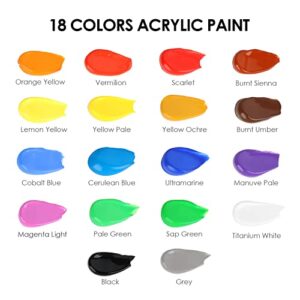
- Acrylic paint: white, ultramarine blue, yellow ochre, a warm yellow, a warm red, burnt sienna, burnt umber
- Brushes: 1 inch flat, size 8 round, size 2 round, an old fan or stiff brush
- Palette, water, paper towels
Steps
- Paint the sky. Fill the top third with a pale blue that lightens near the horizon. Let it dry.
- Mark the path. Lightly sketch a path that starts wide at the bottom and narrows to a point near the center of the horizon. This creates strong perspective.
- Block in distant trees. Using a muted mix of yellow ochre, white, and a touch of blue, dab soft tree shapes near the vanishing point. Muted colors recede.
- Paint the path. Use a light warm gray-brown (burnt umber, white, a touch of ochre), lighter in the distance and slightly darker in the foreground.
- Add the main trunks. Paint tall trunks on both sides with burnt umber, thicker in the foreground and thinner toward the distance.
- Dab foliage in layers. With the round brush or a sponge, dab darker rust and crimson first, then orange, then golden yellow on top. Keep the brightest yellows where light hits the canopy.
- Let light through. Leave or re-add small gaps of sky between leaves. These “sky holes” make foliage look natural.
- Scatter leaves on the path. Dab small spots of orange and yellow along the path, bigger and more spaced in the foreground.
- Add cast shadows. Paint thin, cool plum or blue-gray shadows from the trunks across the path, all angled the same direction.
- Final highlights. Add a few touches of bright yellow mixed with white on the sunlit side of the canopy and on a few path leaves.
Fall Painting Ideas by Age and Skill
| Group | Best ideas | Why |
|---|---|---|
| Young kids | Leaf prints, fork-painted trees, pumpkin shapes | Tactile, fast, and forgiving |
| Teens | Cozy window scenes, harvest moon, graphic leaf patterns | Trendy and room-worthy; see our painting ideas for teenagers |
| Adult beginners | Birch forest, pumpkin trio, single leaf study | Simple shapes, satisfying results |
| Intermediate | Tree-lined path, lake reflection, fox in leaves | Perspective, reflections, fur texture |
Tips for Glowing Fall Paintings
- Use complementary contrast. Orange glows next to blue; red sings next to green.
- Vary your oranges. Mix at least three distinct warm shades for foliage.
- Paint shadows cool. Violet and blue-gray shadows make sunlit areas look warmer.
- Dab, do not stroke, foliage. Dabbing creates the broken texture of leaves.
- Keep distance muted. Grayer, lighter colors far away and saturated colors up front build depth.
- Use earth tones. Burnt sienna and yellow ochre help keep fall colors natural rather than neon.
Painting From Life in Autumn
Fall is an excellent season for painting outdoors or from real objects. Light is lower and warmer than in summer, which creates long shadows and rich color for much of the day. If you paint outside, work small (6×8 or 8×10 inches) because light shifts quickly in the late afternoon. Indoors, collect real leaves, small pumpkins, acorns, and pinecones as still life subjects. Leaves curl and fade within days, so paint them soon after collecting or press a few between books to keep as reference.
Painting Fall Scenes in Watercolor
Watercolor captures the glow of autumn light beautifully because transparent layers let the paper shine through. A few medium-specific tips:
- Drop colors into wet shapes. Paint a leaf shape in yellow, then touch orange and red into it while wet. The colors mingle like real leaves changing color.
- Use salt for texture. Sprinkling salt into a damp wash of autumn colors creates speckled patterns that suggest foliage or frost.
- Save whites early. Plan where birch trunks, light on pumpkins, or a pale sky will go before painting, since you cannot easily add white later.
- Splatter for falling leaves. Tap a loaded brush over the paper for random drops of warm color.
- Glaze to warm or cool. A thin wash of yellow ochre over a dry scene warms everything; a thin blue wash over shadows cools them.
A Simple Fall Painting Schedule
Autumn passes quickly, so a loose plan helps you paint the season as it unfolds:
- Early fall: Apples, sunflowers past their peak, first hints of yellow in the trees.
- Mid fall: Peak foliage scenes, tree-lined paths, lake reflections, and pumpkin patches.
- Late fall: Bare branches, fallen leaves, misty mornings, harvest moon, and cozy interiors.
Fall Paintings for Gifts and Decor
Autumn paintings make thoughtful seasonal decor and gifts. Small canvases of pumpkins or leaves look great on a mantel in groups of three. Painted wooden signs with harvest motifs, leaf-printed tea towels using fabric paint, and watercolor place cards for Thanksgiving dinner are practical projects that use the same skills. Painting a set of four small seasonal canvases, one for each season, also creates decor you can rotate throughout the year.
Common Fall Painting Mistakes
- All-orange paintings. Without cool contrast, warm colors become flat. Add blue sky, gray trunks, or violet shadows.
- Muddy foliage. Overmixing reds, greens, and oranges on the canvas creates brown. Layer instead.
- Solid tree canopies. Leave sky holes so trees look airy.
- Straight, uniform trunks. Vary width, angle, and spacing.
- Bright colors in the distance. This flattens depth. Mute distant trees.
FAQs
What are easy fall painting ideas for beginners?
Pumpkins, a single maple leaf, birch trees with golden leaves, leaf prints, and a harvest moon over fields are all approachable autumn subjects for beginners.
What colors do I need for fall paintings?
Burnt sienna, yellow ochre, a warm yellow, a warm red, a crimson, burnt umber, ultramarine blue, and white cover nearly every autumn scene.
How do I keep fall paintings from looking muddy?
Layer colors rather than mixing them on the canvas, let layers dry before adding complementary colors on top, and include cool contrast like blue skies or violet shadows.
How do you paint autumn leaves on trees?
Dab foliage with a round brush, sponge, or bundled cotton swabs, starting with darker reds and rusts and layering lighter oranges and yellows on top. Leave small gaps for sky.
What are fun fall painting ideas for kids?
Leaf printing, fork-painted trees, cotton-swab foliage, pumpkin painting, and handprint trees are fun, simple, and great for small hands.
What is a good fall painting for a paint night?
The birch forest, pumpkin trio, or harvest moon over fields work well for groups because they combine simple shapes with eye-catching color.
Final Thoughts
Fall rewards painters who balance warmth with coolness. Start with a single leaf or pumpkin to practice autumn color mixing, then try the tree-lined path for depth and light. When the leaves are gone and you are ready for the next season’s projects, browse our top picks for seasonal painting ideas.