
A wire brush can rescue gunked-up paint brushes fast when used carefully.
You finished a trim job and your favorite angled sash brush feels like a brick. Soap and water barely dent the crud. Mineral spirits loosen only part of it. Here’s the fix pros rely on: the right wire brush, used with a light hand, to break up dried paint at the heel and ferrule, followed by a comb to realign the bristles. When used correctly, a wire brush to clean paint brushes brings fibers back to life, saves money, and avoids those dreaded streaks. I’ve tested what works, what harms, and how to match the bristle type with the right tool—so you spend more time painting and less time fighting clumps.
Wooster Painters Brush Comb 1832/1831

The Wooster Brush Comb is the quiet hero in brush care. It’s not flashy, but it does what others can’t. It opens bristles at the heel, where paint tends to harden first, and allows water or solvent to flush deep into the pack. I use it after a light pass with a wire brush to clean paint brushes, and the combo saves brushes I thought were toast.
The metal teeth are set to glide through bristles without tearing them apart. Combing from ferrule to tip pulls out clumps and aligns filaments so they dry straight. This also reduces brush frizz, which can ruin cut lines. As of 2026, a simple comb like this still offers the best dollar-for-dollar extension of brush life.
Pros:
- Reaches the heel near the ferrule to remove hidden paint
- Aligns bristles to reduce frizz and maintain a sharp tip
- Speeds up rinsing and solvent flushing for deeper cleaning
- Gentle on nylon, polyester, and natural bristles
- Compact and easy to store in a pocket or pouch
Cons:
- Not ideal for heavy, fully dried paint by itself
- Metal teeth can bend if forced through thick clumps
- No long handle for leverage on stubborn buildup
My Recommendation
If you want to keep high-end brushes in service, start here. A comb is safer on bristles than repeated scrubbing. Use a wire brush to clean paint brushes very lightly on the outside of the pack, then finish with this comb while rinsing. You’ll remove more paint with less damage, and your brushes will keep their snap. The Wooster comb is especially good for pros and DIYers who use quality sash brushes and demand crisp lines.
| Best for | Why |
|---|---|
| Maintaining premium trim brushes | Gently opens bristles for deep cleaning without damage |
| Daily cleanup after latex | Fast flush-through at the ferrule prevents hard clumps |
| Pairing with a wire brush | Finishes the job after a light scrape to remove residue |
Purdy Long-Handle Wire Brush 140910200
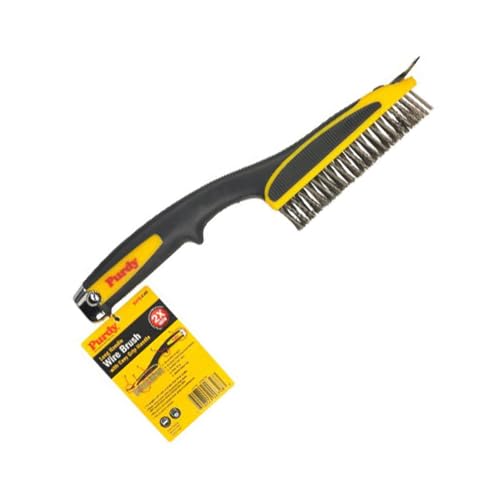
Purdy built this long-handle wire brush for jobsite abuse. The extended handle gives you reach and control when scraping stubborn residue. On paint brushes, that leverage helps you skim hardened paint on the outside of the bristles and clean the ferrule. I use it carefully, following the direction of the bristles, and only on the exterior to avoid cutting fibers.
This makes a great “first pass” tool when a brush comes off a long day with dried specks. A couple of gentle strokes near the ferrule loosens buildup, then I switch to warm water and a comb. I also use this on roller frames, metal bucket rims, and dried gunk on putty knives. As a multi-tool, it earns space in any caddy.
Pros:
- Long handle improves leverage and control
- Durable wire head stands up to jobsite use
- Great for ferrules, roller frames, and tool cleanup
- Narrow head fits tight spaces in brush and frame hardware
- Reliable brand known for pro-grade paint tools
Cons:
- Too aggressive for direct use on soft bristle tips
- Not ideal for delicate natural-bristle brushes
- Works best as a pre-clean, not the whole solution
My Recommendation
Pick this if you want a tough wire brush to clean paint brushes and tools. It shines when you need to break crust at the ferrule and hardware before you rinse and comb. I recommend it for pros, remodelers, and anyone who fights dried latex day after day. Use a light touch, always in the direction of the bristles, and follow with a comb to keep your brush shape intact.
| Best for | Why |
|---|---|
| Pre-cleaning stubborn buildup | Long handle gives control to skim off crust safely |
| Ferrules and metal parts | Wire bristles remove residue on hardware fast |
| Jobsite tool cleanup | Durable head handles frames, knives, and buckets |
Heavy-Duty Stainless Steel Wire Brush (1-Pack)

This heavy-duty stainless wire brush is a muscle tool. It targets rust, concrete, and baked-on paint. For brush care, I use it sparingly and strategically. It excels at scraping the ferrule and spine of a brush where paint cakes first. I keep the bristles moving with the grain and never dig into the flags of the brush.
The rubber-covered handle helps grip when your hands are wet or gloved. Stainless wire resists corrosion if you rinse and dry it after use. When I face a brush with stubborn, dry rings near the ferrule, this is the tool that cracks the shell. Follow with warm water, a mild cleaner, and a good comb to finish the job.
Pros:
- Stiff stainless bristles for tough, dried paint
- Rubber handle offers secure grip when wet
- Great for ferrules and the outer pack of bristles
- Useful for rust and surface prep beyond paint tools
- Holds up to frequent, heavy use
Cons:
- Too aggressive for delicate bristle tips
- Single brush, no softer options included
- Careless use can scratch polished ferrules
My Recommendation
Choose this if you battle hardened build-up and don’t mind a firm touch. It’s a strong wire brush to clean paint brushes as long as you stick to the ferrule and outer pack. I suggest it for contractors, maintenance crews, and DIYers who deal with heavy latex or oil residues. Always finish with a brush comb to keep the bristles aligned and ready for fine work.
| Best for | Why |
|---|---|
| Stubborn dried paint at the ferrule | Stainless wire breaks crust without bending |
| Tool and surface prep | Tough enough for rust, grills, and concrete |
| Gloved or wet work | Rubber handle provides a stable, non-slip grip |
3-Piece Wire Brush Set: Brass, Steel, Nylon

This three-pack covers the full spectrum: nylon for gentle cleaning, brass for medium duty, and stainless for the tough stuff. When I use a wire brush to clean paint brushes, having these options matters. Nylon helps scrub soap into the bristles without cutting fibers. Brass lets me work near the heel on synthetic brushes with better control.
The curved grip improves angle and pressure control. I like this set for small daily cleanups and for keeping brushes sharp week after week. Stainless comes out only when I see hardened crust. Brass handles most ferrule cleanup. Nylon finishes with a gentle rinse scrub. It’s a simple, smart system for anyone who wants to baby their favorite brushes.
Pros:
- Three bristle types for different tasks
- Brass option is brush-friendly for medium grime
- Nylon is safe on delicate fibers and finishes
- Curved handles improve reach and control
- Budget-friendly way to build a cleaning kit
Cons:
- Small size not ideal for large, flat tools
- Stainless can be too harsh if misused
- Lightweight construction may shed bristles over time
My Recommendation
Get this set if you want precision and choice. It’s the most flexible way to use a wire brush to clean paint brushes without overdoing it. Nylon for soaps, brass for the heel, and stainless for occasional crust—done. It’s great for homeowners, furniture painters, and trim pros who clean often to preserve feel and flow.
| Best for | Why |
|---|---|
| Gentle daily maintenance | Nylon bristles won’t damage tips or flags |
| Controlled ferrule cleaning | Brass bristles remove grime with less risk |
| Occasional heavy buildup | Stainless tackles hardened paint when needed |
Stainless Steel Wire Brush for Rust Removal

This stainless wire brush is compact and firm. It’s tuned for rust, grills, and concrete, but it also has a place in brush care. I use it on metal parts and dried rings near the ferrule. A couple of light, one-direction passes are enough to break that crust so water and soap can do the rest.
The ergonomic handle helps when your hand is tired. For a wire brush to clean paint brushes, rigid stainless can be a blunt tool. So I pair it with patience and a comb. Use it like a surgeon, not a sledgehammer. The reward is a brush you thought you’d replace brought back to neat, flexible form.
Pros:
- Dense stainless bristles for hard deposits
- Comfortable handle reduces hand strain
- Compact head reaches tight spots by the ferrule
- Multi-use on grills, tools, and masonry
- Easy to rinse and keep clean
Cons:
- Harsh on natural bristles if misapplied
- Small head means more time on large tasks
- Needs a comb and cleaner to finish the process
My Recommendation
If you like firm, no-nonsense tools, this brush earns its keep. It’s a strong wire brush to clean paint brushes when you meet dried rings and metal grime. I suggest keeping strokes light and limited to hardware and the outer pack. Finish with a comb and a mild cleaner to protect bristle tips and preserve your brush’s cut-in feel.
| Best for | Why |
|---|---|
| Breaking ferrule buildup | Compact head targets the ring where paint dries first |
| Tough cleanup tasks | Stainless bristles cut through stubborn deposits |
| Budget-friendly multi-use | Works on tools, grills, and masonry too |
FAQs Of wire brush to clean paint brushes
Can I use a wire brush on the bristle tips?
Use extreme care. Avoid scrubbing the tips. Work with the grain, lightly, on the outer pack and near the ferrule. Finish with a brush comb to protect flags and shape.
Which wire is safest for paint brush cleaning?
Nylon is safest, brass is moderate, stainless is most aggressive. For a wire brush to clean paint brushes, start with nylon or brass and use stainless only on tough crust.
Will a wire brush damage natural bristles?
It can. Natural bristles are soft and can split. If you must, use a very light brass brush near the ferrule. Prefer a comb and mild soap on the bristles themselves.
What’s the best method to clean after painting?
Rinse, work in mild soap, comb from ferrule to tip, then flush. If there’s dried paint, use a wire brush to clean paint brushes lightly on the ferrule, then comb again.
Can a wire brush restore an old, stiff brush?
Sometimes. Break the crust lightly, soak in the right solvent, then comb and rinse. If the bristles are bent or cut, it may not return to pro-quality performance.
Final Verdict: Which Should You Buy?
For daily care, pair the Wooster Comb with the 3-Piece Set. Use brass or nylon first, then comb. This gentle system keeps bristles sharp and saves time.
For heavy buildup, add a stronger wire brush to clean paint brushes like the Purdy or the Heavy-Duty Stainless option. Use a light hand, and always finish with a comb for best results.