PaintingProGuide is reader-supported. When you buy through links on this page we may earn an affiliate commission at no extra cost to you.
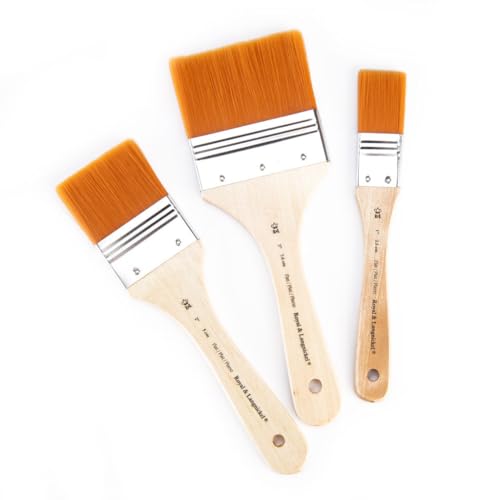
Covering a large canvas, a mural wall or a big abstract background with a small artist brush is slow and streaky. The best acrylic paint brushes for large areas are wide flat brushes, usually from 1 inch up to 3 or 4 inches, with synthetic bristles that hold plenty of paint, spring back when loaded with heavy acrylic and leave a smooth or deliberately textured stroke. For truly huge areas such as gesso on big canvases, an extra-wide paddle brush saves real time.
This guide compares seven wide brushes and sets from our October 2026 Amazon check, explains which widths to use on which canvas sizes, and covers the technique and cleanup habits that make big brushes perform well with fast-drying acrylic.
Quick answer: For most large acrylic paintings, the Fuumuui 4-Piece Flat Paddle Set (1, 2, 3 and 4 inches) offers the widest useful range with double-crimped stainless ferrules and short birch handles. On a tighter budget, the PHOENIX 3-Size Flat Brush Set covers 1, 2 and 3 inches in high-density nylon. For gesso and very big backgrounds, the Magimate 8-Inch Paddle Brush covers ground fast.
Our Top Picks at a Glance
- Fuumuui 4pcs Flat Paddle Paint Brush Set, 1 to 4 inch — Best overall large-area brush set
- PHOENIX Flat Paint Brush Set, 1, 2 and 3 inch — Best value nylon set
- Kynigo 4Pcs Wide Flat Acrylic Brush Set, 2 to 7 cm — Best for watercolor-style washes and acrylic glazes
- Alrhso 3Pcs Wide Flat Acrylic Paint Brushes — Best artist-style wide flats
- Bates Flat Paddle Paint Brush Set, 1, 2 and 3 inch — Best budget paddle brushes
- GACDR 1 Inch Flat Paint Brushes, 12 Pack — Best bulk 1-inch flats for groups
- Magimate 8 Inch Large Paddle Brush — Best for gesso and very large backgrounds
| Product | Best For | Key Spec | Key Strength | Price Tier |
|---|---|---|---|---|
| Fuumuui 4-Piece | Large canvases and murals | 1, 2, 3, 4 in, synthetic | Double-crimped stainless ferrules | $$ |
| PHOENIX 3-Size | Budget large-area work | 1, 2, 3 in, high-density nylon | Firm, chemical-resistant bristles | $ |
| Kynigo 4-Piece | Washes and glazes | 2, 3, 4, 7 cm, soft nylon | Smooth even strokes | $ |
| Alrhso 3-Piece | Artist-style flats | Wide flats, nylon, wood handles | Lightweight ergonomic handle | $ |
| Bates Paddle 3-Pack | Low-cost paddle set | 1, 2, 3 in, nylon | Ergonomic short handles | $ |
| GACDR 12 x 1 in | Classes and parties | 12 x 1 in flats | Aluminum double-crimped ferrules | $ |
| Magimate 8 in | Gesso and huge backgrounds | 8 in (200 mm) double paddle | SRT filament, plastic handle | $ |
How We Chose
We compared these brushes based on the Amazon listing details and specifications checked in October 2026: brush widths, bristle material and stiffness, ferrule construction, handle design and stated uses, and how widely each is reviewed by Amazon buyers. We did not paint with them. We looked specifically for features that matter when moving a lot of acrylic paint quickly: width, paint capacity, firm but springy bristles and secure ferrules.
- Width range: a spread from about 1 inch to 3 or 4 inches.
- Synthetic bristles: nylon and synthetic filaments suit water-based acrylic.
- Paint capacity and spring: holds enough paint without flopping.
- Ferrule quality: crimped ferrules that will not loosen or shed.
- Handle: short paddle handles for control, longer handles for reach.
Brush Width Guide for Large Acrylic Paintings
| Canvas or area size | Main background brush | Secondary brush |
|---|---|---|
| 11 x 14 to 16 x 20 in | 1 to 2 in flat | 1/2 to 1 in flat |
| 18 x 24 to 24 x 36 in | 2 to 3 in flat or paddle | 1 in flat |
| 30 x 40 in and larger | 3 to 4 in paddle | 2 in flat |
| Murals and gesso coats | 4 to 8 in paddle | 2 to 3 in flat |
Best Acrylic Paint Brushes for Large Areas Reviewed
1. Fuumuui 4-Piece Flat Paddle Set — Best Overall Large-Area Brush Set

Fuumuui’s set includes 1, 2, 3 and 4-inch flat paddle brushes, the widest artist-brush range in this guide. The soft synthetic bristles are described as having good load capacity and smooth flow while keeping elasticity and shape, sturdy enough not to bend or split under pressure. Each has a hand-crafted, double-crimped stainless steel ferrule pressed firmly into a short, ergonomic birch handle.
Paddle brushes like these are made for swaths of color on large paintings and murals, and the listing points out you can turn the brush on its edge for sharp, straight lines. The 4-inch brush is the standout for backgrounds on 30 x 40-inch canvases and larger, while the 1 and 2-inch brushes handle shapes and transitions.
Best suited for: Painters working on large canvases, abstract backgrounds and murals.
Key features:
- 1, 2, 3 and 4-inch flat paddle brushes
- Soft synthetic bristles with good spring
- Double-crimped stainless steel ferrules
- Short ergonomic birch handles
Pros:
- Widest artist range here
- Secure ferrules
- Edge for crisp lines
Cons:
- Highest price tier in this group
- Short handles limit reach at a tall easel
- Soft bristles less suited to heavy texture
Buying consideration: Dampen the bristles slightly before loading acrylic; it helps paint flow and makes cleanup easier.
2. PHOENIX 3-Size Flat Brush Set — Best Value Nylon Set

PHOENIX’s set includes 1, 2 and 3-inch flat brushes with high-density nylon fibers described as stiff enough for control yet flexible, resisting splaying with acrylics, oils, gesso and varnish. The tapered edges are designed for crisp lines, and the firm bristles also suit textured effects. The listing calls the bristles chemical-resistant and quick to clean with warm water and mild soap.
Firmer bristles are useful with heavy-body acrylics and gesso, where soft brushes can flop. At a low price tier, this is an easy set to keep for priming and backgrounds.
Best suited for: Budget-minded painters covering backgrounds, applying gesso and varnish.
Key features:
- 1, 2 and 3-inch flat brushes
- High-density nylon, firm and flexible
- Tapered edges for clean lines
- Acrylic, oil, gesso and varnish
Pros:
- Low price tier
- Firm enough for heavy paint
- Easy cleanup
Cons:
- No 4-inch size
- Firm bristles may leave visible strokes
- Handle details not specified
Buying consideration: Use it for gesso and first coats, and a softer brush like Fuumuui’s for smooth final layers.
3. Kynigo 4-Piece Wide Flat Set — Best for Washes and Glazes

Kynigo’s set includes widths of 2, 3, 4 and 7 cm (roughly 3/4, 1 1/4, 1 1/2 and 2 3/4 inches) with soft nylon bristles and wood handles. The listing emphasizes even strokes, shedding resistance and use for washes as well as acrylic, oil and watercolor.
Soft, wide brushes are ideal for thin acrylic glazes and watery washes on large canvases, where you want smooth transitions without brush marks.
Best suited for: Glazing, washes and smooth gradients on large canvases.
Key features:
- 2, 3, 4 and 7 cm widths
- Soft nylon bristles
- Wood handles
- Acrylic, oil and watercolor
Pros:
- Soft bristles for smooth blends
- Four sizes
- Low price tier
Cons:
- Soft bristles less suited to heavy body paint
- Metric sizing
- Detail page lists an odd bristle type
Buying consideration: Thin acrylic with water or glazing medium when using soft brushes for large gradients.
4. Alrhso 3-Piece Wide Flat Brushes — Best Artist-Style Wide Flats

Alrhso’s three wide flats have nylon bristles and sturdy wooden handles designed to be lightweight and ergonomic. The listing describes smooth application for acrylic, watercolor, oil, gesso and varnish.
These are a straightforward set of artist-style wide brushes for blocking in large areas. Check the product images for exact widths, which the listing does not state.
Best suited for: Artists who want simple wide flats for blocking in large shapes.
Key features:
- 3 wide flat brushes
- Nylon bristles
- Lightweight wooden handles
- Acrylic, oil, watercolor, gesso and varnish
Pros:
- Comfortable handles
- Versatile across media
- Simple set
Cons:
- Widths not stated in the listing
- Fewer sizes than Fuumuui
- Generic description
Buying consideration: Confirm the widths in the images so they complement brushes you already own.
5. Bates Flat Paddle 3-Pack — Best Budget Paddle Brushes

Bates offers 1, 2 and 3-inch flat paddle brushes with nylon bristles and ergonomic short handles, described as compatible with all paints and stains. The detail page highlights them as scale paddle brushes for oil and acrylic.
They are an inexpensive way to try paddle brushes before investing in a premium set.
Best suited for: Painters trying paddle brushes for the first time or needing a spare set.
Key features:
- 1, 2 and 3-inch paddle brushes
- Nylon bristles
- Short ergonomic handles
Pros:
- Lowest price tier paddle set
- Comfortable grip
- Useful sizes
Cons:
- No 4-inch size
- Less detail on ferrule construction
- Basic quality
Buying consideration: Keep one paddle for gesso and varnish only, so primer residue never ends up in your color layers.
6. GACDR 12 x 1-Inch Flat Brushes — Best Bulk 1-Inch Flats for Groups

GACDR’s pack contains twelve 1-inch flat brushes with aluminum double-crimped ferrules and straight birch wood handles. The listing describes them as inspected for shedding and suitable for watercolor, oil and acrylic, especially for laying down base color.
A 1-inch flat is the universal large brush for medium canvases. Having twelve means you can dedicate brushes to individual colors on a big painting, or supply a whole paint night.
Best suited for: Paint nights, classrooms and painters who like one brush per color.
Key features:
- 12 x 1-inch flat brushes
- Aluminum double-crimped ferrules
- Birch wood handles
Pros:
- One brush per color
- Good for groups
- Secure ferrules
Cons:
- Only one size
- Not wide enough for very large canvases alone
- Bristle type not detailed
Buying consideration: Use separate brushes for light and dark colors on large gradients to keep transitions clean.
7. Magimate 8-Inch Paddle Brush — Best for Gesso and Very Large Backgrounds

Magimate’s brush is 8 inches (200 mm) wide, a double paddle brush with SRT blend filaments and an ergonomic plastic handle. The listing is aimed at large surfaces such as wallpaper paste, furniture and fences, and specifically mentions gesso application.
For artists, that makes it a specialist tool: priming a large raw canvas, applying a colored ground across a mural wall, or laying in a huge abstract background in a few passes.
Best suited for: Gessoing large canvases, mural grounds and very large abstract backgrounds.
Key features:
- 8-inch (200 mm) wide paddle
- SRT blend filaments
- Ergonomic plastic handle
- Suitable for gesso
Pros:
- Covers huge areas quickly
- Ideal for even gesso coats
- Saves time on big projects
Cons:
- Too wide for most painting tasks
- Leaves broad stroke marks
- Designed mainly for non-art uses
Buying consideration: Apply gesso in two thin coats at right angles to each other for an even, smooth ground.
Techniques for Painting Large Areas with Acrylic
- Work fast and wet: acrylic dries quickly, so load generously and keep a wet edge.
- Mist or use retarder: a light mist of water or a slow-dry medium extends blending time.
- Mix enough paint: mix more of the background color than you think you need to avoid mismatched batches.
- Use criss-cross strokes: then finish with light strokes in one direction for an even surface.
- Block in large shapes first: work from big brush to small, background to foreground.
- Keep a damp cloth handy: to wipe the brush and control paint load.
Flat, Paddle or Mop: Which Wide Brush Shape?
Not every wide brush behaves the same. Wide flats have longer bristles and a crisp edge, good for both coverage and straight edges. Paddle brushes are shorter, denser and hold more paint, making them efficient for covering ground and for painterly, visible strokes. Mop and hake-style brushes, which are soft and fluffy, excel at smooth washes and blending but carry less heavy paint. For acrylic on large canvases, most painters rely on a combination: a paddle for blocking in, a wide flat for edges and transitions, and a soft brush for final smoothing.
Cleaning Large Brushes After Acrylic
Wide brushes hold a lot of paint near the ferrule, where acrylic dries first. Rinse often during a session, never let the brush sit with paint drying in it, and wash thoroughly at the end with mild soap and lukewarm water, working the soap into the base of the bristles. Reshape and dry flat or bristles-down hanging, so water does not run into the ferrule and loosen the glue.
Buying Guide: How to Choose Brushes for Large Acrylic Areas
Size relative to canvas
Choose the largest brush that suits the area; use the width table above as a starting point.
Soft vs firm bristles
Soft synthetics for smooth glazes and gradients, firm nylon for heavy body paint and gesso.
Ferrule construction
Double-crimped ferrules resist loosening when wide brushes are loaded with paint.
Handle length
Short paddle handles give control at a table; longer handles help at an easel.
Dedicated brushes for gesso and varnish
Keep cheap wide brushes for primers and varnish, separate from color brushes.
Quantity
Multiple brushes of the same size let you keep colors clean on big gradients.
Learn the Technique and Keep Brushes Clean
Our guide to painting with large brushes covers loading, stroke direction and blending. To keep wide brushes working, read how to clean acrylic paint brushes and these tips on cleaning acrylic off brushes fast.
Common Mistakes to Avoid
- Using small brushes for large backgrounds and getting streaks.
- Letting acrylic dry in the ferrule of a wide brush.
- Mixing too little background color and having to match it later.
- Overworking drying paint, which lifts and streaks.
- Using the same brush for gesso, color and varnish.
- Loading only the tip of a wide brush, so it runs dry halfway through a stroke.
FAQs
What size brush should I use for a large acrylic painting?
For 24 x 36-inch canvases, start with a 2 to 3-inch flat or paddle brush; for 30 x 40 inches and larger, use 3 to 4 inches.
Are paddle brushes good for acrylic painting?
Yes. Paddle brushes hold lots of paint and cover large areas quickly, and their edges can make straight lines.
How do I avoid brush strokes in large acrylic areas?
Use soft wide brushes, thin the paint slightly, keep a wet edge, and finish with light strokes in one direction.
Can I use house painting brushes for art?
For gesso and very large backgrounds they work. For color layers, artist synthetic brushes give smoother results.
How do I keep acrylic from drying while painting large areas?
Mist your work lightly, add a slow-dry medium or retarder, and work in sections.
Should large-area brushes be soft or stiff?
Soft for smooth blends and glazes; stiff for heavy body paint, gesso and texture.
Final Recommendation
For most large acrylic paintings, the Fuumuui 4-piece paddle set offers the best combination of widths and construction. Choose the PHOENIX 3-size set for value and firmer bristles, and Kynigo’s soft wide flats for washes and glazes.
Alrhso and Bates are simple, low-cost alternatives, GACDR’s 12-pack suits classes and color-dedicated brushes, and the Magimate 8-inch paddle is the specialist for gesso and huge backgrounds. Clean wide brushes thoroughly, and they will cover a lot of canvas.