PaintingProGuide is reader-supported. When you buy through links on this page we may earn an affiliate commission at no extra cost to you.
The humble rinse cup does more work than almost any other tool on a painting table. Every color change passes through it, and a cup that tips, splashes or leaves pigment in the bristles quietly affects every stroke.
Brush rinse cups for painters have evolved well beyond the old jam jar. Some have textured silicone bottoms that scrub paint out gently and lids with brush rests. Collapsible silicone cups fold flat for travel. Stainless steel washers with sealing lids hold solvents for oil painters. Fresh-water stations recirculate water so the brush meets clean water each time.
We compared six rinse cups available on Amazon by design, capacity, stability and media compatibility, using each listing’s details.
Price differences are small across most rinse cups, so choose for the job rather than the cost.
The best choice depends on where you paint: a heavy, stable cup for the studio, a folding cup for travel, a sealed metal cup for oil.
Quick answer: For studios and classrooms, the Ultimate Rinse Cup is our top pick: a silicone scrubbing bottom, a flexible lid with brush rests, a wide drip-catching base and dishwasher-safe construction. For travel, the Faber-Castell Clic and Go Collapsible Water Cup is light, cheap and has a scalloped rim to rest brushes. Oil painters should choose the MyLifeUNIT Stainless Steel Brush Washer, which seals solvents with a rubber ring.
Rinse Cup Features That Matter
Stability. Wide bases resist tipping. Tall narrow jars are the most likely to spill.
Scrubbing surface. Textured silicone or rubber floors and coils work paint out of the ferrule without bending the hair.
Brush rests. Grooves, scalloped rims or lid slots hold brushes horizontally so tips stay off the table and out of the water.
Capacity. More water stays cleaner longer.
Portability. Collapsible silicone folds flat for bags.
Seal. For solvents, a lid with a rubber gasket reduces evaporation and odor.
Matching a Cup to Your Medium
Watercolor and gouache painters rinse constantly, so capacity and a clean-water second cup matter most. Acrylic painters need a scrubbing surface and frequent water changes, because acrylic sludge builds quickly and dries in the ferrule.
Oil painters need a sealed, solvent-safe container, ideally with a filter or coil that lets pigment settle. Many oil painters also keep a separate cup of safflower or other vegetable oil for a gentler first rinse before soap and water.
One Cup or Two?
Many painters use two containers: one for the dirty first rinse and one for clean water to wet the brush before fresh paint. That simple habit keeps colors brighter, especially in watercolor.
Multi-packs of collapsible cups make this easy, and a three-pack lets you add a third cup for clean water only.
Our Top Picks at a Glance
- Ultimate Rinse Cup Paint Brush Cleaner — Best overall rinse cup
- Faber-Castell Clic and Go Collapsible Water Cup — Best travel rinse cup
- SUWARMN Foldable Rinse Cup with Holder and Palette — Best all-in-one foldable cup
- Aswewamt Collapsible Brush Washer (3-Pack) — Best multi-pack for staged rinsing
- MyLifeUNIT Stainless Steel Brush Washer (10 oz) — Best for oil painters and solvents
- Upgraded Art Rinse Brush Cleaner (3-in-1 station) — Best fresh-water rinse station
| Product | Best For | Key Spec | Key Strength | Price Tier |
|---|---|---|---|---|
| Ultimate Rinse Cup Paint Brush Cleaner | overall rinse cup | 4 in mug, silicone scrubbing bottom and lid | Stable, gentle scrubbing, dishwasher safe | $$ |
| Faber-Castell Clic and Go Collapsible Water Cup | travel rinse cup | Collapsible plastic, scalloped brush-rest rim, about 2.8 oz | Light, cheap and portable | $ |
| SUWARMN Foldable Rinse Cup with Holder and Palette | all-in-one foldable cup | Silicone, rubber pad cleaner, brush holder, palette exterior | Scrubber, holder and palette in one | $ |
| Aswewamt Collapsible Brush Washer (3-Pack) | multi-pack for staged rinsing | 3 silicone cups with thickened base | Three cups for dirty, rinse and clean water | $ |
| MyLifeUNIT Stainless Steel Brush Washer (10 oz) | oil painters and solvents | 10 oz stainless steel, sealing rubber ring, porous filter | Leak-proof seal for solvents | $ |
| Upgraded Art Rinse Brush Cleaner (3-in-1 station) | fresh-water rinse station | Top tank, one-touch flush, holder and tray | Brings clean water to each rinse | $$ |
We left out a second collapsible silicone cup that duplicated options above.
How We Chose
We did not use these rinse cups. Picks are based on the Amazon listing details and specifications checked in October 2026, how well each cup’s stability, scrubbing surface, portability and media compatibility suit painters, and how widely each product is reviewed by Amazon buyers.
- Stability and spill resistance
- Scrubbing surface
- Brush rests or holders
- Capacity
- Portability
- Solvent compatibility
Best Brush Rinse Cups for Painters Reviewed
1. Ultimate Rinse Cup Paint Brush Cleaner — Best overall rinse cup

The Ultimate Rinse Cup is designed for classrooms, studios and home use with acrylic and watercolor. Its bottom is lined with silicone rubber that removes paint as you swish, without damaging bristles, according to the listing.
A flexible silicone lid has small brush resting areas inside and out, and a wide water-catcher base collects drips and makes the cup hard to knock over. It is dishwasher safe.
Best suited for: Studio painters, classrooms and kids.
Key features:
- Silicone scrubbing bottom
- Flexible lid with brush rests
- Wide drip-catching base
- Dishwasher safe
Pros:
- Very stable
- Gentle on bristles
- Easy to clean
Cons / limitations:
- Single compartment
- Higher price tier for a cup
- Not for solvents per listing focus
Buying consideration: Pair with a second plain cup for clean water.
2. Faber-Castell Clic and Go Collapsible Water Cup — Best travel rinse cup

Faber-Castell’s Clic and Go cup collapses flat for bags and opens into a sturdy water cup. A wavy, scalloped rim doubles as a brush holder to keep brushes off the table.
It is easy to rinse and clean, weighs around 2.8 ounces and comes from a long-established art supply brand.
Best suited for: Plein air, sketchbook and class painting.
Key features:
- Collapsible design
- Scalloped rim brush holder
- About 2.8 oz
- Washable plastic
Pros:
- Very low price
- Folds flat
- Trusted brand
Cons / limitations:
- Small capacity
- No scrubbing surface
- Lighter, so less stable
Buying consideration: Fill it only partway on uneven ground to keep it steady.
3. SUWARMN Foldable Rinse Cup with Holder and Palette — Best all-in-one foldable cup

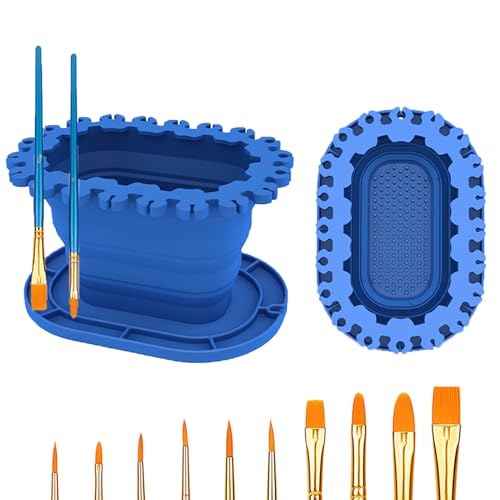
This silicone cup folds flat but adds features the simple collapsible cups lack: a built-in rubber pad cleaner for scrubbing, brush holder slots and an exterior that can be used as a palette.
The listing describes a large capacity, anti-slip design and a perforated edge so it can hang on a wall when not in use. It is designed for acrylic, watercolor and water-based mediums.
Best suited for: Painters who want studio features in a travel-friendly cup.
Key features:
- Foldable silicone
- Built-in rubber scrubbing pad
- Brush holder
- Exterior palette surface
Pros:
- Multi-function
- Folds and hangs
- Low price
Cons / limitations:
- Water-based media only
- Silicone attracts lint
- Palette area is small
Buying consideration: Rinse the scrubbing pad well after acrylic sessions.
4. Aswewamt Collapsible Brush Washer (3-Pack) — Best multi-pack for staged rinsing

Three collapsible silicone cups let you set up a proper staged rinse anywhere: dirty, second rinse and clean. The listing describes high-grade flexible silicone with a reinforced, thickened base and a design that flattens in seconds.
They also work as temporary palettes and for plein air painting.
Best suited for: Watercolorists, plein air painters and families.
Key features:
- Three collapsible cups
- Thickened base
- High-grade silicone
- Rinse with warm soapy water
Pros:
- Enables staged rinsing
- Folds flat
- Good value
Cons / limitations:
- No brush rests
- Small individual capacity
- Light cups tip if bumped
Buying consideration: Color-code them: one color always for clean water.
5. MyLifeUNIT Stainless Steel Brush Washer (10 oz) — Best for oil painters and solvents

This stainless steel washer is built for oil painters. A sealing rubber ring keeps solvent from leaking or evaporating, and it holds water, spirits, ink, turpentine and toning oil, according to the listing.
A removable porous filter gives a friction surface for cleaning and lets sludge settle below it, so the liquid above stays cleaner longer. A sturdy handle makes it easy to carry.
Best suited for: Oil painters using solvents or oil rinses.
Key features:
- 10 oz stainless steel
- Sealing rubber ring
- Removable porous cleaning filter
- Carry handle
Pros:
- Solvent-safe metal
- Seal reduces fumes and evaporation
- Filter separates sludge
Cons / limitations:
- Small capacity
- Not see-through
- Higher cost than plastic cups
Buying consideration: Let sludge settle and reuse the clear solvent; dispose of residue responsibly.
6. Upgraded Art Rinse Brush Cleaner (3-in-1 station) — Best fresh-water rinse station

For painters who want more than a cup, this station combines cleaning, holding and organizing. Pressing a switch flushes dirty water away while fresh water flows from a top tank, per the listing.
It is designed for small to medium brushes and lists oils, acrylics, watercolors, varnish and glazes.
Best suited for: Studio painters who want cleaner rinse water without frequent refills.
Key features:
- One-touch fresh-water flush
- Top tank
- Brush holder and tray
- Stain-resistant plastic
Pros:
- Cleaner rinse water
- Organizes brushes
- Compact
Cons / limitations:
- Small to medium brushes only
- More parts to clean
- Bulkier than a cup
Buying consideration: Empty and rinse the tanks after each session to prevent buildup.
How to Rinse Brushes Without Damaging Them
Wipe excess paint on a rag first; less paint in the cup keeps water clean longer.
Swish gently side to side. Do not jab the brush into the bottom or grind it against the floor.
Use the textured surface lightly to dislodge paint near the ferrule.
Rest brushes horizontally on the rim or lid between uses, never standing in water.
Change water as soon as it looks cloudy.
Cleaning the Cup Itself
Empty rinse cups at the end of every session. Pigment settles and dries into a film that tints fresh water next time.
Wash silicone cups in warm soapy water and let them dry open before folding; folding them wet traps moisture and odor.
For stainless steel solvent washers, decant clear solvent into a sealed jar, wipe out the sludge with paper towels and let the filter dry before reassembling.
If a scrubbing floor collects dried acrylic, soak the cup in warm water and peel the film away. Never use sharp tools that could tear silicone.
Rinse Water and Watercolor Clarity
Watercolor is the medium most affected by dirty water. Transparent washes pick up tints from cloudy rinse water, turning bright colors dull.
Use a two-cup system, change water often and keep the clean cup strictly for wetting the brush and diluting paint.
Rinse Cup, Brush Tub or Washer?
A rinse cup is the simplest option: one container, maybe with a scrubbing floor and brush rests. A brush tub divides water into several compartments for staged rinsing. A washer or rinse station supplies fresh water to the brush.
Cups win on price, simplicity and portability. Tubs win on clean color during long sessions. Washers win on water clarity but need more maintenance.
For most painters, two good cups do the job of a tub at a fraction of the bulk.
Water Management for Plein Air Painting
Carry more water than you think you need, in a bottle with a secure lid. Pour a little into a collapsible cup at a time and refresh it often rather than filling a large cup that gets dirty quickly.
Set cups on flat ground or clip them to an easel tray. A cup with a wide base or a three-pack with one cup for clean water reduces mess.
Pack used water back out in a sealed bottle rather than tipping pigmented water onto plants or into streams.
Rinse Cups for Kids and Classrooms
Children knock cups over. Wide-based, low cups with lids are the safest choice, and dishwasher-safe cups make cleanup quick for teachers.
Give each child their own cup, or one per pair, so water stays cleaner and colors brighter. Fill cups only halfway.
Disposal
Let acrylic rinse water settle, pour off the clearer water and wipe sludge into the trash.
Never pour solvents down drains. Let them settle, reuse the clear layer and dispose of residue according to local rules.
Buying Guide: How to Choose a Brush Rinse Cup
Where you paint
Studio: heavy, stable cups with lids and scrubbing floors. Travel: collapsible silicone. Oil: sealed metal.
Many painters own one of each.
Scrubbing
Silicone or rubber floors clean gently. Smooth cups rely on swishing.
Avoid metal coils on delicate natural hair.
Brush rests
Rims, lids or slots keep brushes off the table.
Horizontal rests are better than upright storage.
Capacity
Larger cups stay clean longer.
Collapsible cups trade capacity for portability.
Solvent use
Use metal or solvent-rated containers for oil painting.
Plastic and silicone cups are for water-based media unless stated otherwise.
Cleaning
Dishwasher-safe cups are easiest.
Rinse silicone well; it can hold residue.
Keep Fine Brushes Sharp
Gentle rinsing keeps liners and small rounds pointed for work like our liner brush detail techniques.
See also what brush size to use for detailed acrylic work.
Common Mistakes to Avoid
- Using one cup for everything in watercolor
- Jabbing brushes into the cup floor
- Leaving brushes standing in water
- Using plastic cups for solvents
- Pouring solvent down the drain
- Filling a collapsible cup to the brim outdoors
FAQs
What is the best rinse cup for watercolor?
A stable cup used in a two-cup system: one for dirty rinse, one for clean water. Silicone-bottom cups like the Ultimate Rinse Cup help clean gently.
Are collapsible water cups good for painting?
Yes for travel and plein air. They fold flat but hold less water and tip more easily.
Can I use a rinse cup for oil paint?
Only if it is solvent-safe, such as a stainless steel washer with a sealing lid.
How often should I change rinse water?
Whenever it looks cloudy, often every 20 to 30 minutes for acrylic.
Do silicone scrubbing cups damage brushes?
Used gently, no. Avoid grinding brushes hard against any surface.
Is a rinse cup better than a jar?
Usually yes: wider bases, scrubbing surfaces and brush rests reduce spills and protect bristles.
Final Recommendation
For most painters, the Ultimate Rinse Cup is the best rinse cup for the studio, with its scrubbing bottom, brush-rest lid and wide stable base. For travel, the Faber-Castell Clic and Go is inexpensive and folds flat, while the SUWARMN cup adds scrubbing and a palette.
Use the Aswewamt three-pack to set up staged rinsing anywhere, the MyLifeUNIT stainless washer for oil and solvents, and the 3-in-1 rinse station if you want fresh water for every rinse.
Whichever cup you choose, a second container for clean water and a habit of changing water early will improve your color more than any single feature.