
PaintingProGuide is reader-supported. When you buy through links on this page we may earn an affiliate commission at no extra cost to you.
Vinyl bends, stretches and gets sat on, which is exactly why ordinary paint fails on it. A rigid paint film cracks the first time a vinyl chair cushion compresses or a bag folds. The best paint for vinyl surfaces is a flexible coating made for vinyl, usually a vinyl spray paint or a dye-type color restorer that bonds with the surface and moves with it, applied over a thoroughly cleaned surface in light coats.
Quick answer: For most vinyl projects, Rust-Oleum Vinyl spray paint is the best starting point: it is made with vinyl paint resins so it stays as flexible as the vinyl, and dries to the touch in about 10 minutes. For a leather-and-vinyl finish in semi-gloss black, NADAMOO leather and vinyl spray is designed to flex. To restore faded vinyl and upholstery, HI-TECH’s big-can spray dye covers more per can.
Below we compare six coatings for vinyl chairs, bags, upholstery, dashboards and craft projects, then explain prep, application and how to keep painted vinyl from cracking.
Our Top Picks at a Glance
- Rust-Oleum Vinyl Spray Paint, White — Best overall for vinyl surfaces
- SEM Color Coat Plastic & Vinyl Flexible Coating — Best for a professional-style vinyl refinish
- NADAMOO Leather & Vinyl Spray Paint, Black — Best flexible semi-gloss for seats and furniture
- HI-TECH Big Can Spray Dye, Black — Best for restoring faded vinyl and upholstery
- Heirloom Traditions ALL-IN-ONE Paint — Best brush-on option for mixed surfaces
- Angelus Acrylic Leather Paint, Black — Best for small leather and faux-leather details
| Product | Best For | Key Spec | Key Strength | Price Tier |
|---|---|---|---|---|
| Rust-Oleum Vinyl | General vinyl | 11 oz spray, gloss white | Flexible vinyl resins | $ |
| SEM Color Coat | Refinishing | 12 oz aerosol, gloss white | For vinyl and carpet | $$ |
| NADAMOO | Seats and furniture | 13 oz spray, semi-gloss black | Moves with the surface | $$ |
| HI-TECH Spray Dye | Faded vinyl, carpet | 15 oz aerosol, black | Adjustable fan tip | $$ |
| Heirloom ALL-IN-ONE | Brush-on projects | Quart, velvet sheen | Stretches on vinyl per listing | $$$ |
| Angelus Leather Paint | Small details | 1 oz, water-based acrylic | Flexible, crack resistant | $ |
How We Chose
We selected these from Amazon listing details and specifications checked in October 2026, based on whether each product is made for or explicitly lists vinyl (or closely related flexible surfaces), its flexibility claims, and how widely each product is reviewed by Amazon buyers. We have not applied these coatings, so we report listing claims and established practice. Always test on a hidden area first.
- Flexibility: coatings that bend with the vinyl rather than cracking.
- Vinyl named: vinyl listed as a surface or primary use.
- Application: aerosol for even coverage; brush-on for control.
- Coverage per can relative to typical projects.
- Finish: gloss, semi-gloss or low-luster options.
We left out a general-purpose latex enamel from our research because its listing does not name vinyl, and rigid paints are the main reason vinyl paint jobs crack.
Best Paint for Vinyl Surfaces Reviewed
1. Rust-Oleum Vinyl Spray Paint, White — Best for vinyl surfaces overall
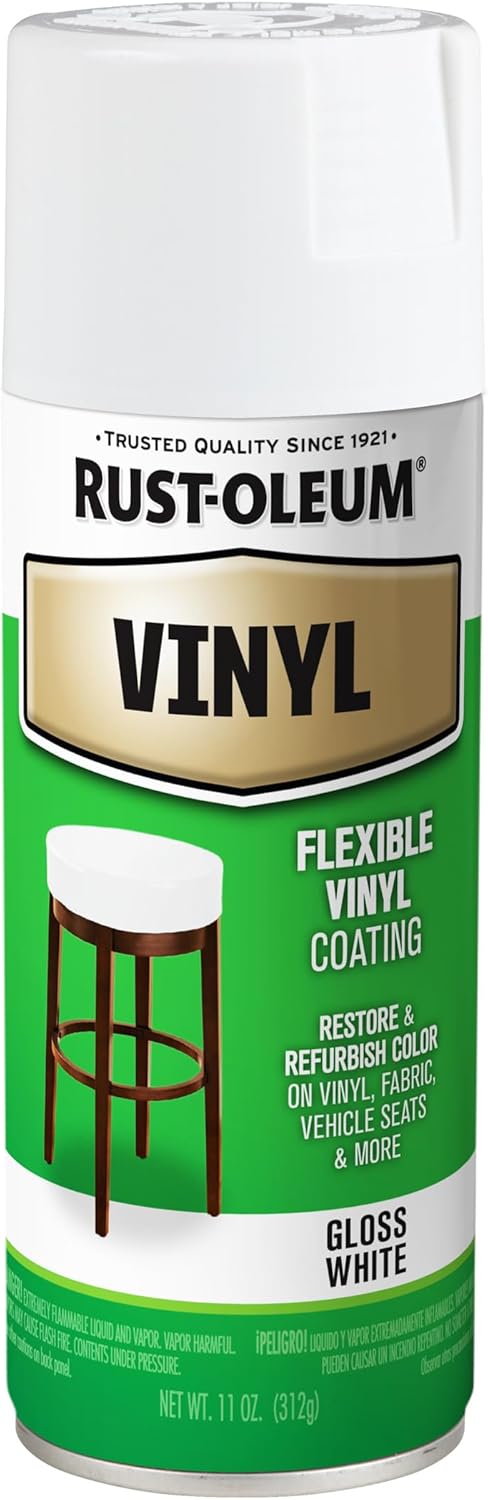
Rust-Oleum’s vinyl spray is made with actual vinyl paint resins, so the listing says it is as flexible as the vinyl being painted. It names luggage, car and boat seats, dashboards, upholstery, furniture and sports equipment as typical uses, and describes durable, permanent color. It dries to the touch in 10 minutes and covers up to 7 sq ft per can, with a gloss finish.
The low coverage per can is important: a vinyl chair or a set of cushions may need several cans. Several light coats will look better and flex better than one heavy coat.
Best suited for: Vinyl chairs, cushions, bags and small upholstery projects.
Key features:
- 11 oz spray, gloss white
- Made with vinyl paint resins
- Dries to touch in 10 minutes
- Up to 7 sq ft per can
Pros:
- Flexible like the vinyl
- Fast drying
- Wide range of vinyl uses
Cons and limitations:
- Low coverage per can
- Gloss may not match original sheen
Buying consideration: Buy more cans than you think you need, from the same batch if possible.
2. SEM Color Coat Plastic & Vinyl Flexible Coating — Best for a professional-style refinish

SEM’s Color Coat is a flexible coating for plastic and vinyl, and the listing details name vinyl and carpet as recommended surfaces. This 12 oz aerosol is Phantom White with a gloss finish.
The listing does not include detailed bullets, so we are limited to size, color, finish and surfaces. Use it with the cleaner and prep steps the manufacturer recommends for best adhesion.
Best suited for: Refinishing vinyl panels, seats and trim where a durable color change is wanted.
Key features:
- 12 oz aerosol
- Phantom White, gloss
- Vinyl and carpet listed
- Flexible coating
Pros:
- Purpose-made for vinyl and plastic
- Gloss white finish
- Aerosol for even coverage
Cons and limitations:
- Higher price tier
- Limited listing detail
Buying consideration: Follow the manufacturer’s full prep system for the most durable result.
3. NADAMOO Leather & Vinyl Spray Paint, Black — Best for seats and furniture

NADAMOO lists leather and vinyl as surfaces and aims at worn couches, faded dining chairs and cracked car seats. The listing describes a flexible coating that moves with the surface as it bends, stretches and compresses, strong adhesion that resists peeling and flaking, and resistance to wear, spills and body oils. The 13 oz can sprays a semi-gloss black.
Semi-gloss is close to the sheen of many vinyl seats, which helps a refresh look original.
Best suited for: Black vinyl or leather chairs, seats and headboards.
Key features:
- 13 oz (450 ml) spray
- Semi-gloss black
- Leather and vinyl listed
- Flexible, crack resistant per listing
Pros:
- Designed to flex
- Natural-looking sheen
- Wear and stain resistance claimed
Cons and limitations:
- Black only in this listing
- Spray needs masking around seams
Buying consideration: Mask stitching and piping if you want them to stay a contrasting color.
4. HI-TECH Big Can Spray Dye, Black — Best for restoring faded vinyl and upholstery

HI-TECH’s spray dye comes in a 15 oz can, which the listing says is 33 percent more than standard spray dyes. It has a snorkel-style nozzle with an adjustable fan pattern, and the listing describes a durable, flexible coating that bonds without cracking, splitting, peeling or rubbing off. It is marketed to restore faded surfaces and cover stains on carpets, upholstery and vinyl.
Dye-type coatings are often better than thick paint for restoring color, because they keep the vinyl’s texture visible.
Best suited for: Restoring faded black vinyl, upholstery and interior trim.
Key features:
- 15 oz aerosol, black
- Adjustable fan tip
- Flexible, permanent per listing
- Plastic and vinyl compatible
Pros:
- More per can
- Precise spray pattern
- Keeps surface texture
Cons and limitations:
- Black only here
- Not for big color changes from dark to light
Buying consideration: Spray in light passes and let each one flash off before the next.
5. Heirloom Traditions ALL-IN-ONE Paint — Best for brush-on mixed-surface projects

If you prefer brushing, Heirloom Traditions is one of the few general paints whose listing says it is durable yet stretches to paint smooth fabrics, vinyl and leather. It also advertises no sanding, no priming and no topcoat, with a low-luster velvet sheen, for interior or exterior use.
It suits projects that combine materials, such as a vinyl-seated wooden chair or a metal stool with a vinyl top, where you want one matching color.
Best suited for: Brush-on projects and pieces with mixed materials.
Key features:
- Quart, Iron Gate
- Velvet sheen
- Stretches on vinyl and leather per listing
- No primer or topcoat
Pros:
- Brush or roll
- One paint for several materials
- Low-luster finish
Cons and limitations:
- Highest price tier
- Not vinyl-specific
Buying consideration: Apply very thin coats on vinyl to keep flexibility.
6. Angelus Acrylic Leather Paint, Black — Best for small leather and faux-leather details

Angelus is a well-known leather paint for shoes, sneakers, bags and jackets. The listing describes a quick-drying, flexible, water-based formula that will not crack or peel, and says it can be blended to hide scuffs or used to customize. It is listed for smooth leather.
Many crafters use it on faux-leather and vinyl accessories, but since the listing names leather rather than vinyl, test on a hidden spot first.
Best suited for: Small details, scuffs and custom designs on bags and accessories.
Key features:
- 1 fl oz, black
- Water-based acrylic
- Flexible, crack and peel resistant per listing
- For smooth leather
Pros:
- Precise brush application
- Flexible
- Easy cleanup
Cons and limitations:
- Small bottle
- Vinyl not named in listing
Buying consideration: Use a deglazer or cleaner appropriate to the surface before painting.
How to Prepare Vinyl for Paint
- Clean thoroughly. Wash with soapy water to remove dirt and body oils, then rinse and dry.
- Degrease. Wipe with rubbing alcohol or a vinyl prep cleaner to remove silicone protectants and residues, which are the main cause of peeling.
- Repair. Patch tears with a vinyl repair kit before coloring.
- Mask. Tape off stitching, metal, wood and anything you do not want colored.
- Test. Spray a hidden area and check adhesion and flexibility once dry.
Setting Up Your Workspace
Spraying vinyl is mostly about overspray control and ventilation. Work outdoors on a calm day or in a garage with the door open and a fan pulling air out. Lay down drop cloths, and build a simple spray booth from a large cardboard box for smaller items like bags and cushions. Wear a respirator rated for paint fumes, gloves and eye protection. Remove cushions from frames where possible, so you can spray them evenly from all sides and avoid coloring the frame. If you are working on a vehicle interior, mask windows, carpets and electronics carefully and keep doors open for airflow.
How to Apply Vinyl Paint
Shake aerosol cans well. Hold the can at the distance on the label and spray in light, sweeping passes, starting and stopping off the surface. Let each coat flash off for a few minutes before the next. Three or four light coats are better than one heavy coat, which can run and crack. Flex the vinyl gently once dry to check the finish moves with it. Allow the full cure time before sitting on or handling the piece.
Vinyl or Leather? How to Tell
Many products look like leather but are vinyl, and the right coating depends on which you have. Real leather has an irregular grain with small variations and pores, feels warm and slightly soft, and the edges or underside show a fibrous suede-like texture. Vinyl usually has a very even, repeating grain, feels cooler and smoother, and the back often shows a woven fabric backing. If a label is available, it settles the question. Vinyl coatings are designed for the non-porous plastic surface of vinyl; leather paints are formulated for leather but some crafters also use them on faux leather after testing.
Planning a Color Change
Going darker is easy; going lighter is hard. Covering black vinyl with white can take many coats and may never look as even as the original. If you want a light color on dark vinyl, consider a mid-tone instead, or use a light-colored base coat from a product designed for that purpose before the final color. Restoring the same color, or deepening it, gives the most natural result. When in doubt, choose a color close to the original and focus on even, light coats.
Caring for Painted Vinyl
Clean painted vinyl with mild soap and water and a soft cloth. Avoid harsh solvents, abrasive pads and silicone-heavy protectants, which can soften or lift some coatings. Keep outdoor vinyl covered or out of direct sun when not in use, since UV fades color over time. Touch up small worn areas on armrests and seat edges early, using the same product, before wear spreads.
Common Vinyl Projects
Vinyl dining chairs and bar stools refresh well with flexible spray in a semi-gloss.
Luggage and bags can be updated with vinyl spray or detailed with flexible acrylic paint.
Boat and RV cushions benefit from vinyl-specific coatings and regular cleaning.
Dashboards and interior trim are often restored with dye-type sprays that keep texture.
Craft projects such as vinyl records or faux-leather patches can be painted with flexible acrylics.
For other tricky surfaces, see our guide to painting metal surfaces.
Buying Guide: How to Choose Paint for Vinyl Surfaces
Flexibility is non-negotiable
Choose coatings made for vinyl or that explicitly state they flex. Rigid paints crack.
Match the sheen
Many vinyl seats are semi-gloss. Matching the original sheen makes the refresh look natural.
Consider dye versus paint
Dye-type coatings keep texture and suit color restoration. Paint-type coatings can change color more dramatically.
Buy enough coverage
Vinyl sprays can cover relatively small areas per can. Estimate carefully.
Think about wear
Seats and armrests get the most wear. Light coats and full cure times improve durability.
Indoor or outdoor use
Patio cushions, boat seats and RV awnings face sun and moisture. Look for fade resistance in the listing and plan on more frequent touch-ups for outdoor vinyl than for indoor furniture.
Test first
Different vinyls react differently. A test patch saves a ruined project.
Common Mistakes to Avoid
- Skipping degreasing. Protectant residue causes peeling.
- Using regular spray paint. It cracks when vinyl flexes.
- Heavy coats. They run, stay tacky and crack.
- Using the piece too soon. Respect cure time.
- Going dark to light. Covering dark vinyl with white takes many coats.
- Painting in humid or cold conditions. Follow temperature guidance on the can.
FAQs
What kind of paint sticks to vinyl?
Flexible coatings made for vinyl, such as vinyl spray paints and vinyl dyes, stick best because they bond and flex with the surface.
Can you paint vinyl chairs?
Yes. Clean and degrease thoroughly, then apply several light coats of a flexible vinyl spray and let it cure fully.
Will paint on vinyl crack?
Rigid paint will. Flexible vinyl coatings applied in thin coats are designed to move with the surface.
Do I need to prime vinyl before painting?
Most vinyl sprays do not need a primer, but thorough cleaning and degreasing are essential. Follow the product’s instructions.
Can I use acrylic paint on vinyl?
Flexible acrylics, like some leather paints, can work for small details. Standard craft acrylic may crack or peel.
How long does vinyl paint take to cure?
Many vinyl sprays are dry to the touch within minutes, but allow the full cure time on the label before heavy use.
Final Recommendation
For most vinyl projects, Rust-Oleum Vinyl spray is the best starting point thanks to its flexible vinyl resins. SEM Color Coat is the choice for a refinish-style job, and NADAMOO’s semi-gloss black suits seats and furniture.
To restore faded vinyl while keeping texture, use HI-TECH’s spray dye. Heirloom Traditions is the brush-on option for mixed-material pieces, and Angelus handles small details after a test patch.




