Choosing the best educational illustration palette helps make learning clear and fun. Colors guide attention and improve understanding in teaching materials.
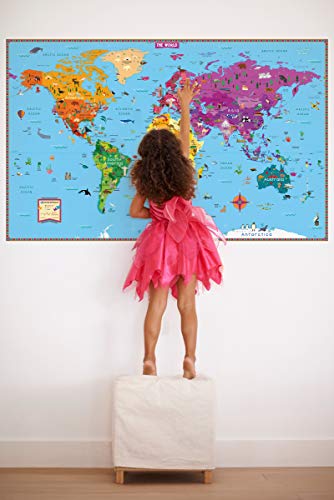
Educational illustrations need colors that are simple, bright, and easy to recognize. Soft tones work well for young children, while more detailed charts benefit from varied shades. For example, the Rand McNally Kids’ Illustrated World Wall Map uses clear, distinct colors to show different countries.
The MIDEFINCH Vintage Crustacean Species Wall Art uses natural ocean colors to teach marine biology. Books like “How Cars Work” use contrasting colors to explain parts clearly. A well-chosen palette makes images easier to read and remember. It supports learning by making information visually organized and appealing. Picking the right colors boosts both interest and understanding in educational content.
Importance of Color in Educational Illustrations
Colors play a crucial role in educational illustrations by enhancing visual appeal and aiding memory retention. An effective educational illustration palette can transform complex information into easily digestible visuals.
Rand Mcnally Kids’ Illustrated World Wall Map

The Rand McNally Kids’ Illustrated World Wall Map – Paper Rolled is ideal for young learners, parents, and educators who want to introduce children to geography in an engaging and colorful way. This map is perfect for classrooms, playrooms, or study areas where kids can easily visualize the world and spark their curiosity about different countries and cultures.
Pros:
- Bright, multi-color design that captures children’s attention
- Large dimensions (50 x 32 inches) providing clear visibility
- Durable paper rolled format for easy storage and display
- Single-page layout simplifies use without overwhelming details
- Produced by a trusted brand, Rand McNally, known for quality maps
Cons:
- Paper material may require careful handling to avoid tears
- Limited to basic geographic information, not suitable for advanced study
- Not laminated, so it may not be waterproof or highly resistant to damage
The Rand McNally Kids’ Illustrated World Wall Map features a visually appealing and educational design that uses vibrant colors to highlight different countries and continents. Its large size makes it easy for kids to identify locations, fostering a better understanding of world geography. The single-page format is user-friendly, helping children focus on the bigger picture without getting overwhelmed by excessive details.
Additionally, this map is crafted on high-quality paper that can be rolled for convenient storage and transport. It encourages interactive learning, making it a great tool for classrooms and home environments alike. While it may not include advanced geographic data, its simplicity and engaging visuals offer significant benefits for early learners, promoting curiosity and global awareness.
To buy this product, click here.
Midefinch Vintage Crustacean Species Wall Art Poster
What Educational Illustration Needs
Educational illustration, for textbooks, science materials, children’s learning resources and museum panels, is judged on clarity first. Colour is used to separate parts, signal relationships and guide the reader, so consistency and legibility matter more than painterly effects. The same colour should mean the same thing on every page of a book.
That makes the practical requirements clear: a palette that holds consistent mixed colours across many sessions, colours that reproduce well in print, and a workflow that allows corrections, since editors and subject experts will almost always request changes.
Palette Features for This Kind of Work
Consistent colour coding
Mix and label a fixed set of colours for recurring elements, such as blood vessels, water or specific materials, and keep them in an airtight palette so they stay usable across a project.
A white, non staining surface
Porcelain or enamel lets you judge colour accurately and does not retain traces of previous mixes.
Plenty of mixing space
Diagrammatic work often needs several tints of one hue. A large flat mixing area lets you grade them side by side.
Portable options for classroom use
If you demonstrate or teach, a closing travel palette keeps colours ready and protected between sessions.
Designing for Learning and Print
Check contrast and legibility, including for readers with colour vision deficiency, which affects a significant share of people. Avoid relying on red and green alone to distinguish important elements; add labels, patterns or differences in value.
Many strong pigments print differently from how they look on paper, so test reproduce key colours early. Scan or photograph work under controlled light and check it at final size, because detail that reads in the original can disappear when reduced on a page.
Frequently Asked Questions
What palette is best for educational illustration?
An airtight porcelain or enamel palette that keeps a fixed, labelled set of colours consistent across a project, with plenty of mixing space.
Why is colour consistency important in educational illustration?
Because readers learn that a colour means something. The same element should be the same colour on every page.
How do I make illustrations accessible for colour blind readers?
Do not rely on red and green alone. Add labels, patterns or clear differences in lightness so information survives without colour.
Do painted illustrations reproduce accurately in print?
Not always. Some strong pigments shift, so test reproduce key colours early and check work at its final printed size.