
PaintingProGuide is reader-supported. When you buy through links on this page we may earn an affiliate commission at no extra cost to you.
Going big changes what a canvas needs to do. Above about 24 x 36 inches, light cotton starts to sag and drum, thin stretcher bars can twist, and a canvas without a center brace may bow inward as it is painted. The best large canvas for painting therefore has heavier cotton, solid pine bars, a cross brace on the bigger sizes, and enough gesso that you are not fighting absorbency across a wide surface.
Your size and budget decide the rest. For most painters stepping up in scale, a 24 x 36 multi-pack is the sensible start. For statement pieces, 30 x 40 and 36 x 48 canvases with heavier cotton are worth it, and for wall-sized work, a professional 1.5 inch deep canvas avoids framing altogether.
Quick answer: For true large-scale work, the Artkey 36×48 2-pack pairs heavy 12.3 oz triple-primed cotton with finger-jointed Swedish pine bars. For first steps into large canvases, the ESRICH 24×36 3-pack adds a cross bar for stability, and for wall-sized professional pieces, the milo 60×72 canvases use 15 oz cotton on a 1.5 inch deep frame.
Our Top Picks at a Glance
- Artkey 36×48 Inch Canvas, 2-Pack, 12.3 oz — Best overall large canvas
- ESRICH 24×36 Inch Stretched Canvas, 3-Pack — Best first step into large sizes
- Oleitodh 30×40 Inch Stretched Canvas, 4-Pack — Best for series work at 30×40
- milo 60×72 Inch Artist Canvas, 2-Pack, 1.5 in — Best for wall-sized professional work
- FIXSMITH 24×36 Inch Stretched Canvas, 2-Pack — Best budget 24×36
- PHOENIX 18×24 Inch Stretched Canvas, 5-Pack — Best mid-large practice pack
| Product | Best For | Key Spec | Key Strength | Price Tier |
|---|---|---|---|---|
| Artkey 36×48 2-Pack | Statement paintings | 12.3 oz cotton, 5/8 in finger-jointed pine | Heavy cotton for big spans | $$$ |
| ESRICH 24×36 3-Pack | Stepping up in size | 8 oz primed, cross bar | Extra brace for stability | $$$ |
| Oleitodh 30×40 4-Pack | Series, wall art | 5-coat gesso, 5/8 in pine | Four large canvases | $$$ |
| milo 60×72 2-Pack | Wall-sized, frameless | 15 oz cotton, 1.5 in profile | Gallery depth, heavy duty | $$$ |
| FIXSMITH 24×36 2-Pack | Budget large canvas | 8 oz acid-free gesso, pine bars | Low tier for 24×36 | $$ |
| PHOENIX 18×24 5-Pack | Practice before going bigger | 4 oz raw / 8 oz primed, mortise joints | AP and CE verified | $$$ |
How We Chose
We did not paint on these canvases. Our picks are based on the Amazon listing details and specifications checked in October 2026, how well each canvas’s size, cotton weight, priming and frame construction suit large-format painting, and how widely each product is reviewed by Amazon buyers. With three 24 x 36 two- and three-packs in the results, we kept the two with the most specific construction details.
Large canvases put more stress on materials, so these criteria carried the most weight:
- Cotton weight: heavier fabric (12 to 15 oz) resists sagging across large spans.
- Frame construction: finger-jointed or mortise-and-tenon pine, cross bars on wide sizes, deeper profiles on the largest.
- Priming: triple or more coats of acid-free gesso for even absorbency across the whole surface.
- Size range: from 18 x 24 practice canvases to 60 x 72 wall pieces.
- Value per square foot: large canvases are expensive; multi-packs help.
Best Large Canvas for Painting Reviewed
1. Artkey Large Canvas 36×48 Inch, 2-Pack — Best Overall Large Canvas

A 36 x 48 inch canvas is where many painters feel they have truly gone big, and it is also where cheap canvases show their weaknesses. Artkey uses 12.3 oz long-staple cotton, roughly triple the raw weight of many budget canvases, primed with three coats of acrylic titanium gesso. Heavier cotton holds its tension better across a wide span and takes thick paint without denting.
The frame is high-precision finger-spliced Swedish pinewood with bevel-carved edges and rounded corners that protect the canvas from tearing, and the canvas is back-stapled for clean sides. It is a 5/8 inch profile, so plan to frame finished work. The listing cites ASTM D-4236 and CE certification.
Best suited for: Painters ready for statement-size work in acrylic, oil or pouring who want heavier cotton without paying professional linen prices.
Key features:
- 36 x 48 inches, 2 canvases
- 12.3 oz 100% cotton, triple-primed titanium gesso
- Finger-spliced Swedish pine bars, 5/8 inch profile
- Back-stapled, rounded bar edges
- ASTM D-4236 and CE verified
Pros:
- Heavy cotton for large spans
- Thoughtful frame construction
- Two large canvases per pack
Cons and limitations:
- Top price tier
- Shallow profile needs framing for a finished look
- No center brace mentioned on a 48 inch span
Buying consideration: For heavy impasto at this size, tap in support from the back if the canvas drums, and store it upright, not leaning on its face.
2. ESRICH Stretched Canvas 24×36 Inch, 3-Pack — Best First Step into Large Sizes
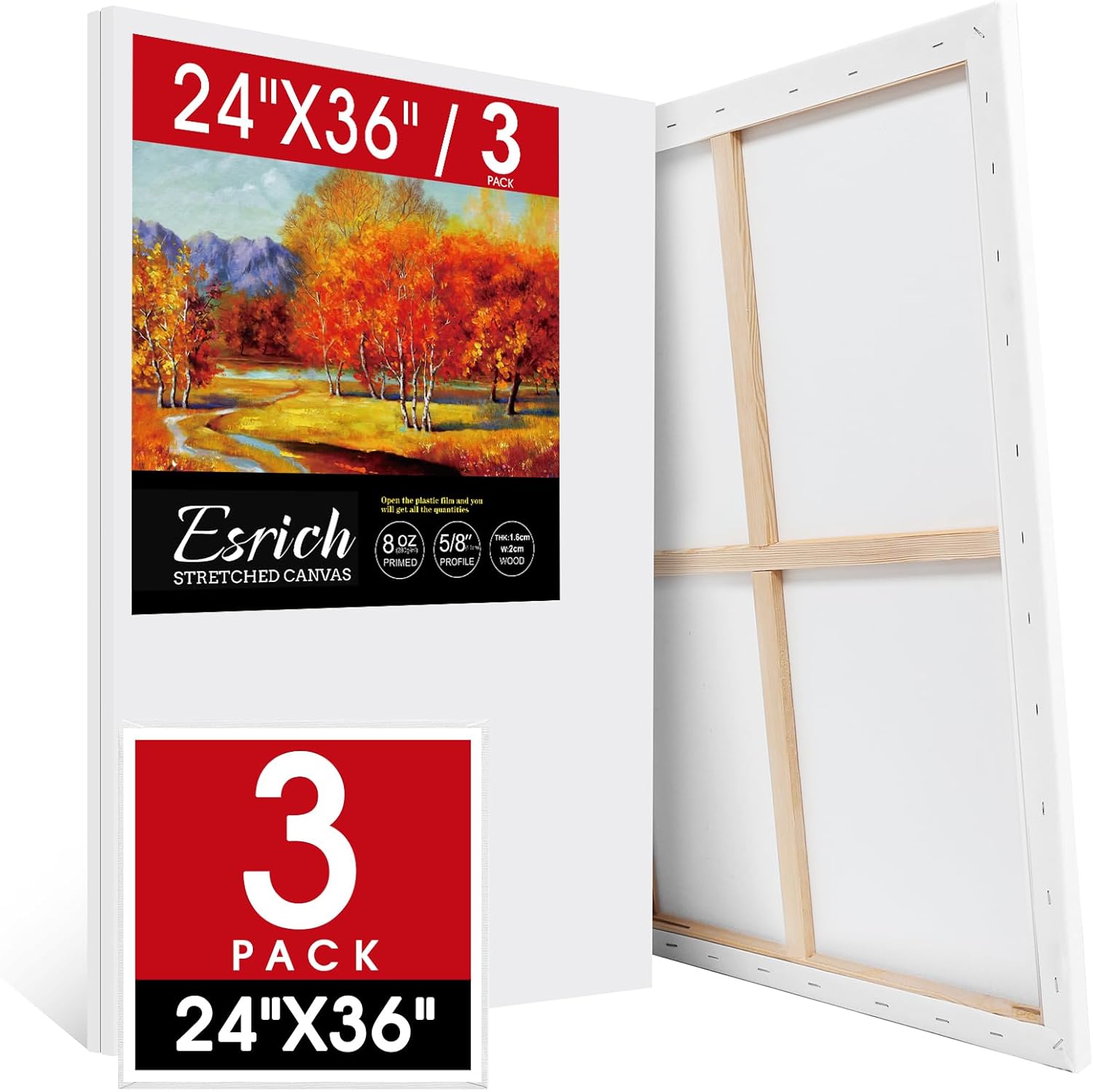
Twenty-four by thirty-six inches is the most popular “large” canvas, big enough to change how you paint but still manageable in a small studio. ESRICH’s three-pack uses cotton pre-coated with acid-free acrylic gesso to a primed weight of 8 oz, stapled to a 5/8 inch pinewood frame.
The useful detail is the extra cross bar, which the listing says ensures steadiness. On a 36 inch span, that brace helps keep the frame square and reduces flex while you paint. Three canvases also let you try a triptych or a short series.
Best suited for: Painters stepping up from 16 x 20 or 18 x 24, painting party hosts, and anyone planning a triptych.
Key features:
- 3 canvases, 24 x 36 inches
- Acid-free acrylic gesso, 8 oz primed weight
- Pinewood frame with extra cross bar
- 5/8 inch profile
Pros:
- Cross bar adds stability
- Three canvases for series work
- Mid tier for its size
Cons and limitations:
- Lighter cotton than the Artkey
- Shallow profile
- Cotton weight before priming not stated
Buying consideration: A smart first large pack; if you love the scale, move to heavier cotton for bigger sizes.
3. Oleitodh Stretched Canvas 30×40 Inch, 4-Pack — Best for Series Work at 30×40

Four 30 x 40 inch canvases in one box is a strong offer for painters building a body of work or making a set of matching wall pieces. Oleitodh describes heavy-duty cotton stretched and stapled onto a 5/8 inch pine frame, primed with five coats of white gesso for a compact, less absorbent, brighter surface.
More gesso means less paint sinking in, which saves material on a large surface. The listing positions the canvases for acrylic, oil, pouring and mixed media.
Best suited for: Painters creating a series, interior decorators making matched wall art, and pour painters who need several large surfaces.
Key features:
- 4 canvases, 30 x 40 inches
- 100% heavy-duty cotton
- 5 coats of white gesso
- Pinewood frame, 5/8 inch thick
Pros:
- Four large canvases per pack
- Extra priming reduces absorbency
- Good per-canvas tier at this size
Cons and limitations:
- Cotton weight not stated
- Shallow profile for its size
- Heavy box to ship and store
Buying consideration: Store large canvases on edge in a dry place, separated by cardboard, to avoid dents.
4. milo Stretched Artist Canvas 60×72 Inch, 2-Pack — Best for Wall-Sized Professional Work
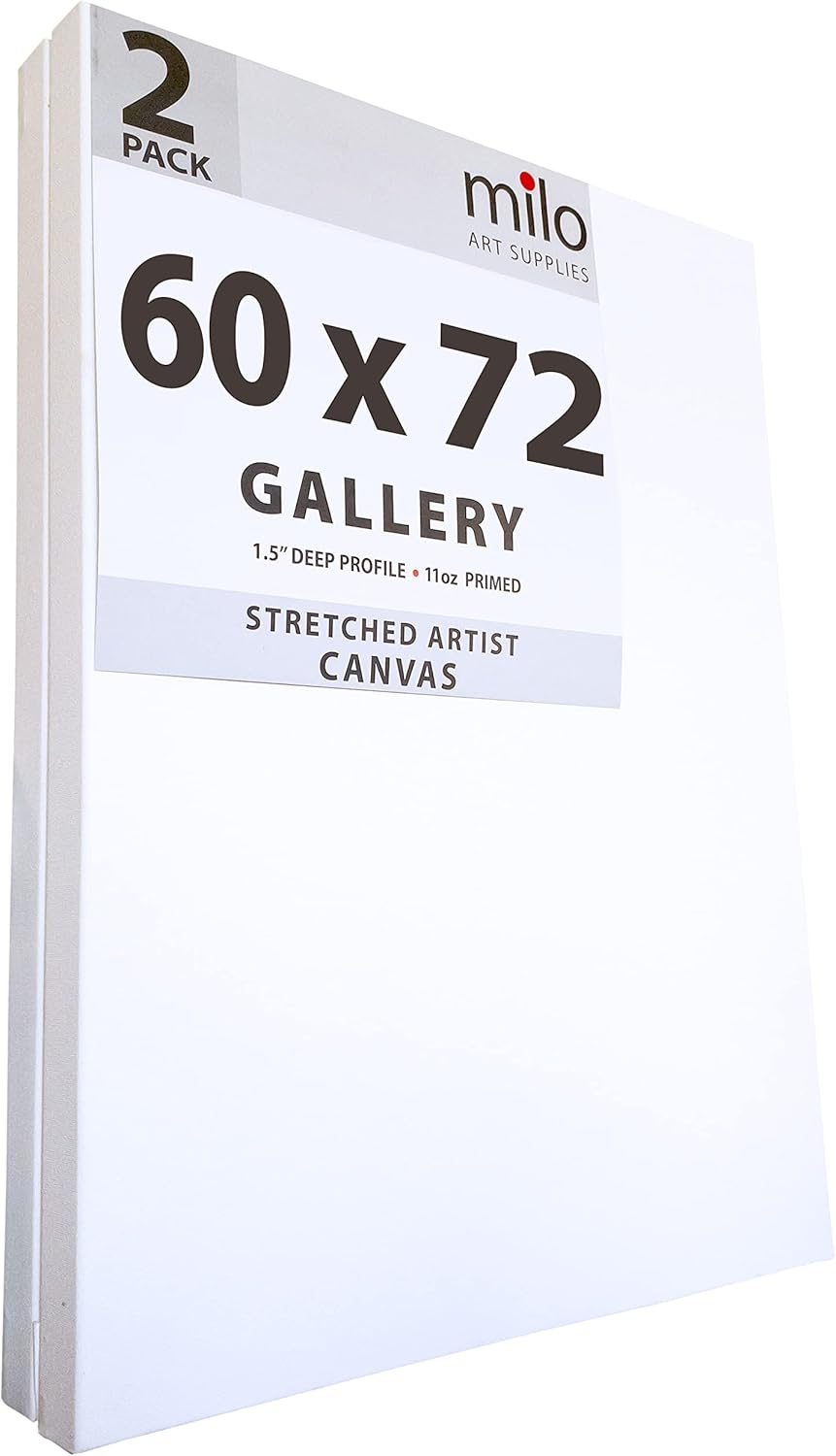
At 60 x 72 inches, milo’s canvases are in a different category: five by six feet, big enough to anchor a living room wall or a gallery space. They use 15 oz heavy-duty 100% cotton, triple primed with gesso to a medium texture, stretched over a 1.5 inch deep pine frame and back-stapled.
The deep profile gives a 3D look on the wall without a frame and adds rigidity at this scale. milo positions it for acrylic, oil, wet media and pouring, and notes it is a USA-based, American-owned company with a satisfaction guarantee.
Best suited for: Professional and serious painters producing wall-sized work, murals on canvas and commissions.
Key features:
- 60 x 72 inches, 2 canvases
- 15 oz 100% cotton, triple primed
- 1.5 inch deep pine frame
- Back-stapled clean edges
Pros:
- Heaviest cotton on this list
- Gallery-depth profile hangs without framing
- Truly wall-sized
Cons and limitations:
- Highest price tier by far
- Needs a large studio, easel or wall to paint on
- Shipping and handling are cumbersome
Buying consideration: Measure doorways, stairwells and vehicles before ordering; a 60 x 72 canvas will not fit everywhere.
5. FIXSMITH Stretched Canvas 24×36 Inch, 2-Pack — Best Budget 24×36

FIXSMITH’s two-pack is the lowest-tier way to get a 24 x 36 canvas here. The cotton is described as not rinsed with alkaline chemicals to keep the fibers flexible, stapled to pinewood bars, and pre-coated with 8 oz of acid-free acrylic gesso.
It is a 5/8 inch profile and works for oil, acrylic and other media. For experimenting with large compositions before committing to heavier canvases, it is a practical choice.
Best suited for: Budget-minded painters trying large compositions for the first time.
Key features:
- 2 canvases, 24 x 36 inches
- 100% cotton
- 8 oz acid-free acrylic gesso
- Pinewood bars, 5/8 inch profile
Pros:
- Lowest tier for 24×36 here
- Clear priming spec
- Good for experiments
Cons and limitations:
- No cross bar listed
- Light cotton for this size
- Only two canvases
Buying consideration: If you paint thickly at this size, the ESRICH three-pack with a cross bar may be the better value.
6. PHOENIX Large Stretched Canvas 18×24 Inch, 5-Pack — Best Mid-Large Practice Pack

Eighteen by twenty-four is the bridge between small studies and true large-scale work. PHOENIX’s five-pack uses medium-texture cotton that the listing says does not shrink, with a 4 oz raw and 8 oz primed weight. Pine stretcher bars use mortise-and-tenon joints, which the brand says keeps them firm enough for impasto and acrylic pouring.
Every other canvas is vacuum packed to save space, and the listing cites AP and CE verification. Five canvases make it easy to practice composition at a bigger size before buying 24 x 36 or larger.
Best suited for: Painters building confidence before going bigger, and classes or groups working at a mid-large size.
Key features:
- 5 canvases, 18 x 24 inches
- 4 oz raw, 8 oz primed cotton
- Mortise-and-tenon pine bars
- AP and CE verified
Pros:
- Five canvases per pack
- Sturdy joinery
- Standard frame size
Cons and limitations:
- Light cotton
- Not truly large for statement pieces
- Vacuum-packed canvases may need time to relax
Buying consideration: A smart stepping stone; practice compositions here, then scale the best ones up.
Buying Guide: How to Choose a Large Canvas for Painting
Cotton weight matters more as size grows
Canvas weight is measured in ounces per square yard. Light 4 oz cotton works on small canvases, but across a 36 or 48 inch span it can sag, drum and dent. Heavier 10 to 15 oz cotton holds tension and takes thick paint better.
Frame depth and bracing
Standard 5/8 to 3/4 inch profiles are intended for framing. Deep 1.5 inch profiles look finished unframed and are more rigid. Canvases over about 30 inches on a side benefit from a center cross brace that keeps the frame square.
Priming
More coats of gesso mean a smoother, less absorbent surface, which saves paint on a big canvas. If a canvas feels thirsty, add another coat of gesso before you start.
Stretched canvas, roll or pad
Pre-stretched canvases are convenient but limited to stock sizes. Rolls of canvas cloth let you stretch any size and are cheaper per square foot. Canvas pads are good for studies and planning compositions before committing to a large surface.
Your space and easel
A large canvas needs an easel that can hold it or a wall to tape or hang it on. Check the maximum canvas height of your easel and the clearance in your room, including ceiling height and room to step back.
Transport and display
Measure doors, stairwells and your car before buying 48 inches or larger. Plan for hanging hardware rated for the weight, and consider whether a deep profile will let you skip framing.
Paint quantity and budget
Large canvases use far more paint. Buying student-grade paint for underpainting and larger tubes or jars for big areas keeps costs reasonable. Wide brushes, rollers and palette knives cover ground faster.
Canvas Skills for Working Large
If you want custom sizes, learn how to use a canvas stretching tool to get even tension on your own frames. Our guide to using canvas cloth for painting covers cutting, priming and stretching raw canvas, which is often the most economical route to very large work.
For planning compositions before you scale up, see how to use a canvas pad for painting, and when you are ready to transfer a sketch, our method for gridding a canvas keeps proportions accurate at any size.
Common Mistakes to Avoid
- Choosing light cotton for very large canvases: it sags and dents.
- Skipping a cross brace on wide canvases: frames can twist or bow.
- Underestimating paint needs: a 36 x 48 canvas uses many times more paint than an 11 x 14.
- Using small brushes: large canvases need wide brushes and big gestures.
- Ignoring transport: measure doors and vehicles before ordering.
- Leaning canvases face-first: store on edge with cardboard between them.
- Not planning the composition: work out the design on a pad or small canvas first.
FAQs
What size is considered a large canvas for painting?
Most painters consider 24 x 36 inches and above large, with 36 x 48 and bigger counted as extra large. Anything over 48 inches on a side is usually considered oversized.
What weight canvas is best for large paintings?
Heavier cotton, around 10 to 15 oz, holds up best on large canvases. Lighter canvases are fine up to about 24 x 36 if you avoid very heavy impasto.
Do large canvases need a cross bar?
Canvases larger than about 30 inches on a side benefit from a center cross bar, which keeps the frame square and reduces flex. Many 24 x 36 canvases include one.
Is it cheaper to stretch my own large canvas?
Usually, yes. Raw canvas cloth and stretcher bars cost less per square foot than pre-stretched canvas, especially at large sizes, but it takes time and practice.
How do I hang a large canvas without a frame?
Deep-profile canvases (around 1.5 inches) can hang directly on two hooks or a cleat. Shallow canvases look better framed. Use hardware rated for the weight.
What paint is best for large canvases?
Acrylic is popular for large work because it dries quickly and is economical in large jars. Oil works beautifully but takes longer to dry and needs more ventilation at scale.
Final Recommendation
For statement-size paintings, the Artkey 36×48 offers heavy cotton and solid construction at a realistic price. If you are just stepping up in size, the braced ESRICH 24×36 three-pack is the safest start, while the FIXSMITH 24×36 pair is the budget alternative.
Painters planning a set of matching pieces will get the most from the Oleitodh 30×40 four-pack, the PHOENIX 18×24 five-pack is the practice step before going bigger, and for wall-sized professional work, the milo 60×72 canvases are in a class of their own.


One Comment