M. Graham acrylic ink shines: dense color, smooth flow, reliable lightfastness.
You want bold lines, clean washes, and strong color that lasts. You want it to behave like ink, but you also need the hold and film strength of acrylic. If you searched for a M. Graham acrylic ink review, you likely love rich pigments and smooth flow. Here is the twist. As of 2026, M. Graham does not sell bottled acrylic ink. But their artist-grade acrylic paints and gloss medium can mimic acrylic ink very well. I tested this mix for brush, pen, and detail work. The result? A fluid system that delivers inking control with acrylic durability.

M. Graham & Co. 5…
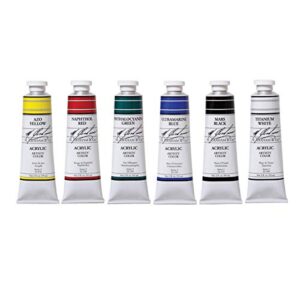
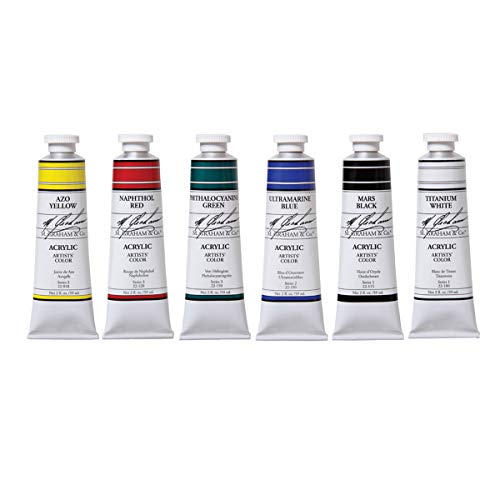
5 Color Acrylic Set, Plus Bonus 6th Color M. Graham paint set Highly pigmented acrylic paint Color free from extenders and adulterants Made in the USA

M. Graham 5-Ounce Tube Acrylic…
Artist quality acrylic paint made with high solids pure acrylic emulsion Increased pigment loads for stronger and more vibrant colors Slightly longer open time allows subtle blends of color Smooth…

M. Graham & Co. 22-190…
Artist quality acrylic paint made with high solids pure acrylic emulsion Increased pigment loads for stronger more vibrant colors Slightly longer open time allows subtle blends of color Smooth buttery…
M. Graham Acrylic Set, 5 Colors + Bonus
This compact M. Graham acrylic set gives you five essential colors plus a sixth bonus color. The pigments are strong, clean, and easy to mix. The paint feels creamy right from the tube. It thins with water or medium to form smooth, ink-like washes without chalkiness.
I used this set to build a fluid painting kit for line work. I mixed each color with the M. Graham Gloss Medium to get a pen-friendly viscosity. The mixes held edges well and dried to a durable film. This is a smart way to follow along with a M. Graham acrylic ink review when you want ink behavior from paint.
Pros:
- Well-chosen color range that mixes into many hues
- High pigment load for strong, bright layers
- Creamy texture thins down to an ink-like flow
- Consistent drying to a tough acrylic film
- Good value for building a small, portable kit
- Colors remain vivid after dilution with medium
- Low odor for long studio sessions
- Compatible with brush, nib, and airbrush when thinned
- Clean color mixing with minimal mud
- Great entry for an M. Graham acrylic ink review style test
Cons:
- Not a true bottled acrylic ink product
- Needs gloss medium for best “ink” flow
- Set may miss a high-chroma yellow for some users
My Recommendation
If you want the feel of acrylic ink but need flexibility, start here. This set lets you build a fluid system with very little waste. It works for comics, line illustration, and mixed media. It is ideal if your M. Graham acrylic ink review priority is flow plus color strength.
Use a 1:1 mix of paint and gloss medium for drawing lines. Add a little water for transparent washes. The film dries tough and resists lifting, so you can glaze. I like this for sketchbooks and storyboards since it dries fast and scans well.
| Best for | Why |
|---|---|
| Beginners testing “ink-like” acrylic | Easy to thin, forgiving, strong color |
| Illustrators who layer | Glazes hold, colors stay clean and bright |
| Travel kits | Compact set, wide mixing range |
Acrylic Paint 5 oz, Titanium White
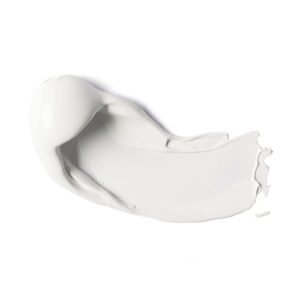
Titanium White is the workhorse of any acrylic system. This 5 oz tube gives you a bright, opaque base for tints and highlights. It mixes to pastel tones with a small amount of color. It also makes “ink-like” mixes more opaque without losing flow.
In my tests, this white stayed neutral and clean. It did not turn colors chalky when I kept the medium ratio high. That helps if your goal is an inking style wash with a soft veil. For any M. Graham acrylic ink review setup, a strong white is key for balance.
Pros:
- High opacity for clean tints and highlights
- Neutral temperature for accurate color shifts
- Blends smoothly into gloss medium for fluid mixes
- Holds edge well when applied with a liner brush
- Excellent coverage over dark grounds
- Stable film with minimal color shift on drying
- Large 5 oz size gives long value
- Helps create pastel “ink” washes that still pop
- Great for negative space and graphic shapes
- Reliable base for the M. Graham acrylic ink review tests
Cons:
- Very opaque; can mute hues if overused
- Needs more medium for ultra-thin line work
- Not a bright white “ink” out of the bottle
My Recommendation
Pick this if you do a lot of tinting and graphic work. It excels at clean whites and pastel mixes. When I want ink-like opacity for highlights, I mix a small amount of Titanium White into gloss medium and color. It pops on toned paper.
This tube also helps control value for comics and line art. If your M. Graham acrylic ink review plan is to test gouache-like flats with acrylic durability, this white is the hub. It is also great for airbrush when thinned and filtered.
| Best for | Why |
|---|---|
| Tinting and pastels | Opaque, neutral, smooth blending |
| Graphic highlights | Strong cover over dark layers |
| Ink-style wash control | Makes mixes visible but soft |
Acrylic Paint 2 oz, Ultramarine Blue
Ultramarine Blue is a classic, warm-leaning blue. It is vital for skies, shadows, and skin tone mixes. The hue granulates a bit in very thin washes, which I like for texture. It also glazes well over warm underpainting.
In fluid mixes with gloss medium, it lays down smooth lines. It keeps its depth when very thin, which is useful in an inking style. For this M. Graham acrylic ink review, I noted how well it reacted to water. It stayed crisp at the edge, with subtle bloom only in heavy wet-on-wet.
Pros:
- Deep, natural blue for shadows and skies
- Glazes with a warm bias for lifelike mixes
- Holds saturation in thin, ink-like layers
- Edges stay sharp with liner brushes
- Works well over gesso and toned grounds
- Mixes clean purples with cool reds
- Creates interesting texture at extreme dilution
- Good for atmospheric perspective
- Reliable anchor color for the M. Graham acrylic ink review
- Pairs well with Titanium White for cool tints
Cons:
- Warm bias can turn greens muddy with some yellows
- Can separate slightly if over-thinned with water alone
- Not as staining as phthalo; lifts a bit during glazing
My Recommendation
Choose Ultramarine Blue if you love expressive shadows and subtle skies. It shines in line-and-wash work. For an ink-like flow, use a 2:1 gloss medium to paint ratio. That gives a rich, transparent blue that still holds a line on hot press paper.
It is a must-have if your M. Graham acrylic ink review goals include portrait studies and moody scenes. It plays nice with Cadmium Red for deep neutrals. It is also easy to rein in with Titanium White without going chalky.
| Best for | Why |
|---|---|
| Atmospheric washes | Warm blue glazes with depth |
| Line-and-wash | Holds edges in fluid mixes |
| Portrait shadows | Natural, lifelike undertones |
Acrylic Paint 2 oz, Cadmium Red

Cadmium Red brings punch. It is opaque, rich, and steady. It covers fast and adds heat to mixes. When thinned with gloss medium, it makes vivid, ink-like strokes that stand out on toned paper.
Note: Cadmium pigments are not for airbrush or spray. Use care with dust and cleanup. In brush use and fluid mixes, it is safe with common sense studio habits. In my M. Graham acrylic ink review trials, it kept its fire in thin lines and small fills.
Pros:
- Intense, warm red with huge impact
- Great coverage for graphic shapes
- Holds saturation when thinned with medium
- Mixes lively oranges and skin tones
- Opaque body helps hide underlayers
- Strong poster-style flats for comics
- Edge control is good even in fluid state
- Excellent with Titanium White for coral tints
- Reliable heat source in a limited palette
- Balances cool blues in the M. Graham acrylic ink review tests
Cons:
- Not suitable for airbrush or spraying
- Opaque; can dull mixes if overused
- Higher price due to cadmium pigment
My Recommendation
Use Cadmium Red if you want bold shapes and punchy notes. It excels in posters, logos, and focal points. If your M. Graham acrylic ink review target is strong, flat fills with ink-like control, this color shines when mixed 1:1 with gloss medium.
I also like it for underpainted warms. A thin glaze of Cadmium Red under skin tones adds life. Keep ventilation good. Avoid spray use. Respect the pigment, and it will reward you with color that jumps off the page.
| Best for | Why |
|---|---|
| Graphic fills | Opaque, high-impact color |
| Focal accents | Holds saturation in thin layers |
| Warm underpainting | Adds life to skin and neutrals |
Acrylic Gloss Medium, 4 oz

This gloss medium is the key to the whole fluid system. It thins paint without breaking the acrylic film. It adds flow, extends open time, and boosts transparency. The finish is glossy, which helps color depth in thin layers.
For a M. Graham acrylic ink review that behaves like real ink, start here. A 1:1 ratio makes most colors pen-friendly. Add more medium for washes and drips. It also binds pigment for durable glazes that do not rub off.
Pros:
- Turns heavy body paint into fluid “ink”
- Maintains film strength for durability
- Improves flow and leveling
- Enhances transparency for glazing
- Low odor, easy cleanup
- Works with brush, nib, and airbrush (with proper thinning)
- Reduces streaks and brush marks
- Great for collage and sealing layers
- Key tool in any M. Graham acrylic ink review workflow
- Extends paint to save cost
Cons:
- Gloss finish may reflect light when scanning
- Can feel tacky in high humidity until fully cured
- Adds dry shine that some artists do not prefer
My Recommendation
If you came here for a M. Graham acrylic ink review, this is the product to buy first. It is the bridge from paint to “ink”. It creates line-friendly flow and keeps the surface tough. It also makes washes that dry clean and clear.
For airbrush, strain the thinned mix. For dip pens, test on scrap to dial viscosity. This medium lets you tune your system like a pro. I use it in most layers when I want smooth edges and luminous color.
| Best for | Why |
|---|---|
| Ink-like line work | Flow without breaking the film |
| Transparent glazes | Boosts clarity and depth |
| Budget-friendly mixing | Extends paint, reduces waste |
FAQs Of M. Graham acrylic ink review
Does M. Graham make a bottled acrylic ink?
As of 2026, no. They make acrylic paints and mediums. You can thin them to ink-like flow with gloss medium.
How do I mix M. Graham acrylics to behave like ink?
Start with 1:1 paint to gloss medium. Add small amounts of water to taste. Strain for airbrush or pen use.
Will fluid mixes stay lightfast and durable?
Yes, if you use medium for thinning. The acrylic film stays strong. Pigments remain stable under normal display.
Can I use these mixes in technical pens?
Use dip pens or brush pens first. Test technical pens on scrap. Always clean tools right after use.
Do glossy layers scan well for print?
They can. Watch for glare. Diffuse light or matte spray after full cure if needed.
Final Verdict: Which Should You Buy?
The Gloss Medium is the hero for an ink-like workflow. Pair it with the 5-Color Set to cover most needs. Add Titanium White for clean tints. This builds a flexible kit for any M. Graham acrylic ink review approach.
Looking for crisp lines and rich washes? This combo nails it. It delivers color, control, and lasting films. Your M. Graham acrylic ink review goal meets real studio results.