Quick answer: Strong painting ideas for bathroom wall decor include coastal and botanical canvases, abstract watercolor pieces in spa colors, vintage-style bath illustrations, playful typography, a painted accent stripe or arch, stenciled tile-look patterns and small gallery groupings above the toilet or towel bar. Because bathrooms are humid, use sealed acrylic on canvas or panel, framed art under glass with a sealed back, and moisture-resistant wall paint, and keep art away from direct shower spray.
Bathrooms are the room most people forget to decorate, yet they are where guests spend a quiet minute looking at the walls. A single well-chosen painting or a creative painted wall treatment can make a plain bathroom feel finished, personal and even a little luxurious. The catch is humidity, which can warp paper, grow mold behind frames and loosen paint in a way that living room art never faces.
This guide covers painting ideas for bathroom wall decor in two categories: artwork you paint and hang, and decorative painting directly on the walls. It also explains how to choose sizes, protect art from moisture and match styles to your bathroom. If you would rather buy finished pieces, our roundup of the best paintings for bathroom walls includes funny and stylish options sized for small spaces.
Bathroom Conditions and What They Mean for Art
Bathrooms vary. A guest half-bath without a shower is nearly as gentle as a hallway, while a small full bath with daily hot showers is one of the harshest environments in a home.
| Bathroom type | Humidity level | Safe art options |
|---|---|---|
| Powder room / half bath | Low | Most framed art, canvases, prints |
| Full bath with good exhaust fan | Moderate | Sealed acrylic canvases, framed art with sealed backs, metal or acrylic prints |
| Small full bath, poor ventilation | High | Varnished acrylic on panel, art on metal or acrylic, wall treatments |
| Wall next to shower or tub | Very high, direct splash | Painted wall designs with moisture-resistant paint, tile, or nothing hanging |
A working exhaust fan run during and after showers is the best protection for any bathroom art.
Painted Artwork Ideas for Bathroom Walls
1. Coastal Seascape
Soft blue-green waves, a pale horizon and sandy shore suit the water theme naturally. Loose brushwork and limited palettes of teal, sand and white feel calm rather than kitschy.
2. Botanical Studies
Ferns, eucalyptus, monstera leaves or palm fronds in greens on a cream background. A pair of tall, narrow panels works well flanking a mirror.
3. Abstract Watercolor in Spa Colors
Wash-based abstracts in sage, mist blue, blush and gray create a soothing, spa-like mood. Frame watercolors under glass with a mat and seal the back.
4. Vintage Bath Illustration
Paint a clawfoot tub, an old-fashioned soap bottle or a stack of towels in a simple illustration style with muted colors. These nod to the room’s function with charm.
5. Playful Typography
Hand-painted words like “Relax,” “Soak,” “Wash Your Hands” or a cheeky phrase in neat lettering on a small canvas or board. Humor works especially well in powder rooms.
6. Seashell or Coral Studies
Single shells or coral branches painted on dark backgrounds look elegant and sculptural.
7. Minimalist Line Art
Continuous line drawings of faces, figures or plants in black on white panels suit modern bathrooms.
8. Underwater Scene
Fish, jellyfish or a whimsical octopus for kids’ bathrooms. Bright but limited colors keep it fun without overwhelming.
9. Moody Floral on Dark Background
Dutch-inspired florals on near-black backgrounds add drama to a bathroom with dark walls or brass fixtures.
10. Geometric Abstract
Tape-masked shapes in two or three colors pulled from your towels, tile or shower curtain tie the room together.
Painting Directly on Bathroom Walls
When humidity is high or wall space is awkward, painting the wall itself can be more practical than hanging art.
11. Accent Arch Behind the Mirror or Vanity
Mark a tall arch with a pencil and string compass, tape the edges and paint it in a contrasting color. The arch frames the mirror and adds architecture without construction.
12. Two-Tone Wall With a Painted Line
Paint the lower third of the wall a darker color, like a modern wainscot, with a crisp line at chair-rail height. It hides splashes and scuffs.
13. Stenciled Tile-Look Pattern
Use a large pattern stencil to create a cement-tile look on one wall or the floor-to-ceiling space behind a toilet.
14. Hand-Painted Mural
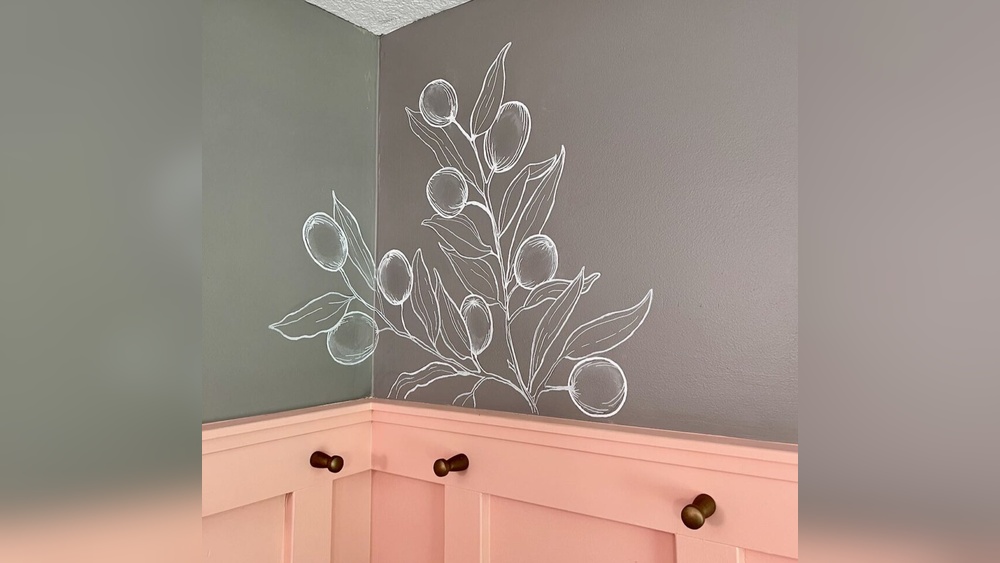
Soft clouds on a ceiling, a botanical vine climbing from a corner, or an abstract color wash across one wall.
15. Color-Drenched Ceiling
Painting the ceiling a soft color, or the same color as the walls, makes small bathrooms feel cocooning and intentional.
16. Painted Stripes
Vertical stripes visually raise low ceilings; horizontal stripes widen narrow rooms. Use painter’s tape and a level.
17. Organic Shapes
Large freehand blobs or arches in muted earth tones create a playful, contemporary feel.
Choosing Paint for Bathroom Walls
- Finish: satin, semi-gloss or specialty bath paints resist moisture and clean more easily than flat finishes.
- Mildew resistance: many bathroom-specific paints include mildew-resistant additives; check the label.
- Prep: clean walls with a mild detergent, rinse, let dry, and prime patched areas or glossy surfaces.
- Detail paint: for murals and stencils, acrylic craft paint can be used for small designs but should be sealed with a clear water-based topcoat rated for walls in humid areas, or use small sample pots of wall paint in the desired colors.
Protecting Painted Art in a Bathroom
- Varnish acrylic paintings. Once fully dry, apply two coats of a clear acrylic varnish to protect against humidity and make cleaning easier.
- Choose rigid supports. Wood or composite panels warp less than paper; stretched canvas can sag in humidity but is usually fine with good ventilation.
- Seal the frame back. For framed works on paper, use acid-free backing and seal the back with framer’s tape to slow moisture entry.
- Add bumpers. Small felt or rubber bumpers on the lower corners let air circulate behind the frame, reducing mold risk.
- Position wisely. Keep art at least a few feet from the shower and avoid walls that stay wet.
- Inspect occasionally. Check behind frames for condensation or mold every few months.
Sizing and Placement Guide
| Location | Suggested art size | Tip |
|---|---|---|
| Above toilet | About 2/3 of the tank width, or a vertical stack of two small pieces | Hang 8–10 inches above the tank |
| Above towel bar | Wide horizontal piece or a row of three small ones | Leave space so towels do not touch the frame |
| Beside mirror | Tall narrow panels | Align top edges with the mirror top |
| Above bathtub | Large single piece (if splash-free) | Center over tub, not over faucet end |
| Small powder room | One bold statement piece | Can be larger than you expect; it becomes the focal point |
A common guideline is to hang art with its center around 57–60 inches from the floor, adjusting for fixtures in the bathroom.
Matching Art to Bathroom Style
| Style | Painting ideas | Palette |
|---|---|---|
| Coastal | Seascapes, shells, sailboats | Navy, teal, sand, white |
| Spa / minimal | Soft abstracts, line art, botanicals | Sage, mist blue, cream, gray |
| Farmhouse | Vintage bath illustrations, typography | Cream, black, muted green |
| Modern | Geometric abstracts, bold arches | Black, white, terracotta, ochre |
| Boho | Organic shapes, palm leaves | Rust, mustard, blush, olive |
| Kids | Underwater scenes, animal typography | Bright primaries, aqua |
| Moody / glam | Dark florals, gold accents | Deep green, navy, black, brass |
Step-by-Step: Botanical Panel Pair for a Bathroom
- Choose supports. Two 8×20 or 10×20 inch wood panels or canvases.
- Base coat. Paint both a warm cream or very pale sage. Let dry.
- Sketch. Lightly draw a tall fern or eucalyptus stem on each panel, mirroring their lean slightly.
- Block in leaves. Use a mid green for all leaves.
- Add depth. Paint darker green where leaves overlap or near the stem, and lighter green on edges facing your chosen light source.
- Refine stems. Use a liner brush for thin stems.
- Seal. Once dry for at least 24 hours (longer for thick paint), apply two coats of clear acrylic varnish in satin.
- Hang. Place on either side of the mirror with tops aligned, adding felt bumpers on the back corners.
Step-by-Step: Painted Accent Arch Behind a Mirror
- Measure. Decide the arch width, usually a few inches wider than the mirror on each side, and the height, often reaching 12 to 18 inches above the mirror top.
- Mark the center line. Use a level to draw a faint vertical line where the center of the arch will be.
- Draw the curve. Tie a pencil to a string, pin the other end at the center line at the point where the curve begins, and swing an arc. The string length equals half the arch width.
- Draw the sides. Extend straight vertical lines from each end of the arc down to the vanity or baseboard.
- Tape the straight edges. Use painter’s tape on the outside of the vertical lines. Curves can be taped with short overlapping pieces or flexible tape, or painted freehand with a small angled brush.
- Seal the tape. Brush a thin coat of the existing wall color over the tape edge to block bleeding.
- Paint two coats of moisture-resistant paint in the accent color, letting the first dry fully.
- Remove tape while the final coat is slightly damp, then rehang the mirror centered in the arch.
The result adds height and a focal point to the vanity wall, and it costs only a sample pot or a quart of paint.
Combining Art and Painted Walls
Painted wall treatments and hung artwork can work together if one leads and the other supports. A bold arch or color-drenched wall pairs best with a single small framed piece in a neutral tone. A calm, pale wall can carry a gallery of three or four paintings. Repeat one accent color between the wall paint and the artwork, such as a terracotta arch echoed in a small terracotta detail in a botanical print, so the room feels planned rather than busy.
Budget-Friendly Bathroom Art Tips
- Paint small: 8×10 inch panels are affordable and suit small walls.
- Reuse thrifted frames; paint them to match fixtures.
- Create a set of three related paintings from one color palette.
- Use sample pots of wall paint for murals and accent shapes.
- Swap art seasonally for a fresh look without repainting.
Common Mistakes
- Hanging unframed paper art. It curls and stains in humidity.
- Ignoring ventilation. Mold behind art often signals a moisture problem in the room.
- Too-small art. Tiny pieces get lost; group them or go larger.
- Clashing with tile. Pull colors from existing tile and fixtures.
- Placing art too close to the shower. Direct splash damages even varnished paintings over time.
FAQs
What kind of art is good for a bathroom?
Varnished acrylic paintings on canvas or panel, framed art with sealed backs, and prints on metal or acrylic handle humidity well. Coastal, botanical, abstract and playful typography styles are popular choices.
Can you hang canvas paintings in a bathroom?
Yes, especially in bathrooms with good ventilation. Varnish acrylic canvases and keep them away from direct shower spray. In very humid rooms, panels or metal prints are more stable.
How do I protect a painting in a bathroom?
Varnish acrylic work, frame paper behind glass with a sealed back, add bumpers for airflow, run the exhaust fan and avoid placing art near the shower.
What paint finish is best for bathroom walls?
Satin or semi-gloss finishes resist moisture and clean easily. Many brands offer bathroom paints with mildew-resistant additives.
What size art should go above a toilet?
A piece about two-thirds the width of the tank, or a vertical pair of small pieces, works well. Hang it roughly 8–10 inches above the tank.
What are easy DIY painting ideas for bathroom walls?
A painted accent arch behind the mirror, a two-tone wall with a crisp line, stenciled patterns or simple stripes are achievable DIY projects with painter’s tape and moisture-resistant paint.
Final Thoughts
Bathroom decor succeeds when style and practicality work together. Choose subjects that suit the mood of the room, protect paintings from humidity, and consider painting the walls themselves where moisture is highest.
If you would like finished artwork ready to hang, browse our curated list of stylish and funny bathroom wall paintings and pick pieces that match your space.