Squeezing out fresh paint, mixing a perfect color and then watching it skin over before the next session is one of the most common sources of waste for painters. Covering your palette between sessions is the simplest fix. The right cover depends on whether you paint with acrylic, oil, watercolor or gouache, and on how long you need the paint to stay usable. This guide explains how to cover a palette to save paint, from quick kitchen solutions to purpose-built lids.
Quick answer: To cover a palette and save paint, use an airtight lid or a sealed container that traps humidity. For acrylic, mist the paint lightly, then close a palette with a cover or use a wet palette with a lid; this can keep paint workable for days. For oil, press plastic wrap loosely over the paint piles or close a lidded palette, and store it somewhere cool, even the freezer, to slow drying. Watercolor and gouache can be left uncovered and rewetted, but a cover keeps dust out.
Why Covering a Palette Works
Different paints dry in different ways, and a cover addresses each one.
- Acrylic dries as water evaporates. A sealed, humid environment slows evaporation dramatically.
- Oil dries mainly by oxidation, reacting with oxygen in the air. Limiting air contact and keeping it cool slows that reaction.
- Watercolor and gouache dry by evaporation but can be rewetted, so covering is mainly about cleanliness and keeping gouache creamy.
The palette itself makes a difference too. Palettes with built-in covers are often the easiest solution, especially for small setups. If you work on detailed pieces and want a compact, easy-to-cover palette, our guide to the best small palettes for detail painting compares designs with lids and covers.
Types of Palette Covers Compared
| Cover type | Best for | How long it saves paint | Pros | Cons |
|---|---|---|---|---|
| Palette with snap-on lid | Acrylic, watercolor, gouache | 1–3+ days for acrylic, depending on seal and humidity | Convenient, portable | Seal quality varies |
| Wet palette with lid | Acrylic, gouache | Several days or longer | Keeps paint soft and blendable | Needs maintenance to prevent mold |
| Plastic wrap | Oil, acrylic | Overnight to a few days | Cheap, available | Can stick to paint peaks; disposable |
| Airtight food container | Any small palette | Several days for acrylic and oil | Reusable, good seal | Must fit the palette |
| Palette seal box | Oil | Several days, longer if refrigerated or frozen | Designed for oil palettes | Bulky |
| Glass palette with cover | Oil | Days | Easy to clean | Heavier |
| Porcelain palette with cover | Watercolor, gouache | Indefinitely (rewettable paints) | Keeps dust off; stain-resistant | Fragile |
How to Cover a Palette for Acrylic Paint
Acrylic is the paint that benefits most from covering, because it can skin over within minutes in warm, dry rooms.
Method 1: Mist and seal
- Gather paint piles together so they are close and not spread thin. Thin smears dry faster than mounds.
- Lightly mist the paint with a fine spray bottle of clean water. Avoid flooding the palette, which can thin paint too much.
- Close the palette’s lid, or place the palette in an airtight container.
- Store it out of direct sunlight and away from heaters.
Method 2: Damp paper towel
For palettes without a lid, place a damp (not dripping) paper towel near the paint piles, not touching them, then cover everything with plastic wrap or a container. The towel adds humidity inside the covered space.
Method 3: Switch to a wet palette
A wet palette keeps acrylic workable while you paint and between sessions. It uses a damp sponge or paper towel layer under a semi-permeable membrane or parchment, with a lid that traps humidity. If you are curious how they work, our explainer on what a wet palette is covers the basics.
How to Cover a Palette for Oil Paint
Oil paint stays workable for hours on its own, but most colors start to skin in one to three days, depending on pigment and medium. Earth colors and some blues can dry faster than cadmiums or titanium white.
Method 1: Plastic wrap
- Gather paint piles toward the edges of the palette.
- Lay plastic wrap loosely over the piles, pressing gently around them to reduce trapped air without flattening the paint.
- Store the palette in a cool spot.
Method 2: Palette box or lidded palette
Many oil painters use a flat, airtight box sized for their palette. Closing it reduces air exposure. Some boxes include a seal or gasket for a better closure.
Method 3: Freeze it
Placing a covered oil palette in the freezer slows oxidation significantly and is a common studio habit for saving paint for days or even longer. Wrap or seal the palette well, and let it come back to room temperature before uncovering to minimize condensation forming on the paint.
Method 4: Clove oil (use carefully)
Some painters place a small dish or cotton ball with a drop of clove oil inside a sealed palette box. Clove oil is known to slow oil paint drying. Keep it away from direct contact with the paint, and be aware that it can delay drying on the painting if it gets mixed in.
How to Cover Watercolor and Gouache Palettes
Watercolor can be left to dry in the palette and rewetted later, so covering mainly protects it from dust, pet hair and accidental splashes. A palette with a hinged lid or a porcelain palette with a cover is ideal.
Gouache can also be rewetted, but many painters prefer it fresh and creamy. To keep gouache moist:
- Use a palette with a tight lid and a damp sponge inside.
- Use a wet palette, which works well with gouache.
- Mist lightly before closing.
Acrylic gouache behaves more like acrylic and does not rewet once dry, so treat it like acrylic and keep it covered.
Choosing a Palette With a Cover
If you are tired of improvising, a palette designed with a cover makes saving paint routine.
- Paint palette with cover: Plastic palettes with snap lids are lightweight and affordable, and many include wells and mixing areas.
- Glass palette with cover: Popular for oil; easy to scrape clean and pairs well with a cover box.
- Porcelain palette with cover: Excellent for watercolor; stain-resistant and keeps dust off.
- Watercolor palette with cover: Folding travel palettes with lids double as storage.
- Wet palette: The best choice for acrylic painters who want paint to stay workable for days.
Look for a lid that seals evenly around the edges, a size that suits your workspace, and materials compatible with your paint.
Step-by-Step: Saving Acrylic Paint Overnight
- Consolidate. Scrape small smears into larger piles with a palette knife.
- Remove contamination. Scrape away muddy mixes you will not reuse.
- Mist. One or two light sprays of water.
- Humidify. Add a damp paper towel strip inside the cover if your palette has no sponge.
- Seal. Close the lid or put the palette in an airtight container.
- Store cool. A cool room or, for short periods, the refrigerator can help, though keep it away from food and label it clearly.
- Check next day. Stir the paint with a palette knife. If a skin formed, lift it off and use the soft paint beneath.
Preventing Mold in Covered Palettes
A covered, humid palette is also a good environment for mold, particularly in wet palettes or warm rooms.
- Use clean water for misting and wet palette sponges.
- Replace sponges and membrane paper regularly.
- Rinse the tray and dry it out completely every so often.
- Some painters add a copper coin to the water or a small amount of a mild antimicrobial product to slow mold growth.
- Discard paint that smells sour or shows fuzzy spots.
How Much Paint Can You Really Save?
Results vary with room temperature, humidity, paint brand and how well the cover seals. As general guidance from common studio practice:
- Uncovered acrylic: minutes to an hour before it becomes unusable.
- Covered acrylic in a sealed palette: often a day or more.
- Acrylic in a wet palette with a lid: often several days.
- Covered oil at room temperature: often several days for many colors.
- Covered oil in a freezer: often much longer.
The biggest savings come from simply not squeezing out more than you need and covering immediately at the end of a session.
Reviving Paint That Started to Dry
Even with a cover, paint sometimes firms up. Before throwing it away, check whether it can be rescued.
- Acrylic with a skin: Lift the skin off with a palette knife; the paint underneath is often still soft. Fully hardened acrylic cannot be rewetted and should be discarded.
- Oil that is tacky on top: Scrape away the skin and use the soft paint beneath. Paint that has become stringy or rubbery throughout should not be used, since it may not bond well.
- Gouache: Add a few drops of water and let it sit for a minute, then stir with a brush.
- Watercolor: Mist or drop clean water onto dried paint a few minutes before painting.
DIY Palette Cover Ideas
- Food storage container: Choose one slightly larger than your palette with a gasket lid.
- Pizza box lined with foil (oil): Not airtight but keeps dust off for a day.
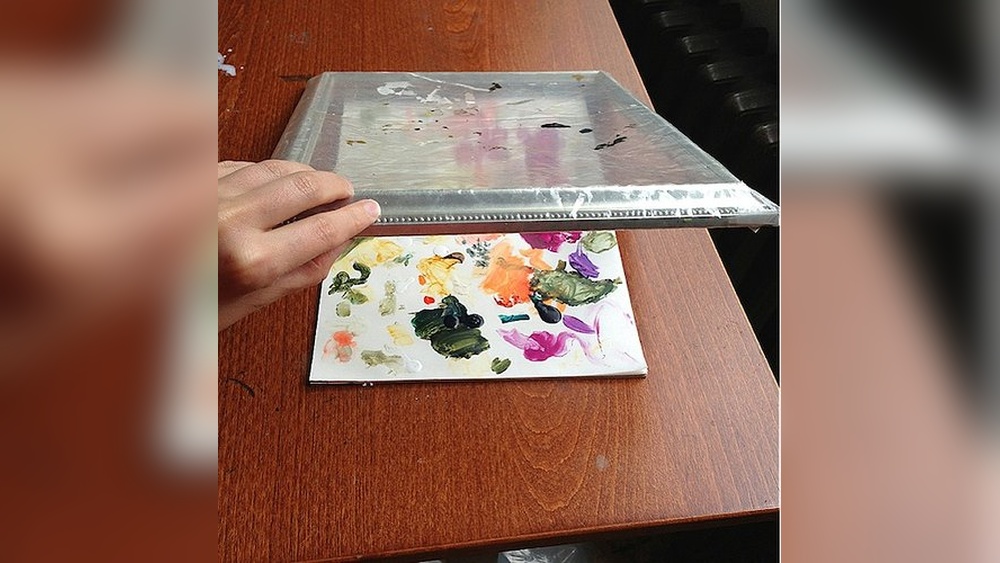
- Baking sheet with plastic wrap: Place your palette on a baking sheet and wrap tightly for oil paint.
- Sealable bag: Small palettes can slide into a large zip-top bag; press out excess air.
- Repurposed tackle box: Some painters use tackle or craft boxes with compartments as covered palettes for acrylic and gouache.
Common Mistakes When Covering Palettes
Covering thin smears
Thin layers dry quickly even under a cover. Consolidate paint into mounds before closing.
Flooding acrylic with water
Too much water thins the paint and can weaken its binder. Light misting is enough.
Plastic wrap pressed flat onto oil paint
Pressing hard flattens piles and can pull paint off when removed. Lay it loosely.
Forgetting the palette in a warm spot
Heat speeds drying. Store covered palettes away from sunny windows and heaters.
Not labeling refrigerated palettes
Paint stored in a fridge or freezer should be clearly labeled and kept away from food.
Matching the Cover to How Often You Paint
How frequently you paint should influence which covering method you choose. Painters who work daily can get by with a lidded palette and light misting, since paint only needs to survive one night. Those who paint on weekends need a stronger approach: a wet palette with a good lid for acrylic, or a sealed box in the freezer for oil. If you paint only occasionally, it is usually better to squeeze out small amounts each time and let watercolor or gouache dry in pans, where they can be rewetted whenever you return.
Travel painters have different needs again. A small folding watercolor palette with a lid or a compact wet palette is easy to pack, and a zip-top bag around the palette adds a second layer of protection against leaks and drying.
FAQs
How do you cover a palette to keep paint from drying?
Consolidate paint into piles, mist acrylic lightly, then seal the palette with a lid, an airtight container or plastic wrap. Store it somewhere cool.
How long will acrylic paint last on a covered palette?
Often a day or more in a well-sealed palette, and several days in a wet palette with a lid, depending on humidity and temperature.
Can I put my oil paint palette in the freezer?
Yes. Many painters freeze covered oil palettes to slow drying. Let the palette warm to room temperature before uncovering.
Do I need to cover a watercolor palette?
Not to save paint, since watercolor rewets, but a cover keeps dust and debris out.
What is the best palette with a cover?
It depends on your paint. Wet palettes suit acrylic, glass palettes with covers suit oil, and porcelain or folding palettes with lids suit watercolor.
Is plastic wrap good for covering a palette?
It works well for oil paint and short-term acrylic storage. Lay it loosely and add humidity for acrylic.
Final Thoughts
Covering your palette is one of the cheapest ways to cut paint waste. Match the method to your medium: humidity and a seal for acrylic, limited air and cool storage for oil, and simple dust protection for watercolor. If you want a palette with a reliable built-in cover, our roundup of small palettes with lids and covers is a good place to compare options.