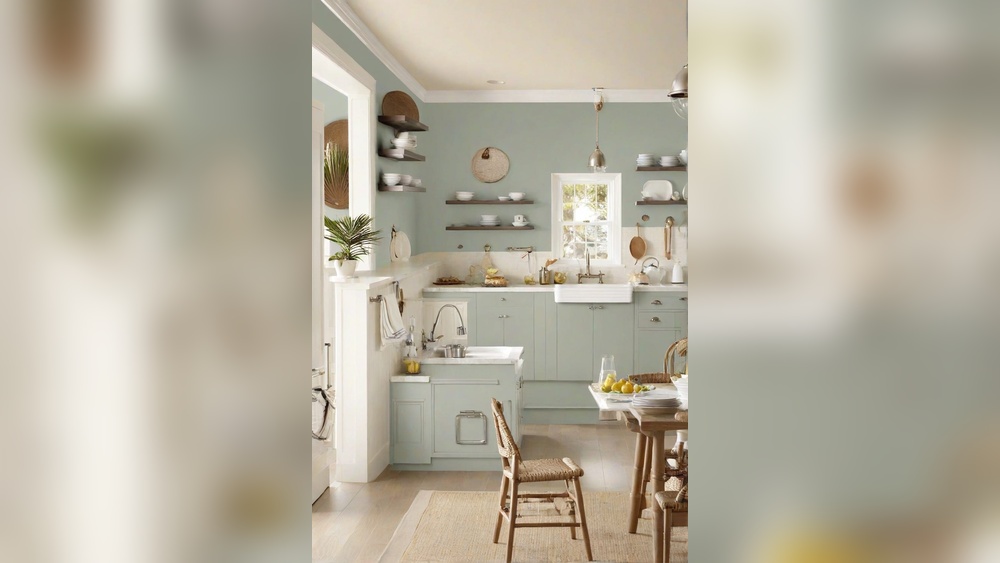
Quick answer: Good painting ideas for kitchen walls include warm whites and creams for a bright, classic look, sage or olive green for a natural feel, navy or charcoal on a single wall or island backdrop, two-tone walls with a darker lower half, a painted range-hood surround or backsplash border, chalkboard paint for menus, stenciled tile effects and a gallery of food or vintage-style paintings. Use a washable satin or semi-gloss finish near cooking zones and choose colors that work with your cabinets and countertops first.
Kitchens are hard-working rooms. Walls face steam, grease spatter, fingerprints and constant traffic, which means the best kitchen wall ideas look good and wash easily. Because cabinets, counters and appliances cover much of the wall area, the visible paint often plays a supporting role, yet the right color or painted feature can still change the whole room’s personality.
This guide covers kitchen wall colors matched to cabinet finishes, creative painted wall treatments, finish and prep advice for kitchens, and how to choose and display artwork. If you prefer to decorate with finished pieces, our roundup of the best paintings for kitchen walls features vintage and food-themed art in kitchen-friendly sizes.
Start With What You Cannot Easily Change
In a kitchen, the paint should be chosen last, after considering:
- Cabinet color and wood tone
- Countertop material and veining
- Backsplash tile
- Flooring
- Hardware and appliance finishes (stainless, black, brass, white)
Pull a subtle color from the countertop veining or backsplash, or choose a neutral that shares the same undertone (warm or cool) as your cabinets.
Kitchen Wall Colors by Cabinet Type
| Cabinets | Wall colors that pair well | Why |
|---|---|---|
| White | Soft gray, pale sage, warm greige, navy accent | Adds contrast without competing |
| Natural oak or maple | Warm white, cream, muted green, soft blue-gray | Balances orange or yellow wood tones |
| Dark wood (walnut, espresso) | Warm white, light taupe, pale butter yellow | Brightens and keeps the room from feeling heavy |
| Navy or deep blue | Crisp white, warm white, light gray | Lets the cabinets lead |
| Green (sage to forest) | Cream, warm white, soft pink-beige | Earthy, cohesive palette |
| Gray | White, pale blue, warm greige | Clean and balanced |
| Black | Warm white, plaster tones, terracotta accent | Softens the drama |
Kitchen Wall Color Ideas
1. Warm White or Cream
A warm white keeps kitchens bright without the clinical feel of stark white. It suits farmhouse, traditional and Scandinavian styles.
2. Sage Green
Soft gray-green brings in a natural feel and pairs beautifully with wood, brass and white.
3. Butter Yellow
A pale, buttery yellow feels sunny and retro, especially in north-facing kitchens that get little direct light.
4. Soft Blue-Gray
Calm and versatile; works with white or wood cabinets and stainless appliances.
5. Navy or Charcoal Feature Wall
One dark wall, perhaps behind open shelving or a dining nook, adds depth without darkening the whole kitchen.
6. Terracotta or Clay
Warm earthy tones bring a Mediterranean feel, especially with natural wood and plaster textures.
7. Greige
A gray-beige neutral works with almost any cabinet and countertop combination.
8. Color-Drenched Kitchen
Painting walls, trim and cabinets the same or similar color creates a seamless, contemporary look.
Creative Painted Wall Treatments for Kitchens
9. Two-Tone Walls
Paint the lower portion a deeper color (where scuffs from chairs and stools happen) and the upper portion lighter. Divide them with a painted line or chair rail.
10. Chalkboard Wall
Chalkboard paint on a section of wall, a pantry door or the end of a cabinet run becomes a menu board, grocery list and kids’ doodle space. Season it by rubbing chalk over the surface and erasing before first use, if the product recommends.
11. Painted Arch Over Open Shelving
Paint an arch behind open shelves to frame dishes and make them look curated.
12. Stenciled Tile Effect
Stencil a patterned “tile” design on a wall section, then seal it with a clear water-based topcoat. Avoid areas directly behind the stove where heat and grease are intense unless the product is rated for it.
13. Painted Backsplash Border
A thin painted stripe or simple pattern just above the backsplash or along the ceiling line adds detail without much effort.
14. Herb Garden Mural
Hand-painted herbs like basil, rosemary and thyme on a dining or breakfast nook wall bring a fresh, garden feel.
15. Painted Ceiling
A pale color on the ceiling, or a bold one in a small kitchen, adds unexpected character.
16. Painted Window Trim
Painting window trim in an accent color frames the view and adds personality cheaply.
Choosing Paint Finish for Kitchen Walls
| Finish | Washability | Look | Best kitchen use |
|---|---|---|---|
| Matte / flat | Low to moderate | Soft, hides flaws | Ceilings, low-traffic dining walls |
| Eggshell | Moderate | Slight sheen | General walls away from cooking |
| Satin | Good | Gentle glow | Most kitchen walls |
| Semi-gloss | Excellent | Shiny, shows imperfections | Behind stove, trim, doors |
Many paint brands offer kitchen and bath formulas with improved stain and moisture resistance. They cost a bit more but suit high-use areas.
How to Prep and Paint Kitchen Walls
- Degrease. Kitchen walls carry invisible grease. Wash with a degreasing cleaner or a TSP substitute, then rinse with clean water. Paint applied over grease peels.
- Repair. Fill nail holes and dents, then sand smooth.
- Protect. Tape cabinets, counters and backsplash edges; cover appliances and floors.
- Prime when needed. Prime patches, glossy surfaces, water stains or large color changes. Stain-blocking primer helps over grease or smoke stains.
- Cut in. Use an angled brush along cabinets, ceiling and backsplash.
- Roll. Roll in sections, keeping a wet edge to avoid lap marks.
- Second coat. Apply after the recommended drying time.
- Ventilate. Open windows and run the range hood fan; low-VOC paints reduce odor.
Artwork Ideas for Kitchen Walls
Kitchens often have small wall sections: above a window, between cabinets, beside a doorway or over a breakfast nook. Art helps finish those spots.
- Vintage food illustrations: fruit, vegetables, coffee or bread in an old botanical or advertisement style.
- Still life paintings: bowls of lemons, pears or cherries in classic or modern styles.
- Typography: simple words like “Eat,” “Gather” or a favorite recipe in handwriting.
- Coffee or tea art: ideal for a coffee station.
- Herb botanicals: rosemary, basil and mint studies in a row.
- Abstract color pieces: pull colors from tiles or dishware.
Painting Your Own Kitchen Art
Kitchen art is a great first project for new painters. A simple lemon still life or a trio of herb studies on 8×10 panels uses a small palette and looks right at home. Varnish finished acrylic paintings to make them wipeable, and hang them away from the stove where grease and heat collect.
Step-by-Step: Lemon Still Life for a Kitchen Wall
- Prepare a panel. Paint an 8×10 or 11×14 panel in a soft blue-gray or warm cream and let it dry.
- Set up a reference. Place two or three lemons on a plain cloth near a window so light comes from one side.
- Sketch. Lightly draw the lemon shapes as slightly pointed ovals, overlapping one another.
- Block in. Fill the lemons with a mid yellow and the table surface with a warm neutral.
- Shadows. Mix yellow with a touch of burnt sienna or purple for the shadow side of each lemon. Paint cast shadows on the table in a darker, slightly cool version of the table color.
- Highlights. Add a small pale yellow-white highlight on the lit side of each lemon.
- Details. Paint a green leaf or a cut lemon half showing pale segments for interest.
- Varnish. Once fully dry, apply a satin acrylic varnish so the painting can be wiped clean.
Step-by-Step: Chalkboard Wall Section
- Choose the spot. A wall near the pantry, a door or the end of a cabinet run works well. Avoid areas near the stove.
- Mark the shape. Use a level and tape to outline a rectangle, or paint the whole surface edge to edge.
- Prep. Degrease and lightly sand glossy surfaces; prime if the product recommends it.
- Apply thin coats. Roll two or three coats of chalkboard paint with a fine foam roller, allowing drying time between each.
- Cure. Wait the full cure time on the label, often a few days, before writing on it.
- Condition. Rub the side of a piece of chalk over the entire surface, then wipe it off. This helps prevent “ghosting” of the first words you write.
- Frame it (optional). Add thin wood trim around the edge, painted to match the cabinets.
Ideas for Small Kitchens
- Use light, warm colors or color drench walls and cabinets to blur edges and make the space feel cohesive.
- Paint the ceiling a very pale tint to lift the room.
- Focus color on one small area, such as a coffee nook or the inside of open shelves.
- Choose one small artwork rather than a cluttered gallery.
- Use semi-gloss on trim to bounce light around.
Where to Place Art in a Kitchen
| Spot | Suggested art | Tip |
|---|---|---|
| Breakfast nook | Large single piece or gallery | Center above table at eye level when seated |
| Above window | Narrow horizontal piece | Leave a few inches above the trim |
| Between cabinets | Tall narrow canvas | Match width to the gap with breathing room |
| Open shelving | Small framed pieces leaned against the wall | Layer with plates and plants |
| Coffee bar | Small art or typography | Coordinate with mugs and canisters |
| Near the stove | Avoid paper art | Heat and grease damage art quickly |
Keeping Painted Kitchen Walls Clean
Wipe splashes promptly with a soft cloth and mild dish soap in warm water. Avoid abrasive pads and harsh cleaners, which can burnish satin finishes into shiny patches. Keep a small jar of leftover paint, labeled with the room and date, for touch-ups.
Kitchen Style Guides
Modern Farmhouse
Warm white walls, black hardware, wood shelves, vintage-style food prints and a chalkboard section.
Scandinavian
Soft white or pale gray walls, light wood, minimal line art and a single green accent.
Mediterranean
Terracotta or warm plaster tones, stenciled tile patterns, lemon still lifes and olive branch paintings.
Retro
Butter yellow or mint walls, checkerboard patterns, bold fruit illustrations.
Moody Modern
Charcoal or deep green feature wall, brass fixtures, dark still life paintings with dramatic lighting.
Common Kitchen Painting Mistakes
- Skipping degreasing. The most common cause of peeling kitchen paint.
- Flat paint near cooking areas. Hard to clean; use satin or semi-gloss.
- Ignoring countertop undertones. A cool gray can clash with warm granite.
- Too many competing colors. Cabinets, tile, counters and walls should share a palette.
- Hanging paper art near the stove. Steam and grease damage it.
- Testing only one swatch. Try samples next to cabinets and in different light.
FAQs
What is the best color to paint kitchen walls?
Warm whites, soft grays, sage green and greige are versatile choices that suit most cabinets and counters. The best color depends on your cabinet finish, countertop undertones and natural light.
What paint finish is best for kitchen walls?
Satin is a popular all-around choice because it balances a soft look with washability. Semi-gloss works well behind the stove and on trim where cleaning is frequent.
Do I need to clean kitchen walls before painting?
Yes. Kitchen walls collect grease that prevents paint from sticking. Wash with a degreaser, rinse and let dry before painting.
Can I use chalkboard paint in a kitchen?
Yes. Chalkboard paint works well on a wall section, pantry door or cabinet end for menus and lists. Follow the product’s curing and seasoning instructions before use.
What kind of art is good for a kitchen?
Food illustrations, still lifes, herb botanicals, typography and abstract color pieces suit kitchens. Varnished paintings on canvas or panel are easier to clean than unframed paper.
Should kitchen walls be lighter or darker than cabinets?
Either can work. Contrast makes cabinets stand out, while similar values create a seamless, calm look. Most kitchens with dark cabinets benefit from lighter walls to keep the room bright.
Final Thoughts
Kitchen walls should complement your cabinets and counters, stand up to cleaning and add personality where space allows. A washable finish, careful degreasing and one creative touch, such as a two-tone wall or a chalkboard section, go a long way.
For finished artwork that suits kitchens, from vintage food prints to classic still lifes, browse our top picks for kitchen wall art.