PaintingProGuide is reader-supported. When you buy through links on this page we may earn an affiliate commission at no extra cost to you.
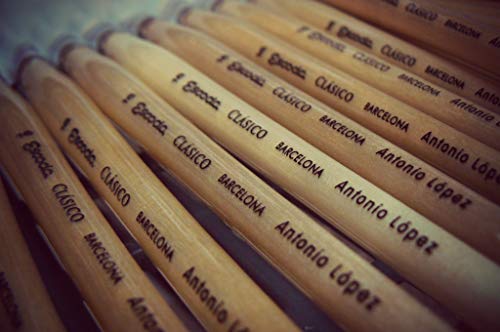
Oil paint is thick, slow-drying and often pushed around with real force, so an oil painting brush has to be tougher than almost any other kind. The Escoda oil painting brush listing that stands out on Amazon is the Antonio López García Artist Set: three handmade brushes in white Chungking hog bristle, sizes 2, 8 and 16, mixing brights with pointed rounds. Escoda built it with the Spanish realist painter for layered, carefully observed oil and acrylic work.
Below we look at what the Escoda set offers an oil painter specifically, why hog bristle remains the traditional oil fiber, where a three-brush set runs out of road, and four other brushes and kits that cover different needs, from texture combs to budget practice sets.
Quick answer: For oil painting, the Escoda Antonio López García Artist Set is the pick if you want a few firm, handmade natural bristle brushes that span large to small. If you need many shapes on a budget, the Nicpro 30-piece set or the Fuumuui 25-piece set gives you flats, filberts, fans and riggers in one purchase. For grass, fur and wood-grain texture in oil, add the GACDR comb brush set.
Our Top Picks at a Glance
- Escoda Antonio López García Artist Set — Best Escoda oil painting brush set for controlled, layered work
- Fuumuui 25-Piece Set with Palette Knife — Best all-shapes kit with a knife for mixing
- Nicpro 30-Piece Paint Brush Set — Best for the widest size run per shape
- GACDR Grainer Comb Brush Set (4 pcs) — Best specialty brush for texture effects
- Amazon Basics 24-Count Multi-Shape Brushes — Best throwaway set for underpainting and rough work
| Product | Best For | Key Spec | Key Strength | Price Tier |
|---|---|---|---|---|
| Escoda Antonio López García Set | Serious oil painting | Sizes 2, 8, 16; Chungking hog bristle | Firm spring, holds thick paint | $$ |
| Fuumuui 25 pcs | All shapes plus knife | 24 brushes, 9 shapes, palette knife | Waterproof roll with slots | $$ |
| Nicpro 30 pcs | Size range | 8 flats, 6 rounds, 6 filberts and more | Many sizes of each core shape | $$ |
| GACDR Comb Set | Texture effects | 1/4, 3/8, 1/2, 5/8 in comb tips | Grass, fur, wood grain marks | $ |
| Amazon Basics 24 ct | Rough and underpainting | 24 polyester brushes; carry container | Low cost, disposable use | $ |
How We Chose
We have not painted with these brushes. Our picks rely on the Amazon listing details and specifications checked in October 2026, how well each brush or set’s fiber, shapes and sizes suit oil painting, and how widely each product is reviewed by Amazon buyers. Where a listing makes general claims, we report them as claims rather than verified results.
Criteria we used:
- Stiffness: oil paint, especially straight from the tube, needs a fiber that does not collapse.
- Solvent tolerance: oil cleanup involves mineral spirits or oil-and-soap washing.
- Shape coverage: flats, brights, filberts and rounds are the core oil shapes.
- Size range: large for blocking in, small for finishing.
- Purpose: some brushes are for finished work, others for underpainting or effects.
Escoda Oil Painting Brush Review
1. Escoda Antonio López García Artist Set — Best for Controlled Oil Work

This set gathers three of the brushes Antonio López García prefers, in sizes 2, 8 and 16. The listing describes two shapes: brights for controlled, short strokes and pointed rounds for precision, outlines and soft transitions. All are handmade in Spain from white Chungking bristle, which the listing says offers firm spring, excellent paint retention and durability under heavy-bodied media.
For oil painters, firm spring is the key phrase. Oil from the tube is thick, and as you add medium in later layers it loosens. A good hog bristle can drive stiff paint into the weave of the canvas in the early stages and still lay down a clean, controlled stroke later. The flagged tips of natural bristle also hold more paint than a cut synthetic, which matters when you want a loaded, single stroke.
The bright shape suits oil particularly well. Its short, square head gives control and lets you place a stroke of paint and leave it untouched, which keeps color fresh. The pointed rounds let you draw into wet paint, define edges and soften transitions between forms.
Best suited for: oil painters working in a realist, observational or carefully layered manner, and painters upgrading from a cheap bundle to a few quality brushes.
Key features (from the listing):
- Sizes 2, 8 and 16
- Bright and pointed round shapes
- White Chungking natural hog bristle
- Designed for oil and acrylic, especially layered landscapes
- Handmade in Spain
Pros:
- Stiff natural bristle built for thick oil paint
- Large-to-small size spread in only three brushes
- Brights give precise placement of strokes
- Specialist maker with handmade construction
Cons / limitations:
- No filbert, flat or liner
- Exact shape per size not stated in the listing
- Higher price tier per brush than bundles
- Needs proper solvent and soap cleaning to last
Buying consideration: Treat this as your core finishing set. Use cheaper brushes for toning, underpainting and scrubbing, and save the Escoda brushes for the stages where control matters.
Why hog bristle is still the standard for oil
Synthetic brushes have improved enormously, but hog bristle remains the default for many oil painters. Its natural flags hold paint, its taper and natural curve help it keep its shape, and it tolerates solvents. Synthetics tend to last longer with acrylic and give smoother strokes, which is why many painters mix both in their kit. For textured, painterly oil work, bristle is hard to beat.
Who should look elsewhere
If you paint thin glazes almost exclusively, softer synthetic or sable-type brushes may suit you better. If you are brand new to oil and do not yet know your preferred shapes, an inexpensive multi-shape set teaches you more for less. And if solvent cleanup is a problem in your space, consider solvent-free cleaning methods before committing to natural bristle.
Alternatives Worth Comparing
2. Fuumuui 25-Piece Set with Palette Knife — Best All-Shapes Kit

This Fuumuui kit packs 24 synthetic brushes into nine shapes: large wide flat, flat, filbert, fan, dagger, cat tongue, round, angle and rigger. A palette knife and a waterproof canvas roll are included. The listing claims higher pigment capacity than standard brushes and good elasticity and shape retention, with birch handles designed to reduce wrist strain.
For oil painters, the filberts, fan and rigger are the shapes the Escoda set lacks. The knife is useful for mixing piles of oil color on the palette without wasting brush life.
Best suited for: oil beginners and painters wanting a backup kit of shapes.
Key features:
- 24 brushes, nine shapes, plus palette knife
- Synthetic flagged bristles
- Waterproof canvas roll with individual slots
Pros: broad shape coverage; knife included; organized storage.
Cons / limitations: synthetic fibers are softer than hog bristle under stiff oil paint; individual sizes are not listed.
Buying consideration: A good way to discover which shapes you prefer before buying premium versions.
3. Nicpro 30-Piece Paint Brush Set — Best Size Range per Shape

Nicpro’s strength is how many sizes it offers within each core shape. The listing breaks it down: eight flats, six rounds (14 down to 0), six filberts (14 down to 2), three angles, three fans, two daggers and a cat’s tongue, among others. The bristles are nylon, with double-crimped aluminum ferrules, birch handles and a nylon canvas roll that resists oil and water.
For oil painters, six filberts in a size run is unusually useful. Filberts are a favorite oil shape for blending and painting rounded forms, and having many sizes lets you match the brush to the passage.
Best suited for: painters who want a full run of sizes in flats, rounds and filberts at a low price tier.
Key features:
- 30 brushes, including 8 flats, 6 rounds and 6 filberts
- Nylon bristles; double-crimped aluminum ferrules
- Birch handles; oil- and water-resistant roll
Pros: many sizes per shape; round down to size 0 for detail; durable roll.
Cons / limitations: nylon is softer than hog bristle with heavy oil; budget construction.
Buying consideration: Pair it with a few stiff bristle brushes for early, thick layers.
4. GACDR Grainer Comb Brush Set — Best for Texture Effects

Comb brushes have split, gapped bristles that leave several parallel lines in one stroke. The GACDR set includes four comb tips in 1/4, 3/8, 1/2 and 5/8 inch. The listing describes split synthetic Toray and Korean nylon hair, seamless silver ferrules and short black birch handles, and suggests them for feathers, fur, grass and wood grain in acrylic, watercolor, gouache and oil.
Best suited for: landscape and animal painters who want fast, natural texture.
Key features:
- Four comb brushes: 1/4, 3/8, 1/2 and 5/8 inch
- Split synthetic hair; seamless ferrules
- Short handles for control
Pros: creates multi-line texture quickly; affordable specialty addition.
Cons / limitations: special-purpose only; short handles are less suited to standing easel work at arm’s length.
Buying consideration: Use sparingly; comb texture repeated everywhere can look mechanical.
5. Amazon Basics 24-Count Multi-Shape Brushes — Best for Rough Work
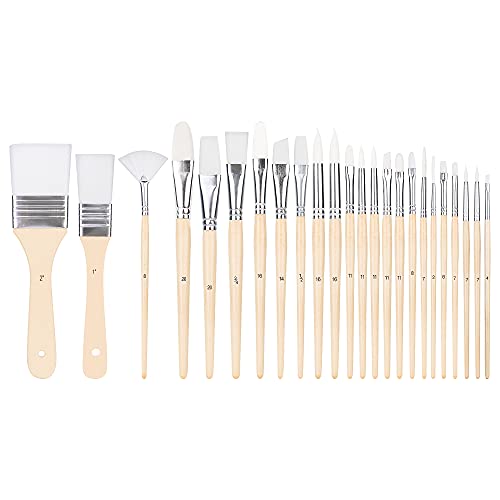
Every oil painter needs brushes they do not mind wrecking: for toning canvases, scrubbing in underpaintings, applying medium or varnish tests. The Amazon Basics set includes 24 polyester brushes in various shapes and sizes, sealed in aluminum ferrules, with a carrying container. The listing recommends cleaning with warm soapy water and storing tip-up.
Best suited for: underpainting, toning, experiments and protecting your good brushes from abuse.
Key features:
- 24 polyester brushes in mixed shapes and sizes
- Aluminum ferrules; carrying container
Pros: very low cost; plenty of brushes for rough tasks.
Cons / limitations: soft polyester is not ideal for thick oil paint; not built for long-term fine work.
Buying consideration: Buy these to extend the life of a premium set like the Escoda, not to replace it.
Which Brush for Which Stage of an Oil Painting
Oil paintings are usually built in stages, and each stage is hard on brushes in a different way. Assigning brushes to stages is the simplest way to get the most from a premium set.
Toning and drawing in
The first layer is often a thin, solvent-diluted wash of a single color, rubbed over the canvas, followed by a loose drawing. This stage is abrasive and messy. A wide brush from the Amazon Basics pack or a large Fuumuui flat is ideal, because scrubbing thin paint into canvas tooth wears bristles quickly.
Blocking in the big shapes
Next come the large masses of light and shadow, often in fairly lean paint. This is where the Escoda size 16 earns its place. A stiff, large brush forces you to simplify and keeps edges loose until the composition is settled.
Building form and color
As layers get richer, following the fat-over-lean principle of adding more oil in later layers, the size 8 does most of the work. Filberts from the Nicpro or Fuumuui sets help here for turning rounded forms and softening edges.
Texture and effects
If a landscape needs grass or a portrait needs hair texture, a comb brush from the GACDR set can lay several strands in one pass. Apply it into wet paint for soft texture or over a dry layer for crisp marks.
Finishing accents
Last come the highlights, accents and tightened edges. The Escoda size 2 handles small controlled strokes, and a rigger or a size 0 round from the budget sets covers the finest lines. Keeping the small Escoda brush for this stage only helps it hold its shape for years.
Buying Guide: How to Choose an Escoda Oil Painting Brush or Alternative
Choose stiffness for your paint consistency
If you paint thickly, straight from the tube, choose hog bristle such as the Escoda Chungking set. If you thin your paint with medium and glaze, softer synthetics work. Most oil painters use both, stiff early and softer later.
Know the four core oil shapes
Flats lay large areas and sharp edges. Brights give short, controlled strokes. Filberts blend and shape rounded forms. Rounds draw lines and details. A rigger or liner adds the finest lines.
Buy sizes that suit your canvas
On 16×20 and larger, brushes in the 10 to 16 range carry most of the painting. On 8×10 or 9×12, sizes 4 to 10 are more comfortable. Always keep at least one brush larger than you think you need.
Consider handle length
Long handles let you stand back from the easel and paint loosely; short handles give close control for small work. The listings here do not all state handle length, so check product photos.
Plan for solvents and cleaning
Oil brushes are typically cleaned with odorless mineral spirits or a solvent-free method using oil and soap. Natural bristle tolerates both. Always finish with soap and water and dry the brush flat.
Keep separate brushes for different jobs
A cheap set for toning, a premium set for finishing and a specialty brush or two for effects is a practical structure. It saves money and keeps your best brushes in shape longer.
More Brush Technique Guides
Small detail in oil follows the same principles as acrylic; see our guide to brush sizes for detail work for how to step down through sizes. For tree branches, rigging and grasses, learn to use a liner brush, and for stippled highlights, try painting dots with a round brush.
Common Mistakes to Avoid
- Using your best brushes for scrubbing. Underpainting and toning wear bristles fast; use cheap brushes.
- Leaving brushes in solvent. Long soaks bend tips and can loosen glue in the ferrule.
- Skipping the soap wash. Solvent alone leaves oil in the bristles, which hardens over time.
- Painting too small too early. Start with large brushes to build the structure.
- Overusing effect brushes. Comb and fan textures look best used sparingly.
- Ignoring ventilation. If you use solvents, work in a well-ventilated space and keep lids closed.
FAQs
Are Escoda brushes good for oil painting?
The Antonio López García set is listed for oil and acrylic and uses white Chungking hog bristle, a traditional oil fiber with firm spring and good paint retention.
What shapes are best for oil painting?
Flats, brights, filberts and rounds cover most oil painting. A liner or rigger is useful for fine lines, and a fan or comb for texture.
Should I use natural or synthetic brushes for oil?
Natural hog bristle suits thick paint and texture. Synthetics suit smooth strokes and are easier to keep in shape. Many oil painters use both.
How many brushes do I need to start oil painting?
Fewer than you might think. A large, medium and small brush in two or three shapes covers most work. The Escoda set’s sizes 2, 8 and 16 are a sensible core.
Can I use the same brush for oil and acrylic?
You can, but it is better to keep separate brushes. Residue from one medium can affect the other, and acrylic dried in bristles is hard to remove.
How do I clean oil brushes without solvent?
Wipe off excess paint, work a little vegetable or safflower oil into the bristles to loosen paint, then wash with soap and warm water until clean.
Final Recommendation
For oil painters who want a small set of genuinely good brushes, the Escoda Antonio López García Artist Set is the strongest option here, with stiff Chungking bristle in large, medium and small sizes for controlled, layered work.
Build around it based on what you paint. The Fuumuui 25-piece set or Nicpro 30-piece set fills in filberts, fans and riggers affordably. The GACDR comb set adds quick natural texture. And an Amazon Basics pack protects your good brushes by taking on the rough jobs. Spend on the brushes that touch the final surface and save on the rest.