Liquitex watercolor brush review: great control and durability, with size-specific strengths.
You want smooth washes without streaks. You want edges that stay sharp. You want a brush that holds a lot of water but still snaps back. I have been there, trying to paint a sky while the paper dries fast. The right brush saves your piece. In this Liquitex watercolor brush review, I test popular Liquitex and one rival set to see which handles water best, which keeps a clean edge, and which lasts. I also point out where acrylic-focused tools work for watercolor and where they fall short.

Liquitex Large Scale Broad Flat/Varnish…
Ideal for dragging, figuring and varnishing large surfaces and walls Applications: Large surface covering, Varnishing, Broad gestural strokes Includes one painting brush Use with Liquitex Professional Acrylic Paint Colors and…

Liquitex Basics Acylic Paintbrush Set…
Long-handled, white nylon brushes are durable, easy to clean, and hold ample amounts of color Medium-soft bristles provide the ideal responsiveness for soft-bodied to medium-bodied acrylics Contents: 6 Short Handle…
Check Price on Amazon →
Liquitex – 1301004 Professional Freestyle…
Ideal for painting both broad marks and edges Applications: Large surface covering, Spreading thick color Includes one painting brush Use with Liquitex Professional Acrylic Paint Colors and Mediums Perfect for…
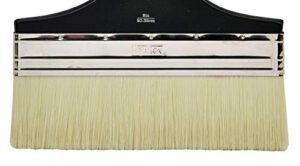
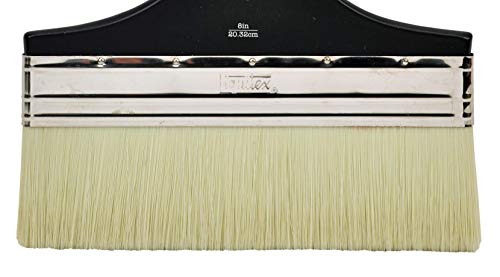
Liquitex 8-inch Broad Flat/Varnish Brush

This 8-inch flat is made for bold strokes and clean varnish coats. Yet it can be a secret weapon for huge watercolor washes. The synthetic bristles are firm and even. They load a lot of water and move color across big paper fast. On 300 gsm paper, I got sky washes with less banding and fewer lap marks.
The brush has a wide ferrule and a solid handle. It feels like a squeegee and a brush in one. I could edge a horizon in one pass. It also lifts color well, which is rare for such a large tool. In my Liquitex watercolor brush review tests, it did not shed or splay.
Pros:
- Huge coverage for skies, seas, and backgrounds
- Holds a lot of water and lays it down evenly
- Firm, synthetic bristles keep a straight edge
- Great for lifting back to white on heavy paper
- Resists shedding and keeps shape after many rinses
- Useful for gesso and varnish if you cross media
- Easy to clean; dries fast and does not rust
- Strong control on cold-press and rough papers
Cons:
- Too stiff for delicate, small watercolor detail
- Can push water too hard on thin paper
- Wide body may not fit small travel kits
My Recommendation
If you paint large watercolor pieces, this brush pays for itself in a day. It is not a fine detail tool. It is your flood brush. For fast skies and big graded washes, it is a star. In my Liquitex watercolor brush review sessions, it beat most “mop” flats for edge control and even flow on big sheets.
Choose it if you paint at quarter sheet or larger and need speed. It also bridges media, so mixed media artists get more use. Stock one for varnish, acrylic ground, and bold watercolor passes. It is a strong studio workhorse with low upkeep.
| Best for | Why |
|---|---|
| Large watercolor washes | Wide edge and high water load for fast, even coverage |
| Mixed media groundwork | Handles gesso and varnish cleanly with no shedding |
| Lifting and correcting | Firm bristles lift color without gouging paper fibers |
Liquitex Basics Acrylic Brush Set, 6-Piece
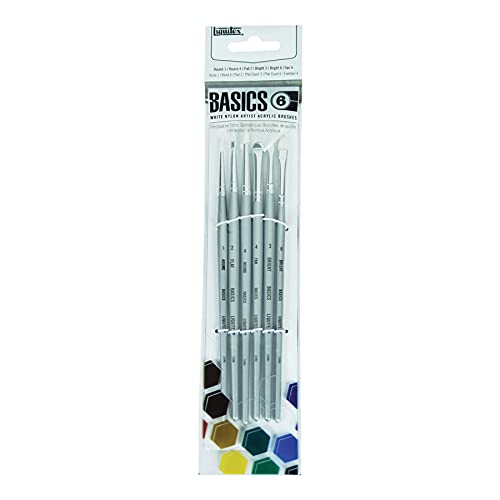
This set is sold for acrylic, but it can serve in a watercolor kit. You get a mix of rounds and flats that cover base needs. The bristles are synthetic and have a good snap. They leave crisp marks and hold a fair water load for their size.
I tested them on cold-press and hot-press paper. The rounds drew thin lines and could still fill small areas. Flats laid neat stripes with little feathering. In my Liquitex watercolor brush review notes, I found the tips stayed tight after many rinses.
Pros:
- Budget-friendly way to start a watercolor toolkit
- Good snap for line work and small patterns
- Multiple shapes cover wash, edge, and detail
- Durable synthetic hair; low shedding
- Holds point well for short strokes
- Works with gouache and ink too
- Easy cleaning; dries quick between layers
- Great backup set for travel or class
Cons:
- Water load is lower than true watercolor mops
- Stiffer feel can drag on soft-sized paper
- Not the best for very soft blends
My Recommendation
I suggest this set for new painters who want to test the waters. It is also handy if you switch between acrylic and watercolor. You give up some water load, but you gain control and tip shape. In my Liquitex watercolor brush review, this set did well for sketchbooks and small studies.
If you like tight edges and short strokes, start here. Add a mop or large flat later for big skies. These brushes will last and will not scare your budget. They are fine tools for daily practice and learner growth.
| Best for | Why |
|---|---|
| Beginners and students | Low cost, multiple shapes, and easy control |
| Mixed media sketching | Works with watercolor, gouache, and acrylic |
| Travel kits | Lightweight, durable, and simple to clean |
Liquitex Pro Freestyle Paddle Brush, 4-inch

The 4-inch paddle gives you a stout, stiff head and a short handle. It is built for bold, flat strokes and pastes. Yet it transfers well to watercolor block-ins. I could flood a half sheet in two passes with fair evenness.
The squared profile lays clean horizons and roof lines. The bristles bounce back fast and keep the edge true. This helps with brick patterns and wood grain in loose urban scenes. In my Liquitex watercolor brush review, the paddle held up to scrubbing and lifting on tough paper.
Pros:
- Sharp, square edge for architectural work
- Fast water laydown on medium to large pieces
- Great for scumbling and drybrush texture
- Holds shape after heavy use and scrubs
- Short handle offers close, precise control
- Works well with masking fluid clean-up areas
- Easy to rinse; no lingering color stain
- Builds smooth gradients with practice
Cons:
- Stiff feel can rough up thin paper
- Not ideal for soft, cloud-like blends
- Too wide for small details or tight spots
My Recommendation
Do you paint buildings, boats, and big shapes? This brush is your block-in tool. Use it for the first two layers, then switch to a round. In my Liquitex watercolor brush review field tests, it gave me crisp roof lines and steady waterlines with ease.
I like it for plein air scenes where speed matters. It moves water fast and keeps the edge sharp. You must be light on thin paper. But on 100% cotton, it shines and lasts a long time.
| Best for | Why |
|---|---|
| Urban sketches | Square edge draws straight lines and flat planes |
| Half-sheet block-ins | Fast coverage with firm control and snap |
| Texture effects | Scumbles and drybrush without shedding |
ARTEGRIA Watercolor Brush Set, 10 Squirrel Brushes

This is the only true watercolor set in the list. These synthetic squirrel brushes hold a lot of water. They have a soft, silky feel and a nice belly. They lay smooth, long washes with fewer reloads.
The tips come to a fine point when wet. That is key for details in flowers, hair, and branches. Flow is very smooth with little drag. In my Liquitex watercolor brush review comparison, this set won on pure water capacity and soft blends.
Pros:
- Very high water load for long, smooth strokes
- Soft hair glides on paper and keeps blends clean
- Points well even in larger sizes
- Ideal for graded washes and glazing
- Great value for a full, 10-brush lineup
- Comfortable handles for long sessions
- Minimal streaking on hot-press paper
- Gentle on delicate surfaces and sizing
Cons:
- Softer snap; less control for razor edges
- Not as durable for scrubbing or lifting
- Can over-flood thin papers if you are heavy-handed
My Recommendation
If you want pure watercolor flow, pick this set. It is the soft blend champion. Use it for skies, skin, and floral work. In my Liquitex watercolor brush review stack, this is the set I grabbed when I needed long, gentle washes and fine, tapering points.
Choose this if you love a fluid look and smooth fades. You will still want one stiff flat for lifting or scrubs. But for day-to-day watercolor, these brushes feel right at home. They also offer strong value for a full range.
| Best for | Why |
|---|---|
| Soft, flowing washes | High water load and silky glide |
| Detail with a soft touch | Wet tips point well for fine lines |
| Glazing layers | Even flow with minimal streaks |
Liquitex Freestyle Paddle Brush, 2-inch

The 2-inch paddle is a smaller, more nimble flat. It moves like a wide shader. I like it for borders, bold shadows, and fast tree lines. It has the same firm synthetic bristles and snap as its bigger sibling.
On 140 lb paper, it kept edges clean with little feathering. It is strong for cloud edges and building sides. It also lifts color from broad areas without roughing the sheet. In my Liquitex watercolor brush review, this 2-inch size balanced control and flow well.
Pros:
- Great balance of width and control
- Clean edges for shadows and borders
- Firm enough for light lifting and corrections
- Compact size fits studio and travel kits
- Good water load for medium washes
- Fast to clean and dry
- Works well for gouache block-ins
- Handles masking fluid clean-up work
Cons:
- Not suited for tiny details
- Can streak if you go too dry on big areas
- Feels stiff on very soft-sized papers
My Recommendation
Pick this if you want one Liquitex brush that can do a lot in watercolor. It lays mid-size washes and strong edges. It also fixes small blooms and lifts with care. In my Liquitex watercolor brush review, this felt like the most “universal” Liquitex option for watercolor work.
Plein air painters will like the short handle and tight control. Studio painters will like the firm, repeatable feel. Add a soft mop to pair with it, and you are set for most scenes.
| Best for | Why |
|---|---|
| Medium washes | Good water load with precise edges |
| Shadow planes | Firm synthetic hair keeps crisp angles |
| Plein air kits | Compact, sturdy, and easy to clean |
FAQs Of Liquitex watercolor brush review
Are Liquitex brushes made for watercolor?
They are designed for acrylic and mixed media. But many work well for watercolor, especially for flat washes and edges. My Liquitex watercolor brush review shows strong control with a bit less water load.
Do Liquitex brushes hold as much water as squirrel mops?
No. Synthetic Liquitex bristles hold less. Squirrel and synthetic squirrel carry more. In my Liquitex watercolor brush review, Liquitex wins on edge control, not water capacity.
Can I use these brushes to lift watercolor?
Yes. The firm Liquitex flats and paddles lift well on cotton paper. They remove color without shredding when used with light pressure.
Will Liquitex brushes damage watercolor paper?
They are stiffer, so be gentle. On thin or soft-sized paper, go light. My Liquitex watercolor brush review suggests best results on 100% cotton sheets.
How should I clean Liquitex brushes after watercolor?
Rinse with lukewarm water until clear. Use mild soap if stained. Shape the bristles and lay flat to dry.
Final Verdict: Which Should You Buy?
The Liquitex Freestyle 2-inch Paddle is my top pick for most watercolor work. It balances flow, control, and value. In this Liquitex watercolor brush review, it proved the most versatile day to day.
Need huge washes? Grab the 8-inch flat. Want super soft blends? Choose ARTEGRIA. This Liquitex watercolor brush review shows you can mix stiff and soft tools for the best kit.