PaintingProGuide is reader-supported. When you buy through links on this page we may earn an affiliate commission at no extra cost to you.
You spent an evening painting a wood slice, a sign or a set of coasters, and now the last step decides whether the colors survive a year of handling. A clear sealer locks the paint in, adds sheen, and keeps fingerprints, dust and the occasional damp glass from wearing through. The best paint sealers for wood are the ones matched to where the piece will live and what paint is underneath.
This guide focuses on sealing painted wood crafts and small decor, not decks or fences. We compare six clear finishes sold on Amazon, from craft staples like Mod Podge and Aleene’s spray to water-based polyurethanes from Minwax and Varathane, and explain how sheen, application method, durability and yellowing differ.
Quick answer: For most painted wood crafts that need real scratch and spill protection, Minwax Polycrylic in clear satin is the most balanced choice: water-based, low odor, listed as non-yellowing, and recoatable in two hours. For quick, even coverage on carved or textured pieces, Aleene’s Spray Acrylic Sealer avoids brush marks. For decoupage and light-use decor, Mod Podge Gloss glues and seals in one product.
Our Top Picks at a Glance
- Minwax Polycrylic Protective Wood Finish, Clear Satin — Best overall for painted wood crafts
- Varathane Water-Based Ultimate Polyurethane, Satin — Best for higher-wear items such as trays and boxes
- Aleene’s Spray Acrylic Sealer, Gloss — Best spray sealer for textured and carved pieces
- Clear Acrylic Paint Sealer, High Gloss (MCTRHG) — Best brush-on high gloss for acrylic art on wood
- Mod Podge Gloss Sealer, Glue and Finish — Best for decoupage and mixed-media wood projects
- Rust-Oleum Painter’s Touch 2X Clear Gloss Spray — Best for outdoor painted decor
| Product | Best For | Key Spec | Key Strength | Price Tier |
|---|---|---|---|---|
| Minwax Polycrylic Clear Satin | Painted crafts, small furniture accents | Water-based, 1/2 pint, recoat in 2 hours | Listed as non-yellowing, low odor | $ |
| Varathane Ultimate Poly Satin | Trays, boxes, high-handling items | Dry to touch 30 min, up to 31.25 sq ft | Stain and scratch resistance | $ |
| Aleene’s Spray Acrylic Sealer | Textured, carved, wood-burned pieces | 6 oz aerosol, gloss | No brush marks | $ |
| MCTRHG Clear Acrylic Sealer | Acrylic paintings on wood panels | Brush-on high gloss | Self-leveling wet look | $ |
| Mod Podge Gloss | Decoupage, paper on wood | 16 oz glue, sealer and finish | All-in-one craft medium | $ |
| Rust-Oleum 2X Clear Gloss | Outdoor painted signs and planters | Oil-based spray, covers up to 12 sq ft | Chip resistant, interior and exterior | $ |
How We Chose
This list is based on Amazon listing details and specifications checked in October 2026, how well each finish suits painted wood craft projects, and how widely each product is reviewed by Amazon buyers. We did not apply these products ourselves; performance notes come from the listings and from well-known properties of water-based, acrylic and oil-based clear coats.
- Compatibility with acrylic craft paint, the most common paint on painted wood projects.
- Clarity and yellowing, especially over white and pastel paint.
- Durability against scratches, handling and moisture.
- Application method: brush-on for control, spray for textured surfaces.
- Indoor or outdoor rating as stated in each listing.
We left out a large-format deck and masonry waterproofer that appeared in our product pool. It is designed for bare exterior wood and concrete, not for sealing painted artwork.
Best Paint Sealers for Wood Reviewed
1. Minwax Polycrylic Protective Wood Finish, Clear Satin — Best for painted wood crafts

Polycrylic is a water-based protective finish that sits between craft sealers and full furniture polyurethane. The listing says it protects against scratches, spills and dirt, is non-yellowing and non-ambering, has low odor, and can be recoated after two hours. It cleans up with soap and water.
For painted wood crafts this combination is hard to beat. It is tougher than a craft spray, clearer than oil-based varnish, and the half-pint can is a sensible size for signs, ornaments, frames and wood slices. Satin keeps the painted colors readable without the plastic look of high gloss.
Best suited for: Painted signs, wood slices, ornaments, frames and small decor that will be handled regularly indoors.
Key features:
- Water-based clear protective finish
- Satin sheen
- Recoat after 2 hours
- Listed as non-yellowing and low odor
- Soap and water cleanup
Pros:
- Strong protection for indoor projects
- Clear over most colors when applied thin
- Easy cleanup
Cons and limitations:
- Interior use per listing
- Thick coats can look cloudy, especially over dark paint
- Brushing needs a good synthetic brush to avoid marks
Buying consideration: Apply two or three thin coats rather than one heavy coat. Thin coats dry clearer and level better.
2. Varathane Water-Based Ultimate Polyurethane, Satin — Best for higher-wear items
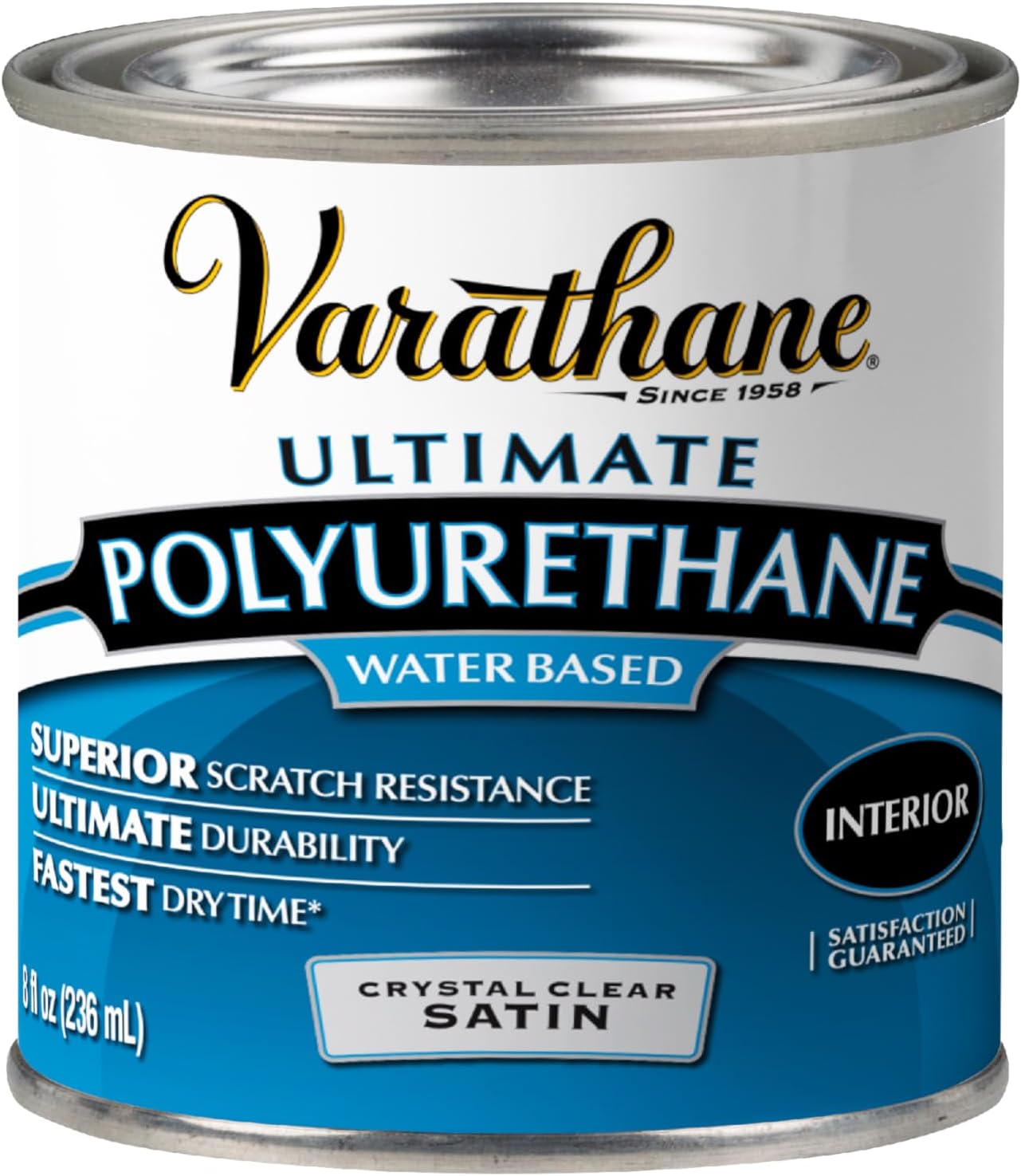
Varathane’s water-based polyurethane is aimed at indoor wood surfaces such as furniture, cabinets and trim, which makes it a good match for painted pieces that will get real use: serving trays, jewelry boxes, painted stools or toy chests. The listing gives a 30-minute dry-to-touch time, up to 31.25 square feet of coverage and recoating after two hours.
It emphasizes stain and scratch resistance with excellent clarity, so it suits projects where you want the painted design to stay readable under a durable film.
Best suited for: Painted items that will be touched, wiped and moved often, such as trays, boxes and small furniture accents.
Key features:
- Water-based polyurethane, satin
- Dry to touch in 30 minutes
- Recoat after 2 hours
- Coverage up to 31.25 sq ft
Pros:
- Durable for frequently handled pieces
- Fast drying
- Good coverage for the size
Cons and limitations:
- Indoor use
- Overkill for small ornaments
- Needs careful thin brushing over hand-painted details
Buying consideration: Test over a painted scrap first. Brushing any water-based poly too vigorously over fresh acrylic can lift or smear soft paint.
3. Aleene’s Spray Acrylic Sealer, Gloss — Best for textured and carved pieces

Spraying solves the biggest problem with sealing painted wood crafts: brushing over delicate paint details. Aleene’s spray acrylic sealer goes on as a fine mist, and the listing describes a clear, durable protective finish with a gloss luster for indoor or outdoor projects.
Spray is especially useful on wood-burned pieces, carved items, wood with deep grain, and anything with fine marker or paint pen lines that a wet brush might smear.
Best suited for: Wood-burned art, carved or textured wood, and pieces decorated with paint pens or fine detail.
Key features:
- Spray-on acrylic sealer
- Clear gloss finish
- Listed for indoor and outdoor projects
- 6 oz can
Pros:
- No brush marks
- Will not drag fine details
- Fast, even coverage
Cons and limitations:
- Needs ventilation
- Thinner protection per coat than brush-on poly
- Gloss only in this listing
Buying consideration: Spray several light passes from a consistent distance. Heavy single passes run and pool in recesses.
4. MCTRHG Clear Acrylic Paint Sealer, High Gloss — Best for brush-on high gloss on acrylic art

This brush-on varnish is designed for acrylic artwork. The listing highlights a crystal-clear, wet-look gloss, a non-yellowing film, and a self-leveling formula that minimizes streaks, bubbles and brush marks. It names wood crafts, painted rocks, canvas, paint pours and clay among suitable surfaces.
If your wood project is really a painting on a wood panel, or a pour on a wood board, this kind of varnish gives the deep, saturated look that satin poly does not.
Best suited for: Acrylic paintings on wood panels, pour art on wood, and craft pieces where a deep gloss is the goal.
Key features:
- Brush-on acrylic varnish
- High-gloss, non-yellowing per listing
- Self-leveling formula
- 5.3 oz
Pros:
- Rich, saturated color
- Designed for acrylic paint
- Self-leveling helps hide brush marks
Cons and limitations:
- Gloss can create glare in bright rooms
- Not a furniture-grade wear finish
- Smaller container
Buying consideration: Gloss shows dust easily. Apply in a clean room and cover the piece loosely while it dries.
5. Mod Podge Gloss Sealer, Glue and Finish — Best for decoupage and mixed media

Mod Podge is a glue, sealer and finish in one. The listing describes a clear, glossy, quick-drying formula for wood, paper, canvas, tin and terra cotta, with soap and water cleanup. For decoupage on wood, where paper or napkins are glued to a painted surface, it is the standard tool.
As a stand-alone sealer for painted wood it is best for decorative items that are not handled much. It is not the hardest finish, and in humid conditions it can feel slightly tacky, so high-use pieces benefit from a polyurethane topcoat.
Best suited for: Decoupage on wood, mixed-media projects, and decor that sits on a shelf.
Key features:
- Glue, sealer and finish in one
- Gloss finish
- 16 oz bottle
- Soap and water cleanup
Pros:
- Combines adhesive and topcoat
- Large bottle
- Very beginner friendly
Cons and limitations:
- Less durable than polyurethane
- Can feel tacky in humidity
- Not designed for wet use
Buying consideration: For coasters or trays, use Mod Podge for the decoupage layer and finish with Polycrylic or Varathane.
6. Rust-Oleum Painter’s Touch 2X Ultra Cover Clear Gloss Spray — Best for outdoor painted decor

This clear gloss spray is oil-based and rated for interior and exterior surfaces including wood, metal, plastic, masonry and unglazed ceramic. The listing says it dries to touch in 20 minutes, covers up to 12 square feet per can, and resists chips.
Outdoor painted decor such as garden signs, birdhouses and porch planters needs a tougher, weather-ready clear coat, and an oil-based spray fits that role. The trade-off is that oil-based clears can warm the color slightly over time, which matters most over white.
Best suited for: Painted garden signs, birdhouses, outdoor ornaments and porch decor.
Key features:
- Oil-based clear gloss spray
- Interior and exterior use
- Dry to touch in 20 minutes
- Covers up to 12 sq ft per can
- Any-angle spray
Pros:
- Outdoor-ready
- Chip resistant
- Covers awkward shapes quickly
Cons and limitations:
- Strong solvent odor, use outside
- May warm or slightly yellow pale colors over time
- Gloss only
Buying consideration: Let acrylic paint dry thoroughly before spraying an oil-based clear. Spray light coats first to avoid wrinkling soft paint.
Buying Guide: How to Choose a Sealer for Painted Wood
Indoor or outdoor
Indoor pieces only need protection from handling and dust, so water-based polyurethane or acrylic sealer is enough. Outdoor pieces face UV, rain and temperature swings, so choose a product rated for exterior use and expect to reseal periodically.
Water-based or oil-based
Water-based finishes dry fast, clean up with water and stay clear. Oil-based finishes are tough and good outdoors but have more odor and can amber over time. Over light colors, water-based is the safer choice.
Sheen
Matte and satin let painted detail read clearly without glare. Gloss deepens color and makes surfaces easier to wipe but shows dust and brush marks. Consider how the light in the room will hit the piece.
Brush or spray
Brush-on gives thicker protection per coat and more control. Spray avoids smearing fine details and gets into carved recesses. Many crafters spray the first coat to lock in details, then brush additional coats.
Durability needs
A wall plaque needs far less protection than a serving tray. Match the sealer to the level of handling and moisture the piece will see.
Compatibility with your paint
Most of these products are listed for use over acrylic paint. Chalk-style paints are porous and may absorb more sealer; test first. Paint pens and markers can smear under a wet brush, so spray first.
Which Sealer for Which Painted Wood Project
Most sealing problems come from mismatching the finish to the job. Use this quick matcher before you buy:
- Wood slice ornaments and wall plaques: Polycrylic satin or Aleene’s spray. Light handling and indoor use mean the choice is mostly about sheen.
- Painted serving trays and coasters: Varathane Ultimate Polyurethane in several thin coats. Treat these as decorative surfaces; craft finishes are not cutting boards.
- Wood-burned art with color accents: spray first so burned lines and pigment stay crisp, then brush a satin poly if the piece will be handled.
- Acrylic paintings on wood panels: the MCTRHG gloss varnish for depth, or a satin poly if glare is a concern where the piece will hang.
- Decoupage boxes and frames: Mod Podge for the paper layer, then a polyurethane topcoat for durability.
- Garden signs, birdhouses and porch decor: an exterior-rated clear like the Rust-Oleum gloss spray, refreshed as the finish weathers.
A practical rule: the more the piece is touched, the tougher the topcoat should be, and the finer the painted detail, the more you should favor spray for the first coat. Sheen is a style decision; durability is a use decision. Decide durability first, then pick the sheen within that product type.
Sealer also changes how colors look. Gloss deepens darks and makes reds and blues appear richer, while matte and satin slightly soften contrast. If color accuracy matters, for example when matching a painted sign to a room, seal a test swatch on scrap wood painted with the same colors and compare it in that room’s light before finishing the real piece.
How to Seal Painted Wood Without Ruining the Paint
- Let the paint dry fully. Acrylic can feel dry quickly but stays soft underneath for longer.
- Dust the surface with a soft, dry brush or lint-free cloth.
- Test the sealer on a painted scrap or the back of the piece.
- Apply a thin first coat, especially over detail work. Spray is safest for fine lines.
- Let each coat dry as the label directs, then lightly sand with very fine abrasive only if the surface feels rough.
- Apply two or three thin coats for indoor pieces, more for outdoor or high-use pieces.
Sealing is the final step of many of our wood projects. See how it fits into painting on wood slices and painting wood-burned crafts, where spray sealers help protect burned lines and fine paint.
Common Mistakes to Avoid
- Sealing too soon. Trapping moisture under a clear coat can cause clouding.
- Applying one thick coat. Thick coats run, take longer to dry and look milky.
- Overworking the brush. Repeated strokes can lift soft acrylic underneath.
- Using indoor sealer outside. It may break down under sun and rain.
- Choosing oil-based over white paint. Expect warming over time.
- Skipping a test. Paint pens and some craft paints react differently.
FAQs
What is the best sealer for acrylic paint on wood?
For indoor projects, a water-based polyurethane such as Minwax Polycrylic or an acrylic sealer works well. For outdoor projects, use a clear coat rated for exterior use.
Does Mod Podge seal painted wood?
Yes, for decorative pieces. It is less durable than polyurethane and may feel tacky in humidity, so high-use items benefit from a tougher topcoat.
Will polyurethane yellow painted wood?
Oil-based polyurethane tends to amber over time. Water-based finishes like Polycrylic are listed as non-yellowing, but thick coats can still look cloudy.
Should I use spray or brush-on sealer on painted wood?
Spray is best for textured pieces and fine details. Brush-on gives more protection per coat. Many crafters use both.
How many coats of sealer does painted wood need?
Usually two to three thin coats for indoor items, and more for outdoor or frequently handled pieces.
Can I seal painted wood for outdoor use?
Yes, with an exterior-rated clear coat. Reseal periodically, since sun and weather wear any finish.
Final Recommendation
For most painted wood crafts kept indoors, choose Minwax Polycrylic. For trays, boxes and other items that see real wear, Varathane Ultimate Polyurethane adds durability. Use Aleene’s spray when you cannot risk smearing fine details, the MCTRHG high-gloss varnish for acrylic paintings on wood panels, and Mod Podge for decoupage. For outdoor painted decor, the Rust-Oleum clear gloss spray is the weather-ready option.