PaintingProGuide is reader-supported. When you buy through links on this page we may earn an affiliate commission at no extra cost to you.
A large oil canvas puts real demands on an easel. A 30×40 inch stretched canvas with thick paint can weigh several pounds, catches air like a sail outdoors, and gets pushed every time you lean into a stroke with a stiff bristle brush. The easel has to hold it at the right height, keep it from wobbling, and let you step back without the whole thing shifting. That is why choosing among oil painting easels for large canvases starts with numbers: maximum canvas height, weight capacity and mast height.
We need to be upfront about this list. The products available to us on Amazon for this check were adjustable metal tripod easels, which are portable and affordable but have clear limits for big, heavy canvases. We cover the three that fit best, state their stated capacities, and then explain in detail when you should step up to an H-frame studio easel instead, and what to look for when you do.
Quick answer: Among the tripod easels we reviewed, the NS JYMB 17-66 inch metal easel is the clearest fit: it lists support for canvases up to 36 inches high and 10 pounds. For a lower-cost option, the RRFTOK 17-66 inch heavy duty easel adds an enhanced bottom crossbar, and the Aredy 66-inch two-pack suits painters who want a spare for display or plein air. For canvases over 36 inches tall or heavy impasto work, use an H-frame studio easel.
Our Top Picks at a Glance
- NS JYMB 17-66 Inch Adjustable Easel Stand — Best tripod for canvases up to 36 inches
- RRFTOK 17-66 Inch Heavy Duty Art Easel — Best budget tripod with reinforced crossbar
- Aredy 66 Inch Metal Easel (2 Pack) — Best two-pack for studio plus display
| Product | Best For | Key Spec | Key Strength | Price Tier |
|---|---|---|---|---|
| NS JYMB 17-66 in Easel | Canvases up to 36 in | Holds up to 36 in high, 1.2 in deep, 10 lb | Stated capacity, spring clip | $$ |
| RRFTOK 17-66 in Easel | Budget large-canvas tripod | Aluminum and iron, 18-66 in | Enhanced bottom crossbar | $$ |
| Aredy 66 in Easel 2 Pack | Two easels, display | Adjusts 17.3-66 in, carry pouch | Non-slip base, two units | $$ |
How We Chose
We did not paint on these easels. Picks are based on the Amazon listing details and specifications checked in October 2026, how well each easel’s stated canvas capacity, height range and construction fit large oil canvases, and how widely each product is reviewed by Amazon buyers. Only three listings in our product set were genuine floor easels suited to large work; tabletop easels and kits were excluded.
- Maximum canvas height: stated in the listing where possible.
- Weight capacity: large oil canvases are heavier than they look.
- Height range: enough to put the center of the canvas at eye level standing.
- Stability features: crossbars, top clips and non-slip feet.
- Portability: folded size and carry bags for outdoor painting.
Easel Types for Large Canvases
| Type | Typical Max Canvas | Stability | Best For |
|---|---|---|---|
| Metal tripod | About 30-36 in tall, light weight | Fair; can wobble under pressure | Plein air, display, medium canvases |
| A-frame (lyre) | About 40-60 in | Good | Small studios, moderate sizes |
| H-frame studio | Often 60-80 in or more | Very good | Large, heavy oil canvases |
| Crank/convertible studio | Large, varies by model | Excellent | Professional large-format work |
These ranges are typical for each type, not specs for particular products. Always check the maximum canvas height listed for the model you buy.
Best Oil Painting Easels for Large Canvases Reviewed
1. NS JYMB Easel Stand for Painting, 17-66 Inch Adjustable — Best for canvases up to 36 inches

NS JYMB gives the clearest capacity numbers of the three: canvases or panels up to 36 inches high and 1.2 inches deep, with a maximum weight of 10 pounds. The metal tripod adjusts from 17 to 66 inches in height, folds down to 21 inches, and has a spring clip at the top to hold artwork in place.
A 36-inch canvas height covers common large formats like 24×36 and 30×30. For oil painters, the top clip matters: it keeps the canvas from tipping forward when you press with a loaded brush.
Best suited for: Painters working up to 24×36 inches who need portability as well.
Key features:
- Adjusts 17 to 66 inches
- Holds canvases up to 36 in high and 1.2 in deep
- Maximum 10 lb
- Spring clip at top, folds to 21 in
Pros:
- Clear stated capacity
- Top clip secures canvas
- Folds compact for travel
Cons and limitations:
- Tripods flex under firm brush pressure
- Not for canvases over 36 inches
- Highest price tier of the three
Buying consideration: Hang a weighted bag from the center of the tripod legs for extra stability outdoors.
2. RRFTOK 17-66 Inch Adjustable Art Easel Stand — Best for a budget tripod with a reinforced crossbar

RRFTOK builds its easel from aluminum and iron and describes it as heavy duty, with an enhanced bottom crossbar to secure the canvas. It adjusts from a compact 18 inches to 66 inches and doubles as a sign or display stand.
The listing does not state a maximum canvas size or weight, so treat it as a medium-to-large canvas easel and test stability with your heaviest canvas before committing to a long session.
Best suited for: Budget-conscious painters who need a floor easel for medium and occasional large canvases.
Key features:
- Aluminum and iron construction
- Adjusts roughly 18 to 66 inches
- Enhanced bottom crossbar
- Collapsible for storage
Pros:
- Low price tier
- Reinforced bottom support
- Doubles as a display stand
Cons and limitations:
- No stated canvas size or weight limit
- Tripod stability limits
- Fewer specs than competitors
Buying consideration: Open the legs to their widest spread for large canvases; a wider footprint resists tipping.
3. Aredy 66 Inch Metal Art Easel, 2 Pack — Best for a studio easel plus a display easel

Aredy sells two metal easels in one pack, each adjusting from 17.3 to 66 inches with a spring top holder and a non-slip base the listing says adapts to uneven ground. A carrying pouch is included for transport.
Two easels are genuinely useful for oil painters: one holds the painting in progress, while the other holds a reference, a drying canvas or a finished piece for display.
Best suited for: Painters who want a second easel for references or drying, and plein air painters.
Key features:
- Two easels
- Adjusts 17.3 to 66 inches
- Non-slip base
- Carrying pouch
Pros:
- Two units for one price tier
- Portable with pouch
- Good for uneven ground
Cons and limitations:
- Canvas size limit not stated
- Light frames for heavy canvases
- Spring top holder can loosen with use
Buying consideration: Use one easel for your canvas and the second for a reference photo or still life at the same height.
When to Choose an H-Frame Studio Easel Instead
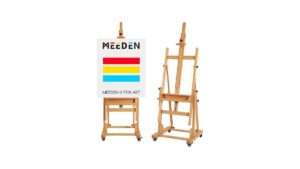
If you regularly paint canvases taller than 36 inches, use heavy impasto, or paint standing for long sessions with firm brushwork, a tripod will frustrate you. An H-frame easel has a rectangular base and two vertical uprights, which keep the canvas square and resist the rocking that tripods are prone to.
- Maximum canvas height: look for a stated figure well above your largest planned canvas.
- Mast height: the upright should extend high enough that the center of the canvas sits at eye level.
- Tilt: forward tilt reduces glare and dust on wet oil paint.
- Canvas holder: an adjustable top clamp and a deep bottom tray.
- Wheels with locks: useful for heavy studio easels.
- Wood quality: hardwoods like beech are common for durable studio easels.
Buying Guide: How to Choose Oil Painting Easels for Large Canvases
Measure your largest canvas
Write down the height, width and depth of the biggest canvas you plan to paint. Gallery-wrapped canvases are often 1.5 inches deep, which exceeds some easel clips; the NS JYMB, for example, lists 1.2 inches.
Estimate weight
Large stretched canvases on wood bars, plus wet oil, can weigh more than you expect. Compare that with the stated weight capacity, and leave headroom for brush pressure.
Check the height range
For standing work, the center of the canvas should sit near your eye level. A 66-inch maximum easel can place a 36-inch canvas comfortably for most adults.
If you paint seated, you need a low setting too.
Prioritize stability features
Top clamps, bottom crossbars, wide leg spread and non-slip feet all help. For tripods, a weight hung from the center helps outdoors.
Indoor vs outdoor
Outdoors, wind is the enemy of large canvases. Smaller canvases or a heavier easel help. Indoors, a studio H-frame is the long-term solution.
Storage and portability
Folded length matters if you carry an easel to classes or plein air spots. Studio H-frames rarely fold small.
Canvas Size and Easel Match Chart
| Canvas Size | Approximate Format | Easel That Usually Works |
|---|---|---|
| 16×20 to 18×24 in | Medium | Sturdy tripod or A-frame |
| 24×30 to 24×36 in | Large | Tripod with stated 36 in capacity, or A-frame |
| 30×40 in | Large | A-frame with high capacity or H-frame |
| 36×48 in and above | Extra large | H-frame or crank studio easel |
Orientation matters too. A 24×36 canvas hung landscape is only 24 inches tall, which many tripods hold more securely than the same canvas in portrait orientation. If your easel is near its limit, consider whether the composition works sideways.
Setting Up a Studio Corner for Large Canvases
The easel is only part of the system. Large oil paintings need space to step back, steady light and somewhere to put a big palette. A few setup choices make a bigger difference than upgrading the easel itself.
- Viewing distance: leave at least 6 to 8 feet behind you so you can step back and judge the whole canvas. Large paintings are designed to be read from a distance.
- Light from one side: a north-facing window or a daylight-balanced lamp placed to the side and slightly above reduces glare on wet oil.
- Palette at hand height: a rolling cart or small table beside the easel, on your dominant side, keeps you from stretching across the canvas.
- Floor protection: a drop cloth or vinyl mat under the easel catches drips and helps tripod feet grip.
- Ventilation: large paintings mean more paint and medium in the air; open a window or run a fan when using solvents.
- Drying space: a wall rack or a clear stretch of wall where finished canvases can lean safely face-out.
If you work in a small room, a tripod you can fold away after each session may actually be the more practical choice, even for larger work. Many painters keep a portable tripod for plein air and classes and add an H-frame later when they have permanent studio space.
Stability Tips for Tripod Easels
- Spread the legs to their maximum and check that each foot sits flat.
- Lower the canvas so its weight sits closer to the leg joint.
- Tighten all knobs before loading the canvas, then once more after.
- Use the top clip on every canvas, even if it seems stable.
- Outdoors, hang a bag of stones or a water bottle from the center to lower the center of gravity.
- Use a lighter touch with stiff brushes, or brace the canvas edge with your free hand.
Painting Large Canvases Outdoors
Plein air painters who want to work big face a special challenge: the larger the canvas, the more it behaves like a sail. Most outdoor painters keep large work to calm days, set up with the canvas edge-on to the prevailing breeze, and stake or weight the easel legs. A light tripod like the ones above is easy to carry to a site, but plan for extra ballast, such as a sandbag or a full water jug hung from the center, and keep the canvas lower on the mast. On gusty days, switch to a smaller study and develop the large version in the studio from it.
Easel Troubleshooting
| Problem | Likely Cause | Fix |
|---|---|---|
| Canvas tips forward | No top clip or clip too loose | Tighten clip; tilt easel slightly back |
| Easel wobbles during strokes | Narrow leg spread or loose joints | Widen legs, tighten knobs, lower the canvas |
| Legs slide on smooth floors | No grip on feet | Rubber pads or a rug under the easel |
| Canvas too deep for holder | Gallery-wrap depth exceeds clip | Use a thinner canvas or a studio easel |
| Glare on wet paint | Light hitting canvas straight on | Tilt canvas forward slightly or move light |
Learn More About Easel Painting
Large-format painting has a long history tied to oil; our article on why oil became the dominant medium in easel painting explains how. To keep any easel working smoothly for years, follow our guide on cleaning and maintaining a wooden easel, and if you prefer painting seated on smaller work, see how to paint sitting with a lap easel.
Common Mistakes to Avoid
- Ignoring canvas depth. Deep gallery-wrap canvases may not fit tripod clips.
- Assuming “66 inches” means a 66-inch canvas. That is the easel height, not the canvas capacity.
- Painting large in wind on a tripod. Canvases act like sails; weight the easel or wait for calm.
- Overloading a light easel. Stay under stated weight limits.
- Leaving knobs loose. Wet oil canvases that slip will smear.
- Buying a tripod for regular 40-inch-plus work. Choose an H-frame.
FAQs
What easel is best for large oil canvases?
For canvases over 36 inches tall or heavy impasto, an H-frame studio easel is best. For canvases up to about 36 inches, a sturdy tripod like the NS JYMB, which lists a 36-inch, 10-pound capacity, can work.
Can a tripod easel hold a 24×36 canvas?
Some can. The NS JYMB lists canvases up to 36 inches high. Check each model’s stated capacity and use the top clip.
How tall should an easel be for large paintings?
Tall enough that the center of the canvas sits near your eye level when standing. A 66-inch easel suits many medium and large canvases for most adults.
What is the difference between an H-frame and an A-frame easel?
An H-frame has a rectangular base and two uprights for greater stability; an A-frame (lyre) uses a tripod-like shape that is more compact but less stable with very large canvases.
How do I stop my easel from wobbling?
Widen the legs, tighten all knobs, lower the canvas, use the top clip and, outdoors, hang a weight from the center of the tripod.
Are metal easels good for oil painting?
Metal tripods are light and portable, good for plein air and display. For heavy studio work on large canvases, a wooden H-frame is usually steadier.
Final Recommendation
For canvases up to 36 inches tall, the NS JYMB easel is the best choice of the three, thanks to its stated 36-inch, 10-pound capacity and top spring clip. The RRFTOK is the budget alternative with a reinforced crossbar, and the Aredy two-pack is useful when you want a second easel for references, drying or display. If your work regularly goes larger or heavier than that, plan on an H-frame studio easel with a stated maximum canvas height above your biggest size.