PaintingProGuide is reader-supported. When you buy through links on this page we may earn an affiliate commission at no extra cost to you.
The best paint activities for kids are the ones that fit the child in front of you: a 2-year-old needs big movements and safe paint, a 6-year-old wants to make something recognizable, and a 10-year-old wants a project that looks impressive when it is done. Below are 14 tried-and-true painting activities organized by age, each with the supplies it needs and the skill it builds, followed by five ready-made kits on Amazon that take the prep work out of the best of them.
None of these activities requires artistic talent from the adult. Most use materials you already have, like paper plates, rocks, sponges and cardboard. Where a kit genuinely saves time, such as stepping stones or wooden magnets, we point to it.
Quick answer: For toddlers, start with spill-proof painting or paint with water books like the TECJOE 3-pack. For ages 3 to 8, painting wooden magnets with the JOYIN 12-piece magnet kit gives a quick, useful result. For kids 8 and up, painting a garden stepping stone with the Dan&Darci 5-stone kit is a satisfying weekend project. Free activities like sponge printing, salt painting and rock painting fill the gaps.
Our Top Picks at a Glance
- Dan&Darci Stepping Stones Painting Kit — Best weekend project for families
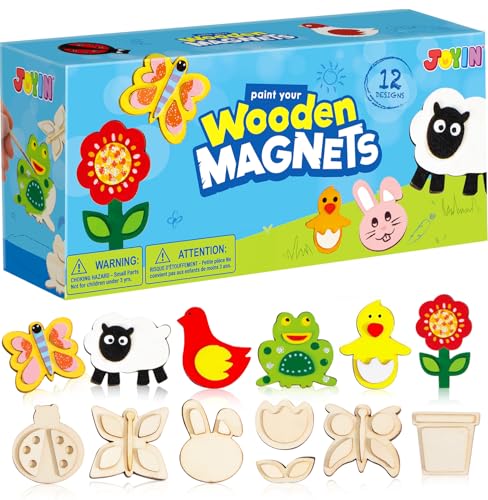
- JOYIN 12 Wooden Magnet Painting Kit — Best quick craft with a useful result
- Crayola Spill Proof Paint Set — Best everyday painting for toddlers
- TECJOE 3 Pack Paint with Water Books — Best mess-free activity
- Creative Roots Mosaic Turtle Stepping Stone — Best single-stone project for ages 8+
| Product | Best For | Key Spec | Key Strength | Price Tier |
|---|---|---|---|---|
| Dan&Darci 5 Stepping Stones | Family projects | 5 stones, 7 paints and 2 brushes each | Five designs | $$ |
| JOYIN 12 Wooden Magnets | Ages 3-8 | 12 wood magnets, palette, brush, glitter glue | Fridge-ready result | $ |
| Crayola Spill Proof Set | Ages 2-4 | 8 washable paints, 40 activity pages | Spill-proof jars | $$ |
| TECJOE Paint with Water 3 Pack | Ages 3-8, travel | 3 books 6.5 x 8.23 in, 3 water pens | 7-color palette on each page | $ |
| Creative Roots Mosaic Turtle | Ages 8+ | 8.25 in ceramic stone, 6 acrylics | Mosaic pattern to fill | $ |
How We Chose
We did not run these activities with children ourselves. The activity list draws on widely used early-childhood and art-class techniques. The product picks are based on Amazon listing details and specifications checked in October 2026, how well each kit fits a specific age and activity, and how widely each product is reviewed by Amazon buyers.
- Age fit: motor skills and attention span at each stage.
- Prep effort: how much the adult has to set up.
- Mess level: washable, contained or mess-free.
- Result: something to keep, use or give away.
- Learning value: color, texture, pattern or planning.
14 Best Paint Activities for Kids, by Age
Ages 2 to 3
1. Paint in a bag. Squirt a few blobs of washable paint into a zip bag, seal it, tape it to the table and let your toddler squish the colors together. Zero mess, and they see mixing happen.
2. Big-brush water painting. Give a bucket of plain water and a wide house-painting brush and let them “paint” a fence, sidewalk or wall outside. It builds arm control and the water evaporates.
3. Spill-proof pot painting. A spill-proof paint set and thick paper teach the dip-and-paint rhythm without floods.
4. Paint with water books. Color is printed on the page; kids add water. Perfect for short attention spans and restaurants.
Ages 3 to 5
5. Sponge stamping. Cut kitchen sponges into shapes, dip them in tempera and stamp. Great for pattern and repetition.
6. Fork and cotton swab painting. Forks make fur and grass; cotton swabs make dots. Both build fine motor control.
7. Painted paper plates. Paint a plate yellow for a sun, red for a ladybug, or green for a turtle shell. Add paper features once dry.
8. Wooden magnet painting. Small wood shapes are quick to finish, and the magnet back makes them useful on the fridge.
Ages 5 to 8
9. Salt watercolor. Paint a wash of watercolor, then sprinkle table salt while it is wet. The salt pulls pigment into starry textures as it dries.
10. Rock painting. Smooth stones become ladybugs, monsters and pets. Acrylic covers well; seal rocks that live outside.
11. Crayon resist. Draw in white or bright crayon, then paint over with watercolor. The wax repels the paint and the drawing appears like magic.
12. Bubble wrap printing. Paint a sheet of bubble wrap and press it onto paper for honeycomb or fish-scale textures.
Ages 8 and up
13. Stepping stone painting. A ceramic or concrete-look stone becomes a garden decoration. It teaches planning, layering and sealing.
14. Guided canvas painting. Follow a simple step-by-step tutorial on a small canvas, such as an animal or landscape. It builds patience and gives a framable result.
Activity Planner at a Glance
| Activity | Ages | Prep Time | Mess | Main Skill |
|---|---|---|---|---|
| Paint in a bag | 2-3 | 2 min | None | Color mixing |
| Water painting outside | 2-4 | 1 min | None | Gross motor |
| Sponge stamping | 3-5 | 10 min | Medium | Pattern |
| Wooden magnets | 3-8 | 5 min | Low | Fine motor |
| Salt watercolor | 5-8 | 5 min | Low | Texture, cause and effect |
| Rock painting | 5+ | 15 min (collect rocks) | Medium | Design |
| Stepping stones | 8+ | 5 min | Medium | Planning, layering |
Best Paint Activity Kits for Kids Reviewed
1. Dan&Darci Stepping Stones Painting Kit — Best for weekend family projects

Dan&Darci includes five paint-ready stepping stones in unicorn, heart, medallion, turtle and emoji designs. Each stone comes with its own set of seven paint colors and two brushes, one fine tip for detail and one wider for big areas. The stones have a texture that feels like real stone, and no molding or plaster is needed.
Five stones means siblings can each have their own, or one child can work through them over a few weekends. The raised designs give clear areas to paint, which keeps the results tidy even for kids who are not detail-oriented.
Best suited for: Families, siblings and kids who like a project with a lasting result.
Key features:
- 5 stepping stones in 5 designs
- 7 paint colors per stone
- 2 brushes per stone (fine and wide)
- Paint-ready, no molding
Pros:
- Enough for several kids or sessions
- Paints and brushes per stone
- Satisfying garden decor result
Cons and limitations:
- Outdoor use may need an extra sealer
- Higher price tier than small crafts
- Takes more than one sitting
Buying consideration: Let each color layer dry before painting next to it. Wet edges bleed together on textured surfaces.
2. JOYIN 12 Wooden Magnet Painting Kit — Best for a quick craft with a useful result

JOYIN’s kit includes 12 wooden magnets, a paint palette, a brush, glitter glue and an instruction sheet. The listing states the kit is non-toxic, BPA-free and lead-free and meets US toy standards.
Magnets are an underrated paint activity. They are small enough to finish in one sitting, the result goes straight onto the fridge, and kids get to see their work every day, which encourages them to paint more.
Best suited for: Ages 3 to 8, classroom crafts and rainy-day activities.
Key features:
- 12 wooden magnets
- Paint palette and brush
- Glitter glue
- Instruction sheet
Pros:
- Fast, finished result
- Everyday display on the fridge
- Low price tier
Cons and limitations:
- Only one brush
- Small palette for groups
- Magnets are small parts for toddlers
Buying consideration: Add a second cheap brush so two kids can paint at once, and keep the finished magnets away from children under 3.
3. Crayola Spill Proof Paint Set (8ct) — Best for everyday toddler painting

Crayola’s spill-proof set includes eight washable paints in reusable spill-proof jars, three brushes, two trays and 40 activity pages. It is designed to make daily painting realistic for parents of toddlers.
The 40 pages give you a ready activity for weeks. Rotate between pages and free painting on blank paper to keep it interesting.
Best suited for: Ages 2 to 4 for daily, low-stress painting time.
Key features:
- 8 washable paints in spill-proof jars
- 3 brushes
- 2 paint trays
- 40 activity pages
Pros:
- Spill-proof jars
- Washable from skin and most clothing
- Built-in activities
Cons and limitations:
- Eight colors
- Thin paint coverage on dark paper
- Outgrown by school-age kids
Buying consideration: Keep this set at child height with paper nearby. Easy access is what turns painting into a habit.
4. TECJOE 3 Pack Paint with Water Books — Best for mess-free painting

TECJOE’s three books measure about 6.5 x 8.23 inches and each page has a built-in seven-color watercolor palette. The kit includes three water pens and three brushes, so kids can choose between them.
Water pens are the real advantage: they hold water in the barrel, so there is no cup to tip over. That makes these books ideal for restaurants, airplanes, car rides and quiet time.
Best suited for: Ages 3 to 8, siblings and travel.
Key features:
- 3 books about 6.5 x 8.23 in
- Built-in 7-color palette per page
- 3 water pens and 3 brushes
- Thick watercolor paper
Pros:
- No cups or jars needed
- Kids choose colors from the palette
- Three sets for siblings
Cons and limitations:
- Single-use pages
- Limited color range
- Not a substitute for real paint skills
Buying consideration: Fill water pens over a sink and wipe them dry before handing them over.
5. Creative Roots Mosaic Turtle Stepping Stone Kit — Best for a single-stone project for ages 8 and up

Creative Roots provides a ready-to-paint ceramic turtle stepping stone about 8.25 x 8.25 x 1 inches, a six-color acrylic paint strip, a brush and instructions. The mosaic shell pattern gives dozens of small sections to fill.
The listing says the stone is for display only and recommends an exterior varnish if you place it outdoors. It is designed for kids 8 and up, which matches the patience the mosaic pattern requires.
Best suited for: Kids 8 and older who enjoy detail, and turtle fans.
Key features:
- Ceramic turtle stone 8.25 in
- 6-color acrylic strip
- Brush and instructions
- No plaster or molding needed
Pros:
- Mosaic pattern teaches color planning
- Attractive finished piece
- Low price tier
Cons and limitations:
- Single stone only
- One brush
- Needs varnish for outdoor use
Buying consideration: Plan a color pattern before starting, such as alternating greens and blues, to keep the mosaic from looking random.
Buying Guide: Choosing Paint Activities and Kits for Kids
Match the activity to attention span
A good rule is about 3 to 5 minutes of focus per year of age for young children. Choose activities a child can finish within that window, or that can be paused easily.
Choose paint by surface
Paper: washable tempera or watercolor. Wood and rocks: kid-grade acrylic. Ceramic and stone kits: the included paint, then a sealer for outdoor use.
Using the wrong paint, such as watercolor on wood, leads to pale, patchy results.
Think about the result
Kids love activities that become something: a magnet, a stepping stone, a card. A useful or displayable result encourages them to finish.
Prep time versus kits
Many activities need only household items. Kits earn their place when they save sourcing time, as with stepping stones or magnets.
Mess tolerance
Be honest about your space and energy. Mess-free books for a weekday evening; sponge stamping and rock painting for weekends with the table covered.
Safety
Look for non-toxic labels and keep small parts away from toddlers. Supervise acrylic use and wash hands afterward.
Setting Up a Kids Painting Corner at Home
Children paint more often when painting is easy to start. A permanent corner, even a small one, removes the setup barrier that makes parents say “not today.” You need less than you might think.
- A washable surface: a small table with an oilcloth or a vinyl shower curtain liner taped down.
- Low, open storage: a caddy or shoe box with brushes, paint pots and sponges that kids can reach.
- A paper supply: heavier paper or a roll of kraft paper, cut in advance.
- A smock hook: an old adult T-shirt worn backwards works as well as any apron.
- A drying line: string and clothespins along a wall turn drying into a display.
- A cleanup kit: wipes, a sponge and a bucket for rinsing brushes.
Rotate the activity in the corner every week or two. One week it holds sponge stamps, the next a stack of paper plates, then a basket of rocks. Rotation keeps the space feeling new without adding more supplies, and gives you an easy answer when a child asks, “What can I do?”
Step-by-Step Guides for Popular Activities
Rock painting is one of the most loved activities for ages 5 and up; our guide to painted rock critters for kids walks through designs that work on any smooth stone. For a first canvas or paper plate painting, try the easy ladybug painting lesson, and for dinosaur fans, the easy dinosaur painting tutorial is a great guided project.
Common Mistakes to Avoid
- Choosing a project above the child’s stage. Frustration ends painting time faster than anything.
- Pouring too much paint. A teaspoon per color is plenty for young kids; add more as needed.
- Skipping drying time between colors. Especially on stones and wood, wet colors blur together.
- Redirecting every choice. Let kids own the result; ask about their painting instead of correcting it.
- Leaving outdoor projects unsealed. Rain and sun fade unsealed acrylic.
- Forgetting cleanup as part of the activity. Kids can rinse brushes and wipe tables.
FAQs
What are easy paint activities for toddlers?
Paint in a sealed bag, water painting outside with a big brush, spill-proof pot painting and paint with water books are all easy and low-mess for ages 2 to 3.
What paint activities can I do with household items?
Sponge stamping, fork painting, cotton swab dots, bubble wrap printing, salt watercolor and paper plate crafts all use common household materials.
What paint should kids use on rocks?
Kid-grade acrylic paint covers rocks well and dries quickly. Seal rocks that will be kept outdoors.
How do I keep painting activities from getting messy?
Cover the table, use smocks, give each child their own water cup and small portions of paint, and keep wipes nearby.
What is a good painting project for an 8-year-old?
Stepping stones, rock painting, crayon resist and guided canvas paintings are good choices that reward patience and planning.
Are paint with water books worth it?
Yes, for travel and quick sessions. They are mess-free and build brush control, though they do not teach color mixing.
Final Recommendation
For a family weekend project, the Dan&Darci five-stone kit offers the most painting for the effort. For quick crafts with a useful result, JOYIN’s wooden magnets are hard to beat. Keep the Crayola Spill Proof set out for daily toddler painting and TECJOE books in your bag for travel. Kids 8 and up who enjoy detail will get a lot out of the Creative Roots mosaic turtle. Mix these with free household activities like sponge stamping and salt painting and you will have a painting idea for every age and every day of the week.