
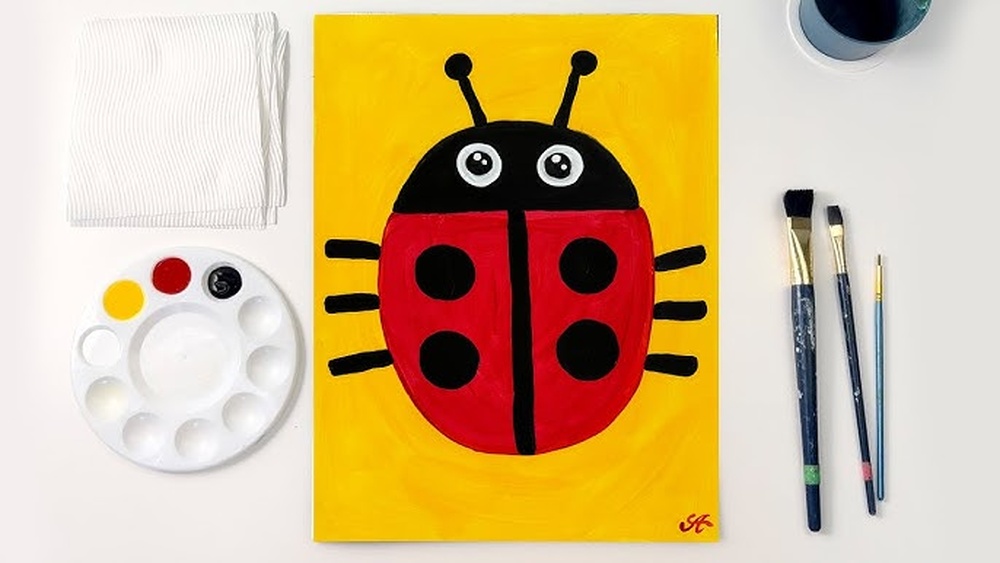
Quick answer: Here is how to paint a ladybug for kids: paint a large red circle or oval for the body and a black half circle at one end for the head. Let the red dry for 10 to 15 minutes, then paint a black line down the center of the back to split the wings and add round black spots with a cotton swab or pencil eraser. Finish with six short black legs, two curly antennae and white dot eyes. It uses just red, black and white, takes about 30 minutes and works for kids as young as 3.
Few painting projects give kids such a bold result with so little effort. Red and black side by side are about as high-contrast as colors get, so even a wobbly circle with a few dots looks graphic and finished. Ladybugs are also small in real life, which gives children permission to make them giant and cartoonish on the page.
Here is how to paint a ladybug for kids easy enough for a preschool classroom, plus versions on rocks and canvas, a garden leaf background, an open-wing flying ladybug and a list of fixes for the usual hiccups.
Why Ladybugs Are Easy to Paint for Kids
- Three colors only. Red, black and white. No mixing required, so colors stay clean.
- One main shape. A circle or oval does almost all the work.
- Dots are forgiving. Real ladybugs vary in spot count and placement, so there is no wrong arrangement.
- Fast drying wait. Thin red tempera usually dries in 10 to 15 minutes, a short enough break for little ones.
Because the steps are so clear, a ladybug is a great project for teaching the “base layer, wait, details” order that underlies most beginner paintings. You can find more projects that use the same rhythm in the painting for kids guide.
Supplies
- Thick paper, a canvas panel or a smooth rock
- Washable tempera or student acrylic in red, black and white (green for a leaf background)
- A medium flat or round brush for the body
- A small round brush for legs and antennae
- Cotton swabs, a pencil with an eraser or a bottle cap for spots
- Water cup, paper towels, a palette and a smock
How to Paint a Ladybug for Kids Easy: Step-by-Step
1. Draw (or trace) the body
Draw a large circle in the middle of the paper. Kids can trace around a small bowl or a large lid for a perfect circle. Then draw a half circle at the top edge, overlapping the main circle slightly. That is the head.
2. Paint a leaf (optional)
If you want the ladybug sitting on a leaf, paint a large green leaf shape first, a long oval with pointed ends, so the ladybug circle sits on top of it. Let the green dry before painting the red over it, or paint around the circle carefully.
3. Paint the red body
Fill the circle with red. Red tempera can look streaky in one coat on white paper; if it does, wait a few minutes and add a second coat. Two thin coats look better and dry faster than one thick coat.
4. Paint the black head
Fill the half circle with black. Clean the brush thoroughly before and after, because a little black in red paint turns it maroon.
5. Let it dry
Wait 10 to 15 minutes. Touch an edge lightly with a fingertip. If it feels cool or tacky, give it a few more minutes. Spots added to wet red will bleed and smear.
6. The center line
Paint a black line from the bottom of the head straight down to the bottom of the circle. This is where the two wing covers meet. For younger kids, an adult can paint this line, or the child can use a black marker once the paint is fully dry.
7. Add spots
Dip a cotton swab, the eraser end of a pencil or the rim of a bottle cap in black paint and press it straight down. Place spots evenly on each side of the center line, such as three on the left and three on the right. Kids can count spots aloud for a sneaky math moment.
8. Legs and antennae
With a small brush, paint three short lines sticking out from each side of the body, angled slightly forward and back. Add two antennae from the top of the head: short curved lines ending in a dot, or curly spirals for extra fun.
9. Face
Paint two white dots on the black head for eyes. When dry, add a tiny black dot inside each. Some kids like to add a white smile too. A single short white curve on the head makes it look cheerful.
Ladybug Variations by Age and Skill
| Version | What changes | Best age | Extra skill learned |
|---|---|---|---|
| Fingerprint ladybugs | Red thumbprints with marker details | 2 to 4 | Printing, counting |
| Classic round ladybug | Full method above | 3 to 7 | Layering, waiting for dry |
| Ladybug on a leaf | Green leaf background with vein lines | 5 to 8 | Background before subject |
| Flying ladybug | Wing covers open, clear wings showing | 7 to 10 | Shape planning, transparency effect |
| Ladybug family | Three sizes on one page | 6 to 10 | Scale, composition |
Fingerprint ladybugs for toddlers
Press a thumb in red paint and print several thumbprints across the paper. When dry, an adult or older child adds a black head, a center line, spots and legs with a fine marker. It is quick, mess is contained and the result makes a sweet card.
The flying ladybug
Instead of one circle, paint two red half ovals that tilt apart at the bottom like an open book. Between them, paint pale gray or very light blue wing shapes with thin lines, showing the delicate flying wings. Add the head and spots as usual. This version teaches kids to observe how insects actually move.
Easy Rock Painting Ideas for Kids: Ladybug Stones
Smooth, rounded rocks are almost exactly the shape of a ladybug, which makes them one of the most popular rock-painting projects for kids.
- Scrub the rock with water and let it dry completely.
- Paint the whole top red. Rocks usually need two coats, with about 15 minutes of drying between them.
- Paint one end black for the head.
- Add the center line and spots once dry.
- Paint white dot eyes.
- For rocks going outdoors, an adult can apply a clear water-based sealer once the paint has fully dried, following the product label.
Student acrylic tends to grip rock surfaces better than tempera, which can flake when handled. A family of ladybug rocks in a garden bed or on a windowsill is a lovely way to display kids’ work.
Easy Animal Painting for Kids: Turning Ladybugs Into a Garden Scene
A single ladybug on a blank page is cute. A ladybug in a scene tells a story. Add these elements around it:
- Big leaf: Paint it first, with a darker green vein down the middle and smaller veins angling off.
- Flowers: Simple daisies or tulips in the background, painted before the ladybug.
- Grass: Quick upward flicks of green along the bottom.
- Dotted flight path: A looping line of small dots behind a flying ladybug.
- Sun: A yellow circle in the corner with short rays.
Kids who enjoy the dotted spots might also love blowing paint across the page with a straw to create grass and vines around their ladybug. The straw painting tips for kids show how to thin the paint so it spreads properly.
Common Mistakes and Fixes
| Problem | Why | Fix |
|---|---|---|
| Spots smudged into red | Body not dry | Let dry, cover smudges with red, redo spots |
| Red looks pink or streaky | Thin coat on absorbent paper | Add a second coat once the first dries |
| Red turned dark maroon | Black left on the brush | Rinse and blot thoroughly; repaint with clean red |
| Spots uneven sizes | Different pressure each time | Use the same tool and press straight down every time, or embrace the variety |
| Legs look like hair | Lines too long and too many | Keep it to three short legs per side |
| Center line wobbly | Normal for little hands | Paint over with a slightly thicker line, or use a marker once dry |
Easy Things to Paint for Beginners Kids: Ladybug Tips by Age
Ages 2 to 4
Draw the circle and head for them with a marker so the outline stays visible through the paint. Offer a chunky brush or a sponge on a clothespin for the red, and let them stamp spots with fingertips. An adult can add legs and antennae with a marker afterward. Ten to fifteen minutes of painting is a realistic goal.
Ages 5 to 7
Most kids can draw the circle themselves by tracing a lid. Teach them to count spots so both sides match, and to rinse and blot the brush between red and black. They can usually manage legs with a small brush if you remind them to keep each line short.
Ages 8 to 10
Introduce a highlight: once the red dries, paint a small curved stroke of white or pale pink on the upper side of each wing cover to make the shell look shiny and round. They can also try the flying ladybug, a ladybug viewed from the side or a group of ladybugs climbing a stem. Encourage them to look at a close-up photo and notice that the head has two white patches, not just eyes.
Ladybug Fun Facts to Share While the Paint Dries
Drying breaks are a chance to connect art and nature. A few well-known facts kids enjoy:
- Ladybugs are a kind of beetle, and the hard red shells are actually wing covers protecting thin flying wings underneath.
- Their bright colors are thought to warn birds and other predators that they taste bad.
- Not all ladybugs are red with black spots. Some are orange, yellow or even black with red spots.
- Gardeners welcome ladybugs because they eat aphids, tiny insects that damage plants.
Ask kids to paint a “different” ladybug next, using one of the other color combinations.
Easy Things to Paint for Kids After a Ladybug
Once a child is comfortable with circles and dots, these subjects follow naturally:
- Bumblebee: A yellow oval with black stripes and clear wings.
- Caterpillar: A row of overlapping green circles with a face on the first one.
- Planets: Circles with rings, swirls and craters, explained in the space and planets painting guide for kids.
- Lion face: A circle face with a big shaggy mane.
Related Reading
FAQs
How do you paint an easy ladybug for kids?
Paint a red circle and a black half-circle head. When the red dries, add a black line down the middle, black dot spots, six legs and two antennae. Finish with white dot eyes.
What colors do you need to paint a ladybug?
Red, black and white are all you need. Add green if you want a leaf or grass background.
What can kids use to make ladybug spots?
Cotton swabs, pencil erasers, bottle caps, the back of a paintbrush handle or fingertips all make round spots. Press straight down without twisting for clean circles.
Are ladybugs good easy rock painting ideas for kids?
Yes. Rounded rocks already have a ladybug shape, and the design needs only three colors. Acrylic paint and a clear sealer help the finished rocks last outdoors.
What are easy paint ideas for kids aged 3 to 5?
Fingerprint ladybugs, stamped flowers, two-shape fish, rainbows and suns are great choices. They rely on simple shapes, few colors and short steps.
How long should the red dry before adding spots?
About 10 to 15 minutes for thin washable tempera or student acrylic. Thick paint or a humid room may need 20 minutes or more. Test by gently touching a corner.
Final Thoughts
A ladybug is a confidence-building first painting: bold colors, a simple shape and a satisfying moment when the spots go on. It also introduces the habit of waiting for paint to dry, which makes every future project cleaner.
When your child is ready for something new, browse the collection of creative techniques and projects for young painters to find the next subject, tool or seasonal idea.



2 Comments