Quick answer: If you are asking what kind of brush for gouache works best, the answer is a soft-to-medium synthetic brush with good spring, such as a taklon or synthetic sable round or flat. Short-handled watercolor-style brushes suit most gouache work, since it is usually done on paper at a desk. A medium round, a small detail round and a flat cover almost every subject; natural sable works too but wears faster with gouache’s thicker body.
Gouache sits between watercolor and acrylic. It thins with water like watercolor but covers like acrylic, and that in-between personality is exactly why brush choice confuses people. Picking the right kind of brush for gouache means matching four things to the paint: the fiber, the shape, the size and the handle.
Below, each factor is explained with what to choose and why, followed by suggested kits for different subjects. If you would rather skip straight to tested-style roundups of specific brushes, see our guide to the best paint brushes for gouache painting.
What Gouache Needs From a Brush
Three properties matter more than anything else.
- Spring: Gouache mixed to a creamy consistency has more body than watercolor. The brush needs enough resilience to push it across paper without collapsing.
- Smooth release: Gouache is prized for flat, even color. The brush should lay paint down in a smooth film rather than leaving grooves.
- Easy cleaning: Gouache is pigment-heavy and dries quickly. Fibers that rinse clean keep colors from contaminating each other.
Brush types that deliver all three are the safest picks. Brushes that excel at one but fail another, such as stiff hog bristle (spring but rough marks) or a floppy squirrel mop (capacity but little spring), are specialist tools rather than everyday ones.
Fiber: Synthetic, Natural or Blend?
| Fiber | Feel with gouache | Pros | Cons |
|---|---|---|---|
| Soft synthetic (taklon, synthetic sable) | Smooth, springy, controlled | Affordable, durable, rinses clean, animal-free | Holds less water than natural hair |
| Firmer synthetic (acrylic-style) | Snappy, good for thick paint | Pushes heavy gouache, crisp edges | Can leave faint brush marks |
| Natural sable | Silky, generous capacity, sharp point | Excellent for detail and long strokes | Expensive; thick paint and scrubbing wear it faster |
| Natural or synthetic squirrel | Very soft, high capacity | Great for washes and wetting paper | Too soft for opaque layers |
| Hog bristle | Stiff, textured | Dry-brush and texture effects | Visible ridges; disturbs lower layers |
| Sable-synthetic blend | Balanced | Some natural capacity at lower cost | Quality varies widely |
For most painters, soft synthetics are the default. They hold up to the extra friction of opaque paint, stay sharp, and cost little enough that you can own several sizes. Many gouache illustrators keep one good natural-hair round for detail and use synthetics for the rest.
Shape: Which Brush Shapes Matter for Gouache
Round
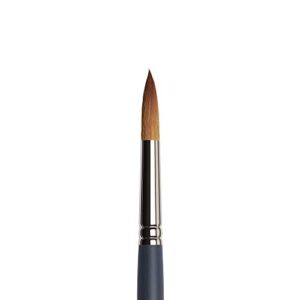
The workhorse. A round with a good belly and point can paint broad shapes when pressed and fine lines when lifted. If you buy one brush for gouache, make it a medium round.
Flat (or bright)
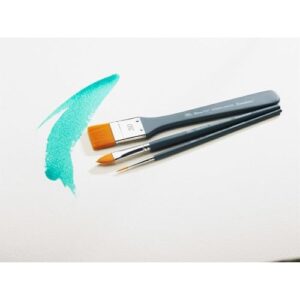
Essential for the clean, poster-flat areas gouache does so well, and for crisp straight edges like architecture. A bright is a flat with shorter hairs, which gives a little more control with thick paint.
Filbert
A flat with a rounded tip. It leaves soft-edged marks, which is useful for clouds, foliage, petals and skin, and blends adjacent colors without hard lines.
Liner or rigger
Long, thin hairs for continuous fine lines: branches, rigging, whiskers, hair strands. Thin your gouache slightly for these so it flows.
Angled flat
Good for edges that meet at angles and for tucking paint into corners. Optional, but handy for illustration.
Fan, mop and specialty shapes
Useful for specific effects such as foliage texture or large washes, but not needed for a starter kit.
Size: Choosing Brush Sizes for Gouache
Brush sizes are not standardized across brands, so a size 6 from one maker may be closer to another maker’s size 5. Use these ranges as a guide and check the hair length and width where listed.
| Paper size | Main round | Detail round | Flat |
|---|---|---|---|
| Sketchbook (A5, 5×8″) | Size 4 | Size 0 or 1 | 1/4″ |
| Standard (A4, 9×12″) | Size 6 or 8 | Size 1 or 2 | 1/2″ |
| Larger (11×15″ and up) | Size 10 or 12 | Size 2 or 3 | 3/4″ to 1″ |
A common habit is reaching for tiny brushes too early. Gouache rewards larger brushes for longer: you get smoother color and fewer overworked patches. A well-pointed size 6 can paint finer lines than many people expect.
Handle Length and Ferrule
Most gouache is painted on paper at a table, close to the work, so short handles like those on watercolor brushes are comfortable. Long handles, typical of oil and acrylic brushes, suit standing at an easel and painting at arm’s length. They work, but can feel unwieldy at a desk.
Look for a seamless, firmly crimped ferrule. Gouache that creeps into a loose ferrule dries there and pushes hairs apart, which ruins the point.
What Kind of Brush for Gouache, by Subject
Illustration and lettering
A small round with an excellent point, a liner, and a 1/4″ flat for clean fills. Synthetic sable is a good fit because it keeps sharp edges and resists wear from repeated detail work.
Landscapes and plein air
A larger round (size 8 to 10), a 1/2″ to 3/4″ flat for skies and fields, and a filbert for foliage. Travel brushes with protective caps or reversible handles are convenient outdoors.
Botanical and natural history
Fine rounds in sizes 0 to 4 with strong points. Some painters prefer natural-hair rounds here because of their capacity for long, controlled strokes.
Flat graphic and poster-style work
Flats and brights in several widths, plus an angled flat. A slightly firmer synthetic helps push heavier paint evenly to the edges.
Portraits and figures
Filberts for soft transitions, small rounds for features, and a flat for backgrounds.
Do You Need Special “Gouache Brushes”?
Not really. A few brands label brushes specifically for gouache, but any well-made soft synthetic watercolor or acrylic brush will perform. The category label matters less than the properties covered above: spring, smooth release and easy cleaning.
What does matter is whether you use traditional gouache or acrylic gouache. Acrylic gouache dries permanently, so it should go with durable synthetics you clean immediately. Keep your finest natural-hair brushes for traditional gouache and watercolor.
Brushes to Avoid for Gouache
- Very cheap craft brushes with shedding hairs. Loose hairs embed in flat color areas and are hard to remove once the paint dries.
- Brushes with trimmed, blunt tips. They leave ragged edges and cannot paint fine lines.
- Stiff bristle brushes for smooth work. They leave ridges and can scrub up the layer beneath.
- Old brushes with paint dried in the heel. These splay and release paint unevenly.
A Simple Way to Test a Brush With Gouache
Before committing to a brush, run it through this quick test on scrap paper.
- Mix a medium-value color to heavy-cream consistency.
- Paint a 2-inch square using overlapping strokes. Check whether it dries flat or streaky.
- Paint a thin line, then a thick line in one stroke by varying pressure.
- Let the square dry, then paint a second color over half of it in one pass. Check whether the first layer lifted.
- Rinse the brush and see whether all color comes out easily and the point reforms.
A good gouache brush passes every step. Most soft synthetics do; stiff or floppy brushes usually fail one or two.
Budget Guidance
You can start well with synthetic brushes at modest prices. Spend more on the one or two brushes you use most, usually a medium round and a small detail round, because a reliable point makes the biggest difference. Large flats and specialty shapes can stay inexpensive.
Natural Hair Types Explained
Natural-hair brushes are less common in gouache than in watercolor, but you will see them in sets and on store shelves. Knowing what each hair does helps you decide whether it is worth adding.
- Sable (including Kolinsky): Springy, holds a sharp point, high capacity. The premium choice for detail rounds, though expensive and slower to recover from thick paint abuse.
- Squirrel: Extremely soft and absorbent. Best for washes and wetting paper; it collapses under creamy gouache.
- Goat: Soft, holds water, often used in wide wash brushes and Asian-style brushes. Too limp for crisp gouache edges.
- Ox hair: Firmer, often used in flats. It has decent spring but does not form a fine point.
- Hog bristle: Stiff with split ends that hold thick paint. Mainly an oil and acrylic brush; in gouache it is a texture tool.
Synthetic Filament Types
“Synthetic” is not one material. Brush makers use different filaments and blends, and the label often hints at the feel.
| Label wording | Usual feel | Gouache suitability |
|---|---|---|
| Taklon / golden taklon | Smooth, medium-soft, good snap | Excellent general choice |
| Synthetic sable / sable-type | Engineered to mimic sable taper and spring | Excellent for rounds and detail |
| Synthetic squirrel / mop | Very soft, higher capacity | Washes and underlayers |
| Synthetic bristle / mongoose-type | Firm, springy | Thick gouache, texture, acrylic gouache |
| White nylon | Firm, can be springy or stiff | Fine for flats; budget sets vary |
How to Read a Brush Label
Brush handles usually carry a series number, shape and size. The series identifies a product line, so you can reorder the same brush. Shape might appear as round, flat, bright, filbert, liner, angle or a manufacturer-specific name. The size is a number for rounds and often a fraction of an inch for flats.
Product descriptions may also state the intended medium. “Watercolor,” “water media” and “all media” brushes are generally suitable for gouache. “Oil” or “acrylic” labels do not rule a brush out, but check the fiber: soft synthetics work, stiff bristles are better avoided for smooth work.
Sample Gouache Brush Kits by Budget
| Budget level | What to include | Where to spend |
|---|---|---|
| Starter | Synthetic rounds size 2 and 6, one 1/2″ flat | Choose a round with a reliable point |
| Mid-range | Rounds size 1, 4, 8; flats 1/4″ and 3/4″; one filbert; one liner | Better-quality synthetic sable rounds |
| Dedicated hobbyist | Above, plus one natural sable detail round and a wash brush for underlayers | The sable round for fine work |
Whatever the budget, prioritize a few brushes you trust over a large set of unreliable ones. A big set where half the brushes shed or splay costs more in frustration than it saves.
Matching Brush Choice to Your Gouache Brand and Consistency
Gouache brands differ in body. Some are smooth and almost fluid straight from the tube; others are stiffer and chalkier. The stiffer the paint, the more you benefit from a firmer synthetic that can push it, especially for flat fills. With softer, more fluid gouache, a softer synthetic or even a sable round glides well and leaves fewer marks.
Your working consistency matters too. Painters who dilute gouache toward a watercolor-like flow can use softer brushes with higher capacity. Painters who work thick, close to the tube consistency, often prefer short-haired brights and firmer rounds that resist bending. If brushes feel wrong, try adjusting the paint before replacing the brush; a few drops of water often solve what looks like a brush problem.
When to Upgrade a Gouache Brush
- The point no longer forms after cleaning and reshaping.
- Hairs splay at the ferrule even when clean.
- Loose hairs keep turning up in your paint.
- You consistently reach for a smaller brush because the main one will not hold an edge.
Older brushes still have uses. Retired rounds make good dry-brush and texture brushes, where a perfect point is not required.
FAQs
What kind of brush is best for gouache?
A soft-to-medium synthetic brush with good spring, in round and flat shapes. It handles gouache’s creamy body, lays down smooth color and rinses clean.
Are synthetic or natural brushes better for gouache?
Synthetics are usually more practical because they resist wear from thicker paint. Natural sable offers more capacity and a finer point, which some painters prefer for detail.
What size brush should I use for gouache?
For standard 9×12-inch paper, a size 6 or 8 round, a size 1 or 2 detail round and a 1/2-inch flat cover most needs.
Can I use oil painting brushes for gouache?
Soft synthetic oil brushes work. Stiff hog bristle brushes are poorly suited except for texture effects.
Do I need a flat brush for gouache?
It is strongly recommended. A flat makes even color blocks and straight edges much easier, which is one of gouache’s strengths.
Are short or long handles better for gouache?
Short handles suit desk work on paper, which is how most people paint gouache. Long handles are better if you paint at an easel.
Final Thoughts
The right kind of brush for gouache is not exotic: a springy soft synthetic round and flat in sizes that match your paper, plus a small round for detail. Add a filbert or liner as your subjects demand. Focus your budget on brushes with reliable points and seamless ferrules, and avoid stiff bristle and shedding craft brushes for smooth work.
When you are ready to choose, our gouache brush buying guide and top picks compares rounds, flats and complete sets so you can match a specific brush to the subjects you paint most.