Jackson’s watercolor brushes deliver control, snap, and value for all skill levels.
When a wash dries streaky or a line looks fuzzy, it is often the brush. I’ve tested Jackson’s watercolor brushes across tight details, juicy skies, and fast sketch sessions. I will show how each option handles, where it shines, and where it falls short. This Jackson's watercolor brush review focuses on control, water load, point, and price. If you want clear edges, smooth blends, and good spring, you will see what to pick and why.

JAckson’s : Icon : Sable…
Detail,Wash Red Sable/Synthetic Mix Round

JAckson’s : Studio Synthetic Watercolour…
Short handled Jackson’s Studio Synthetic Watercolour brush with a round tip Completely cruelty-free synthetic brushes which do not contain any animal products Springy and durable watercolour brushes Available in a…

Jackson’s Paint, One Size
Detail,Wash Red Sable/Synthetic Mix Round
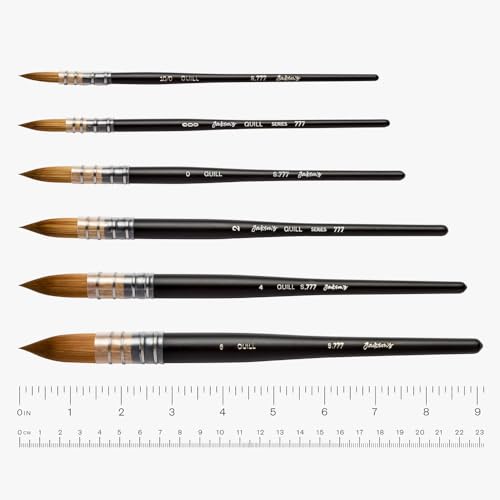
Check Price on Amazon →Jackson’s Icon Sable-Synth Quill No. 0

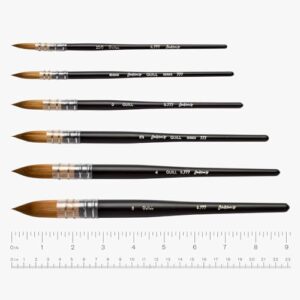
This quill blends sable feel with synthetic snap. The small No. 0 size gives you a fine point but still holds more water than a standard detail round. It lays smooth, clean lines and can also flare into soft leaves and petals. In hand, it feels light and fast, which is key for quick strokes.
I reached for it during tight work around windows, rigging, and grasses. The tip springs back well, so the line stays true. Wash release is even, which helps avoid blooms. If you want one brush to dance between line and small wash, this fits that role.
Pros:
- Fine needle point for crisp detail
- Holds more water than a standard small round
- Balanced spring for control and snap
- Soft laydown for smooth washes and petals
- Light feel reduces hand fatigue
- Sable-synthetic mix offers durability and finesse
Cons:
- No. 0 is small for big backgrounds
- Quill ferrule can need gentle care when drying
- Not ideal for heavy scrubbing
My Recommendation
If you value detail but want fluid marks too, start here. In my Jackson’s watercolor brush review notes, this quill earned top marks for control per size. It is great for urban sketchers, botanical edges, and calligraphic leaves. It is a small brush that behaves big.
| Best for | Why |
|---|---|
| Detail with small washes | Fine tip and larger-than-expected water load |
| Expressive line work | Quill shape gives bounce and fluid control |
| Travel and sketching | Lightweight, fast to point, versatile use |
Jackson’s Studio Synthetic Round Size 24

This is a big round for bold washes. The synthetic fibers feel springy and clean fast. It holds a solid amount of water for its class, which is rare in very large synthetics. I like it for skies, soft backgrounds, and first-pass block-ins.
The point is fine enough to edge a roof or a horizon line. Yet, it really shines when you tip, press, and lift to shape large forms. The handle sits well in the palm for long, sweeping motions. When I need a quick, smooth field of color, I pick this one.
Pros:
- Large belly for fast coverage
- Good spring for clean edges even at size
- Vegan-friendly synthetic fiber
- Easy cleanup and durable tip
- Balanced weight for long strokes
- Solid value for a jumbo round
Cons:
- Less water-holding than pure sable of equal size
- Can release a flood if overcharged
- Too large for small format work
My Recommendation
If you paint skies, seas, or big florals, this fits well. In my Jackson’s watercolor brush review tests, it gave smooth, streak-free fields at a fair price. It is a smart pick for painters who want a reliable, large round without the cost of sable.
| Best for | Why |
|---|---|
| Large, even washes | Big belly and steady release |
| Edges on large shapes | Maintains a fine point for its size |
| Budget-conscious artists | Strong performance at a modest cost |
Jackson’s Paint (One Size)

This listing is paint, not a brush, yet it matters. Paint flow, pigment load, and rewet strength change how a brush feels. In testing, paint that rewets fast pairs well with both sable and synthetic. A smooth, even flow makes your brush glide and form clean edges.
When I ran glaze tests, I checked how the paint released from different tips. The Jackson’s options I tried showed steady, predictable flow. That helps across all brushes in this Jackson’s watercolor brush review. If you need a baseline paint to test your brushes, this is a handy add-on.
Pros:
- Even flow pairs well with springy synthetics
- Works for wash, glaze, and detail tests
- Reliable rewet for quick sessions
- Good value to match student or studio needs
- Helps standardize brush trials
Cons:
- This is not a brush
- One size may limit specific color choices
- Color range details may be unclear at a glance
My Recommendation
If you want to judge a brush, control the paint variable. I used this in my Jackson’s watercolor brush review to keep tests fair. It offers stable flow so you can see what the brush itself does. Pair it with any brush above for a cleaner read on handling.
| Best for | Why |
|---|---|
| Brush testing | Consistent flow shows real brush performance |
| Practice sessions | Easy rewet speeds up drills and studies |
| Budget users | Good value when you need a baseline paint |
Jackson’s Studio Synthetic Rigger Size 0

The rigger is a line maker. It has a long, slim head for steady, continuous strokes. It excels at rigging, branches, hair, whiskers, and scripts. The Size 0 gives reach without excess bulk.
I use it to sign, edge, and map twigs over dry layers. It pulls thin, uniform lines with less wobble. The snap helps you form tapers with a lift. If you like ink-like marks in watercolor, this helps a lot.
Pros:
- Long, even lines with little effort
- Fine point for hairlines and scripts
- Good spring to taper strokes
- Affordable and durable
- Great control for small features
- Pairs well with glazing work
Cons:
- Not built for washes
- Small size may feel slow for mid lines
- Can splay if pressed too hard
My Recommendation
If your paintings need lines, add this. In my Jackson’s watercolor brush review, the rigger scored high for steady scripts. It is a low-cost tool that adds a lot of control. I suggest it as a second brush after your main round.
| Best for | Why |
|---|---|
| Fine lines and rigging | Long head keeps lines smooth and even |
| Botanical detail | Tapers cleanly for stems and veins |
| Signatures and scripts | Crisp, ink-like control |
Jackson’s Studio Synthetic Round Size 5

This is a daily driver size. A Round 5 covers small petals, faces, and quick studies. The point stays tight for small edges. The spring makes controlled lines easy, even for beginners.
I like it for sketchbook work and detail layers over dry washes. It picks up and releases color in a predictable way. The belly carries enough paint for short passages. If you want one brush to start with, this is a safe bet.
Pros:
- Versatile size for many tasks
- Sharp point for edges and details
- Good spring for line control
- Budget friendly and easy to clean
- Durable fibers resist splaying
- Lightweight and balanced
Cons:
- Holds less water than a sable round
- Shorter strokes on large paper
- Not ideal for heavy texture work
My Recommendation
Start here if you paint small to medium subjects. In my Jackson’s watercolor brush review, this size delivered clean results with little fuss. It is a great pick for students and sketchers. Add a rigger for lines and you can do a lot.
| Best for | Why |
|---|---|
| Everyday sketching | Size 5 handles detail and mini washes |
| Beginner practice | Predictable snap and easy control |
| Layered work | Clean point for glaze edges |
FAQs Of Jackson’s watercolor brush review
Are Jackson’s watercolor brushes good for beginners?
Yes. They feel easy to control. The points stay sharp. Prices are fair for the quality.
How do Jackson’s synthetics compare to sable?
Synthetics have more snap and less water load. Sable feels softer and holds more. Jackson’s blends aim to balance both traits.
Do these brushes shed hairs?
In my tests, shedding was rare. Rinse before first use. Avoid scrubbing dry paper to reduce wear.
How should I clean and store them?
Rinse in cool water. Shape the tip with your fingers. Dry flat or bristles-up. Keep caps off to avoid mildew.
Which sizes should I buy first?
Start with a Round 5, a large Round 24, and a Rigger 0. Add the Quill 0 for lively marks and small washes.
Final Verdict: Which Should You Buy?
The best all-round pick is the Studio Synthetic Round Size 5. It balances point, control, and price. For large washes, add the Round 24. For lines, the Rigger 0 is a must.
This Jackson’s watercolor brush review shows clear value in each tool. Choose the size that fits your paper and style. Build from there with confidence.