

PaintingProGuide is reader-supported. When you buy through links on this page we may earn an affiliate commission at no extra cost to you.
Acrylic paint is easy to clean while it is wet and stubborn once it dries, and it dries fast. That single fact shapes everything about cleaning acrylic paint brushes. The real work happens during the painting session: rinsing often, never letting paint creep up into the ferrule, and keeping brushes damp. The end-of-session wash then takes only a minute, and your brushes keep their points and edges for years.
This guide covers how to clean brushes during and after painting, how to remove dried acrylic, how to handle rinse water responsibly and how to store brushes. We then review five Amazon products that make the routine easier, including two silicone brush washing stations and brush soaps that also condition.
Quick answer: Rinse brushes every few minutes while painting, wipe them on a rag, and never leave them standing in water. At the end of the session, wash with lukewarm water and a brush soap such as General’s The Masters Brush Cleaner, reshape and dry flat. A ribbed silicone washer like the NISVACON foldable brush cleaner makes rinsing faster, and U.S. Art Supply Brush Cleaner and Restorer rescues brushes with dried paint.
Why Acrylic Is Hard on Brushes
Acrylic paint is pigment suspended in an acrylic polymer emulsion. While wet, the emulsion mixes with water. As it dries, the polymer particles fuse into a flexible plastic film that water can no longer dissolve. If that happens inside the ferrule, where bristles meet the metal, the hairs splay apart and the brush loses its point or edge. The goal of every cleaning step is to stop paint from drying where you cannot see it.
Cleaning During a Painting Session
- Load only the front half of the bristles. Dipping to the ferrule pushes paint where it is hardest to remove.
- Rinse every few minutes, even if you are using the same color, especially in warm or dry rooms.
- Use two water containers: one for the first rinse, one for a cleaner second rinse.
- Wipe after rinsing on a rag or paper towel so water does not dilute your next stroke.
- Do not leave brushes standing in water. It bends the tip and can swell wooden handles and loosen ferrules. If you must pause, lay brushes across the water container or on a damp cloth.
- Switch brushes rather than rushing to clean one while paint dries on another.
Cleaning Acrylic Brushes After Painting
- Wipe off excess paint on a rag or paper towel, squeezing from ferrule to tip.
- Rinse in lukewarm water, gently rubbing the bristles against a ribbed surface or the bottom of a container.
- Apply brush soap or a mild soap and work it into the bristles in your palm, paying attention to the area near the ferrule.
- Rinse and repeat until the lather is clear.
- Reshape the point or edge with your fingers. Conditioning brush soaps can leave a light film that helps.
- Dry flat or bristles-down. Never dry brushes upright while wet, as water runs into the ferrule.
For a faster version when you are short on time, see our guide to cleaning acrylic paint off brushes fast, and for a more detailed walkthrough, our guide on how to clean acrylic paint brushes.
How to Remove Dried Acrylic Paint From Brushes
Brush restorer soak
Dedicated brush restorers are designed to soften dried acrylic. Soak only the bristles, then work out the softened paint with a rag, comb or old toothbrush and wash with soap. Time required ranges from minutes to hours depending on how much paint has dried.
Brush soap and time
Some brush soaps can lift old dried paint if you work them in and leave them on the bristles for several hours, then rinse and repeat.
Rubbing alcohol
Isopropyl alcohol can soften dried acrylic. Dip the bristles, wait, then comb out the paint and wash thoroughly with soap. Use in a ventilated space and keep it away from the handle finish.
Harsh solvents
Stronger solvents such as acetone can remove dried acrylic but may damage some synthetic fibers, glue and handle finishes. Treat them as a last resort and test on an old brush first.
Repurpose
If a brush cannot be saved, it becomes an excellent tool for texture, stippling, dry brushing or applying gesso and glue.
Troubleshooting Brush Problems
| Problem | Likely cause | Fix |
|---|---|---|
| Bristles splay outward | Paint dried near the ferrule | Soak in restorer, comb out paint, reshape with conditioning soap |
| Tip curls to one side | Brush stood in water or dried upright | Wet, reshape, and dry flat; dipping briefly in hot (not boiling) water can help synthetic fibers recover |
| Bristles feel stiff after washing | Soap or paint residue | Rinse more thoroughly; use a conditioning brush soap |
| Hairs falling out | Loosened ferrule or glue from soaking | Avoid long soaks and hot water; retire the brush for rough work |
| Color stain remains | Strong staining pigments | Normal; does not affect performance if the brush is clean |
| Handle paint cracking | Water swelling the wood | Keep handles out of water; dry promptly |
Most of these problems trace back to two habits: letting paint reach the ferrule and leaving brushes in water. Fix those, and brushes last dramatically longer.
Handling Rinse Water Responsibly
Acrylic is a plastic once dry, so many painters avoid pouring large amounts of paint water down the drain. A common approach is to let rinse water sit in a container so pigment and solids settle, pour off the clearer water, and let the remaining sludge dry before putting it in the trash. Wiping brushes thoroughly on rags before rinsing also reduces how much paint ends up in your water. Check local guidance for disposal in your area.
Different Brushes, Different Care
- Synthetic brushes (the standard for acrylic) tolerate frequent washing well.
- Natural hair brushes can be damaged by acrylic; if you use them, clean especially thoroughly and condition.
- Detail brushes lose their points fastest. Rinse them more often and protect tips with caps. Choosing the right size helps too; see our guide to what size brush to use for detailed acrylic work.
- Large flats and mops hold a lot of paint near the ferrule; spend extra time washing them.
Our Top Picks at a Glance
- General’s The Masters Brush Cleaner and Preserver, 2.5 oz — Best everyday brush soap
- NISVACON Foldable Silicone Brush Cleaner — Best rinsing station with scrubber
- U.S. Art Supply Brush Cleaner and Restorer, 16 oz — Best for dried acrylic
- Foldable Silicone Brush Cleaner Cup with Holder — Best compact cup with drying slots
- The Masters Brush Cleaner and Preserver, 1 oz — Best travel-size brush soap
| Product | Best For | Key Spec | Key Strength | Price Tier |
|---|---|---|---|---|
| General’s The Masters, 2.5 oz | End-of-session wash | Solid cleaner and preserver | Cleans and conditions | $ |
| NISVACON Silicone Brush Cleaner | Rinsing | Foldable, textured scrubber, brush grooves | Dishwasher-safe silicone | $ |
| U.S. Art Supply Restorer, 16 oz | Dried paint | 16 oz soak solution | Large bottle | $$ |
| Silicone Cleaner Cup with Holder | Compact rinsing | Ribbed basin, drying slots | Folds flat | $ |
| The Masters, 1 oz | Travel | 1 oz, ACMI AP non-toxic | Portable | $ |
How We Chose
We chose products from Amazon listings checked in October 2026 that support each step of acrylic brush care: rinsing, washing and restoring. We compared design features such as scrubbing surfaces and drying slots, stated compatibility with acrylic, safety statements and how widely each product is reviewed by Amazon buyers. We left out an airbrush-specific cleaner and a brush set, since neither is primarily a brush cleaning product for hand painting.
- Usefulness during or after painting.
- Effectiveness claims for wet and dried acrylic.
- Material and ease of cleaning the tool itself.
- Portability and storage.
Best Products for Cleaning Acrylic Paint Brushes Reviewed
1. General’s The Masters Brush Cleaner and Preserver, 2.5 oz — Best for an everyday brush soap

The Masters is a solid brush soap that the listing says removes oils, acrylics, watercolors, stains and varnishes in one cleaning and conditioning step, for sable, bristle and synthetic brushes.
For acrylic painters, a conditioning soap restores softness to synthetic bristles that get stiff from repeated washing.
Best suited for: Acrylic painters who want a reliable end-of-session wash.
Key features:
- 2.5 oz solid cleaner
- Cleans and conditions
- For synthetic and natural brushes
Pros:
- Leaves brushes soft
- Lasts a long time
- Low price tier
Cons and limitations:
- Needs water to lather
- Slow on fully dried paint without soaking time
Buying consideration: Swirl a wet brush on the cake, lather in your palm and rinse until clear.
2. NISVACON Foldable Silicone Brush Cleaner Container — Best for a rinsing station with scrubber

NISVACON’s washer has a built-in textured scrubber at the bottom, wave-shaped grooves along the edge to keep brushes from sliding, and holder holes for different brush sizes. It opens to 8.8 by 3 inches and collapses to 8.8 by 1.2 inches. The listing describes food-grade silicone that resists solvents and stains and can go in the dishwasher.
A textured bottom loosens paint quickly during sessions, and the grooves give brushes a safe place to rest instead of standing in water.
Best suited for: Acrylic and watercolor painters who rinse often.
Key features:
- Textured scrubber base
- Brush rest grooves and holder holes
- Foldable silicone
- Dishwasher safe
Pros:
- Speeds rinsing
- Rests brushes horizontally
- Packs flat for travel
Cons and limitations:
- Silicone is flexible; keep it on a flat surface
- Single compartment
Buying consideration: Pair with a second plain cup of clean water for a final rinse.
3. U.S. Art Supply Brush Cleaner and Restorer, 16 oz — Best for dried acrylic

This 16 oz restorer is described as a cleaning solution for brushes with dried-on acrylic, oil, gouache, inks and water-based paints. The listing says to soak as needed and remove softened residue with a wipe, knife or toothbrush, with results in minutes to hours.
The larger bottle is a good choice for classrooms or painters who often rescue brushes.
Best suited for: Teachers, studios and anyone who frequently restores brushes.
Key features:
- 16 oz bottle
- Softens dried acrylic and oil
- Also for airbrushes and tools
Pros:
- Saves expensive brushes
- Large volume
- Mid price tier
Cons and limitations:
- Soaking takes time
- Follow with soap wash
Buying consideration: Soak only the bristles; avoid submerging wooden handles.
4. Foldable Silicone Paint Brush Cleaner Cup with Holder — Best for a compact cup with drying slots
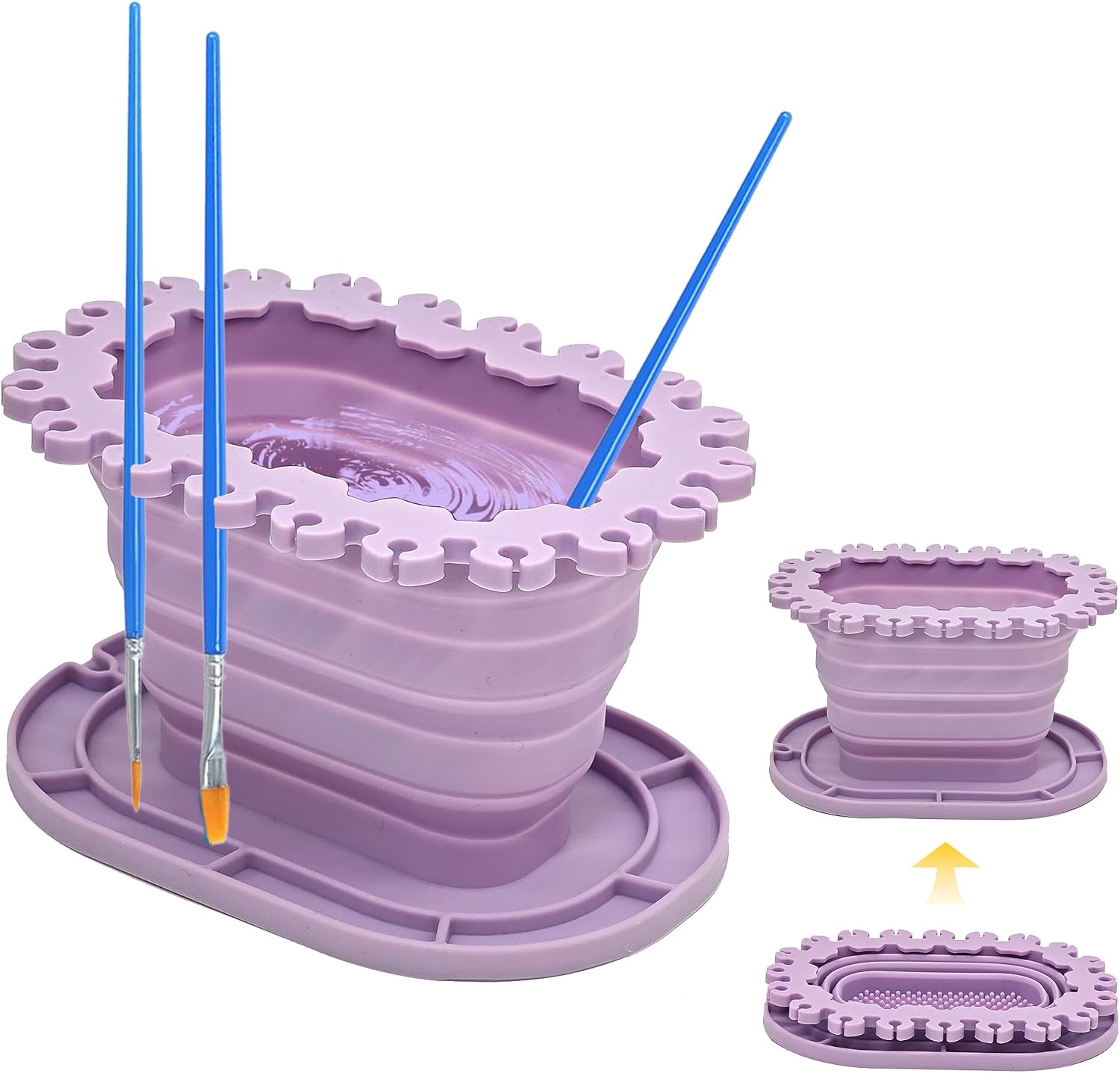
This collapsible silicone cup has a ribbed interior to loosen paint between color changes and multi-size openings that hold brushes while they drip dry. The listing advises using it on a flat surface, keeping water below the rim and not lifting it while full.
It is a tidy, portable option for small desks and plein air kits.
Best suited for: Small spaces, travel and watercolor or acrylic sessions.
Key features:
- Ribbed rinse basin
- Multi-size brush drying slots
- Folds flat
Pros:
- Compact
- Keeps brushes organized
- Low price tier
Cons and limitations:
- Flexible walls can tip if lifted when full
- Smaller capacity
Buying consideration: Empty or lower the water before moving it.
5. The Masters Brush Cleaner and Preserver, 1 oz — Best for a travel-size brush soap

The 1 oz Masters cleaner is made by General Pencil Company to ACMI AP non-toxic standards, according to the listing. It cleans and conditions in one step, is safe for synthetic and natural hair, and can remove old dried paint if left on the brush for several hours.
A small tub fits in any travel kit.
Best suited for: Plein air painters, classes and travel.
Key features:
- 1 oz
- ACMI AP non-toxic
- Cleans and conditions
Pros:
- Portable
- Gentle on fine brushes
- Low price tier
Cons and limitations:
- Small size runs out with daily use
- Not a soak solution
Buying consideration: Keep it with your travel brushes and a small towel.
Buying Guide: Choosing Acrylic Brush Cleaning Supplies
Rinsing container
Look for a textured base to loosen paint and a way to rest brushes horizontally.
Brush soap
A conditioning soap keeps synthetic bristles soft and helps them hold their shape.
Restorer
Keep a bottle for emergencies; it pays for itself the first time it saves a good brush.
Portability
Foldable silicone tools are ideal for small spaces and travel.
Easy cleaning of the tool itself
Silicone that releases dried paint and is dishwasher safe saves time.
Safety statements
Non-toxic certifications such as the AP Seal are helpful for classrooms and kids.
Storing Acrylic Brushes
Once fully dry, store brushes upright with bristles up in a cup, flat in a drawer or in a brush roll. Protect detail brushes with their caps. Keep brushes away from heat and direct sun, which can dry out natural hair and warp handles. If you travel or paint outdoors, a brush roll or a rigid case with a lid protects tips from being crushed in a bag, and a small towel lets you blot brushes dry before packing them away.
Common Mistakes to Avoid
- Letting paint dry in the ferrule. Rinse often during sessions.
- Loading paint to the ferrule. Keep paint on the front half of the bristles.
- Leaving brushes in water. Rest them flat instead.
- Using hot water. Lukewarm protects glue and bristles.
- Scrubbing against hard edges. It splays bristles; use a soft ribbed surface.
- Drying brushes upright while wet. Water runs into the ferrule.
FAQs
How do you clean acrylic paint brushes?
Wipe off excess paint, rinse in lukewarm water, wash with brush soap until the lather runs clear, reshape and dry flat or bristles-down.
How do I get dried acrylic paint out of a brush?
Soak the bristles in a brush restorer or rubbing alcohol, comb or work out the softened paint, then wash with soap. Repeat if needed.
Can I leave acrylic brushes in water?
Not for long. Standing in water bends tips and can loosen ferrules. Rest brushes flat or across the water container instead.
Is dish soap okay for cleaning acrylic brushes?
A mild soap works, but dedicated brush soaps also condition bristles and are gentler over time.
Can I pour acrylic paint water down the sink?
Many painters avoid it. Let solids settle, pour off clearer water and let the sludge dry for trash disposal, following local guidance.
How often should I rinse brushes while painting with acrylic?
Every few minutes, and whenever you change colors. In warm or dry rooms, rinse even more often.
Final Recommendation
The most effective acrylic brush care is habit: rinse often while painting and wash properly at the end. A conditioning soap like General’s The Masters handles the daily wash, while the NISVACON silicone station or the compact silicone cup with drying slots makes rinsing quicker and keeps brushes out of standing water. Keep U.S. Art Supply Brush Cleaner and Restorer on hand for brushes that slipped through, and pack the 1 oz Masters for painting away from home.




