PaintingProGuide is reader-supported. When you buy through links on this page we may earn an affiliate commission at no extra cost to you.
An acrylic paint primer does three jobs: it seals the surface so paint does not soak in, it gives the surface “tooth” so paint grips, and it creates an even, usually bright ground that makes colors look their best. For canvas, paper, wood and board, that primer is almost always acrylic gesso. For miniatures, models and slick surfaces, a dedicated acrylic surface primer does the same job with better adhesion on plastic, resin and metal.
This guide explains when you need a primer, which type suits which surface, how to apply it properly and how to tint or texture it. Then we review seven primers and gessos on Amazon, from a small heavy-body tub to a half-gallon classroom jug and a miniature primer designed for airbrushing.
Quick answer: For general acrylic painting on canvas, wood and paper, a liquid white gesso like U.S. Art Supply White Gesso or Liquitex Basics Gesso is all you need. For texture, use a heavy gesso such as the BLUEBIRD Heavy Gesso tub. To keep a surface visible under paint, choose a clear gesso like Liquitex Professional Clear Gesso. For miniatures and models, use a dedicated primer such as Vallejo White Surface Primer.
Do You Need to Prime Before Acrylic Paint?
| Surface | Prime? | Why |
|---|---|---|
| Store-bought primed canvas or canvas panel | Optional | Already primed; an extra coat smooths texture or reduces absorbency |
| Raw canvas or linen | Yes | Seals fibers and creates a paintable ground |
| Wood and MDF | Yes | Stops absorption and helps block substances in wood from discoloring paint |
| Paper and cardboard | Recommended | Reduces buckling and soaking; brightens colors |
| Rocks | Optional | A white base makes colors brighter |
| Miniatures, plastic, resin, metal | Yes, with a surface primer | Acrylic struggles to grip slick surfaces without primer |
| Glass and glazed ceramic | Special prep | Clean, degrease, and use products made for non-porous surfaces |
For non-porous surfaces such as glass, see our guide on using acrylic paint on glass jars, which covers cleaning, primers and curing.
Types of Acrylic Primer
White acrylic gesso
The standard ground for acrylic and oil painting. It dries matte, flexible and bright, with a little tooth. Liquid gessos brush on smoothly; thicker ones cover in fewer coats.
Heavy or impasto gesso
Thick gesso that holds brush or knife marks. Use it to build texture into the ground or to fill wood grain before sanding smooth.
Clear gesso
Dries transparent with tooth, so the surface (wood grain, a drawing or colored paper) shows through. It is ideal when you want to paint over a sketch or keep natural wood visible.
Black and colored gesso
Dark grounds make colors glow and suit night scenes and dramatic lighting. You can also tint white gesso with a little acrylic paint to make a toned ground.
Miniature and model surface primers
Formulated for plastic, resin and metal figures, often designed for airbrushing. They level into thin, hard films that do not obscure fine detail.
Spray primers
Convenient for large or detailed objects but must be applied outdoors or with good ventilation. Choose ones labeled for the surface and for use under acrylic.
How to Apply Acrylic Gesso Properly
- Prepare the surface. Dust off canvas; lightly sand and wipe wood; flatten paper with tape.
- Stir, do not shake. Shaking adds bubbles. Thin the first coat slightly with water if the gesso is thick, so it penetrates.
- Apply thin coats. Use a wide, soft flat brush or a foam brush. Two or three thin coats beat one thick coat.
- Alternate direction. Brush the first coat horizontally, the second vertically, for an even surface.
- Dry between coats. Wait until each coat is dry to the touch.
- Sand if you want smooth. Fine sandpaper between coats gives a glassy surface for detail; skip sanding for more tooth.
- Let it cure. Give the final coat several hours, ideally overnight, before painting.
How Much Primer Will You Need?
Coverage depends on surface absorbency and how thickly you brush, so treat these as rough planning guides rather than exact figures. A 16 oz bottle of liquid gesso will typically prime a good stack of small and medium panels with two or three coats each. Raw wood and cardboard drink more primer than pre-primed canvas. Heavy gesso goes less far because it is applied thickly. If you prime regularly or for a group, a larger bottle or half-gallon jug is more economical, while a small tub is perfect for occasional texture work or touch-ups.
Tinting, Texturing and Toning Your Ground
- Toned ground: mix a small amount of acrylic into gesso for a warm gray, ochre or sienna ground that makes value judgments easier.
- Textured ground: apply heavy gesso with a palette knife, comb or sponge and let it dry before painting.
- Smooth panel: five or six thin, sanded coats on board give a near-porcelain finish for fine detail.
- Clear over drawing: clear gesso over a pencil or ink drawing lets you paint without losing your lines.
Priming well makes simple projects look professional; our simple acrylic painting ideas for beginners and guide to DIY wall art with acrylic both benefit from a good ground.
Our Top Picks at a Glance
- U.S. Art Supply White Gesso, 500 ml — Best all-round white gesso
- Liquitex BASICS Acrylic Gesso, 16 oz — Best one-coat value gesso
- BLUEBIRD Heavy Gesso Primer, 5.3 oz Tub — Best for textured grounds
- Liquitex Professional Gesso, Clear, 8 oz — Best clear primer
- Vallejo White Surface Primer, 60 ml — Best for miniatures and models
- Handy Art Little Masters White Gesso, 64 oz — Best bulk gesso for classrooms
- BLUEBIRD Studio Liquid Gesso, 16.9 oz — Best budget liquid gesso
| Product | Best For | Key Spec | Key Strength | Price Tier |
|---|---|---|---|---|
| U.S. Art Supply White Gesso | All-round | 16.9 oz, matte, thins with water | Bright white, flexible | $ |
| Liquitex BASICS Gesso | Value priming | 16 oz, satin | One coat often enough | $ |
| BLUEBIRD Heavy Gesso | Texture | 5.3 oz tub, matte | Thick body | $ |
| Liquitex Professional Clear Gesso | See-through ground | 8 oz, matte | Keeps surface visible | $$ |
| Vallejo Surface Primer White | Miniatures | 60 ml, matte, airbrush-ready | Hard, thin film | $ |
| Handy Art White Gesso | Bulk and classrooms | 64 oz, AP certified | Allergen-free statement | $$ |
| BLUEBIRD Studio Liquid Gesso | Budget liquid | 16.9 oz, matte | Low cost per ounce | $ |
How We Chose
We compared Amazon listings checked in October 2026 on primer type (white, clear, heavy, surface primer), stated surfaces and media, finish, volume, safety statements and how widely each product is reviewed by Amazon buyers. We included one miniature primer because models and figures need a different formulation from canvas gesso.
- Primer type and intended surface.
- Coverage and number of coats suggested.
- Volume relative to price tier.
- Safety certifications such as ASTM D4236 or the AP Seal.
Best Acrylic Paint Primers and Gessos Reviewed
1. U.S. Art Supply White Gesso Primer, 16.9 oz — Best for an all-round white gesso

U.S. Art Supply’s 500 ml acrylic gesso is designed to prime surfaces for acrylic and oil. The listing describes an opaque white, matte finish with tooth, smooth flowing consistency for streak-free application, quick drying between coats and the option to thin with water. It lists canvas, paper, wood and board among surfaces.
It is a dependable everyday gesso for painters who prime regularly.
Best suited for: Most acrylic painters preparing canvas, wood or paper.
Key features:
- 16.9 oz / 500 ml
- Opaque white, matte
- Thins with water
- Flexible, crack-resistant film
Pros:
- Large volume
- Easy to brush
- Mid price tier
Cons and limitations:
- Multiple coats needed on raw wood
- Not for slick surfaces
Buying consideration: Thin the first coat slightly so it soaks into raw surfaces.
2. Liquitex BASICS Acrylic Gesso, 16 oz — Best for one-coat value priming

Liquitex Basics Gesso is a value acrylic gesso for acrylic and oil painting. The listing states one coat is usually all that is required, that it is intermixable with Liquitex Professional colors and mediums, and that it conforms to ASTM D4236.
Good coverage per coat saves time when you prime many surfaces.
Best suited for: Students and painters priming panels in batches.
Key features:
- 16 oz / 473 ml
- Satin finish
- Intermixable with Liquitex products
- ASTM D4236
Pros:
- Strong coverage
- Trusted brand
- Low-mid price tier
Cons and limitations:
- Satin rather than matte finish
- Raw wood still benefits from two coats
Buying consideration: Tint with a little acrylic paint for a toned ground.
3. BLUEBIRD Heavy Gesso Primer, 5.3 oz Tub — Best for textured grounds
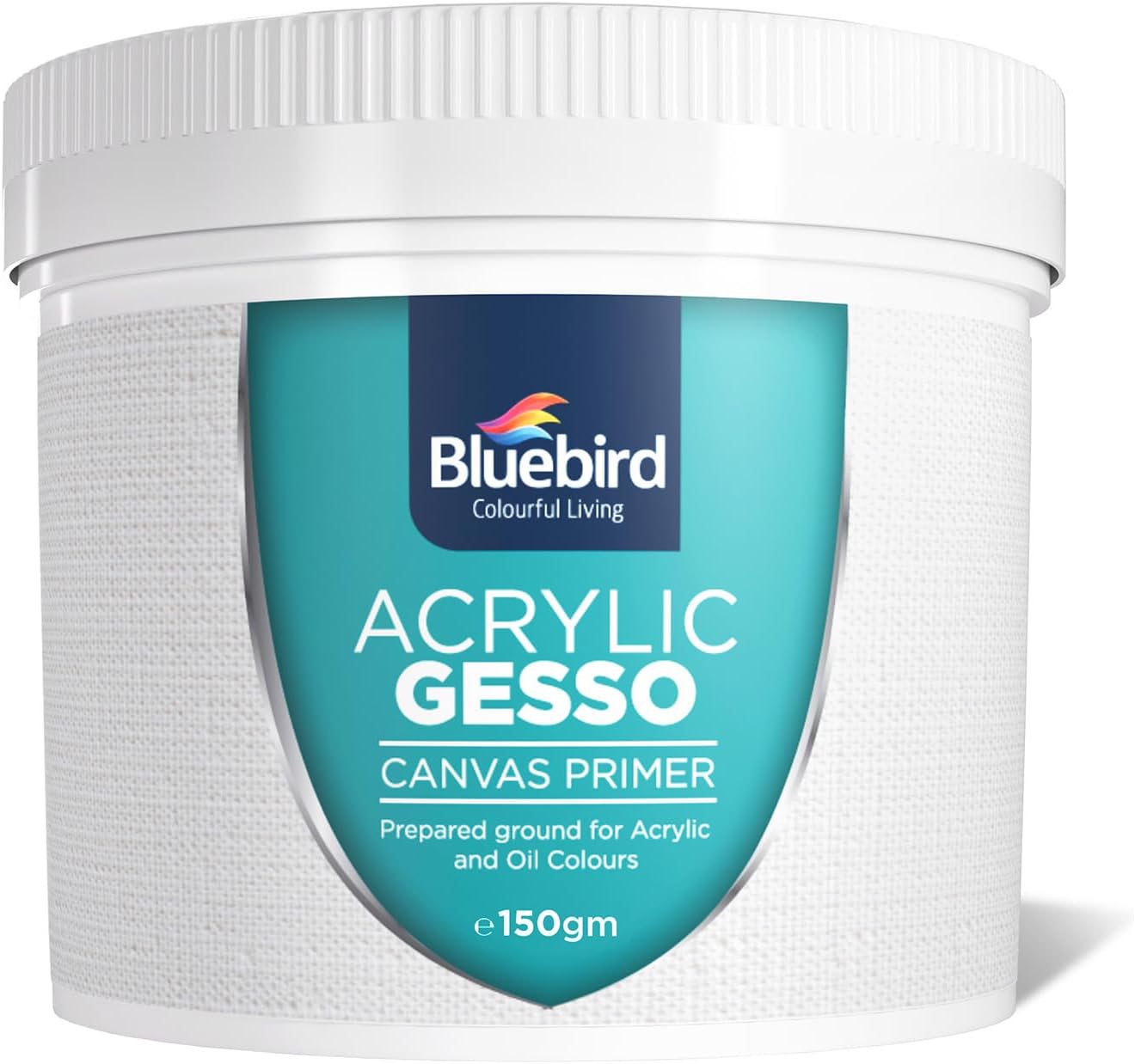
BLUEBIRD’s heavy gesso comes in a 150 g tub and is described as artist grade with superior coverage, excellent adhesion and quick drying, for canvas, wood, paper and more. The listing positions it for both acrylic and oil.
A thick gesso in a tub is easy to scoop with a palette knife for textured grounds.
Best suited for: Painters who want texture or need to fill grain and imperfections.
Key features:
- 5.3 oz / 150 g tub
- Heavy body, matte
- For acrylic and oil
Pros:
- Lowest price tier
- Easy knife application
- Good for texture
Cons and limitations:
- Small quantity
- Too thick for smooth, detailed grounds without thinning
Buying consideration: Thin a portion with water for smooth areas and use it straight for texture.
4. Liquitex Professional Gesso, Clear, 8 oz — Best for a clear primer

Liquitex Professional Clear Gesso is listed as a surface prep medium with a matte finish, intermixable with Liquitex Professional colors and mediums and conforming to ASTM D4236. The listing notes it is fluid in nature.
Clear gesso is the go-to when you want a sketch, collage or natural wood grain to remain visible under your paint.
Best suited for: Mixed-media artists and painters working over drawings or wood.
Key features:
- 8 oz / 237 ml
- Clear, matte
- Fluid consistency
- ASTM D4236
Pros:
- Keeps surfaces visible
- Adds tooth to slick papers
- Professional line
Cons and limitations:
- Smaller bottle
- Mid price tier for its size
Buying consideration: Test over pencil first; heavy brushing can smudge graphite before it is sealed.
5. Vallejo Surface Primer, White, 60 ml — Best for miniatures and models

Vallejo’s acrylic surface primer is formulated for airbrushing, with recommended compressor settings around 15 to 20 PSI according to the listing. It dries quickly into a hard, resistant film and can be used straight or diluted with Vallejo airbrush thinner. The listing advises applying it to a degreased surface.
Miniature painters need a primer that grips plastic, resin and metal without hiding fine detail.
Best suited for: Miniature, model and figure painters.
Key features:
- 60 ml / 2.02 fl oz
- Matte white
- Airbrush-formulated
- Non-toxic, non-flammable per listing
Pros:
- Thin, hard film preserves detail
- Fast drying
- Low price tier
Cons and limitations:
- Designed for airbrush; brushing needs care
- Not for canvas priming
Buying consideration: Wash and dry models before priming; mold-release residue prevents adhesion.
6. Handy Art Little Masters White Gesso, 64 oz — Best for bulk use and classrooms

Handy Art’s half-gallon gesso is described as thick, bright white, creamy and easy to apply on canvas, wood, panels, glass, metal, MDF and cardboard. The listing states it is AP certified, non-toxic and free from latex, dairy, casein, soy, egg, gluten, peanuts and tree nuts, and made in the USA.
For classrooms or painters who prime large canvases, bulk volume and clear safety information are a strong combination.
Best suited for: Schools, art groups and large-format painters.
Key features:
- 64 oz pourable bottle
- AP certified, allergen-free statement
- Matte white
- Made in USA
Pros:
- Huge volume
- Strong safety documentation
- Upper-mid price tier with low cost per ounce
Cons and limitations:
- Large container to store
- Pour into a smaller cup for daily use
Buying consideration: Decant into a lidded jar for everyday priming to keep the main jug clean.
7. BLUEBIRD Studio Acrylic Gesso, 16.9 oz — Best for budget liquid gesso

BLUEBIRD Studio Gesso is a liquid primer for canvas, wood, paper and other surfaces. The listing describes a smooth matte surface for paint adhesion, suitability for acrylic, oil and mixed media, and quick, even drying.
Liquid gesso brushes out thinly and evenly, which is ideal for smooth panels and paper.
Best suited for: Budget-conscious painters who prime often.
Key features:
- 16.9 oz bottle
- Liquid consistency, matte
- For acrylic, oil and mixed media
Pros:
- Low price tier
- Smooth application
- Good volume
Cons and limitations:
- Thinner body may need extra coats for full opacity
- Fewer safety details in listing
Buying consideration: Apply three thin coats for an opaque, even ground.
Buying Guide: How to Choose an Acrylic Paint Primer
Match primer to surface
Gesso for canvas, wood, paper and board; surface primer for miniatures and plastic; special products for glass and glazed ceramic.
White, clear or dark
White for bright colors, clear to keep the surface visible, black or tinted for dramatic or toned grounds.
Body
Liquid gesso for smooth coats; heavy gesso for texture and filling grain.
Finish
Matte gesso gives the most tooth; satin is smoother.
Volume
Small tubs for occasional use; 16 oz bottles for regular painters; half gallons for classrooms and large work.
Safety information
Look for ASTM D4236 or the AP Seal, especially for use with children.
Common Mistakes to Avoid
- One thick coat. It can crack, sag or dry unevenly.
- Shaking the bottle. Stir instead to avoid bubbles.
- Priming dusty or greasy surfaces. Clean first.
- Painting before gesso cures. Give it several hours or overnight.
- Using canvas gesso on miniatures. It can obscure detail; use a surface primer.
- Ignoring the back of wood panels. Sealing both sides helps prevent warping.
FAQs
What is the best primer for acrylic paint?
Acrylic gesso is the best primer for canvas, wood, paper and board. For miniatures and plastics, use an acrylic surface primer made for those materials.
Is gesso the same as primer?
Acrylic gesso is a type of primer designed for art surfaces. It seals, adds tooth and creates a bright, even ground.
How many coats of gesso do I need?
Two to three thin coats for raw surfaces is typical. Some gessos, such as Liquitex Basics, state that one coat is often enough on suitable surfaces.
Can I paint acrylic without primer?
On pre-primed canvas, yes. On raw wood, paper or cardboard, paint will soak in and colors will look dull without a primer.
What is clear gesso used for?
Clear gesso adds tooth while letting the surface show through, so you can paint over drawings, collage or wood grain.
How long should gesso dry before painting?
It is often dry to the touch within an hour, but letting it cure several hours or overnight gives the best results.
Final Recommendation
For everyday priming of canvas, wood and paper, U.S. Art Supply White Gesso and Liquitex Basics Gesso are the most practical choices, with Basics offering strong one-coat coverage. Choose BLUEBIRD Heavy Gesso for texture, Liquitex Professional Clear Gesso when you want the surface to show through, and BLUEBIRD Studio for a budget liquid option. Classrooms and large-format painters will get the best value from Handy Art’s half-gallon jug, and miniature painters should use Vallejo’s surface primer rather than canvas gesso.