Many people want to start painting, but they worry it’s too hard. Acrylic painting is a great choice for beginners. The paint dries fast, is easy to use, and you can fix mistakes quickly. You don’t need expensive tools or a big studio to get started.
In fact, you can create beautiful art with just a few colors, a brush, and your imagination.
But what should you paint when you’re new? Choosing simple ideas helps you learn the basics and build confidence. This article will give you creative, easy-to-follow ideas for your first acrylic paintings. You’ll also find practical tips, common mistakes to avoid, and answers to questions beginners often ask.
Whether you want to decorate your home, make a gift, or just relax, these acrylic painting ideas will help you begin your journey.
Why Choose Acrylic Painting As A Beginner?
Acrylic paints are known for their versatility and forgiving nature. If you make a mistake, you can paint over it after just a few minutes. You can use acrylics on paper, canvas, wood, and even fabric. The supplies are easy to find and not too expensive. Water is all you need for cleaning your brushes.
Here are some reasons beginners love acrylics:
- Quick drying time makes layering and corrections simple.
- Low odor compared to oil paints.
- Vivid colors that stay bright after drying.
- Mixes well with water or special mediums.
You can experiment without fear, and your skills will improve faster.
Essential Supplies For Simple Acrylic Painting
Starting with acrylics doesn’t mean buying everything in the art store. Here’s what you really need:
- Acrylic Paints: Buy a starter set or a few basic colors—red, blue, yellow, white, and black. These let you mix many shades.
- Brushes: Get a small, medium, and large brush. Choose flat and round shapes for variety.
- Palette: A plastic plate or even a piece of foil works.
- Canvas or Paper: Acrylic paper is affordable. Small canvases (8×10 inches) are easy to handle.
- Water Cup: For cleaning brushes.
- Rags or Paper Towels: For wiping brushes or fixing mistakes.
- Apron or Old Clothes: Acrylic paint can stain.
Beginners often forget that they can paint on cardboard or even old wood pieces. This makes practice less stressful.

Credit: www.paintingtogogh.com
12 Simple Acrylic Painting Ideas For Beginners
You don’t need to copy famous artists. Start with easy ideas to learn brush control, blending, and color mixing. Here are twelve beginner-friendly ideas with tips for each.
1. Colorful Abstract Shapes
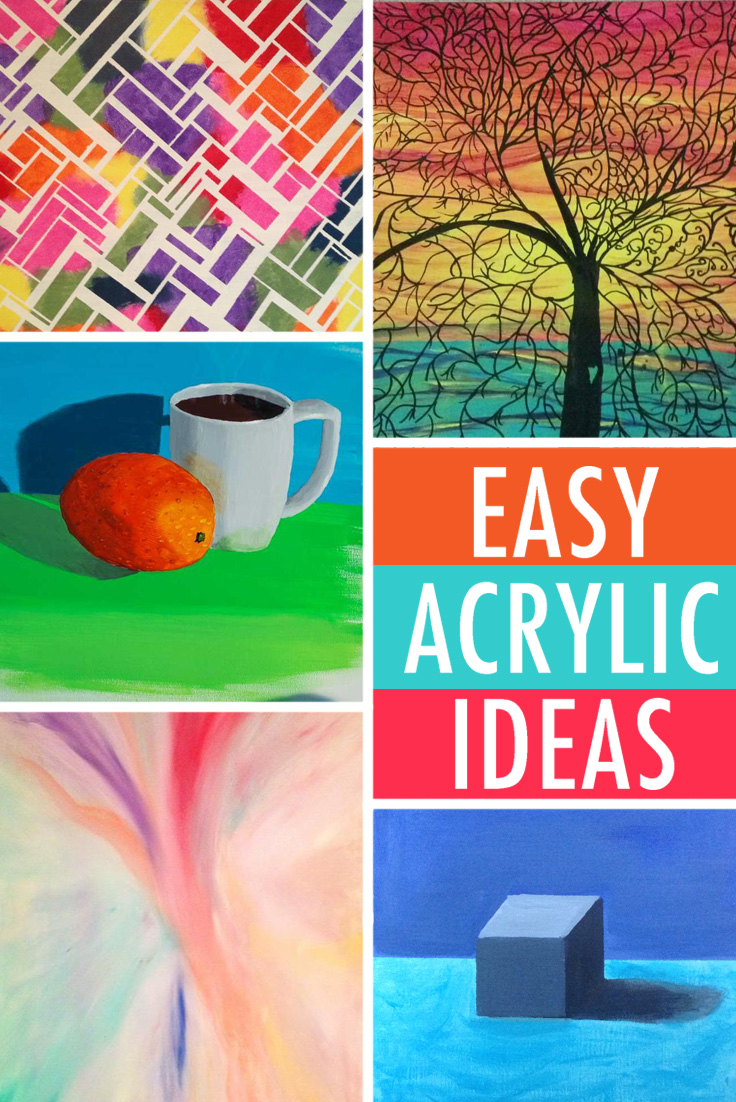
Abstract painting is perfect for beginners. Just play with shapes and colors. Paint circles, squares, lines, or random blobs. Try overlapping colors to see how they mix.
Tip: Use painter’s tape to create clean edges between colors.
2. Silhouette Against A Sunset
Create a simple sunset with horizontal strokes of yellow, orange, pink, and purple. When dry, paint a black shape in front, like a tree, animal, or person.
Tip: Blend the sky colors while wet for a soft look. Use a photo as a reference for the silhouette.
3. Simple Flowers In A Vase
Paint a table, a basic vase, and a few colorful flowers. Focus on round petals and simple leaves.
Tip: Keep the background plain. Use a thin brush for the flower stems.
4. Mountain Landscape
Paint layers of blue, gray, and white to make distant mountains. Add a few simple trees with vertical strokes.
Tip: Start with the background and paint forward. Use lighter colors for distant objects.
5. Cactus In A Pot
Draw a basic pot and a green cactus shape. Add white dots or lines for the cactus needles.
Tip: Use different shades of green by mixing yellow and blue.
6. Beach Scene
Paint a blue sky, a yellow sand area, and the blue-green ocean. Add a few white lines for waves.
Tip: Use a dry brush to create texture in the sand.
7. Rainbow Over Hills
Paint rolling hills in green shades. Add a bright rainbow with simple curved lines.
Tip: Use a small brush for the rainbow stripes to keep edges clean.
8. Starry Night Sky
Fill the canvas with dark blue or black. Flick white paint for stars and add a moon or planet.
Tip: Use a toothbrush for a realistic star effect.
9. Fruit Bowl
Paint a bowl shape and fill it with simple circles or ovals for apples, oranges, or bananas.
Tip: Use white to add highlights and make the fruit look round.
10. Simple Tree In Four Seasons
Paint the same tree four times, each with different colors for spring, summer, fall, and winter.
Tip: Try using a cotton swab for dabbing leaves and blossoms.
11. Geometric Patterns
Divide your canvas into triangles or rectangles. Fill each section with a different color.
Tip: Painter’s tape helps make straight lines.
12. Cute Animal Faces
Draw a large oval for the head. Add basic shapes for ears, eyes, and nose. Paint it as a cat, dog, or bear.
Tip: Keep features large and simple. Use soft colors for a friendly look.
Practical Tips For Better Results
Many beginners worry their painting won’t look “right.” Here are some practical tips to help you improve:
- Less is more: Don’t use too much paint on your brush.
- Layer slowly: Wait for each layer to dry before adding more.
- Practice blending: Mix colors on a test paper before using them on your painting.
- Clean brushes often: This keeps colors bright and prevents muddy effects.
A common mistake is scrubbing the canvas with a dry brush. Always add a little water to your brush for smoother strokes.
Simple Color Mixing Guide
Understanding color mixing saves money and helps your paintings look better. With just a few colors, you can make many shades.
Here is a basic mixing guide:
| Colors Mixed | Resulting Color | Where to Use |
|---|---|---|
| Red + Yellow | Orange | Sunsets, fruits |
| Blue + Yellow | Green | Leaves, grass |
| Blue + Red | Purple | Flowers, night skies |
| White + Any Color | Lighter Shade (Tint) | Clouds, highlights |
| Black + Any Color | Darker Shade (Shade) | Shadows, depth |
Experimenting with different mixes helps you learn which colors look good together. Beginners often avoid mixing but it’s a valuable skill.
Comparing Canvas, Paper, And Board For Beginners
Choosing the right surface makes painting easier. Here’s a quick comparison:
| Surface | Pros | Cons |
|---|---|---|
| Canvas | Feels professional, lasts long | Costs more, needs space |
| Acrylic Paper | Cheap, easy to use, portable | Not as durable |
| Cardboard/Wood | Recyclable, fun for practice | Can warp, needs sealing |
If you’re just starting, acrylic paper is a smart choice. Save canvases for special projects.
Credit: www.craftsy.com
Step-by-step Example: Painting A Simple Sunset
Let’s walk through a basic acrylic painting idea: a sunset with a silhouette.
- Prepare your surface: Tape the edges for clean borders.
- Paint the sky: Start at the top with dark blue, then blend in purple, pink, orange, and yellow as you move down.
- Blend quickly: Acrylic dries fast, so work while the paint is wet.
- Let it dry: Wait 10-15 minutes.
- Add the silhouette: Use black paint to make a tree, mountain, or animal shape in the foreground.
- Final touches: Add a few highlights or details if you like.
This painting teaches blending, layering, and creating contrast—all important beginner skills.
Common Mistakes To Avoid
Learning is faster if you know what problems to watch for. Here are mistakes beginners often make:
- Using too much water makes colors thin and weak.
- Not letting layers dry causes colors to mix in unwanted ways.
- Pressing too hard damages brushes and canvas.
- Ignoring the background makes paintings look flat.
- Not cleaning brushes can ruin them quickly.
Remember, every painter makes mistakes. The key is to keep going and enjoy the process.
How To Build Your Confidence
It’s normal to feel unsure at first. Many beginners compare their work to professionals and feel discouraged. Here’s how to stay motivated:
- Celebrate small wins: Even a simple painting is an achievement.
- Paint regularly: Practice helps you improve faster.
- Share your work: Family or friends can give useful feedback.
- Join a group: Online forums or local classes offer tips and support.
Confidence grows with every painting you finish. Your unique style will appear over time.
Taking Your Skills Further
Once you’re comfortable, try more complex ideas. Here are a few ways to challenge yourself:
- Add more details, like shadows or reflections.
- Try painting from real life or photos.
- Mix your own colors for every part of your painting.
- Use palette knives for texture.
You can also explore online resources or tutorials. For example, the WikiHow Acrylic Painting Guide offers step-by-step advice and new project ideas.

Credit: www.youtube.com
Frequently Asked Questions
What Is The Best Acrylic Paint Brand For Beginners?
Many brands are good. Liquitex Basics, Winsor & Newton Galeria, and Arteza offer quality at a low price. Choose one you can afford and find in your local store.
How Do I Clean My Brushes After Painting?
Wash brushes with warm water and mild soap right after use. Swirl them in the water, then rinse until the water is clear. Dry flat to keep the shape.
Why Does My Paint Dry Too Fast?
Acrylics dry quickly. Work in small sections, use a spray bottle to mist your palette, and add a slow-drying medium if needed.
Can I Use Acrylic Paint On Any Surface?
Acrylics work on many surfaces—canvas, paper, wood, fabric. For smooth or shiny surfaces, prime them first with gesso for better paint adhesion.
How Can I Make My Paintings Look More Professional?
Focus on clean edges, good color mixing, and interesting compositions. Practice, patience, and learning from others will help your work improve.
Simple acrylic painting is an enjoyable way to express yourself and learn new skills. You don’t need talent to start—just curiosity and a willingness to try. With these ideas and tips, your first steps in acrylic painting can be fun and successful.
Don’t be afraid to experiment. Every painting teaches you something new, and soon you’ll be surprised by what you can create.