Spring is a season full of energy, color, and new beginnings. For many people, it’s the perfect time to start a new hobby or try something creative. Painting is one of the most relaxing and rewarding ways to capture the beauty of spring. But if you’re a beginner, it can be hard to know where to start. The good news is that you don’t need to be an expert to make something beautiful. With the right ideas and a few simple techniques, anyone can create lovely spring paintings.
This guide is packed with easy spring painting ideas that are ideal for beginners. Whether you want to use watercolor, acrylics, or even just colored pencils, you’ll find inspiration and tips to help you get started. Plus, you’ll learn about basic materials, step-by-step instructions, and common mistakes to avoid. Let’s bring your spring scenes to life, one brushstroke at a time.
Why Paint In Spring?
Spring is a favorite subject for artists because of its vivid colors, fresh flowers, and changing landscapes. Trees turn green, flowers bloom, and the sky often looks brighter. Painting these scenes can help you notice the small details in nature and express your own feelings about the season.
For beginners, spring offers many simple shapes and patterns. For example, painting a single flower or a line of green hills is much easier than a crowded winter scene with lots of detail. Even if you make mistakes, the bright colors and loose forms of spring landscapes are very forgiving.
Essential Painting Materials For Beginners
Before you begin, you’ll need a few basic materials. You don’t have to buy expensive supplies. Here’s what you should have:
- Paint: Watercolor or acrylic paints are best for beginners. Watercolors are easy to clean, while acrylics dry quickly and are good for layering.
- Brushes: Start with a small round brush, a medium flat brush, and a detail brush.
- Paper or Canvas: Watercolor paper for watercolors, canvas or mixed media paper for acrylics.
- Palette: For mixing colors.
- Cup of Water: For washing brushes.
- Pencil and Eraser: For sketching outlines.
- Paper Towels: To blot and clean up.
Even with just a few colors and brushes, you can make beautiful spring paintings.
Credit: stepbysteppainting.net
12 Easy Spring Painting Ideas For Beginners
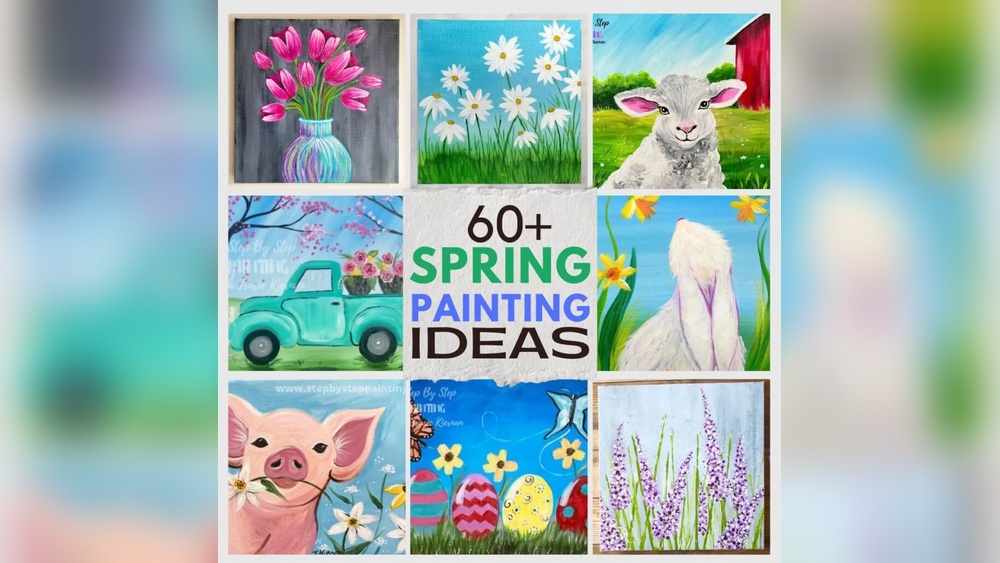
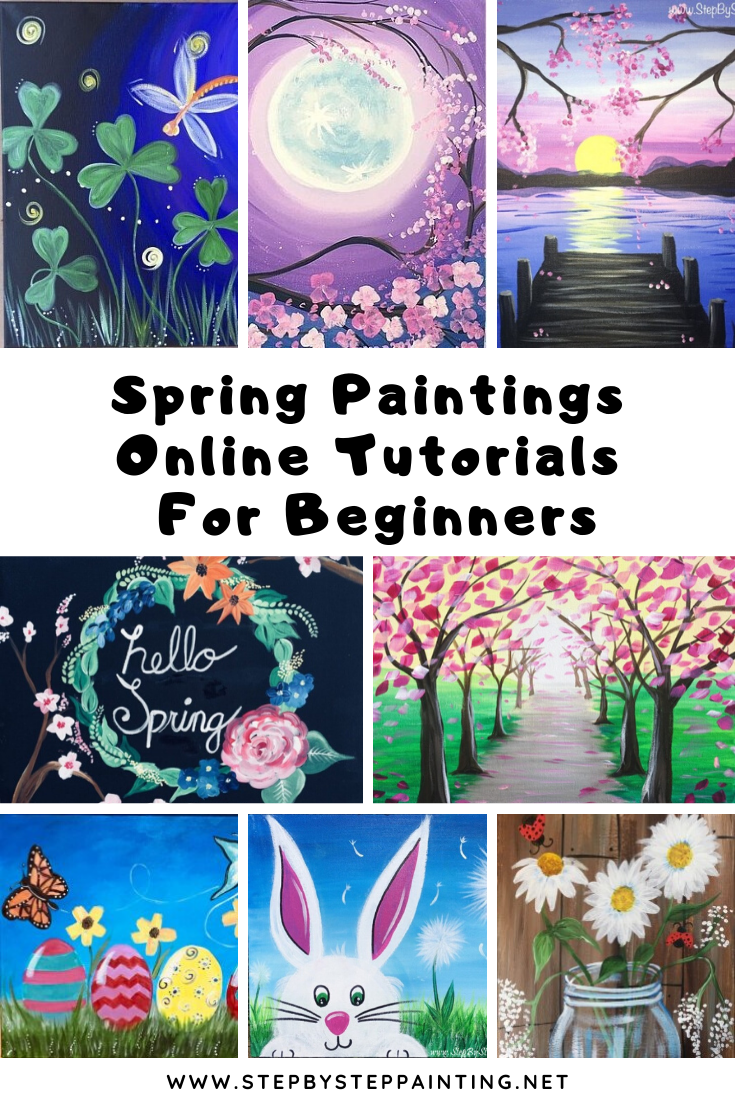
Here are some simple, creative ideas to get your inspiration flowing. Each one can be finished in one or two sessions, even if you’re just starting out.
1. Simple Spring Flowers
Paint a group of tulips, daisies, or daffodils using basic shapes. Start by sketching circles for the flower heads and lines for the stems. Use bright yellows, pinks, and greens. If you use watercolors, let the colors blend naturally for a soft effect.
Pro tip: Don’t worry about making each petal perfect. Overlapping colors and loose lines often look more lively.
2. Cherry Blossom Branch
Cherry blossoms are a classic spring theme. Use a thin brush or even a toothpick for the branch. Add clusters of pale pink dots for the flowers. You can fill the background with a light blue wash to suggest sky.
Beginner insight: The blossoms don’t have to be detailed—just dots and a few small petals create the effect.
3. Rainy Day Umbrella
Spring often brings rain. Paint a bright umbrella with blue raindrops falling around it. Start with a semicircle for the umbrella, fill it with your favorite color, and add simple stick lines for the handle. Use quick, short strokes for the rain.
Common mistake: Beginners sometimes forget to let the paint dry between layers. Wait before adding raindrops to avoid smudging.
4. Spring Meadow
Paint a field of wildflowers using the tip of your brush to make dots and small lines. Start with a green base, then add color for flowers—yellow, white, purple, or red. You can use the side of a sponge to dab on texture for grass.
5. Butterfly On A Leaf
Sketch a big, simple leaf and paint a colorful butterfly on top. Use two wings with mirror patterns, and add black lines for detail. Keep the background plain so the butterfly stands out.
Non-obvious tip: Outline your butterfly with a thin black marker after the paint dries for sharp contrast.
6. Bird Nest With Eggs
Draw a round nest using loose, criss-crossing lines in brown and tan. Add three or four blue or white eggs inside. Surround the nest with green leaves or pink flowers for a real spring feel.
7. Blossoming Tree
Paint the trunk with a flat brush, then use the tip to dab on clusters of pink, white, or purple for blossoms. The more random your dots, the more natural the tree will look.
Beginner insight: If your tree looks too stiff, try painting it upside down to loosen your hand.
8. Ladybug On Grass
A ladybug is easy and bright. Make a red oval, add black dots, and draw a line down the middle for wings. Paint simple green blades of grass around it.
Practical tip: Use a cotton swab to make perfect dots for the ladybug’s back.
9. Spring Landscape With Hills
Paint rolling green hills under a blue sky. Add simple white clouds and a few trees. If you want, use a toothbrush to flick on yellow and white for wildflowers.
10. Bunny In A Field
Draw a cute bunny shape—two long ears, round body, and a small nose. Paint the bunny gray or brown and add a patch of colorful flowers nearby.
11. Tulip In A Vase
Draw a simple vase, then add a few tulip stems coming out. Use bright colors for the flowers and simple shapes for the leaves. You can experiment with shadows by adding darker blue or gray under the vase.
12. Rainbow After Rain
Paint a curved rainbow across your page, then fill the bottom with green grass or flowers. Use soft, blended colors for the rainbow and let your brush strokes show for a playful look.
Step-by-step: Painting A Simple Spring Flower
Let’s walk through a beginner project: a yellow daffodil.
- Sketch a small circle for the center and six oval petals around it.
- Paint the petals light yellow, leaving some white for highlights.
- Paint the center a darker orange-yellow.
- Add a green stem and leaf.
- Let dry, then outline with a thin marker if you want crisp edges.
This project is a great way to practice brush control and color blending.
Comparing Paint Types For Spring Art
It’s normal to wonder which paint to use as a beginner. Here’s a quick comparison:
| Paint Type | Pros | Cons | Best For |
|---|---|---|---|
| Watercolor | Easy to clean, soft colors, blends well | Paper can wrinkle, mistakes are hard to fix | Flowers, skies, light effects |
| Acrylic | Dries fast, covers mistakes, works on many surfaces | Paint dries on brushes quickly | Bold shapes, layering, texture |
| Colored Pencils | Easy control, no mess | Colors are less bright, can’t blend as much | Detail, small projects |
Most beginners enjoy watercolors because they feel forgiving and are easy to set up and clean.
Simple Color Mixing Tips
Spring paintings look best with fresh, bright colors. But you don’t need a huge set of paints. With just a few colors, you can mix most shades you need.
- Mix yellow and blue for green leaves and grass.
- Add a touch of red to yellow for orange flower centers.
- Mix white with any color for a pastel spring look.
- For shadows, use a little blue or purple instead of black.
A common mistake is using colors straight from the tube. Mixing helps your painting look more natural and less flat.
Avoiding Common Beginner Mistakes
Even simple spring paintings can go wrong if you’re not careful. Here are mistakes to watch out for:
- Painting on thin paper: Use thicker paper to avoid wrinkling, especially with watercolors.
- Not letting layers dry: Wait for one layer to dry before painting over it, or colors may bleed together.
- Using too much water: Your colors can look faded. Test your brush on scrap paper first.
- Overworking an area: Too many brush strokes can make colors muddy. Try to finish with fewer strokes.
- Forgetting light direction: Decide where the light comes from, and add lighter and darker areas for depth.
How To Find Inspiration For Spring Paintings
If you’re not sure what to paint, take a walk outside or look at spring photos online. Try these ideas:
- Notice the colors and shapes in your garden or local park.
- Take photos of flowers, birds, or rainy windows.
- Use your imagination—paint a fantasy spring scene with unusual colors.
- Look at children’s books for simple, bold art styles.
You can also join beginner painting groups online or follow step-by-step videos to learn new techniques. For more inspiration, check out the ideas on the WikiHow Painting Guide.

Credit: feelingnifty.com
Table: Quick Reference For Spring Painting Subjects
To help you decide what to paint next, here’s a handy subject reference:
| Subject | Difficulty | Main Colors | Best Tools |
|---|---|---|---|
| Tulips | Easy | Red, yellow, green | Round brush, watercolor |
| Cherry Blossoms | Easy | Pink, brown, blue | Detail brush, acrylic |
| Butterflies | Medium | Blue, orange, black | Fine brush, colored pencils |
| Rainy Umbrella | Easy | Any bright color | Flat brush, acrylic |
| Bird Nest | Medium | Brown, blue, green | Round brush, watercolor |
Finishing And Displaying Your Spring Art
When your painting is dry, sign your name in the corner. You can frame your artwork, hang it with clips, or give it as a gift. If you want to share online, take a photo in good light—natural daylight works best.
Remember, every painting is practice, and it’s normal to see improvement with each one.

Credit: www.youtube.com
Frequently Asked Questions
How Do I Choose Which Spring Painting Idea To Start With?
Pick a subject that feels simple and fun to you. Flowers, umbrellas, and rainbows are great first choices because they use basic shapes and colors.
What Is The Easiest Paint Type For Beginners?
Most beginners find watercolor easiest, but acrylic is also good if you like bold colors. Try both to see which you enjoy more.
How Can I Fix A Mistake In My Painting?
With acrylics, let the paint dry and go over the mistake with a new color. With watercolors, blot gently with a clean, wet brush. Remember, small mistakes often make art more interesting.
How Do I Make My Spring Colors Look Brighter?
Use less water for stronger color, and always mix a little white for pastel effects. Layer colors for more depth, but let each layer dry first.
Where Can I Find More Beginner Painting Tutorials?
Many free guides and videos are online. Try the WikiHow Painting Guide for step-by-step help.
Spring is the perfect time to try painting, especially for beginners. The season’s fresh colors and simple shapes give you plenty of room to experiment and enjoy. Remember, art is about expression, not perfection—so relax, have fun, and let your creativity bloom.