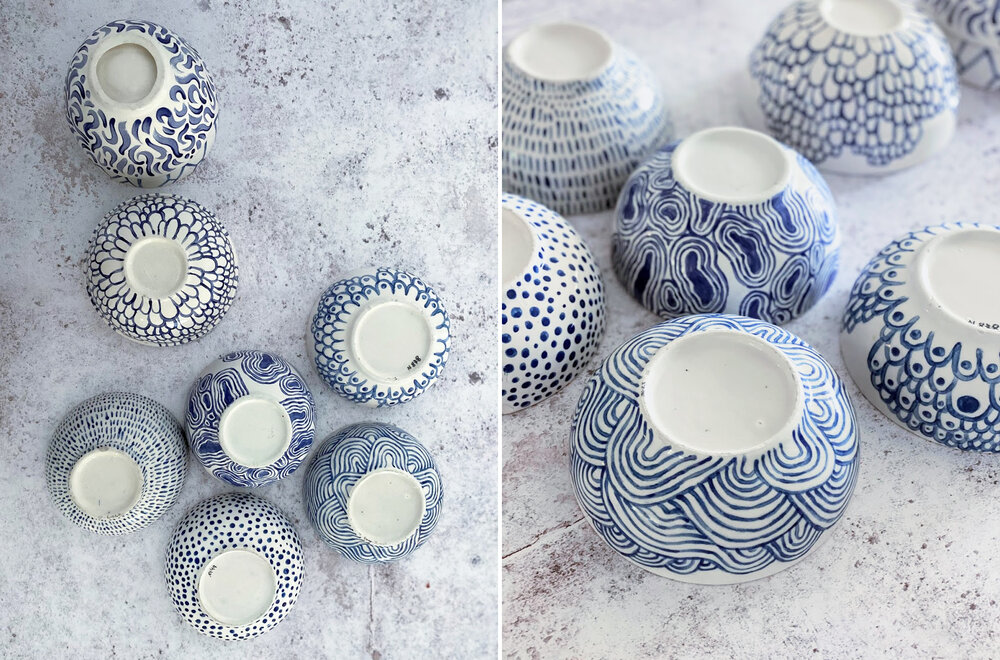
Quick answer: Good ceramic painting ideas include polka-dot and stripe mugs, botanical leaf prints, watercolor-style floral bowls, geometric triangle plates, mandala coasters, sgraffito-look line art, ombre planters and personalized name plates. Choose designs based on the paint you have: underglaze for bisque that will be kiln-fired, and multi-surface acrylic or enamel paint for already-glazed pieces at home. Simple shapes with bold color usually look best on curved ceramic surfaces.
Ceramics are an unusual canvas. They curve, they get handled and washed, and the finished surface can be glossy, matte or raw. The best ceramic painting ideas work with those qualities instead of fighting them: designs that wrap around a mug, patterns that hide small wobbles, and color choices that suit the finish you will end up with.
Below you will find more than 20 ideas sorted by difficulty, plus a quick primer on which paint suits which surface, color palette suggestions, and a step-by-step method for a first project. Paint choice matters a lot on ceramics, so if you have not picked yours yet, our comparison of the best paints for ceramic painting explains which types suit kiln-fired versus home-cured projects.
Before You Start: Match the Idea to the Surface
Ceramic painting falls into two broad camps, and the idea you choose should match the one you are in.
| Surface | Paint type | Finishing | Food-safe potential |
|---|---|---|---|
| Bisque (unglazed, once-fired clay) | Underglaze or glaze | Clear glaze, then kiln firing | Yes, if glazes are rated food-safe and fired correctly |
| Already-glazed ceramic (store-bought mugs, plates) | Enamel, porcelain or multi-surface acrylic paint | Air-dry, often followed by oven-curing per label | Usually decorative only, or keep paint away from lip and food surfaces |
| Unglazed decor (terra-cotta, plaster-like pieces) | Craft acrylic | Sealer or varnish | No; decorative only |
Paint-your-own-pottery studios use bisque and underglaze. Home projects on dollar-store mugs use enamel or acrylic paint labeled for glass and ceramics. Always follow the paint label for curing and dishwasher claims.
Ceramic Painting Ideas for Beginners
These need no drawing skill, forgive mistakes and finish in an hour or two.
1. Polka-dot mug
Dip the end of a pencil eraser, a dowel or a round foam dauber into paint and stamp dots in rows or randomly. Use two or three sizes for depth. Dots hide the curve of a mug better than straight lines do.
2. Painted-tape stripes
Wrap low-tack tape around a planter or vase in bands, paint between them, and peel while the last coat is still slightly tacky for clean edges. Try thin and thick stripes alternating.
3. Dipped-edge look
Paint just the bottom third of a mug or bowl in a solid color, with a slightly irregular top edge. It imitates a dipped glaze and looks deliberate even if the line wanders.
4. Fingerprint hearts or flowers
Press painted fingertips to make petals or hearts. A good choice for gifts and kids’ projects.
5. Simple sponge texture
Dab a sea sponge or crumpled cosmetic sponge in two related colors for a speckled, stoneware feel.
6. One-word mug
Write a single word, like a name, “coffee” or “hello”, in a paint pen designed for ceramics. Lightly pencil guidelines first; graphite wipes off most glazed surfaces.
Intermediate Ceramic Painting Ideas
7. Botanical leaf prints
Brush paint onto the back of a real leaf (ferns and herbs with strong veins work well), press it onto the ceramic, and lift. Overlap two or three leaves in different greens.
8. Watercolor-style florals
On bisque, thinned underglazes can be layered to mimic loose watercolor petals. On glazed pieces, translucent enamel paints thinned with the brand’s medium give a similar effect. Keep shapes loose; this style relies on soft edges.
9. Geometric triangles
Use tape to mask out a triangle pattern on a plate rim, then fill each shape with a different color from a limited palette. Peel and touch up.
10. Scalloped rims
Paint a row of small semicircles along the edge of a bowl, then outline each with a fine brush or paint pen in a darker shade.
11. Mandala coasters
Ceramic tiles make perfect coasters. Start with a center dot and build rings of dots and petals outward. Rotating the tile as you work keeps rings even.
12. Ombre planter
Blend a color from dark at the base to light at the rim by adding white in stages. On a pot, work in horizontal bands and soften each join with a dry brush.
13. Animal faces
Turn mugs into cats, foxes or pandas by painting simple ears near the rim and a face on one side. Keep features small and spaced widely for a cute look.
Advanced Ceramic Painting Ideas
14. Sgraffito-look line art
True sgraffito means scratching through a layer of slip or underglaze on leather-hard or bisque clay. On a bisque piece, apply an even coat of dark underglaze, let it dry, then scratch a design with a stylus to reveal the lighter clay. Glaze and fire as usual.
15. Delft-style blue and white
Use one blue in several dilutions to paint windmills, flowers or scrolling vines. The single-color restriction makes it look cohesive and classic.
16. Folk-art florals
Practice comma strokes and teardrop petals on paper first, then build flowers in bold primaries with white highlights.
17. Landscape wrap-around mug
Paint a horizon line all the way around: mountains, trees or a city skyline. The handle can become a tree trunk or a lamppost.
18. Faux marble
Over a white or cream base, drag a fine liner with thin gray paint in wobbly veins, then soften some with a damp brush and add a few gold accents.
19. Portrait or pet silhouette
Trace a simplified silhouette from a photo using transfer paper, then fill in with a single dark color for a striking gift.
Seasonal and Gift Ideas
- Holiday ornaments: ceramic bisque ornaments painted with snowflakes, wreaths or names and dates.
- Spring planters: pastel stripes or small daisies for herb pots.
- Halloween candy bowls: black base with orange pumpkins or white ghosts.
- Personalized name plates: a child’s name and birth date painted around a plate rim, best done on bisque with food-safe glaze if it will be used.
- Handprint keepsakes: a small dish with a child’s painted handprint and the year.
Ceramic Paint Palette Ideas
Color choice can make a simple design look polished. These palettes work well on ceramics because they suit both glossy and matte finishes.
| Palette name | Colors | Works for |
|---|---|---|
| Coastal | Navy, sky blue, sand, white | Stripes, waves, fish, Delft style |
| Terracotta modern | Rust, blush, cream, olive | Planters, geometric designs, arches |
| Garden | Sage, moss, butter yellow, soft pink | Botanicals, florals, leaf prints |
| Bold folk | Red, cobalt, mustard, black, white | Folk florals, mandalas |
| Neutral speckle | Charcoal, warm gray, oatmeal | Sponge texture, dipped edges |
Keep to three to five colors per piece. On curved surfaces, a tight palette makes slight imperfections look like part of the style.
How to Paint a Ceramic Mug: Step by Step
This method is for a store-bought glazed mug and home-cure paint.
- Clean the surface. Wash with dish soap, dry, then wipe with rubbing alcohol to remove fingerprints and oils. Paint grips poorly to greasy glaze.
- Plan the design. Sketch on paper, then mark key points on the mug with a pencil or washable marker.
- Keep away from the lip. Leave roughly the top 3/4 inch (about 2 cm) unpainted where your mouth touches, unless the paint is explicitly rated food-safe for that use.
- Apply thin coats. Thick coats are more likely to peel or bubble during curing. Let each coat dry as the label directs before adding the next.
- Add details last. Use a fine liner brush or ceramic paint pen for outlines and lettering.
- Air-dry fully. Many paints recommend a waiting period, sometimes 24 hours or more, before curing.
- Cure according to the label. Some paints need baking in a home oven; the general approach is to place the piece in a cold oven, heat to the stated temperature, bake for the stated time, then let it cool inside the oven so it does not crack from sudden temperature change.
- Wait before washing. Hand-wash gently unless the paint specifically claims dishwasher durability after curing.
Painting Bisque at a Pottery Studio: What Changes
Paint-your-own-pottery studios use a different process from home projects, and a few ideas behave differently there.
- Colors look different before firing. Underglazes often look chalky and pale when wet and only reach their true color after the clear glaze is fired. Studios usually display fired sample tiles; use those, not the bottle color, to choose.
- Coats matter. Most underglazes need about three coats for solid, even color. One coat often fires streaky or translucent, which can be a nice watercolor effect if planned.
- Do not paint the foot. The bottom ring that touches the kiln shelf must be left bare, or glaze can fuse the piece to the shelf.
- Sharp lines blur slightly. Firing can soften very fine lines. Make line details a little bolder than you think they need to be.
- Wax resist works well. Painting wax resist on bisque before color lets you create crisp white patterns that stay unpainted.
How to Choose an Idea That Suits the Object
| Object | Ideas that suit it | Avoid |
|---|---|---|
| Mugs | Wrap-around bands, dots, animal faces, single words | Large detailed scenes that get hidden by the handle |
| Flat plates | Rim patterns, center motifs, Delft scenes | Paint where knives will scratch (on home-cured paint) |
| Bowls | Inside bottom medallions, outside stripes, scallops | Heavy detail on curved inner walls |
| Planters | Ombre, geometric, terracotta palettes | Paint on the inside where soil and water sit |
| Tiles | Mandalas, lettering, small landscapes | Very thick paint that chips at the edges |
Common Mistakes
- Skipping the alcohol wipe. Oils from hands cause peeling.
- Using craft acrylic on items that will be washed. Standard acrylic is not durable on glazed ceramic without a proper medium or sealer.
- Painting where food or lips touch with paint not rated for it.
- Putting a cold piece in a hot oven. Thermal shock can crack ceramics.
- Overloading the brush. Thick paint drips on curved surfaces and dries unevenly.
- Too many colors. Busy designs look messy on small, curved objects.
Tips for Better Results
- Use a lazy Susan or turntable to rotate pieces smoothly while painting bands.
- Wipe mistakes immediately with a damp cotton swab; once cured, they are hard to remove.
- Test colors on the bottom of the piece or a spare tile first, since many ceramic paints change slightly after curing.
- Rest your painting hand on a folded towel to steady it on curved areas.
FAQs
What are easy ceramic painting ideas for beginners?
Polka dots, taped stripes, dipped-edge designs, sponge textures, fingerprint flowers and single-word lettering are all beginner-friendly. They need no drawing skill and forgive small mistakes.
What kind of paint do you use on ceramics?
Use underglaze or glaze on bisque pieces that will be kiln-fired. For already-glazed items at home, use enamel or multi-surface paint designed for glass and ceramics, cured as the label directs.
Can you use acrylic paint on ceramic?
Regular craft acrylic will stick to unglazed ceramic for decorative pieces if sealed, but it is not durable on glazed or washed items. Paints formulated for ceramic surfaces hold up much better.
Is painted ceramic food safe?
Only if the paint or glaze is specifically labeled food-safe and applied and fired or cured as directed. When in doubt, keep paint off eating and drinking surfaces and treat the piece as decorative.
How do I keep paint from peeling off a ceramic mug?
Clean with alcohol before painting, apply thin coats, let the paint dry fully, cure it exactly as the label says and hand-wash gently afterward.
What should I paint on a ceramic plate?
Plates suit rim designs such as scallops, vines or geometric bands, as well as center motifs like a single large flower, a mandala or a Delft-style scene.
Final Thoughts
The most successful ceramic painting ideas are simple shapes in a tight color palette, matched to the right paint for your surface. Start with dots or stripes, move on to leaf prints and mandalas, and save landscapes and sgraffito for when your hand feels steady. When you are ready to buy supplies, our guide to choosing paint for ceramic projects breaks down the options for durability and finish.