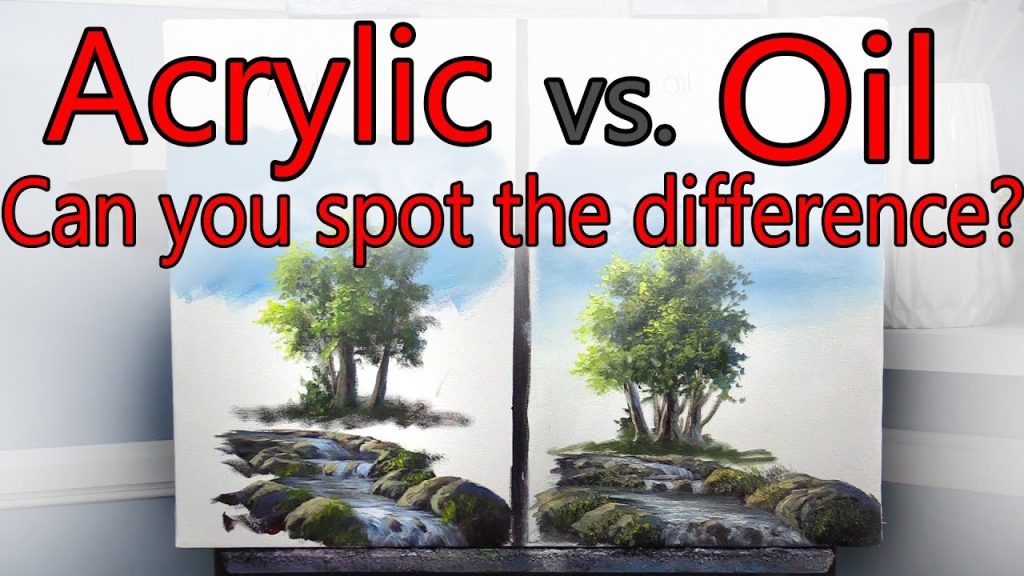
Oil dries slow with rich blending; acrylic dries fast with bright, durable layers.
If you have ever wondered what's the difference between oil and acrylic painting, you are in the right place. I have spent years switching between both. I know what each medium does well, and where it can trip you up. In this guide, I explain what's the difference between oil and acrylic painting in clear, simple terms, with examples you can use in your next piece.

The core differences at a glance
Oil and acrylic paint look similar in the tube, but they behave very differently. The binder, the solvent, and the dry time shape every choice you make on the canvas.
Here are the key contrasts you will feel right away:
- Binder and solvent. Oil paint binds pigment in drying oils. Acrylic paint suspends pigment in water-based polymer.
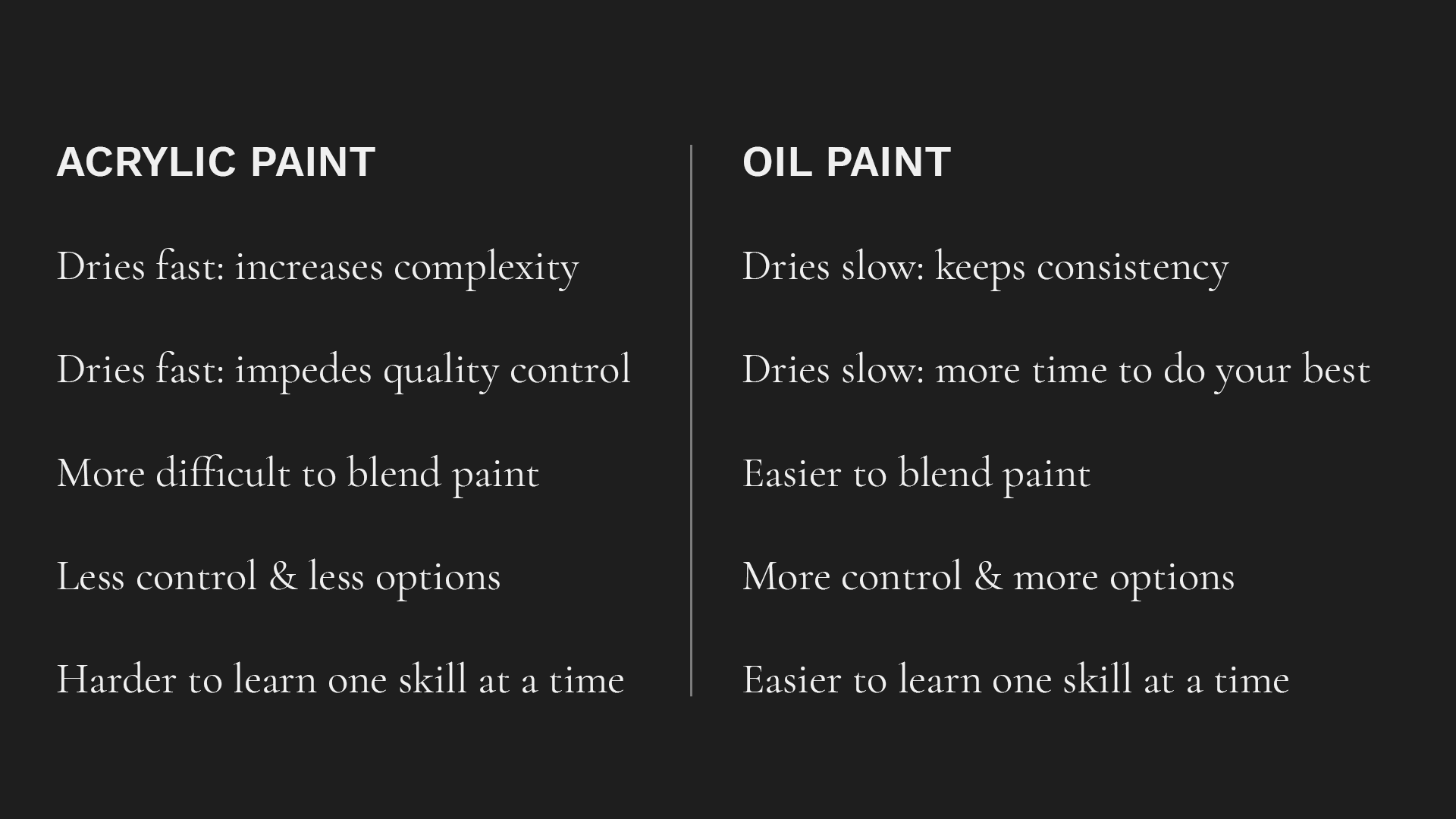
- Drying time. Oils stay wet for hours to days. Acrylics can dry in minutes.
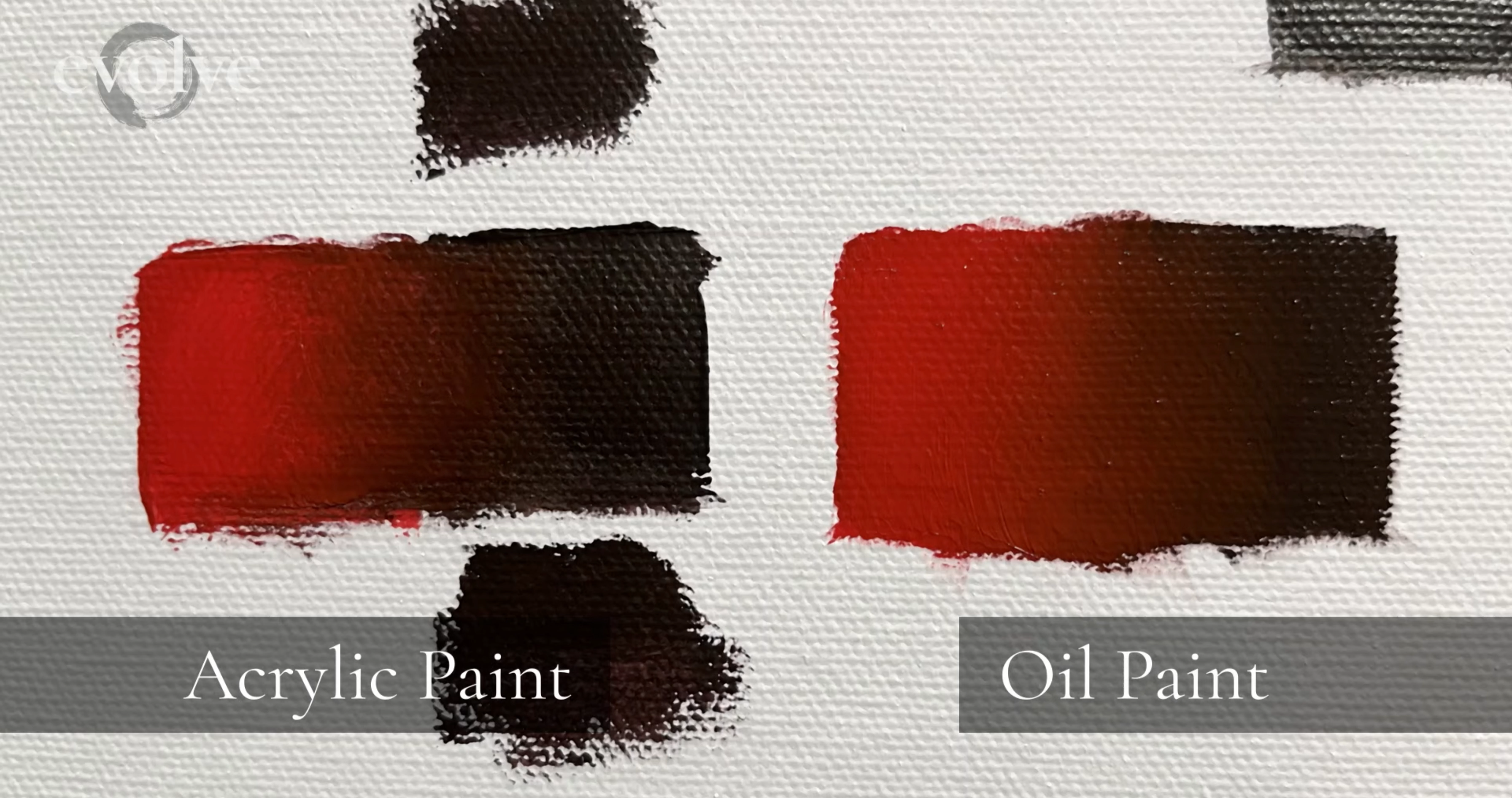
- Rework and blending. Oils blend like butter on the canvas. Acrylics need layers or additives for soft blends.
- Finish and color shift. Oils dry with a rich sheen and little shift. Acrylics often dry darker and more matte.
- Cleanup. Oils need solvents or oil for cleanup. Acrylics clean with water when wet.
- Health and safety. Oil solvents can give off fumes. Acrylics are water-based, but some mediums have mild VOCs.
- Longevity. Oil paintings can last centuries. Acrylics are newer but very strong when used with quality pigments.
- Cost and pace. Oils move slow and reward patient work. Acrylics move fast and suit quick, layered builds.
Drying time and working time: your daily workflow
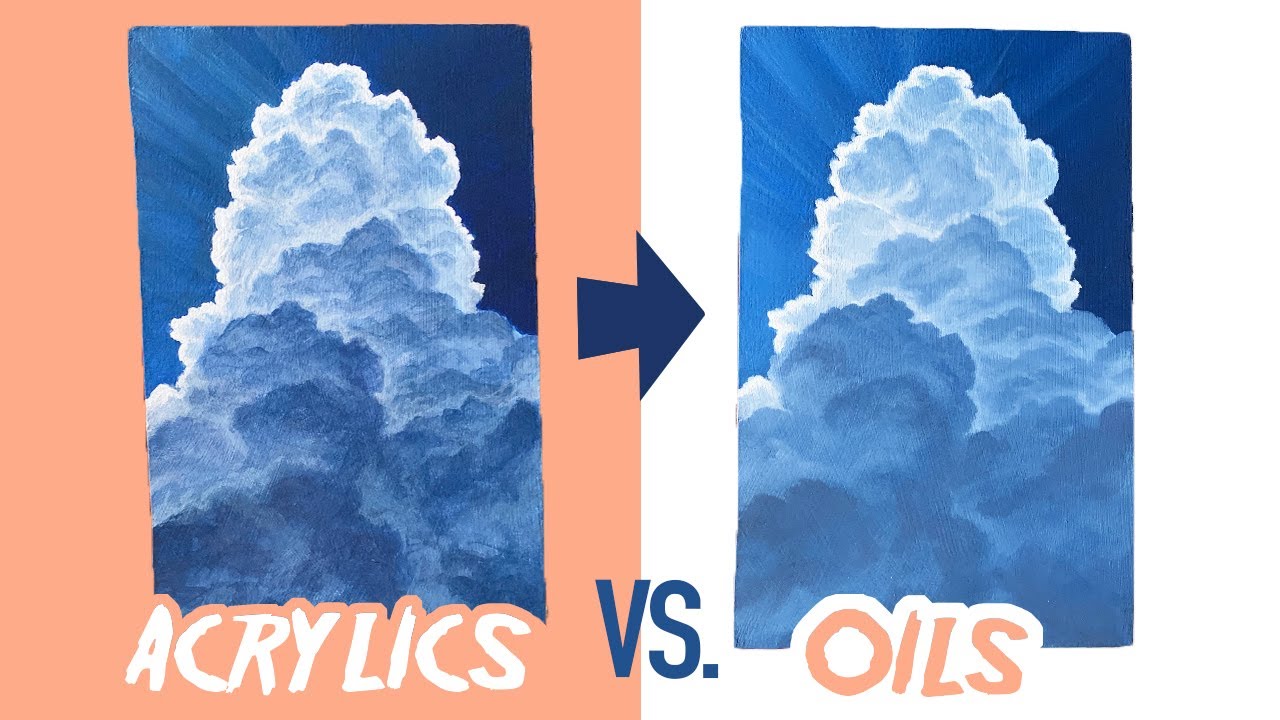
Dry time is the heart of what's the difference between oil and acrylic painting. Oils give you a long open time. You can blend edges for hours. You can push and pull color all day. I often set an oil portrait aside, then return at night to soften the cheek or lift a highlight.
Acrylics lock in fast. That speed helps you layer quickly. It also means edges can dry before you are ready. Add a retarder or a slow-dry medium if you want more time. A light mist from a spray bottle helps too, but do not flood the surface.
One note from my studio. When I paint skies, oils let me merge blues with perfect gradation. With acrylics, I build soft blends with thin layers and a large, damp brush. Both look great. The path to that result is just different.

Color, finish, and the acrylic color shift
Oils show depth and glow due to the oil binder. They stay close to the wet color you see on the palette. Acrylics often dry darker because water leaves the film. Many acrylic colors also dry more matte than they look when wet.
You can manage this shift with a few steps:
- Use higher quality paint. Brands with more pigment show less shift.
- Add gloss medium to match wet and dry sheen.
- Varnish when fully cured to unify gloss and restore depth.
If a client needs exact color, I choose oils or I swatch acrylic mixes and let them dry first. That small step has saved me many repaints.

Layering rules, fat-over-lean, and film strength
This is where technical care matters. In oil painting, follow fat over lean. Lean means more solvent and less oil. Fat means more oil. Each new oil layer should have a bit more oil than the one under it. This helps the top layers stay flexible as the whole film cures. Skip this, and you risk cracks later.
Acrylics have a different rule. Think thin to thick and flexible to less flexible. Let each layer dry fully. Heavy acrylic layers can trap water and cause issues. Acrylics form a strong, flexible film, so they handle thick impasto well when built right.
For glazing, both shine. Oils use a touch of medium for transparent veils of color. Acrylics use gloss medium or glazing liquid. Keep layers thin, even, and dry between passes.
Surfaces and prep: canvas, panels, and paper
Support choice shapes handling and durability. Canvas is classic for both. Panels are stable and great for detail. Heavy watercolor paper also works well, especially for acrylics.
Grounds matter:
- Acrylic gesso works for both acrylic and oil painting.
- Oil ground gives a slicker feel for oils and glowing blends.
- Do not apply acrylic paint over an oil ground or over oil paint.
- Seal raw wood to stop support-induced discoloration in acrylics.
I love acrylic gesso for mixed media because it grips collage and pencil. For portraits in oil, I reach for oil ground. Skin blends feel better on that smooth surface.

Archival durability and conservation insights
From a museum view, oils are proven. Great oil works have lasted for centuries. That said, they age and yellow in low light and can crack if painted without care. Acrylics are newer but tough. The film is flexible and resists cracking. The catch is dust and scuffs. Acrylics can be sticky and grab dirt. Cleaning needs care because water can mark the surface.
Use lightfast pigments in both. Avoid fugitive colors in important works. A removable varnish adds UV protection and a unified finish. Always wait for full cure before varnish. Oils need months. Acrylics often need a few days to weeks, based on thickness.
Health, safety, and cleanup
Safety is a big part of what's the difference between oil and acrylic painting. Traditional oil painting often uses solvent. Ventilate your studio. Keep rags in a metal can with water, as oily rags can self-ignite. You can also go solvent-free. Use safflower or walnut oil for brush cleaning and a gel medium for paint.
Acrylics clean up with water while wet. Some gels and sprays can have mild fumes, so keep air moving. Never pour paint water down a sink without proper filtering. Let solids settle and trash them. Your pipes will thank you.
Brush care tip. With oils, wipe first, then oil-rinse, then soap. With acrylics, wash right away. Dried acrylic in a ferrule is forever.

Costs, tools, and workflow efficiency
Costs vary by brand and pigment. In general, artist-grade oils are pricey per tube, but the slow pace means less waste. Acrylics can be budget-friendly and go a long way in thin layers.
Tools that boost speed:
- Oils. A sealed palette box keeps paint workable for days. I chill my oil palette in a fridge or freezer to slow skinning.
- Acrylics. A stay-wet palette is a game changer. It keeps mixes alive for hours. Misters and slow mediums extend time on the canvas.
Think about your schedule. If you paint in short bursts, acrylics fit well. If you enjoy long sessions and slow, subtle shifts, oils may be your best friend.

Which medium fits your style?
If you ask what's the difference between oil and acrylic painting in terms of creative fit, think about how you like to work. Your goals can guide you to the right tool.
Choose oils if:
- You love soft blends, glow, and wet-on-wet work.
- You want time to adjust edges and values.
- You aim for a classic, luminous finish.
Choose acrylics if:
- You like fast layers and bold graphic shapes.
- You plan to add collage, spray, or mixed media.
- You need fast dry times for deadlines or classes.
You can also mix workflows. I often paint an acrylic underpainting for speed, then glaze in oil on top. That hybrid flow gives me the best of both worlds.
Beginner mistakes and pro tips
Small habits create big wins. Here are common traps and fixes from my own practice.
Oil painting mistakes to avoid:
- Skipping fat-over-lean. Build oil content as you go.
- Overusing solvent. Paint can get chalky and weak. Use medium sparingly.
- Rushing varnish. Let the work cure. Test first.
Acrylic painting mistakes to avoid:
- Fighting the fast dry. Use a slow medium or a stay-wet palette.
- Overbrushing semi-dry paint. This lifts layers. Let it dry, then glaze.
- Ignoring color shift. Swatch mixes and plan your finish.
Pro tips that help both:
- Use a value plan. A quick grayscale study saves time later.
- Work from big shapes to small details.
- Keep a clean palette. Mud lives in dirty mixes.
Techniques you can do in both, with tweaks
You can achieve a wide range of looks in either medium. The steps are similar. The timing is not.
Glazing:
- Oils. Mix a little transparent color with medium. Lay thin veils over dry paint.
- Acrylics. Use a glazing liquid. Keep layers thin and even.
Impasto:
- Oils. Use a stiff bristle or knife. Add an impasto gel if needed.
- Acrylics. Use heavy gel or modeling paste. Let thick areas dry longer.
Alla prima:
- Oils. Paint wet-in-wet in one session. Blend edges as you go.
- Acrylics. Work in quick blocks. Use a retarder for more open time.
Underpainting:
- Oils. Start lean, often with a wipe-out value map.
- Acrylics. Block in fast with thinned paint. Switch to thicker layers on top.
Sgraffito:
- Both. Scratch through wet paint to reveal layers below. Use a stylus or the end of a brush.
How this affects learning and growth
Understanding what's the difference between oil and acrylic painting speeds up learning. It removes guesswork and helps you pick the right tool for the job. When I teach, I start students in acrylic to build confidence. Then we move to oils for control and subtle blends.
Set clear goals for each study. Do a sky blend in oils one week. Try the same sky in acrylic the next. Compare notes. You will feel how pace, edges, and color shift change your choices. That insight makes your next piece stronger.
Search intent recap: what you came here to find
You likely searched what's the difference between oil and acrylic painting for a simple answer you can use. Oils are slow, rich, and great for blending. Acrylics are fast, bold, and great for layers and mixed media. Your best pick depends on your pace, your space, and your goals.
If your studio has no ventilation, lean acrylic or solvent-free oils. If you love long blends, choose oil. If you need same-day layers, go acrylic. If you enjoy both, build a hybrid flow that plays to each strength.
Frequently Asked Questions of what's the difference between oil and acrylic painting
Is oil paint harder to learn than acrylic?
Both have a learning curve. Oils offer more time to fix mistakes, while acrylics demand faster decisions.
Do acrylic paintings last as long as oil paintings?
Acrylics are very durable and resist cracking. With quality pigments and proper varnish, they can last for many decades or more.
Can I paint oils over acrylics?
Yes, you can paint oils over a dry acrylic ground or underpainting. But do not paint acrylics over oils.
Why do my acrylic colors dry darker?
Water leaves the film, and the surface can dry matte. Use gloss medium or varnish to reduce shift and restore depth.
Are water-mixable oils the same as acrylics?
No. They are true oil paints that clean with water. They still dry by oxidation and follow fat-over-lean.
Which dries faster: thin oil layers or thick acrylic layers?
Thin acrylic layers still dry faster than most oil layers. Thick acrylic gels can take longer, but oils remain slower overall.
Can I use the same brushes for both?
Yes, but clean them well. Keep a set for oils and another for acrylics to avoid residue issues.
Conclusion
You now know what's the difference between oil and acrylic painting and how it shapes your process. Oils offer long blends, deep glow, and patient work. Acrylics offer speed, crisp layers, and mixed-media freedom. Both can produce museum-worthy results when used with care.
Pick one for your next project and set a simple goal. Paint a small study with three values and one glaze. Then try the same study in the other medium. Compare the results and keep what serves your voice. Ready to go deeper? Subscribe for weekly step-by-steps, ask a question in the comments, or share your latest piece so we can learn together.