

Start with simple shapes, bold colors, and familiar subjects like flowers, skies, or fruit.
If you have ever paused at a blank canvas, you are not alone. I teach beginners and hobbyists, and I know what to paint on a canvas easy is a real question. In this guide, I will show you clear steps, paint-proof ideas, and real tips from the studio. You will learn fast, finish more, and enjoy the craft without stress.

What makes a subject easy on canvas
Choosing the right subject matters. Simple forms and clear edges reduce stress. High-contrast shapes read well from a distance. A limited color range also helps.
Aim for big shapes first. Add details later. Pick scenes with strong light and shadow. Use familiar objects so your eye spots mistakes fast.
When I coach new painters, I start with fruit, leaves, skies, or mugs. These are forgiving. They build skills. This is the heart of what to paint on a canvas easy.

Essential supplies and setup for beginners
Good tools make painting easy. You do not need many. Keep it lean so you can start fast.
- Canvas: 8×10 or 9×12 is a sweet spot for speed.
- Brushes: one flat, one round, one small liner. Synthetic is fine.
- Paints: red, yellow, blue, white, and black. Add one earth tone.
- Palette: paper or a reusable tray. Keep it clean.
- Extras: water cup, rag, painter’s tape, pencil.
Set your space well. Place your reference at eye level. Light your canvas from the side. Keep your palette close to your brush hand. This simple setup supports what to paint on a canvas easy.

Easy techniques that guarantee wins
Start with a sketch. Use a light pencil. Mark large shapes and horizon lines.
Block-in comes next. Paint big areas with flat color. Do not chase details yet. Keep edges soft at first.
Use three-value planning. One light, one mid, one dark. Simple value maps create depth at once.
Try these go-to moves:
- Dry brush for texture on leaves or wood.
- Scumbling for mist or clouds.
- Glazing to shift color without repainting.
I teach students to stop after each layer and step back. A two-minute pause saves a twenty-minute fix. This habit supports what to paint on a canvas easy.

Warm-Up Exercises Before You Paint Something Easy on Canvas
Many beginners freeze because the first mark feels permanent. Warming up on a spare sheet of paper or a scrap canvas takes the pressure off. Spend five minutes making strokes: long lines, short dabs, circles and wavy lines. Mix two colors together and notice what they make. Practice loading the brush and pulling a straight edge. When the canvas finally comes out, your hand already knows what it will do.
50 simple ideas for what to paint on a canvas easy
Nature
- Single leaf on a plain background
- Three lemons with cast shadows
- A sunset sky with two clouds
- Distant mountains in soft blues
- A cactus silhouette at dusk
- A simple wave line along a beach
Objects
- Coffee mug with steam
- Vintage key on a wood table
- Glass bottle with one highlight
- Headphones on a bright backdrop
- Open book with one bookmark
- Sunglasses with a color reflection
Floral
- Daisy close-up with large petals
- Single rose in profile
- Lavender stems in a jar
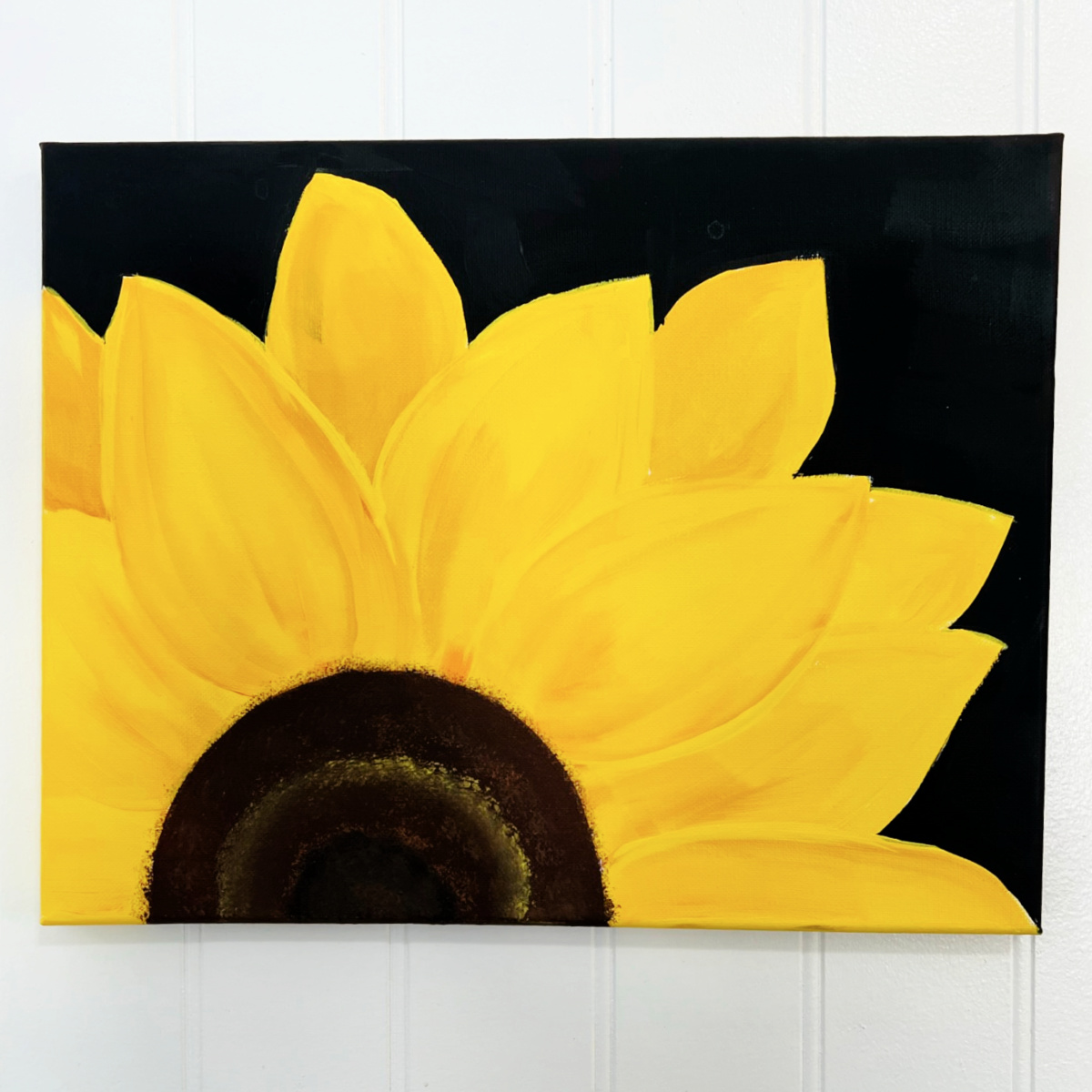
- Sunflower center with loose petals
- Eucalyptus branch in greens
- Tulip bouquet with simple shapes
Food
- Half avocado with seed
- Three strawberries in a row
- Slice of pizza, big shapes
- Ice cream cone with sprinkles
- Doughnut with glossy glaze
- Watermelon wedge with seeds
Animals and silhouettes
- Cat silhouette in window light
- Goldfish with two fins showing
– Bird on a wire at sunset - Whale tail splash
- Butterfly with folded wings
- Simple fox head with color blocks
Scenes and places
- Minimal skyline in two values
- Lighthouse with stripes
- Farm barn front view
- Small bridge over water
- Cabin with smoke in snow
- Desert road into horizon
Abstract and pattern
- Color blocks in a grid
- Loose circles in a limited palette
- Chevron stripes with tape
- One-color gradient with white
- Drip lines with two colors
- Spirals in two tones
Lettering and shapes
- One word mantra over a wash
- Heart shape in scribble strokes
- Starry dots on navy blue
- Geometric triangle stack
- Rainbow arc with five bands
- Peace sign with floral fill
These ideas meet the test: bold shapes, clear values, and low stress. They are perfect for what to paint on a canvas easy. You can finish many of them in under an hour.

Mini tutorials: five paintings you can finish in 30 minutes
- Sunset sky
- Paint the top third deep blue, middle orange, bottom pink.
- Blend edges with a clean, damp brush.
- Add two cloud shapes with soft gray. Stop early.
- Single leaf
- Block a simple leaf shape in mid green.
- Add a dark green vein and a light edge highlight.
- Place a soft shadow under it.
- Coffee mug
- Paint the mug shape in one flat color.
- Add a darker arc on the far side, light arc near the light.
- Dot a white highlight on the rim.
- Mountain layers
- Paint three mountain lines from back to front.
- Use light blue for far, mid blue, then dark blue.
- Add a pale sky and leave it plain.
- Daisy close-up
- Paint a yellow circle for the center.
- Add white petals in three layers: back, middle, front.
- Touch a tiny gray at the petal bases for depth.
Short, clear steps keep focus strong. This is the essence of what to paint on a canvas easy.
Color palettes that never fail
Simple palettes speed choices. They also teach mixing.
- Coastal calm: ultramarine, teal, white, raw umber
- Citrus pop: cad yellow, cad red light, white, phthalo blue
- Forest hush: sap green, burnt sienna, yellow ochre, white
- Night lights: indigo, magenta, white, small touch of orange
- Soft morning: cobalt blue, naples yellow, white, neutral gray
Research in design shows fewer colors improve harmony and reduce fatigue. In class, I limit students to four colors. Their work looks clean and bold. It is a strong path for what to paint on a canvas easy.

Common mistakes and how to fix them
Muddy color
- Cause: mixing too many paints at once.
- Fix: wipe your brush more. Mix two colors, then add white.
Flat shapes
- Cause: no value change.
- Fix: add a brighter highlight and a deeper shadow.
Overworking
- Cause: chasing tiny edges too soon.
- Fix: set a timer. Step back every ten minutes.
Stiff compositions
- Cause: object centered without purpose.
- Fix: use the rule of thirds. Nudge subjects off-center.
These fixes come from years of studio demos. They make what to paint on a canvas easy and fun.

How to find your next idea fast
Make an idea bank. Keep it simple and ready.
- Shoot one photo a day of simple scenes.
- Keep a list of five go-to themes: fruit, clouds, mugs, leaves, waves.
- Use color prompts: pick one palette and paint any shape.
Try a weekly sprint. Paint five tiny studies in five days. Each study takes 20 minutes. By week’s end, you will know what to paint on a canvas easy for a larger piece.
When stuck, I pull three cards: subject, color, mood. Example: leaf, blue-orange, calm. It breaks the blank-canvas freeze every time.

A Step by Step Plan for What to Paint on a Canvas Easy
- Choose one idea. Pick something from the list that makes you smile, not the one you think you should do.
- Tone the canvas. Brush on a thin wash of a light color to remove the intimidating white.
- Block in big shapes. Use a larger brush and paint the sky, ground and main objects loosely.
- Let it dry. A few minutes is enough for thin acrylic layers.
- Add mid-tones and shadows. Think about where the light comes from and darken the opposite side.
- Add details last. Use a small brush for outlines, stems, highlights or dots.
- Step back and stop. Many paintings are overworked in the last ten minutes. When in doubt, leave it.
Choosing the Canvas Size for Easy Paintings
| Canvas size | Best for | Pros |
|---|---|---|
| Small, such as 5 by 7 or 8 by 10 inches | First tries and quick studies | Fast to finish, uses less paint |
| Medium, such as 11 by 14 inches | Single-subject paintings | Room for detail without feeling huge |
| Large, 16 by 20 inches and above | Abstracts and bold color blocks | Good for loose, large strokes |
Starting small keeps projects finishable and makes mistakes cheap, but a very small canvas can feel fiddly for big hands. Many beginners find a medium size a comfortable compromise.
What to Paint on a Canvas Easy for Gifts and Occasions
- Gifts. A simple flower, a favorite animal silhouette or an initial surrounded by a pattern.
- Kids’ rooms. Clouds, rainbows, moons and stars in soft colors.
- Kitchens. Lemons, herbs or a bold abstract in warm tones.
- Seasonal decor. Autumn leaves, snowy trees or a bright summer sky.
- Group painting nights. Everyone paints the same sunset or skyline, then compares results.
Making a Canvas Painting Look Finished
A few simple steps raise the quality of an easy painting. Paint the edges of the canvas in a matching color so it can hang unframed. Check for gaps where the bare canvas peeks through. Sign your name in a corner with a small brush. Once fully dry, a coat of varnish or sealer unifies the sheen and protects the surface, although it is optional for simple decorative pieces. Use a flat hanger or wire on the back and hang the painting at eye level.
Staying Motivated After Your First Canvas
The second painting is where many people stop, usually because it did not match the first or their expectations rose. Treat every canvas as practice. Keep your finished pieces together so you can see improvement. Set a modest goal, such as one small canvas a week, and share a photo with a friend. Try changing just one thing each time, such as a new color scheme or a different brush, so the work stays interesting without becoming overwhelming.
Easy Subjects to Avoid When You Are Just Starting
Some subjects look simple but demand skills that take time to build. Realistic faces, hands, detailed city scenes and fur are tough because small mistakes in proportion show immediately. Large crowds of tiny figures and fine architecture lines can also be tiring. Save them for later and spend your first few canvases on shapes with forgiving edges, like skies, hills, leaves and fruit. When you do try something harder, simplify it into blocks of color first.
Brushes and Tools That Make Easy Canvas Painting Easier
You do not need a large brush collection. A flat brush for backgrounds, a medium round brush for shapes and a small round for details cover most beginner projects. A sponge or a piece of crumpled paper towel can make clouds, foliage and textured skies with no skill at all. Painter’s tape creates straight edges for stripes, horizons and geometric designs; peel it off carefully when the paint is dry to the touch. A palette knife can spread paint for a thick, textured look. Wash tools between colors and keep a cup of clean water for rinsing so the colors stay fresh.
Keep a few paper towels nearby for blotting brushes and wiping mistakes quickly while the paint is still wet. If an area goes wrong after drying, paint over it with a base color and try again; acrylic is forgiving that way.
Simple Ways to Practice Composition on Canvas
Composition is just deciding where things go. Divide the canvas into thirds with imaginary lines and place the horizon on one of them rather than in the exact middle. Put the main subject near an intersection of those lines, and let a secondary shape balance it on the other side. Odd numbers of objects, such as three flowers or five stones, often feel more natural than even numbers. Leave some empty space around the subject so it can breathe. A quick thumbnail sketch in a notebook lets you test several layouts in a minute each before you commit paint to canvas.
Frequently Asked Questions of what to paint on a canvas easy
What size canvas should beginners use?
Start with 8×10 or 9×12. These sizes are fast to cover and easy to frame.
Which paint is best for easy canvas art?
Acrylics are ideal for quick wins. They dry fast, clean with water, and are budget-friendly.
How do I pick a simple subject that still looks good?
Choose bold shapes with clear light and shadow. Fruit, mugs, leaves, and skies are top picks.
How can I avoid muddy colors as a beginner?
Wipe your brush often and mix fewer colors. Add white last to lighten and keep mixes clean.
What is the easiest background for beginners?
Use a flat color or a soft gradient. Both make the subject pop and hide small flaws.
How many colors should I start with?
Use a limited set of four to five. You will learn mixing and keep harmony.
Can I sketch on the canvas first?
Yes, use a light pencil or thinned paint. Keep lines simple and soft.
Conclusion
You now have a clear plan, simple tools, and a long list of ideas. Keep choices small, values bold, and shapes simple. That is the winning formula for what to paint on a canvas easy.
Pick one idea today and set a 30-minute timer. Finish, sign, and move on to the next. Share your result, subscribe for more weekly prompts, and tell me which idea you want a full tutorial on next.




