The right wire brush for cleaning paint brushes restores bristles fast.
You finish a trim job and your best brush is clumped with dried paint at the heel. You rinse, twist, and curse, but the bristles still stick. I’ve been there. A good wire brush for cleaning paint brushes solves this fast. It lifts paint from the ferrule, frees packed fibers, and gets your brush back to smooth strokes. Use the right bristle type and a gentle technique, and you protect your investment. Below, I break down the top options, how they feel in hand, and the best way to use them without harming your brush.
Wooster Brush Comb 1832/1831

The Wooster Brush Comb 1832/1831 is a pro favorite for a reason. It combines a brush comb and a small set of wire teeth in one compact tool. The comb side straightens and separates bristles. The wire teeth attack paint buildup at the ferrule where it matters most. If you want a precise tool rather than a blunt scrubber, this is it.
This is the wire brush for cleaning paint brushes that I reach for first. It works with oil-based or water-based paint. It also handles both nylon/polyester and natural bristle brushes with care. The teeth are firm, but the layout helps you clean in controlled passes. You get less risk of tearing filaments.
Pros:
- Two-in-one comb and wire teeth for targeted cleaning
- Gentle on modern synthetic filaments (PBT/PET) when used right
- Great control near the ferrule to remove packed paint
- Slim profile for tool bags and small caddies
- Speeds up clean-up and extends brush life
Cons:
- Wire section is small; not ideal for heavy rust removal on tools
- Not a full-size scrub brush for large surfaces
- Takes a few passes for very stubborn, long-cured paint
My Recommendation
If you paint often and want a wire brush for cleaning paint brushes that is safe and precise, pick the Wooster. It shines when you need to unclog the heel without tearing bristles. It is best for daily maintenance and quick tune-ups. It also suits those who value control over brute force.
| Best for | Why |
| Daily brush maintenance | Comb plus wire teeth clean fast with low damage risk |
| Detail cleaning at ferrule | Precise teeth lift paint where it packs hardest |
| Synthetic filaments | Gentler action than full-size stainless wire brushes |
6-Piece Wire Brush Set: Steel/Brass/Nylon
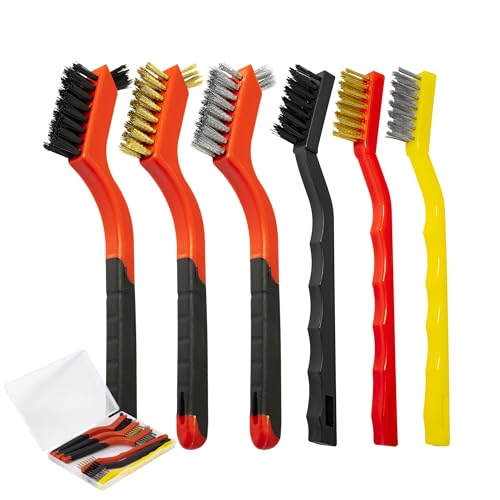
This 6-piece wire brush set gives you options: stainless steel, brass, and nylon. The small, narrow heads reach tight spaces. You can match bristle type to the job. Nylon for gentle scrubbing. Brass for controlled bite. Stainless for tough cleanup and hardware rust. It is a versatile kit for more than brushes.
I like this kit as a budget-friendly way to get a wire brush for cleaning paint brushes plus extras. The brass brush helps dislodge dried paint on synthetic bristles with less risk. The nylon brush handles delicate cleaning along flagged tips. The stainless option is great for scraping metal grids and roller frames, not bristle faces.
Pros:
- Three bristle types for different cleaning needs
- Compact heads reach ferrules and heel areas
- Good value for painters and DIYers
- Nylon option provides very gentle cleaning
- Useful beyond paint brushes (hinges, tools, grout)
Cons:
- Small handles may feel cramped for large hands
- Not built for heavy, all-day site abuse
- Stainless can be harsh on bristles if misused
My Recommendation
Choose this set if you want the flexibility to match bristles to the task. It is ideal for light to moderate cleaning and for those learning how to use a wire brush for cleaning paint brushes without damage. Keep stainless for metal parts only. Use brass or nylon on bristles for a safer clean.
| Best for | Why |
| Beginners | Nylon and brass reduce risk to brush bristles |
| Tight-space cleaning | Small heads target ferrules and heels easily |
| Multi-purpose jobs | Different bristles handle paint, rust, and grime |
Purdy Long-Handle Wire Brush
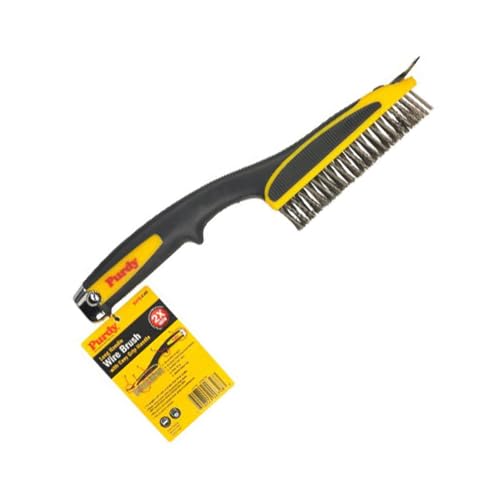
The Purdy Long-Handle Wire Brush focuses on reach and leverage. The longer grip gives you control without cramping your hands. That matters when you are cleaning multiple brushes after a long day. The bristles are firm and uniform. You get consistent bite stroke after stroke.
I use this as a general site brush. It is not only a wire brush for cleaning paint brushes. It also scrubs roller cages, mixer paddles, and dried paint on metal trays. On bristles, use light pressure and keep strokes away from the tips. It excels at cleaning the ferrule area and the outer heel edge.
Pros:
- Long handle reduces hand strain
- Firm bristles for quick, efficient scrubbing
- Reliable brand known to pro painters
- Great for cleaning metal hardware and tools
- Durable build for repeat daily use
Cons:
- May feel too aggressive for fine artist brushes
- Not as precise as a comb-style cleaner
- Larger head can be awkward around small ferrules
My Recommendation
Pick the Purdy if you want a rugged tool that does more than one job. It is best if you clean brushes, rollers, and gear in one go. As a wire brush for cleaning paint brushes, it is fast, but use a light hand. Pair it with a comb for best results.
| Best for | Why |
| Heavy-duty cleanup | Firm bristles and long handle add leverage |
| Jobsite use | Durable build stands up to daily work |
| Tool cleaning | Scrubs roller frames and metal trays well |
Chanharm 2-Pack Steel Brush with Scraper

This Chanharm two-pack uses stainless steel bristles with a built-in scraper. The scraper helps chip away thicker deposits on metal gear. The handle is contoured and grippy, which is nice when your hands are wet. The density of bristles gives a strong bite. It can move old paint fast.
I see this more as a shop workhorse than a delicate cleaner. You can still use it as a wire brush for cleaning paint brushes, but keep it at the ferrule and heel. Do not rake the flagged tips of fine brushes. Save it for stubborn cleanup on metal surfaces and for resurrecting old beater brushes.
Pros:
- Comes with a scraper for heavy buildup
- Two-pack offers value and backup
- Strong bristle density for fast removal
- Contoured handle improves grip and control
- Useful for rust and welding slag too
Cons:
- Too aggressive for soft bristles and artist brushes
- Stainless can scratch delicate surfaces
- Bigger head makes tight corners harder
My Recommendation
Get this if you want power and a scraper in one tool. It is best for pros who clean gear and shop tools along with brushes. As a wire brush for cleaning paint brushes, keep your strokes shallow and near the ferrule. Add a gentler brush or comb for final grooming.
| Best for | Why |
| Stubborn buildup | Scraper plus steel bristles break thick paint fast |
| Shop tools | Designed for rust and slag as well as paint |
| Rescuing old brushes | Aggressive bite helps free hardened heels |
Heavy-Duty Stainless Wire Brush with Grip

This heavy-duty stainless wire brush features a rubber-covered handle. The grip feels secure even with wet or gloved hands. The bristle rows are stiff and straight. You get strong contact and a steady cut. It is built for tough tasks and long life.
As a wire brush for cleaning paint brushes, it is best when paint has cured near the ferrule. It will remove gunk fast, but go easy on the bristle faces. Use short, light strokes, and work from ferrule to tip. Pair with a rinse and a comb for a smooth finish.
Pros:
- Great grip reduces slipping and hand fatigue
- Rigid bristles cut through old paint fast
- Durable build for repeated shop use
- Works on metal trays and roller frames too
- Simple design, easy to clean and store
Cons:
- Too harsh for delicate bristles if overused
- No scraper for chipping heavy chunks
- Not ideal for precision detailing
My Recommendation
Choose this if you want strength and a secure handle. It is best for pros who need to blast through stubborn build-up. As your wire brush for cleaning paint brushes, keep your touch light. Finish with a comb to realign the bristles and protect the brush edge.
| Best for | Why |
| Tough, cured paint | Stiff bristles chew through buildup quickly |
| Wet or gloved hands | Rubber grip keeps control steady |
| Routine tool cleanup | Simple design handles trays and frames |
How to Choose the Right Wire Brush for Cleaning Paint Brushes
Pick the wire brush based on your brush type, paint type, and cleaning stage. Synthetic bristles like PBT and PET are common in 2026. They resist swelling, but they can still scratch. Natural bristles need even more care. Start mild and increase pressure only as needed.
Brass is the safe middle ground. It is softer than steel. It cuts dried paint near the ferrule, yet spares the filament ends. Stainless steel is best for metal gear and the very base of the heel. Nylon is ideal for light cleaning and finishing passes. A comb is the most gentle option for daily maintenance.
Handle length matters too. Short handles excel at tight control near the ferrule. Long handles reduce strain during long cleanup sessions. If you often clean on site, a long handle helps. If you work at a sink, a compact handle can be easier.
Look for bristle density and layout. Tighter rows give more bite. Wider spacing gives better rinse flow. If you often use waterborne paint, you will want easy rinse flow. If you often clean older oil paint, you may want more density near the center rows.
Step-by-Step: Clean Paint Brushes Safely with a Wire Brush
I use a simple system. It protects my brushes and saves time. Follow these steps to use a wire brush for cleaning paint brushes without damage.
1) Rinse out the loose paint first. Use warm water for latex. Use the right solvent for oils. Spin or shake out excess.
2) Hold the brush by the handle. Aim the bristles down. Support the back of the ferrule with your off hand.
3) Start at the ferrule. Use a brass or nylon brush with light pressure. Pull strokes from ferrule toward the tip. Do not scrub across the bristles.
4) Rinse again. Comb the bristles straight. Repeat light wire brushing only where needed at the heel.
5) Final rinse until water runs clear. Shake and comb. Wrap in paper and hang to dry with the tip down.
Note: For oil-based jobs, use the correct solvent first. Then wash with mild soap and water. Ventilate the area. Follow safety labels.
Brass vs. Stainless vs. Nylon: What to Use and When
Use brass for most brush cleaning. It is strong but not too harsh. It is the best match for modern synthetic filaments in premium brushes. It frees heel clogs without shredding the tips.
Use stainless steel when paint has cured near metal parts. Clean the ferrule lip, the sides, and the spine of the heel. Avoid the tip area. Stainless is best for metal gear, trays, grids, and roller frames.
Use nylon for gentle work. It helps with final passes and soft dusting. It also suits fine artist brushes. Nylon is more forgiving and helps preserve flagged tips.
Common Mistakes to Avoid
Do not scrub perpendicular to the bristles. That frays tips and reduces glide. Always stroke from the ferrule toward the tip. Use light pressure and repeat as needed.
Do not use stainless on natural bristles unless you are at the metal edge only. Natural hair is softer. It can break and split. Keep those brushes for oils and treat them gently.
Do not wait days to clean. Dried latex at the heel can bond like cement. Clean right after cutting in. A few minutes now saves hours later.
Do not skip combing. A comb realigns the bristles and keeps the brush’s shape. It is the key to that factory edge feel on your next job.
Brush Care Tips in 2026: What I’ve Learned
Modern paints dry faster thanks to new resins. That means you need to rinse more often as you work. I dip my brush and wrap during breaks to slow drying. I also keep a small bucket to spin out paint in the field.
Premium brushes use tapered, flagged filaments for smooth strokes. Do not risk those tips. Use a wire brush for cleaning paint brushes only at the ferrule and heel. Finish with a comb every time.
For oil paints and alkyds, choose low-odor mineral spirits and ventilate well. For waterborne enamels, warm water and brush soap work well. A light brass brushing at the heel restores flow without fuzzing the tips.
Store brushes in sleeves once dry. Hang them. Do not leave them on bristles. That keeps the profile crisp and extends life.
When to Use a Comb, When to Use a Wire Brush
Use a comb after every session. It is your daily tool. It reopens the bristles and sheds loose paint.
Use a wire brush when the comb is not enough. Aim at the heel and ferrule. Free the packed paint and rinse. Think of the wire brush as a spot repair, not a full scrub.
If you paint all day, you will likely use both. Comb, rinse, wire brush the heel, rinse, and comb again. That cycle restores the brush fast.
Pro Technique: Keep the Edge and Save Time
Angle the brush face down. Let water flow from ferrule to tip as you brush. Short strokes, low pressure. Brass bristles for most work. Save stainless for metal and stubborn heel spots.
I often pinch the bristles just ahead of the ferrule with my off hand. That gives a firm backer. Then I pull the wire brush along the ferrule lip in smooth passes. It pops out dried paint like magic.
Finish by flicking water out and combing. Wrap the brush in clean paper and gently form the tip. Hang to dry. Your next coat will be smoother for it.
FAQs Of wire brush for cleaning paint brushes
Can a wire brush damage my paint brush?
Yes, if you use too much pressure or the wrong bristle type. Use brass or nylon on bristles and keep strokes from ferrule to tip. Avoid scrubbing across the tips.
Should I choose brass or stainless for brush cleaning?
Choose brass for most bristle cleaning. Use stainless on metal parts and for stubborn heel areas only. Brass is safer on synthetic and natural bristles.
How often should I use a wire brush for cleaning paint brushes?
Use it only when a comb and rinse are not enough. After heavy sessions, a few light passes at the heel help. For daily maintenance, a comb is often enough.
What’s the right way to brush the bristles?
Hold the brush with bristles down. Pull light strokes from ferrule to tip. Rinse, comb, and repeat if needed. Keep pressure low to protect the tips.
Can I use a wire brush on natural bristle brushes?
Yes, but very gently and mostly at the ferrule. Brass is safer than stainless. Never scrub across the tips of natural bristles.
Final Verdict: Which Should You Buy?
The Wooster Brush Comb 1832/1831 is my top pick for most painters. It is controlled, safe, and quick. It is the smartest wire brush for cleaning paint brushes when you care about bristle health.
Need more muscle? The Purdy and the heavy-duty stainless options bring power. The 6-piece set offers a gentle path to learn. Pick based on how often you clean and how hard your paint dries.