
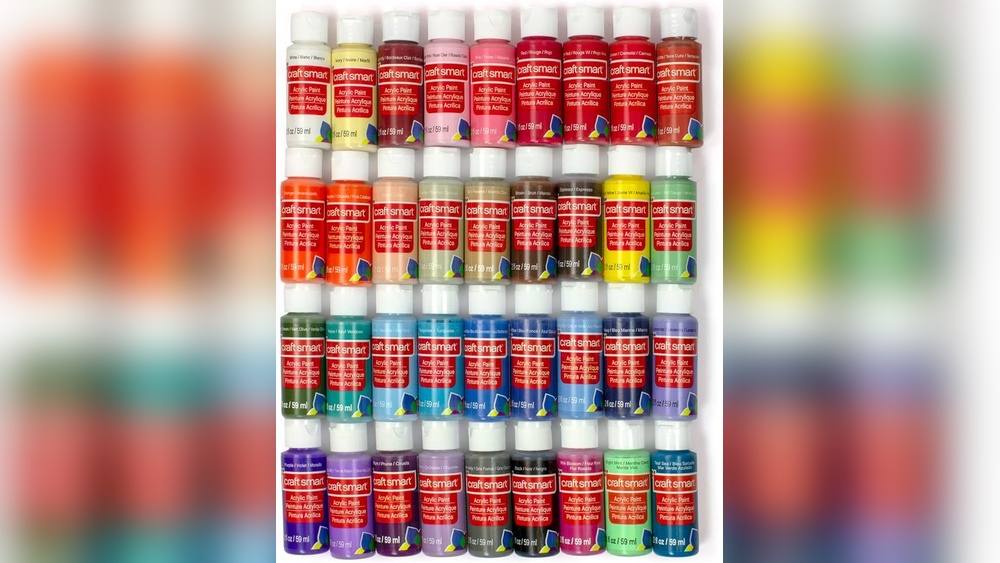
Quick answer: Craft Smart acrylic paint is a water-based craft paint generally sold as conforming to ASTM D-4236, the US labeling standard for art materials, and it is commonly treated as non-toxic for normal crafting. “Non-toxic” on art supplies means a toxicologist found no acute or chronic hazard under intended use; it does not mean edible, food-safe or ideal for toddlers who put things in their mouths. Always check the current label on your specific bottle, supervise children, and choose washable kids’ paint for very young artists.
Craft Smart is a budget-friendly acrylic line sold at Michaels, and it ends up on a lot of family craft tables. So the question “is Craft Smart paint non toxic” usually comes from a parent, a teacher or someone painting near pets or food. The honest answer depends on understanding what the labels actually certify, how acrylic craft paint behaves, and where its limits are.
This guide explains the US art-material safety system, what to look for on a Craft Smart bottle, how it compares with similar craft paints, and when a different product is a better fit. If you are shopping specifically for children, our guide to the best non-toxic paints for kids compares washable and kid-formulated options.
What “Non-Toxic” Means on Art Supplies
In the United States, art materials fall under a federal law called the Labeling of Hazardous Art Materials Act (LHAMA). It requires art materials to be reviewed by a toxicologist and labeled under the standard known as ASTM D-4236.
- “Conforms to ASTM D-4236” means the product was reviewed and labeled according to the standard. It does not by itself mean the product is non-toxic; a product with hazards can conform if it carries the right warnings.
- A warning label (such as “Caution” or “Warning” with specific hazards) means the toxicologist found something users should know.
- No warning label plus a non-toxic statement means no acute or chronic hazard was identified under normal, intended use.
Many manufacturers also participate in a voluntary certification program run by the Art and Creative Materials Institute (ACMI). Its AP (Approved Product) seal indicates a product certified as non-toxic for children and adults when used as intended. The CL (Cautionary Label) seal means the product carries warnings for safe use.
What Non-Toxic Does Not Mean
- It does not mean edible or safe to swallow in quantity.
- It does not mean food-safe for surfaces that touch food or drink.
- It does not mean safe to spray or airbrush without ventilation and a mask.
- It does not mean allergy-free; individuals can still react to ingredients.
- It does not mean washable. Acrylic paint can permanently stain clothes.
Is Craft Smart Paint Non Toxic?
Craft Smart acrylic is a water-based acrylic craft paint. Like most mainstream craft acrylics sold in the US, its labeling typically references conformance with ASTM D-4236, and it is generally marketed and used as a non-toxic craft paint for everyday projects. Formulas and labels can change, and different products in the line (standard acrylic, outdoor, metallic, glitter, multi-surface) may differ, so the label on the bottle in your hand is the authority.
Here is how to read it in under a minute:
- Find the small print near the barcode or on the back label.
- Look for “Conforms to ASTM D-4236” and any seal such as ACMI AP.
- Check for any warning words or hazard statements. If present, follow them.
- Look for age guidance. Many craft paints suggest adult supervision for children under a certain age.
- Note whether the product says “non-toxic.” If it does not, do not assume.
Why Craft Acrylic Is Generally Low-Risk
Water-based acrylic craft paint is pigment suspended in an acrylic polymer emulsion with water, plus additives such as thickeners and preservatives. It contains little or no solvent, so it has a much lower odor than oil or solvent-based paints, and it cleans up with soap and water when wet.
That said, a few ingredients are worth knowing about:
- Preservatives: water-based paints contain them to prevent spoilage. Some people are sensitive to certain preservatives, and a small amount of ammonia smell is normal in many acrylics.
- Pigments: craft paints usually use inexpensive, low-hazard pigments. Professional artist acrylics can include cadmium or cobalt pigments, which carry warnings; craft lines typically avoid those.
- Specialty finishes: glitter, metallic and outdoor formulas can include different additives, which is another reason to check each product individually.
Craft Smart vs Other Popular Craft Paints
Shoppers often compare Craft Smart with DecoArt, Apple Barrel and FolkArt. The table below compares general characteristics as commonly described, not lab results. Verify safety claims on current labels.
| Brand | Type | Typical safety labeling | General reputation | Best use |
|---|---|---|---|---|
| Craft Smart | Water-based acrylic craft paint | Commonly ASTM D-4236 conformance | Budget, wide color range, coverage varies by color | General crafts, school projects |
| DecoArt Americana | Water-based acrylic craft paint | Commonly ASTM D-4236; check for AP seal | Smooth, popular with decorative painters | Decorative painting, wood, home decor |
| Apple Barrel | Water-based acrylic craft paint | Commonly ASTM D-4236; marketed non-toxic | Very affordable, thinner consistency | Kids’ crafts, large quantities |
| FolkArt | Water-based acrylic craft paint | Commonly ASTM D-4236; check for AP seal | Good selection, multi-surface lines | Crafts, glass and ceramic (specialty lines) |
| Washable kids’ tempera | Water-based, washable | Often ACMI AP | Designed for children; washes from skin and many fabrics | Toddlers, preschool, classrooms |
DecoArt vs Craft Smart
Both are water-based acrylic craft paints with broadly similar safety profiles. The differences people notice are practical: consistency, opacity per coat, color consistency between bottles and finish. Decorative painters often prefer the smoother flow of more established craft lines, while Craft Smart wins on price and availability at one retailer.
Apple Barrel Paint vs Craft Smart
Apple Barrel is frequently described as thinner and very inexpensive, which suits kids and large-batch projects. Craft Smart is often considered comparable. Safety-wise, both are generally sold as non-toxic water-based craft paints; check each label.
Is FolkArt Acrylic Paint Non Toxic?
FolkArt acrylics are water-based craft paints generally labeled under ASTM D-4236 and widely used as non-toxic for crafting. Specialty FolkArt lines for glass, enamel or outdoor use may carry different guidance, so read the specific bottle.
Is Crayola Non Toxic? A Useful Benchmark
Crayola is a common benchmark because its children’s products are widely labeled with the ACMI AP seal and designed for kids, including washable paints. If you need paint for preschoolers, a kid-specific washable product like this is usually a better match than any craft acrylic, because it is formulated to wash off skin and many fabrics.
Is Craft Smart Paint Safe for Kids?
For school-age children doing supervised crafts, a water-based craft acrylic labeled non-toxic is commonly used without problems. For younger kids, think about behavior rather than just chemistry:
| Age | Better choice | Why |
|---|---|---|
| Under 3 | Washable finger paints or toddler-specific paints with AP certification | Mouthing, skin contact, easy cleanup matters |
| 3–6 | Washable tempera or washable kids’ paint | Spills and clothing stains are inevitable |
| 6–10 | Washable paint or supervised craft acrylic | Acrylic gives durability for keepsakes |
| 10+ | Craft or student acrylics with good habits | Ready for permanent projects |
Practical rules with any acrylic around children: cover clothing, keep paint away from mouths and eyes, wash hands after painting, and clean brushes promptly. Acrylic dries into a plastic film that can be hard to remove from fabric.
Craft Smart Paint and Food, Skin, Pets and Ceramics
Food Surfaces
Craft acrylic is not food-safe. Do not paint the inside of mugs, bowls, plates or the rim area of glasses. Decorate only outside surfaces well away from where lips and food touch.
Skin and Face Painting
Craft acrylic is not designed for skin. It can irritate, dries tight and can be hard to remove. Use cosmetic-grade face paint for faces and bodies.
Pets
Do not paint pets’ paws or fur with acrylic. If a pet licks wet paint, a small amount of a non-toxic water-based paint is unlikely to be serious, but call your veterinarian or a pet poison hotline if you are concerned, especially with larger amounts.
Is Ceramic Paint Non Toxic?
It depends on the product. Some ceramic and glass paints are water-based and labeled non-toxic but not food-safe even after baking. Others, and many glazes used in kilns, have specific hazards. Read the label carefully and follow its food-contact guidance.
Safe Use Tips for Any Craft Acrylic
- Work in a ventilated room, especially with large projects or sealers.
- Do not sand dried acrylic without a dust mask.
- Never airbrush or spray craft acrylic without ventilation and a suitable respirator.
- Do not eat or drink while painting; keep cups and palettes separate.
- Rinse brushes in a container, then dispose of rinse water following local guidance rather than pouring heavy paint sludge down drains.
- Store paint with lids tight and out of reach of small children.
Non-Toxic Alternatives for Specific Needs
- Washable paint for kids: best for toddlers and preschoolers; look for AP certification and “washable” on the label.
- Non-toxic watercolor sets: good for kids who like detailed work; easy cleanup.
- Gouache for older kids: opaque and rewettable; many student gouaches are labeled non-toxic, but some pigments carry warnings, so check.
- Non-toxic oil painting mediums: adults who use oils can reduce solvent exposure with solvent-free mediums and cleaning with oil and soap, but oil paints themselves may contain pigments with warnings.
What to Do If a Child Swallows or Gets Paint in Their Eyes
Accidents happen even with careful supervision. A small taste of a water-based craft paint labeled non-toxic is generally not expected to cause serious harm, but it is still sensible to act calmly and quickly.
- Remove paint from the mouth. Wipe out any remaining paint and give a few sips of water.
- Keep the bottle. The label lists the product name and any warnings, which is exactly what a poison specialist will ask about.
- Call for advice. In the US, Poison Control can be reached at 1-800-222-1222. They can tell you whether home care is enough. Call emergency services immediately if a child has trouble breathing, is unusually drowsy or is vomiting repeatedly.
- For eyes: rinse gently with lukewarm running water for several minutes, and seek medical advice if irritation continues.
- For skin: wash with soap and warm water while the paint is still wet. Dried acrylic can usually be peeled or softened with a little oil and then washed.
Setting Up a Kid-Friendly Painting Station
The environment matters as much as the paint. A few minutes of setup reduces both mess and risk:
- Cover the table with a vinyl cloth or kraft paper and use a smock or an old adult T-shirt.
- Pour small amounts of paint into a muffin tin or egg carton rather than handing children full bottles.
- Give each child their own water cup with a weighted base, kept separate from drinks.
- Keep wipes and a damp towel within reach before you open the paint.
- Put lids back on as soon as the session ends, and store bottles on a high shelf.
For younger children, swapping craft acrylic for a washable paint makes the whole setup far more relaxed, since spills on clothing and skin rinse away instead of drying into a plastic film.
FAQs
Is Craft Smart acrylic paint non toxic for kids?
Craft Smart acrylic is generally sold as a water-based, ASTM D-4236-conforming craft paint and is commonly used by supervised school-age children. For toddlers and preschoolers, washable paints with ACMI AP certification are a better choice. Always check the specific label.
Is Apple Barrel paint non toxic?
Apple Barrel is a water-based acrylic craft paint generally labeled under ASTM D-4236 and marketed as non-toxic for crafts. Like other craft acrylics, it is not food-safe or designed for skin.
Which is better, DecoArt or Craft Smart acrylic paint?
Both are similar in safety profile. Many crafters find DecoArt smoother and more consistent for decorative painting, while Craft Smart is chosen for low cost and availability. The better choice depends on your project and budget.
Can I use Craft Smart paint on mugs or plates?
Only on exterior decorative areas that never touch food or lips. Craft acrylic is not food-safe, even when sealed, and it will not survive regular dishwashing.
Is washable paint for kids really non toxic?
Kid-specific washable paints are typically formulated and certified for children, often with the ACMI AP seal. Non-toxic means no hazard under intended use, so they still should not be eaten, but they are the safest mainstream option for young kids.
Does Craft Smart paint have fumes?
Water-based acrylic has a mild odor, sometimes with a faint ammonia note, but it lacks the strong solvent fumes of oil-based paints. Normal room ventilation is usually sufficient for brushwork.
Final Thoughts
Craft Smart is a reasonable everyday craft acrylic for supervised projects, provided you read its label, keep it away from food surfaces and skin, and match the paint to the child’s age. Labels like ASTM D-4236 and the ACMI AP seal tell you more than any marketing slogan.
If you are buying paint mainly for little ones, compare the washable, child-certified options in our roundup of safe, kid-friendly non-toxic paint sets before your next craft session.




