PaintingProGuide is reader-supported. When you buy through links on this page we may earn an affiliate commission at no extra cost to you.
Almost every kids’ paint on the shelf says “non-toxic,” which makes the label feel meaningless. It is not, but it is easy to misunderstand. Non-toxic on art materials refers to how a product has been evaluated and labeled for health hazards. It does not mean edible, allergen-free or safe to rub into broken skin. The best non-toxic paints for kids combine credible safety labeling with formats and formulas that suit a child’s age, so the safest choice for a toddler is different from the safest choice for a ten-year-old.
This guide explains what the safety labels on kids’ paint actually mean, how to read them in a few seconds, and which paint types suit which ages. Then we review six non-toxic paints, from toddler finger paint to a student acrylic set for older kids.
Quick answer: For the clearest safety documentation, Colorations Simply Washable Tempera carries the AP Seal, ASTM D4236 conformance and a detailed allergen-free list. For toddlers, ABEIER washable finger paint for ages 1-3 is designed for direct skin contact. For older kids ready for permanent paint, the Shuttle Art 36-color acrylic set conforms to ASTM D4236.
Our Top Picks at a Glance
- Colorations Simply Washable Tempera, 8-Pack — Best for detailed safety and allergen information
- ABEIER Washable Finger Paint for Toddlers 1-3 — Best non-toxic paint for toddlers
- TMOL Washable Paint for Kids, 12 Colors — Best non-toxic starter kit with tools
- Crayola Washable Project Paint, 6 Colors — Best familiar non-toxic classic
- Cra-Z-Art Washable Classic Paint, 8 x 4 oz — Best value non-toxic bottles
- Shuttle Art Acrylic Paint Set, 36 Colors — Best non-toxic acrylic for older kids
| Product | Best For | Key Spec | Key Strength | Price Tier |
|---|---|---|---|---|
| Colorations 8-Pack | Allergy-aware families, schools | 8 x 16 oz washable tempera | AP Seal, ASTM D4236, allergen list | $$ |
| ABEIER Finger Paint | Toddlers 1-3 | 12 colors, creamy | ASTM D4236, skin contact | $ |
| TMOL 12 Colors | Starter kit | 12 bottles, 6 brushes, 2 palettes, bucket | Certified non-toxic claim | $$ |
| Crayola Washable 6ct | Ages 3+ | 6 x 2 oz | Trusted brand labeling | $ |
| Cra-Z-Art 8 x 4 oz | Value | 8 colors x 4 oz | Made in USA, non-toxic | $ |
| Shuttle Art Acrylic 36 | Ages 8+ | 36 x 2 oz + 12 brushes | ASTM D4236, acid-free | $$ |
How We Chose
We did not test these paints. Selections are based on Amazon listing details and specifications checked in October 2026, how clearly each product documents its safety labeling, how well its format suits specific ages, and how widely each product is reviewed by Amazon buyers. Safety claims are reported as the manufacturers state them.
- Recognized labeling: ASTM D4236 conformance or the AP Seal.
- Ingredient transparency: allergen or ingredient information where provided.
- Age-appropriate format: finger paint and washable tempera for little ones, acrylic for older kids.
- Washability: fewer reasons for long skin contact.
- Clear age guidance: products that say who they are for.
What “Non-Toxic” Means on Kids’ Paint
ASTM D4236
In the United States, ASTM D4236 is the standard practice for labeling art materials for chronic health hazards. A product that “conforms to ASTM D4236” has been reviewed by a toxicologist and labeled accordingly; if no warnings are required, it may be marketed as non-toxic. It is a labeling standard rather than a guarantee that a product is harmless in every circumstance.
The AP Seal
The Approved Product (AP) Seal comes from the Art and Creative Materials Institute and indicates that a product has been evaluated and found to contain no materials in sufficient quantities to be toxic or injurious to humans, including children, in normal use. Many teachers look for it.
Children’s product rules
Paints marketed specifically for young children may also be subject to children’s product safety requirements, and some sellers mention certificates for this. When in doubt, buy products that state their compliance clearly.
For an example of how to evaluate a specific craft brand’s claims, see our breakdown of whether Craft Smart paint is non-toxic.
Matching Paint to Age
| Age | Best Paint Types | Why |
|---|---|---|
| 12 months to 3 years | Toddler finger paint, thick washable tempera | Designed for skin contact and quick cleanup |
| 3 to 5 years | Washable tempera, washable watercolor, paint sticks | Bright, forgiving and easy to wash |
| 6 to 8 years | Tempera, watercolor, supervised craft acrylic for special projects | More control, interest in lasting results |
| 9 years and up | Student acrylic, watercolor, gouache | Permanent work on canvas, wood and rocks |
What to Keep Away From Young Children
Some art products are fine for adults but not designed for kids. Spray paints release fine mist that is easily inhaled and should be used only by adults outdoors. Solvent-based paints and mediums, including turpentine and mineral spirits used with traditional oils, give off fumes. Some artist-grade pigments, such as those based on cadmium, cobalt or lead, carry warning labels and are meant for adults following precautions. Powdered pigments and dry tempera powders can be inhaled when mixed, so adults should mix them away from children.
Glitter, glue guns, resin and pouring mediums also deserve care. Loose craft glitter can irritate eyes, hot glue burns, and resin requires adult handling. None of this means kids cannot enjoy a wide range of art; it simply means matching materials to age and keeping adult supplies stored separately and out of reach.
Finally, remember that “non-toxic” applies to normal use. Paint water, dirty brushes and palettes still need cleaning up promptly, and children should wash their hands before snacks. A simple routine of smocks on, paint out, hands washed and supplies away keeps painting both fun and low-risk.
Thinking About Sensitive Skin
Children with eczema or sensitive skin may react to ingredients that do not bother other kids, even in non-toxic paint. Fragrance and preservatives are common culprits in any product that touches skin. If your child is sensitive, choose paints with published ingredient or allergen information, do a small test on the forearm before a big finger painting session, and use brushes, sponges or paint sticks to reduce direct contact. Rinse skin promptly afterward with lukewarm water and a gentle cleanser, and talk to your pediatrician if a reaction appears.
How to Read a Paint Label in 10 Seconds
- Look for ASTM D4236 or the AP Seal.
- Check the age guidance; many paints are labeled 3+.
- Read any caution or warning statements.
- Look for washable if the paint will touch skin or clothes.
- Scan for allergen information if your child has allergies.
Best Non-Toxic Paints for Kids Reviewed
1. Colorations Simply Washable Tempera, Rainbow Plus 8-Pack — Best for detailed safety information

Colorations offers the most complete safety documentation in this group. The listing states AP Seal certification for safety and non-toxicity, ASTM D4236 conformance, a paraben-free formula, and that the paint does not include latex, dairy, casein, egg, gluten, peanut, tree nuts or soy. It is made in the USA.
The rainbow set includes red, orange, yellow, green, blue, purple, black and white in 16 oz bottles, washable and described as not chipping, flaking or cracking when dry.
Best suited for: Allergy-aware families, daycares and classrooms that need documentation.
Key features:
- 8 colors x 16 oz
- AP Seal and ASTM D4236
- Paraben-free
- Allergen-free list
- Washable, made in USA
Pros:
- Clearest safety labeling
- Allergen information
- Large volume
Cons and limitations:
- Higher upfront cost
- Only 8 colors
- Big bottles for small hands
Buying consideration: Keep the packaging or a photo of it; it is useful documentation for schools and caregivers.
2. ABEIER Washable Finger Paint for Toddlers 1-3, 12 Colors — Best for toddlers

ABEIER designs this finger paint for ages 1 to 3. The listing says it conforms to ASTM D4236, can be in direct contact with skin, and is washable from skin, fabrics and plastics. It also includes a clear caution: do not swallow, and small parts present a choking hazard.
Twelve colors in a thick, silky cream texture suit sensory play, handprints and early color learning.
Best suited for: Toddlers exploring paint with their hands.
Key features:
- 12 colors
- Ages 1-3 listed
- ASTM D4236
- Skin contact use
- Washable
Pros:
- Age guidance for toddlers
- Creamy texture
- Clear caution statements
Cons and limitations:
- Small containers
- Choking caution for small parts
- Not edible
Buying consideration: Supervise closely; non-toxic does not mean safe to eat.
3. TMOL Washable Paint for Kids, 12 Colors with Brushes — Best for a non-toxic starter kit
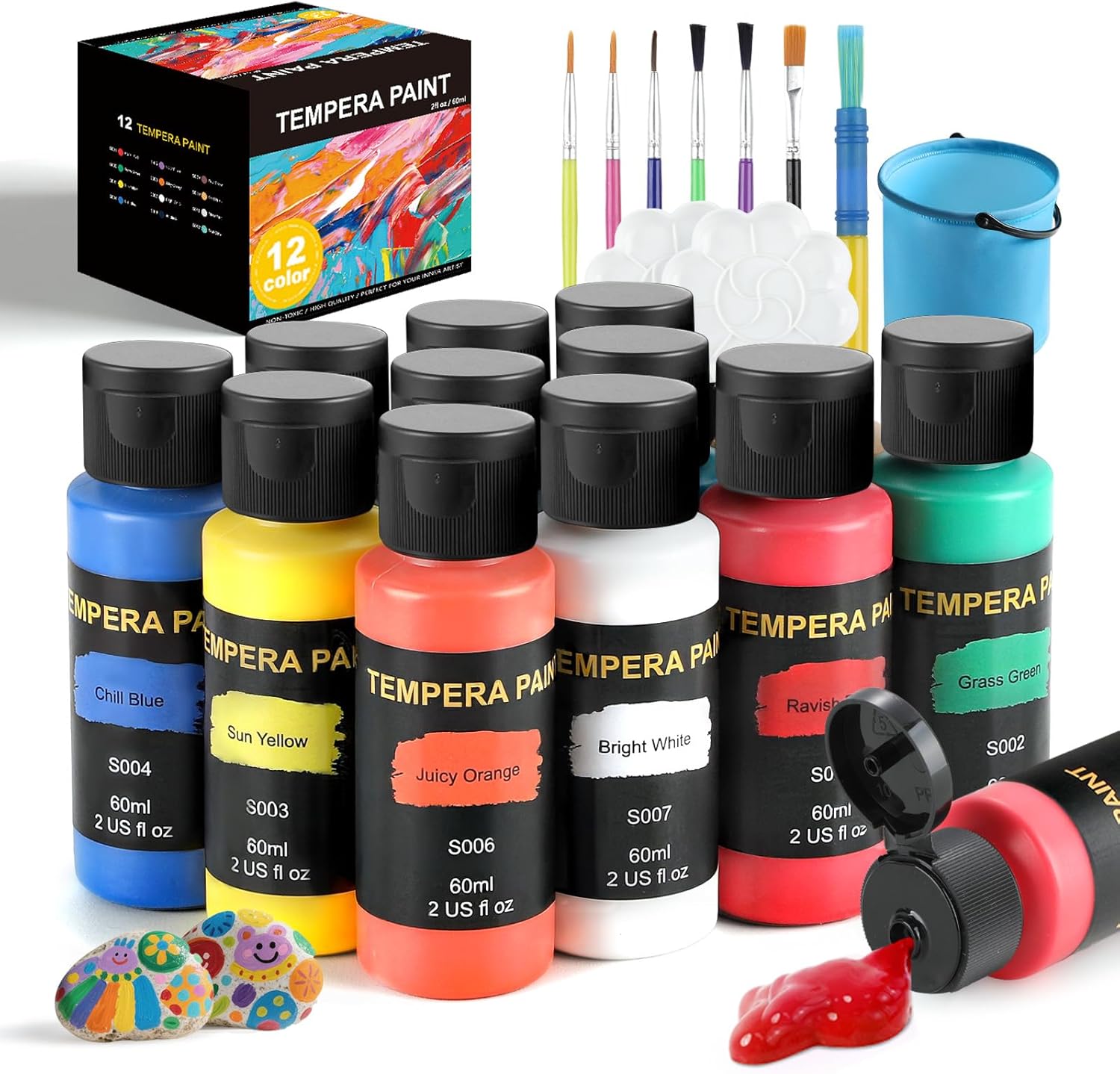
TMOL’s 12-color kit includes 12 bottles, 6 brushes, 2 palettes and a foldable bucket. The listing describes washable tempera certified non-toxic and free from harmful chemicals, washable from skin, clothes and surfaces with soap and water.
Transparent labeled bottles and aluminum-sealed flip-top caps prevent drying and spills. The listing suggests the paint for finger painting for ages 6 and up, so supervise younger children.
Best suited for: Families wanting a complete non-toxic setup in one box.
Key features:
- 12 colors
- 6 brushes, 2 palettes, bucket
- Sealed flip-top caps
- Washable tempera
- Certified non-toxic claim
Pros:
- Everything included
- Labeled bottles
- Caps resist drying
Cons and limitations:
- Specific certification standard not named in the excerpt
- Age suggestion of 6+ for finger painting
- Small bottles
Buying consideration: If you need a named standard for school paperwork, ask the seller or choose a product listing ASTM D4236 or AP Seal.
4. Crayola Washable Project Paint, 6 Colors — Best for a familiar non-toxic classic

Crayola’s washable project paint is labeled safe and non-toxic and ideal for ages 3 and up. Six bold colors come in 2 oz bottles with resealable caps, and the paint washes from skin and most washable clothing.
Crayola is a brand many schools already use, which makes it an easy choice for parents who want something familiar.
Best suited for: Preschool and school-age kids doing everyday projects.
Key features:
- 6 colors x 2 oz
- Non-toxic, ages 3+
- Washable
- Resealable caps
Pros:
- Familiar brand
- Lowest price tier
- Washable
Cons and limitations:
- Few colors
- Labeled 3+
- Safety standard not named in the excerpt
Buying consideration: Check the bottle label for the standard it conforms to; it is often printed on the packaging.
5. Cra-Z-Art Washable Classic Paint, 8 x 4 oz — Best for value non-toxic bottles

Cra-Z-Art’s set includes red, orange, yellow, green, blue, purple, white and black in 4 oz bottles. The listing says the paints are made in the USA, washable and non-toxic for any craft project.
Bigger bottles at a low listing price make this a practical everyday paint for families who paint often.
Best suited for: Families wanting more paint for less.
Key features:
- 8 colors x 4 oz
- Washable, non-toxic
- Made in USA
Pros:
- Good value
- Classic palette
- Washable
Cons and limitations:
- Safety standard not named in the excerpt
- No brushes
- Gloss finish
Buying consideration: Combine with chunky brushes and sponges for younger kids.
6. Shuttle Art Acrylic Paint Set, 36 Colors — Best for older kids’ permanent art

For older kids who want lasting results on canvas, rocks or wood, Shuttle Art’s acrylic set conforms to ASTM D4236 and is described as non-toxic and acid-free. It includes 36 colors in 2 oz bottles, 12 brushes and a palette.
Acrylic is not washable once dry and stains clothes, so it is better for kids around 8 and up with smocks and supervision.
Best suited for: Older children and teens ready for permanent paint.
Key features:
- 36 colors x 2 oz
- ASTM D4236
- Non-toxic, acid-free
- 12 brushes and palette
Pros:
- Named safety standard
- Permanent, multi-surface
- Large palette
Cons and limitations:
- Not washable once dry
- Not for toddlers
- Needs supervision and smocks
Buying consideration: Keep acrylic separate from younger siblings’ washable paints so they are never mixed up.
Buying Guide: How to Choose Non-Toxic Paints for Kids
Look for named standards
ASTM D4236 and the AP Seal are the most useful indicators on US art materials. “Non-toxic” on its own is less informative.
Match the paint to age
Finger paint and washable tempera for toddlers and preschoolers, watercolor for school-age kids, student acrylic for older children.
Avoid adult-only products for young kids
Spray paints, solvent-based paints, oil paints with solvents and artist pigments with warning labels are not for young children.
Check allergen information
If your child has allergies, choose products that list allergen-free claims or ingredients.
Washable reduces exposure
Paint that washes off quickly spends less time on skin.
Read caution statements
Even non-toxic products may warn about small parts or swallowing.
Safe Painting Habits at Home
- Supervise toddlers and preschoolers at all times.
- Keep paint away from mouths and eyes; no eating or drinking at the paint table.
- Wash hands after painting, even with washable paint.
- Ventilate the room if using any product with an odor.
- Store paints out of reach of younger siblings.
- Never use craft paint for face or body painting; use cosmetic face paint instead.
Ready to paint? Kid-friendly projects like painted rock critters, a simple ladybug or a friendly dinosaur work well with any of the washable paints above.
Common Mistakes to Avoid
- Assuming non-toxic means edible: it does not.
- Ignoring age labels: follow them, especially for toddlers.
- Using adult art supplies with young kids: some pigments and solvents carry warnings.
- Skipping hand washing: wash up after every session.
- Painting skin with craft paint: use products made for skin.
- Overlooking allergies: check ingredient and allergen information.
FAQs
What does non-toxic mean on kids’ paint?
It usually means the product has been evaluated and labeled under standards like ASTM D4236 and does not require hazard warnings. It does not mean the paint is edible.
Is ASTM D4236 a safety certification?
It is a labeling standard for chronic health hazards in art materials. Products conforming to it have been reviewed and labeled accordingly.
What is the AP Seal on art supplies?
The AP Seal from the Art and Creative Materials Institute indicates a product has been evaluated and found non-toxic in normal use.
What paint is safest for toddlers?
Washable finger paint or tempera labeled for toddlers, with clear safety labeling, used under close supervision.
Is acrylic paint safe for kids?
Non-toxic acrylics are widely used by older kids. They are not washable once dry, so they are better for children around 8 and up with supervision.
What if my child eats some paint?
Non-toxic paints are not meant to be eaten. Read the label and contact Poison Control or your doctor if you are concerned.
Final Recommendation
For the clearest safety documentation, choose Colorations, with its AP Seal, ASTM D4236 conformance and allergen list. For toddlers, ABEIER finger paint is designed for skin contact and ages 1 to 3. TMOL’s 12-color kit is a complete starter set, Crayola and Cra-Z-Art are dependable everyday paints, and Shuttle Art’s ASTM D4236 acrylics are the next step for older kids. Whatever you buy, supervision and hand washing matter as much as the label.