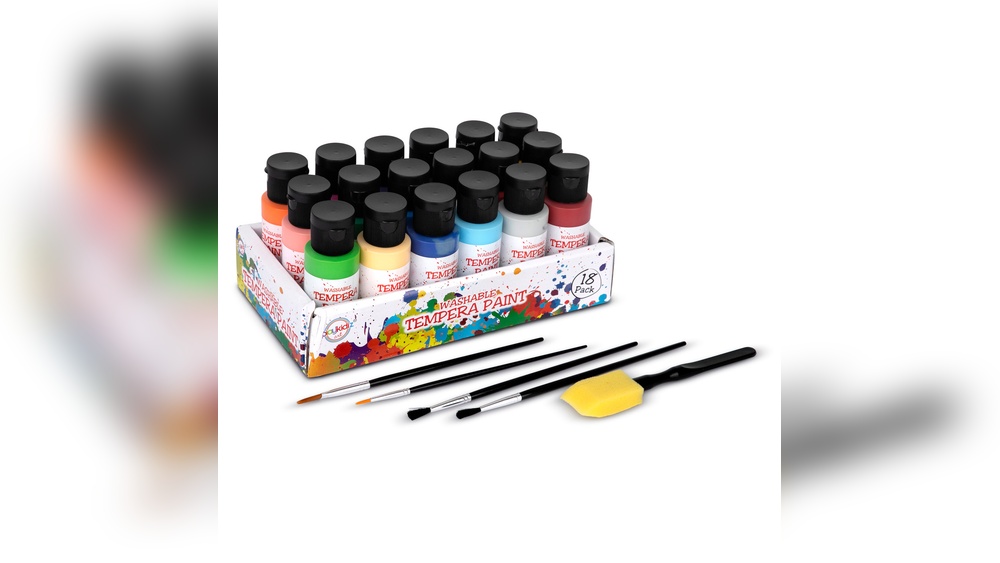
Quick answer: Yes, acrylic paint is generally safe for kids crafts when you use non-toxic, water-based craft or student paint that carries the ACMI AP seal and follows the US ASTM D-4236 labeling standard. It is not meant to be eaten, used as face or body paint, sanded, or sprayed, and some artist-grade colors contain heavy-metal pigments that are best kept away from children. With adult supervision, good ventilation, and quick hand washing, most kids aged about five and up can use acrylic safely.
Parents usually ask whether acrylic paint is safe for kids crafts right after a child has paint on their hands, a toddler has licked a brush, or a shirt is ruined. The short version is reassuring, but the details matter: “acrylic” covers everything from inexpensive craft bottles to professional tubes, and those are not equally suitable for children. This guide explains how to read the label, which situations are actually risky, and how to set up acrylic crafts so cleanup stays easy.
What Acrylic Paint Is Made Of
Acrylic paint is pigment suspended in an acrylic polymer emulsion, essentially tiny plastic particles in water. While it is wet, it cleans up with soap and water. As the water evaporates, the polymer particles fuse into a flexible, water-resistant film. That chemistry explains both its appeal for crafts and its main drawback for kids: once dry, it is very hard to remove from fabric, carpet, and brushes.
Most acrylic paints also contain small amounts of additives such as thickeners, preservatives to prevent mold, and sometimes a trace of ammonia, which is why some bottles have a faint smell. In child-friendly formulas these are present at low levels considered acceptable for supervised use.
Is Acrylic Paint Safe for Kids? It Depends on the Grade
Not all acrylic paint is formulated with children in mind. The grade affects pigment choices, safety labeling, and how hard the paint is to wash out.
| Type | Typical pigments | Kid suitability | Notes |
|---|---|---|---|
| Washable kids’ acrylic | Organic and earth pigments | Best choice for young children | Formulated to wash out of many fabrics while wet or shortly after |
| Craft acrylic (2 oz bottles) | Mostly non-toxic synthetic pigments | Good for ages 5+ with supervision | Permanent once dry; check each label |
| Student-grade tubes | Hue substitutes for costly pigments | Good for older kids and teens | Usually AP certified; cheaper “hue” colors avoid heavy metals |
| Artist/professional grade | May include cadmium, cobalt, manganese | Adult supervision; skip specific colors | Look for “CL” labels or warnings on individual colors |
The practical takeaway: for children, washable or craft acrylic with a clear non-toxic certification is the sensible default. If you want help comparing kid-friendly brands and sets, our roundup of the best acrylic paints for kids sorts options by age, washability, and project type.
How to Read the Safety Label
In the United States, art materials are covered by the Labeling of Hazardous Art Materials Act (LHAMA). It requires products to be reviewed by a toxicologist and labeled with any chronic health hazards. Here is what to look for on a bottle or tube.
- “Conforms to ASTM D-4236”: means the product has been reviewed for chronic hazards and labeled accordingly. It does not by itself mean “non-toxic,” only that any hazards are disclosed.
- ACMI “AP” (Approved Product) seal: issued by the Art and Creative Materials Institute after toxicological review. AP products are considered non-toxic for children and adults under normal use, including reasonably foreseeable misuse.
- ACMI “CL” (Cautionary Label) seal: means the product has hazards that require care. Keep CL products away from young kids.
- Warnings for specific colors: words like cadmium, cobalt, lead, or manganese in the pigment list call for extra caution.
- Age guidance: many sets list a minimum age, often 3+ or 5+, and some include a choking warning for small caps or parts.
If a bottle has no safety information at all, which happens with some unbranded imports, treat it as unknown and choose a labeled alternative for children.
Real Risks and How to Handle Them
Acrylic is low-risk for normal crafting, but a few situations deserve attention.
Swallowing Paint
A lick or a small taste of AP-certified acrylic is generally considered minimally toxic, though it may cause a mild upset stomach. Rinse the mouth with water and offer a drink. If a child swallows more than a small amount, has symptoms, or the paint is not labeled non-toxic, call Poison Control at 1-800-222-1222 (US) right away; keep the bottle handy so you can read the label. Toddlers who mouth everything are better served by paints made specifically for their age.
Is Acrylic Paint Safe for Skin?
Brief contact during crafts is normally harmless for most kids, and non-toxic acrylic washes off with soap and warm water if you catch it before it dries. Dried acrylic peels or rubs off over time. However, acrylic is not designed as face or body paint. Covering large areas of skin can cause irritation, it can be painful to remove from hair and fine skin, and some kids have sensitivities to preservatives. Keep it away from eyes, and use cosmetic-grade face paint for face painting.
Eyes
If paint gets into an eye, flush gently with lukewarm water for several minutes and seek medical advice if irritation continues.
Sanding, Spraying, and Heating
Dried acrylic should not be sanded by children, because the dust can contain pigment particles that are not meant to be inhaled. Airbrushing or spray application creates fine mist, which is a different exposure than brushing. Avoid heating painted pieces with heat guns or in ovens unless the paint maker specifically allows it.
Allergies and Smells
A few children react to the preservatives or the ammonia smell. Paint in a ventilated room, and stop using a product if a child develops a rash or headache.
Safety Rules by Age
| Age | Recommended paint | Supervision level |
|---|---|---|
| Under 3 | Paints made for toddlers (finger paints, washable tempera); skip acrylic | Constant, hands-on |
| 3–5 | Washable paint; washable kids’ acrylic for occasional crafts | Adult at the table |
| 6–9 | AP-certified craft or kids’ acrylic | Adult nearby, sets up and cleans up |
| 10–13 | Craft and student-grade acrylic | Check-ins; teach label reading |
| Teens | Student and artist grade (avoid heavy-metal colors unless taught safe handling) | Independent with rules |
Washable Acrylic Paint for Kids vs Regular Craft Acrylic
“Washable” is the feature parents care about most, and it is worth understanding what it really means. Washable acrylic paint for kids uses formulas that release from many fabrics and surfaces more easily, especially when you rinse before the paint fully cures. Regular craft acrylic forms a permanent film within roughly 20–30 minutes on fabric and can be nearly impossible to remove after that.
The trade-off is durability. Washable formulas may rub off finished projects, smudge when handled, or fade when wiped. For crafts that need to last, like painted wood signs or rocks left outdoors, standard craft acrylic plus a sealer performs better. For everyday creative play, washable paint saves clothes and stress.
Washable paint for kids crafts is also the better choice for group settings such as classrooms, parties, and camps, where you cannot keep an eye on every sleeve.
How to Set Up a Safe Acrylic Craft Session
- Cover the work area with a plastic tablecloth, newspaper, or a cut-open trash bag taped down at the corners.
- Dress for mess: an old T-shirt worn backward makes a great smock. Roll sleeves up.
- Portion paint small: pour coin-sized amounts onto a paper plate. Recap bottles right away so a toddler cannot squeeze them.
- Set out two water cups and paper towels, and keep a damp cloth ready for spills.
- Keep food and drinks off the table so painted cups and snacks do not get confused.
- Open a window or run a fan if you are painting a large project or using several colors at once.
- Wash hands, brushes, and tools before the paint dries; warm soapy water works best.
Acrylic Paint for Crafts: What Kids Can Safely Paint
Acrylic sticks to a wide range of surfaces, which is why it is so popular for crafts. Most are fine for kids with the right prep.
- Paper and cardboard: the easiest surfaces; use heavy paper to prevent curling.
- Canvas panels: great for “real” paintings; pre-primed panels need no prep.
- Rocks: wash and dry first. Seal finished rocks with a clear, water-based sealer applied by an adult if they will live outdoors.
- Wood: unfinished craft wood takes acrylic well; a light coat of gesso or primer helps colors look brighter. An adult should do any sanding.
- Terracotta pots: paint the outside; seal if the pot will be watered.
- Fabric: regular acrylic stiffens fabric. Mix with a textile medium or use fabric paint for wearable items.
- Glass and ceramics: acrylic is decorative only on these. Do not paint surfaces that will touch food or mouths, such as plate tops or mug rims.
How to Thin Acrylic Craft Paint for Kids
Craft acrylic straight from the bottle can be thick and streaky for young painters. Thinning it makes brushing easier and stretches the paint further.
- Water: add a few drops at a time. Up to roughly 1 part water to 2 parts paint keeps color strong. Much more water than that can weaken the binder, so the paint may lift or rub off once dry.
- Flow medium or glazing medium: thins without weakening adhesion. Handy for older kids and pouring projects; an adult should measure it.
- Mix on the plate, not in the bottle, so you do not dilute the whole supply.
Choosing Acrylic Paint Brushes for Kids
Brushes affect safety less than paint, but they affect frustration a lot. Look for short, thick handles for small hands, synthetic bristles that survive scrubbing, and a mix of sizes: a wide flat for backgrounds, a medium round, and a small round for details. Acrylic paint brushes for crafts are inexpensive, so it is sensible to keep a separate “kid set.” Wash them immediately after use; dried acrylic turns bristles into hard sticks.
Removing Acrylic Paint From Skin, Clothes, and Surfaces
| Surface | While wet | Once dry |
|---|---|---|
| Skin | Soap and warm water | Rub with baby oil or cooking oil, then wash with soap |
| Hair | Shampoo and rinse | Work in conditioner or oil, comb out gently |
| Clothes | Rinse from the back under cold water, then dish soap | Rubbing alcohol may soften it on many fabrics; test a hidden area first |
| Table or floor | Damp cloth | Soften with warm soapy water, then scrape gently with a plastic card |
| Brushes | Soap and water, reshape tip | Soak in brush cleaner; may not fully recover |
Adults should handle rubbing alcohol and keep it away from children, flames, and eyes.
Common Safety Mistakes to Avoid
- Assuming every acrylic is kid-safe. Check each label, especially in mixed sets and artist tubes.
- Using acrylic as face paint for parties or costumes.
- Painting kids’ dishes or cups on surfaces that will touch food.
- Letting toddlers handle squeeze bottles, which can end with a mouthful of paint.
- Pouring paint water down the drain in large amounts. Let rinse water sit so solids settle, then discard the sludge in the trash; small amounts of household rinse water are generally fine.
- Skipping hand washing before snacks.
FAQs
Is acrylic paint safe for kids under 3?
It is usually better to skip acrylic for children under three, because they tend to put hands and brushes in their mouths and the paint stains permanently once dry. Finger paints and washable tempera made for toddlers are safer, easier choices for this age.
Is acrylic paint toxic if swallowed?
Non-toxic, AP-certified acrylic is generally considered minimally toxic in small amounts and may cause only mild stomach upset. For larger amounts, symptoms, or unlabeled paint, contact Poison Control at 1-800-222-1222 (US) and have the label ready.
Is acrylic paint safe for skin?
Small splashes during crafts are normally harmless and wash off with soap and water. Acrylic is not formulated for face or body painting, though, so avoid covering large areas of skin and keep it away from eyes.
What does the AP seal on acrylic paint mean?
The AP seal comes from the Art and Creative Materials Institute and means a toxicologist has reviewed the product and found it non-toxic under normal use. It is one of the most useful quick checks when shopping for kids’ art supplies.
What is the best acrylic paint set for kids?
The best set for a child depends on their age and the project: washable formulas suit young kids, while AP-certified craft or student sets suit older children. Our dedicated guide compares kid-friendly acrylic sets in detail.
Can kids use acrylic paint on wood crafts?
Yes. Unfinished craft wood takes acrylic well, especially with a light primer coat. An adult should do any sanding and apply sealer, and painted wood should not be used for anything that goes in the mouth.
Final Thoughts
Acrylic paint is a safe, versatile craft material for most children when you pick a non-toxic, certified formula, match it to the child’s age, and keep a few rules about mouths, faces, and cleanup. Read the label once, set up the table well, and the biggest risk left is a stained shirt. Ready to choose a paint that fits your child’s age and craft plans? Compare the top-rated, kid-friendly options in our guide to acrylic paint sets that work well for children.